Copal
What Is Copal?
Copal is tree resin that’s only partway fossilized, so it hasn’t had the time to fully turn into amber.
Hold a piece in your hand and you’ll notice it fast, especially if you’ve handled amber before. Copal tends to feel a bit lighter, and it has this slightly tacky, warm-to-the-touch thing going on, while amber usually feels harder and more glassy. And copal dents more easily. I’ve handled polished copal where a fingernail mark popped up after just a few minutes of fidgeting with it, mostly on the softer, clearer chunks (the kind that look almost too perfect).
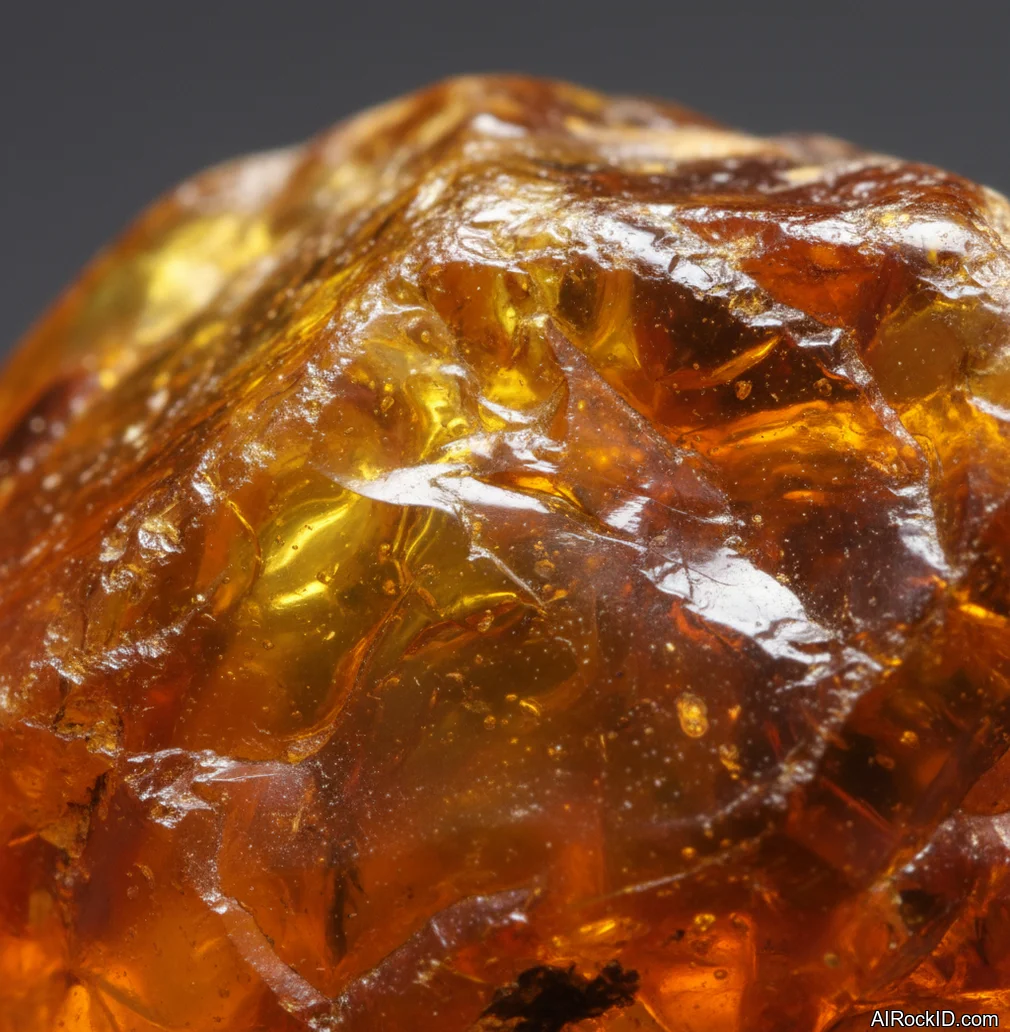
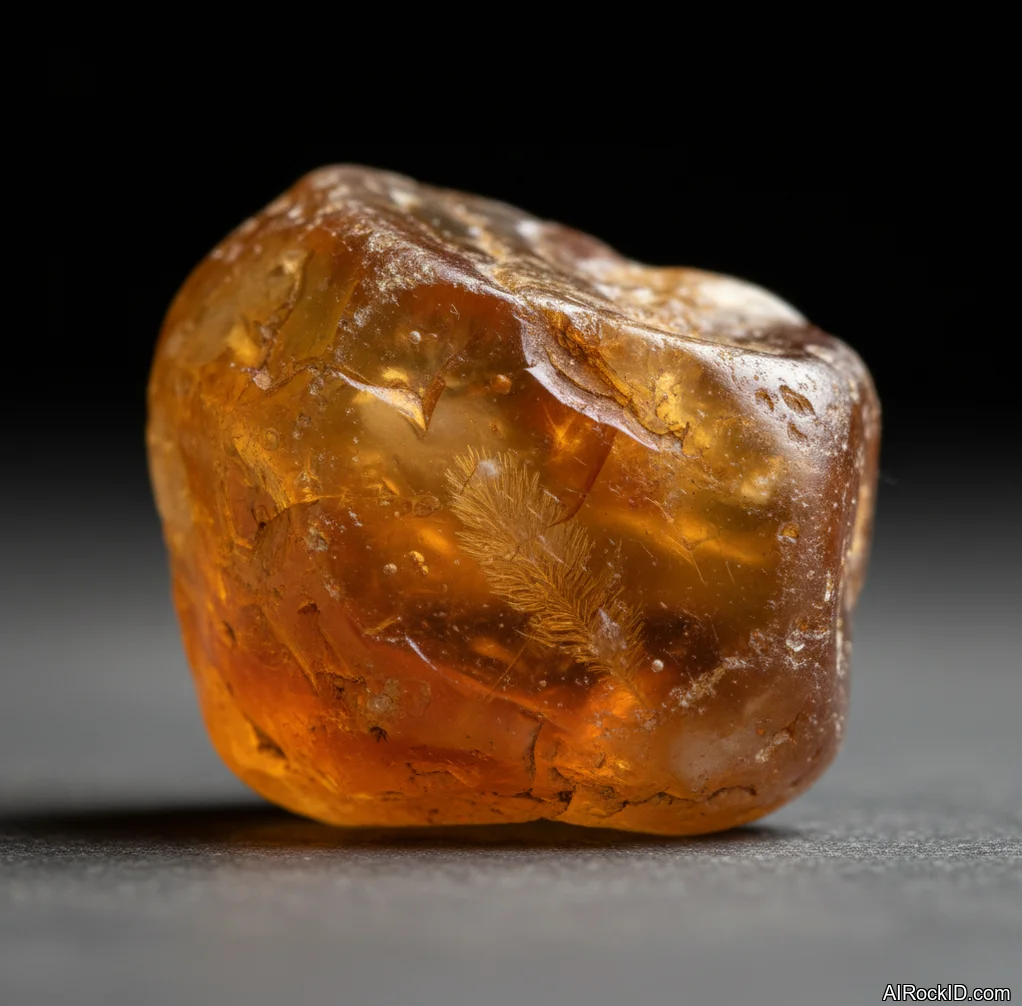
From a distance it can pass for amber, no problem: honey yellow, butterscotch, that cognac orange. But look closer. Copal often shows a bunch of tiny bubbles, swirly flow lines, plus those “wet” looking patches that seem almost fresh. Some pieces even give off a sweet, piney smell if you rub them hard with a cloth. Pretty, sure. Still, it’s not the same category as true amber, and sellers don’t always say that out loud, do they?
Origin & History
Most dealers toss around “copal” as a trade term, not some strict age cutoff, and that’s basically where the mix-ups begin. The word itself comes from Spanish “copal,” which they borrowed from the Nahuatl “copalli,” the resin people burned as incense in Mesoamerica (you can almost picture the sweet, smoky smell clinging to everything).
Scientists have gone back and forth for ages on where copal ends and amber begins, because, honestly, resin doesn’t come with a little date tag stuck to it. So, in the real world, copal usually gets treated as the younger, less polymerized stuff. And you’ll run into it in both older and newer jewelry markets. But you’ll also see it sold as amber when someone’s trying to squeeze a higher price out of the exact same look.
Where Is Copal Found?
Copal turns up in tropical and subtropical regions where resin-producing trees grew and resin got buried in soils or sediments. Madagascar and Mexico are common sources in the current market.
Formation
Resin starts out as the sticky stuff a tree oozes to seal a wound. It drips down the bark, grabs whatever’s in the way (little bark crumbs, insects, dust), then sets up and hardens either right on the trunk or down in the leaf litter. If that blob ends up buried where there isn’t much oxygen, it can hang around long enough to slowly polymerize.
But copal is basically resin that’s only halfway through that process. It’s had time to firm up, shed some of the volatile compounds, and start cross-linking, but it hasn’t hit the same chemical stability amber has. So heat, solvents, even plain sunlight can mess with copal a lot faster than amber. I’ve watched a piece of clear copal turn cloudy right around a drill hole after a warm day sitting in a vendor tent. Amber? It usually just shrugs and stays the same.
How to Identify Copal
Color: Common colors are honey yellow, pale lemon, butterscotch, and orange-brown; clearer pieces often show internal bubbles and flow bands. Some material has milky zones or a greenish cast from inclusions and oxidation.
Luster: Polished copal has a resinous to waxy luster, more “soft shine” than glassy sparkle.
The real test is solvent sensitivity: a tiny dab of acetone on an unseen spot can get tacky on copal, while amber is usually far more resistant. If you scratch it with a copper coin or a fingernail, copal marks easier than amber, and the scratch can look a little gummy. Under UV light, many pieces fluoresce, but the color varies, so don’t use UV alone as your deciding test.
Properties of Copal
Physical Properties
| Crystal System | Amorphous |
| Hardness (Mohs) | 2.0-2.5 (Soft (2-4)) |
| Density | 1.02-1.10 g/cm3 |
| Luster | Resinous |
| Diaphaneity | Transparent to translucent |
| Fracture | Conchoidal |
| Streak | White |
| Magnetism | Non-magnetic |
| Colors | Honey yellow, Lemon yellow, Orange, Brown, Butterscotch, Milky white |
Chemical Properties
| Classification | Organic resin (terpenoid polymers) |
| Formula | Complex mixture (no single fixed formula) |
| Elements | C, H, O |
| Common Impurities | S, N, Fe |
Optical Properties
| Refractive Index | 1.52-1.54 |
| Birefringence | None |
| Pleochroism | None |
| Optical Character | Isotropic |
Copal Health & Safety
Copal is usually fine to handle, but it’ll soften if it gets warm in your hands or sits under a hot lamp, and it can react badly to the kinds of solvents people use for cleaning. So if you’re drilling or polishing it, don’t inhale the fumes. Heated resin can give off this sharp, irritating smell that hits the back of your throat (you’ll know it when you catch a whiff).
Safety Tips
When you’re sanding or drilling, don’t lean on it. Just a light touch, and stop now and then so it doesn’t heat up (you can literally feel it getting warm under your fingertips). And don’t use acetone, don’t soak it in alcohol, and skip the ultrasonic cleaner too.
Copal Value & Price
Price Range
Rough/Tumbled: $5 - $60 per piece
Cut/Polished: $1 - $8 per carat
Clear pieces with cool little inclusions, a nice polish you can feel slick under your thumb, and material that doesn’t feel flimsy or soft tend to cost more. But the market’s a mess, honestly, because the labeling’s all over the place, and “amber” prices get slapped on copal constantly.
Durability
Nondurable — Scratch resistance: Poor, Toughness: Fair
Copal can craze, cloud, or get tacky with heat, UV exposure, and some solvents faster than true amber.
How to Care for Copal
Use & Storage
Store copal away from direct sun and heat, ideally in a soft pouch or a box so it doesn’t pick up scratches. If you’ve got a display shelf that gets afternoon light, don’t put copal there.
Cleaning
1) Rinse quickly with lukewarm water and a tiny drop of mild soap. 2) Wipe with a soft microfiber cloth, no scrubbing. 3) Dry fully and buff lightly; stop if the surface starts to feel tacky.
Cleanse & Charge
For a gentle reset, I stick to smoke cleansing, sound, or a quick pass through cool running water. Long sun baths are a bad idea with copal.
Placement
Keep it on a shaded altar, bedside table, or a desk spot that stays cool. If it’s jewelry, take it off before hot showers, saunas, or leaving it in a car.
Caution
Keep it away from heat, harsh chemicals, and long stretches in direct UV light. Copal scratches pretty easily, and it can turn cloudy or even craze if you’re not careful. And skip ultrasonic or steam cleaners completely. Also, watch out for perfume and hair spray, since that misty stuff loves to settle on the surface (and it’s hard to get off without rubbing).
Works Well With
Copal Meaning & Healing Properties
Copal lives in this funny middle zone between rock stuff and actual forest. People who use it in spiritual work don’t usually talk about it like a “crystal” so much as a resin buddy, and yeah, that checks out once you’ve handled a raw chunk. Warm it up in your palm for a minute and you’ll still catch that faint tree-sap smell, like the inside of a piney drawer.
In my experience, copal feels lighter, more “clearing,” than those heavy, grounding stones. I keep a small polished piece by my desk for those times when my brain’s fried and I’m trying to get my focus back. And it seems to click with simple habits like breathwork or journaling. But look, I’m careful with this part: none of that is medical. If you want the traditional ritual path, burning copal incense is the classic move, and having it as a stone just feels like the quieter, low-smoke version.
Thing is, there’s also the unglamorous practical side. Copal is soft. If you’re someone who carries a pocket stone and rubs it all day, this one’s going to pick up scratches and dull patches fast, and that gets annoying. I’ve also watched people get genuinely bummed when they find out their “amber” was actually copal. So I tell friends the same thing every time: buy it because you like copal, not because you think you’re scoring rare amber.
Identify Any Crystal Instantly
Snap a photo and get properties, value, care instructions, and healing meanings in seconds.