Amber Calcite
What Is Amber Calcite?
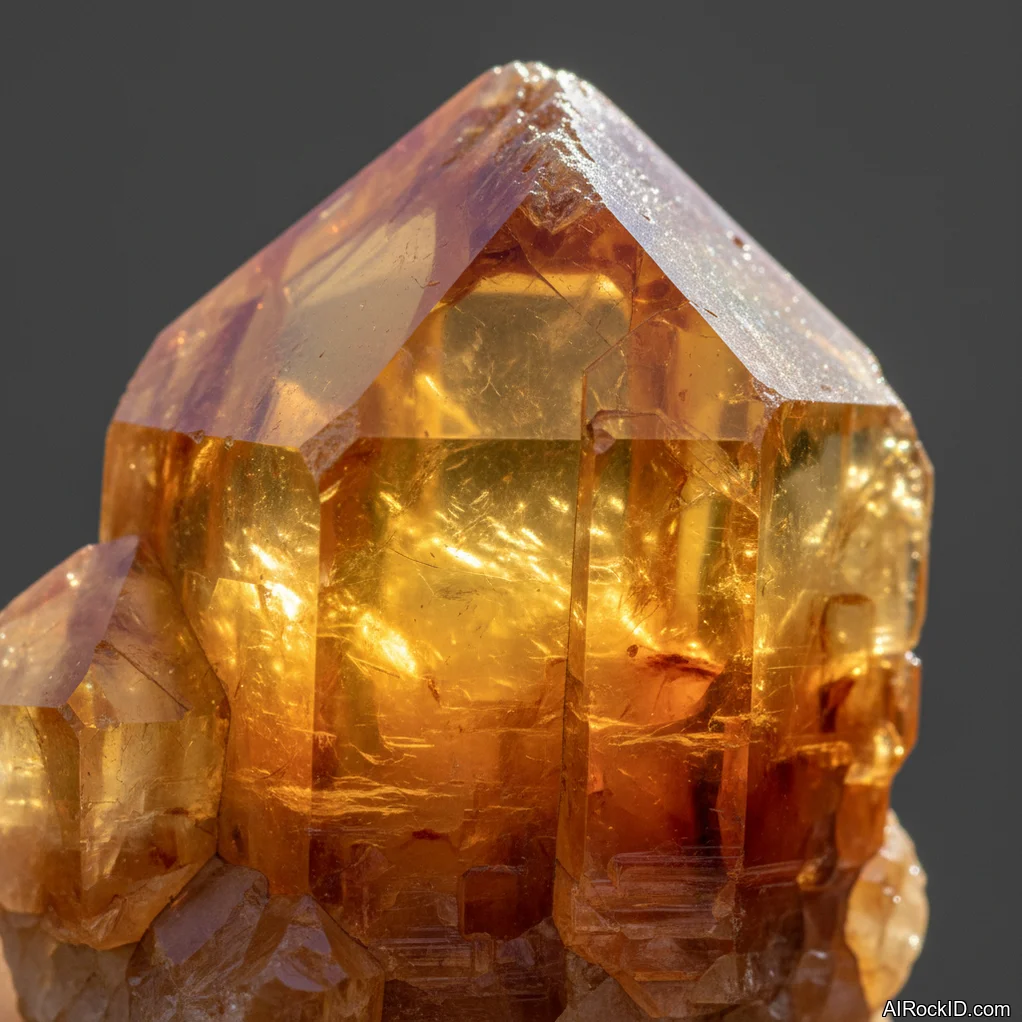
Amber Calcite is just calcite (calcium carbonate, CaCO3) in that honey-yellow to golden range. And the first thing you notice when you actually hold it? It feels softer than you’d think. If you’ve ever had a pile of tumbled stones in your hands, you’ll know exactly what I mean by that slightly “buttery” slip calcite gets when it’s been polished right.
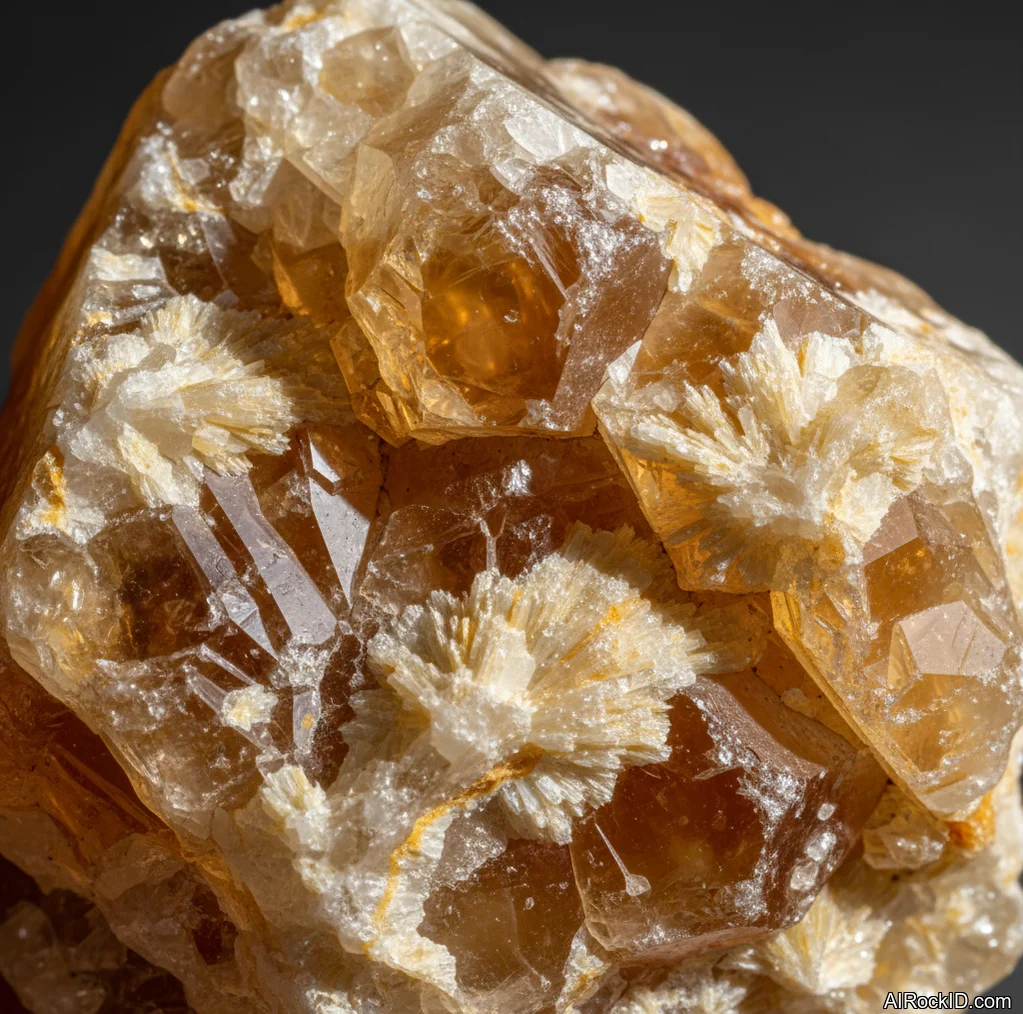
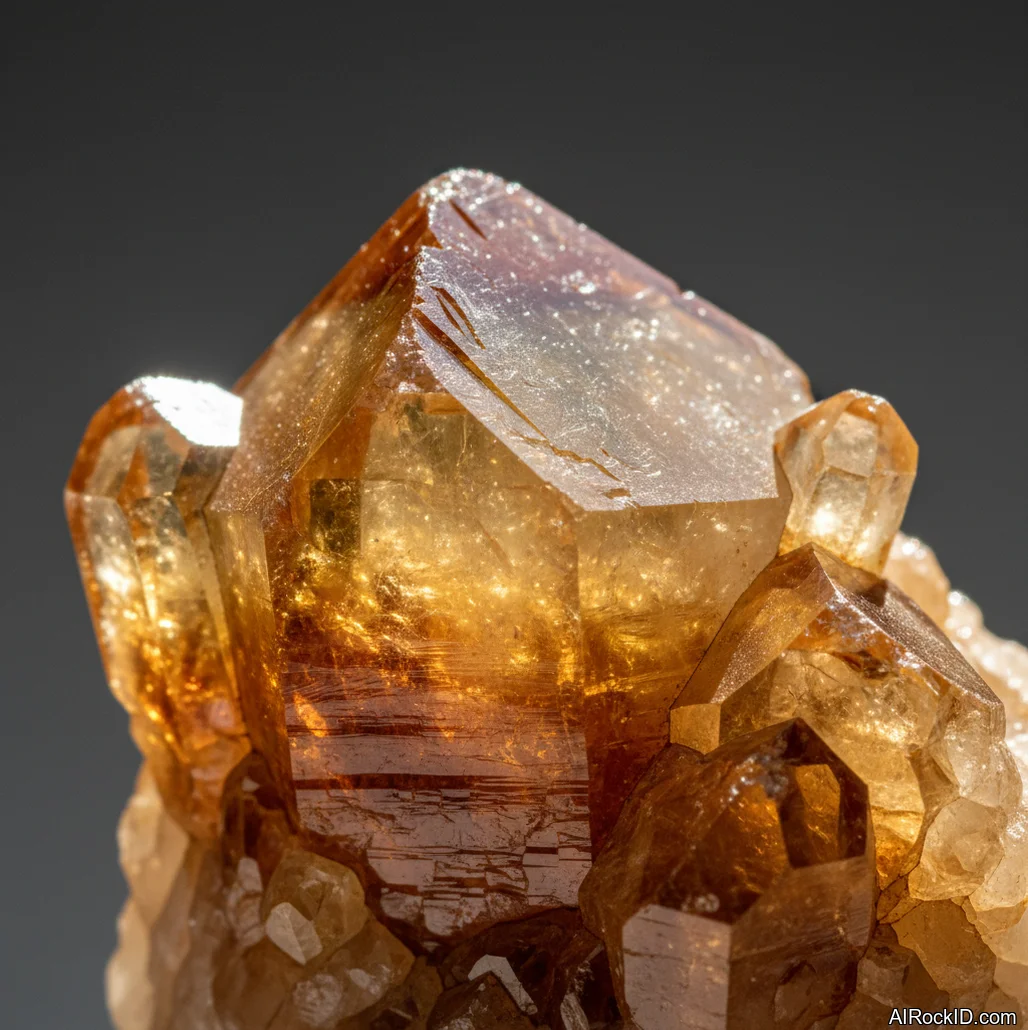
Grab a chunk and tip it under a lamp, like you’re trying to catch glare off a phone screen. The flat cleavage planes flash on and off as you move it, and you can sometimes spot that rhombohedral shape even when the stone looks like nothing more than a rounded palm piece. Some specimens have milky banding. Others get those little “sugar” patches where the surface goes grainy, almost like it wanted to turn drusy (but didn’t). Kind of half-finished, in a cool way.
Next to citrine or amber, the color can fool new collectors. But Amber Calcite still feels cool to the touch, like carbonates do, and it scratches a lot easier than quartz. So, if you’re going to carry it around or leave it on a desk where keys and coins end up, that’s the bit you really need to keep in mind.
Origin & History
Calcite got its official write-up in 1836, thanks to Wilhelm von Haidinger. He borrowed the name from the Greek “chalix,” which basically means lime.
“Amber calcite,” though? That’s not a real mineral name. It’s just a trade label dealers slap on yellow to orange calcite that’s tinted by impurities and inclusions (you can usually see little cloudy streaks or specks when you tilt a piece under a light).
Most Amber Calcite you’ll see at shows comes out of big carbonate deposits where calcite forms those chunky masses and big cleavage blocks. The stuff that wants to break into clean, flat faces if you bump it the wrong way. So yeah, the name is modern and practical. It tells you what it looks like, not that it’s some separate species.
And it also keeps people from mixing it up with actual amber, which is an organic resin and behaves completely differently. Different feel, different break, different everything.
Where Is Amber Calcite Found?
Amber-colored calcite shows up anywhere calcite does, but the steady commercial material is most often from Mexico and Peru, with smaller amounts from the USA and Brazil.
Formation
At first glance, you’d swear it’s a “hot” mineral that cooked up in a magma chamber. But calcite usually tells a cooler, slower story. Amber Calcite most often forms when calcium-rich fluids slip through fractures and cavities and then drop CaCO3 once the conditions change. Think veins, vugs, and those big open pockets you see in limestone, marble, or dolostone.
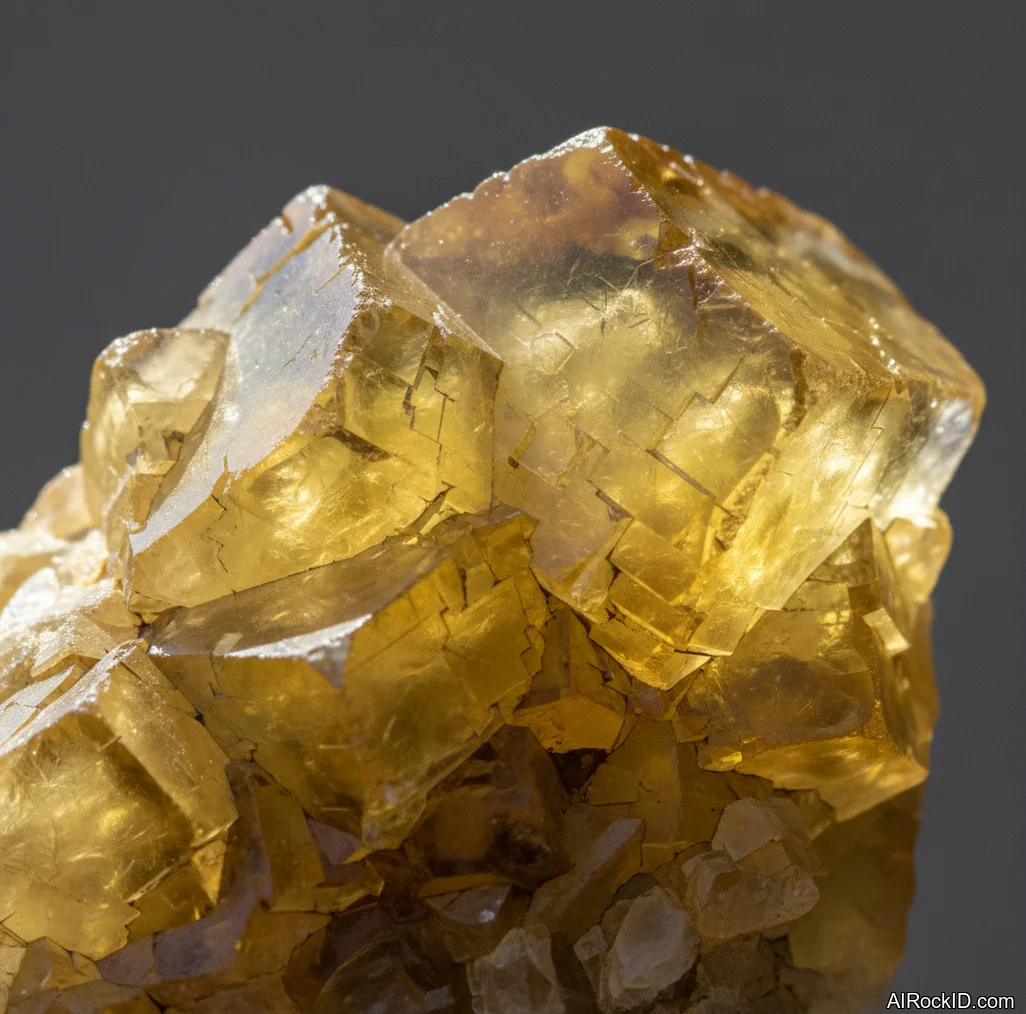
Look, if you stare at a fresh broken face under decent light, you can sometimes track the growth like rings. Clearer honey-colored zones, then cloudy bands, then a paler patch where the fluid chemistry shifted (it’s subtle, but it’s there). And because calcite has perfect rhombohedral cleavage, it naturally snaps into those slanted, blocky chunks when it gets knocked. That isn’t shipping damage. That’s just calcite being calcite.
How to Identify Amber Calcite
Color: Amber Calcite ranges from pale honey and butterscotch to deeper golden yellow, sometimes with creamy white banding or cloudy internal veils. Color can be patchy, and that unevenness is pretty normal.
Luster: Luster is vitreous to pearly, especially on fresh cleavage faces.
If you scratch it with a copper coin, it’ll usually mark. If you try the same thing on quartz or glassy citrine, you won’t get that easy scratch. The real test is cleavage: break or chip a small corner and you’ll see flat planes rather than a curved conchoidal break. And here’s a shop trick: hold a thinner piece over text. Calcite often shows doubling from strong birefringence, even if it’s subtle in amber-colored material.
Properties of Amber Calcite
Physical Properties
| Crystal System | Trigonal |
| Hardness (Mohs) | 3 (Soft (2-4)) |
| Density | 2.71 g/cm3 |
| Luster | Vitreous |
| Diaphaneity | Transparent to translucent |
| Fracture | Uneven |
| Streak | White |
| Magnetism | Non-magnetic |
| Colors | Honey yellow, Golden yellow, Amber orange, Cream, White |
Chemical Properties
| Classification | Carbonates |
| Formula | CaCO3 |
| Elements | Ca, C, O |
| Common Impurities | Fe, Mn, Mg |
Optical Properties
| Refractive Index | 1.486-1.658 |
| Birefringence | 0.172 |
| Pleochroism | None |
| Optical Character | Uniaxial |
Amber Calcite Health & Safety
Amber Calcite is usually fine to pick up and it isn’t toxic. The only real “risk” is the hands-on stuff: it marks up fast (those little scratches show up right away), it can chip if you knock it on something hard, and even mild acids will etch the surface.
Safety Tips
Keep it away from vinegar, citrus cleaners, and any acid-based products. And don’t just chuck it loose in your pocket with your keys, unless you’re fine with it coming out scuffed up.
Amber Calcite Value & Price
Price Range
Rough/Tumbled: $5 - $60 per piece (tumbles to hand-sized chunks)
Cut/Polished: $1 - $8 per carat (cabochons); faceting uncommon
Price mostly comes down to clarity, color saturation, and how clean those cleavage faces look up close. The big display chunks with barely any bruising always run higher, because calcite will chip if you so much as breathe on a sharp edge (seriously, just setting it down on a gritty tabletop can do it).
Durability
Nondurable — Scratch resistance: Poor, Toughness: Fair
Stable in normal room conditions, but it scratches easily and can dull or etch with acids and some cleaners.
How to Care for Amber Calcite
Use & Storage
Store it in a soft pouch or a separate compartment so harder stones don’t scuff it up. If you stack calcite pieces, the edges will bruise and you’ll see little white impact marks.
Cleaning
1) Rinse quickly with lukewarm water and a drop of mild soap. 2) Wipe with a soft cloth or a very soft brush, no gritty towels. 3) Pat dry right away and skip soaking if the piece has cracks or seams.
Cleanse & Charge
For a non-water method, I use smoke, sound, or just resting it on a dry selenite plate. Sunlight is fine for short periods, but I don’t leave calcite baking on a windowsill for days.
Placement
Put it somewhere it won’t get bumped, like a shelf, a tray, or next to a lamp where the color reads warm. On a work desk, keep it off the direct “keyboard zone” unless you like little scratches.
Caution
Don’t use acid-based cleaners on this. Calcite will react, and you’ll end up with a hazy polish (that cloudy film you can see when you tilt it under a lamp). And skip ultrasonic cleaners and steam, too. Thing is, you can’t treat it like quartz in a ring setting.
Works Well With
Amber Calcite Meaning & Healing Properties
Most dealers will sell Amber Calcite as a “sunny” stone, and yeah, I see it. The color does that to you. When I’m sorting flats at a show, the honey-toned pieces are the ones I keep grabbing without even thinking, because the light inside them looks like it’s shifting as you tilt them.
If you’re into metaphysical use, people link yellow calcites with confidence, motivation, and clearing mental clutter. In my own routine, I treat it like a “get moving” stone, not a “deep trance” stone. It’s the one I’ll park next to a notebook when I’m trying to muscle through some boring task, but I’m not going to pretend it replaces sleep, therapy, or a doctor. It won’t.
But here’s the catch: calcite is soft. So if you want a pocket stone for daily stress, this one gets roughed up fast, and once it starts chipping, it literally feels different in your hand. I’ve retired more than one tumbled Amber Calcite because after a couple months of carry the edges went sharp and chalky (you know that dry, dusty feel?). As a shelf piece, though, it keeps that warm look for a long time.
Identify Any Crystal Instantly
Snap a photo and get properties, value, care instructions, and healing meanings in seconds.