Ametrine
What Is Ametrine?
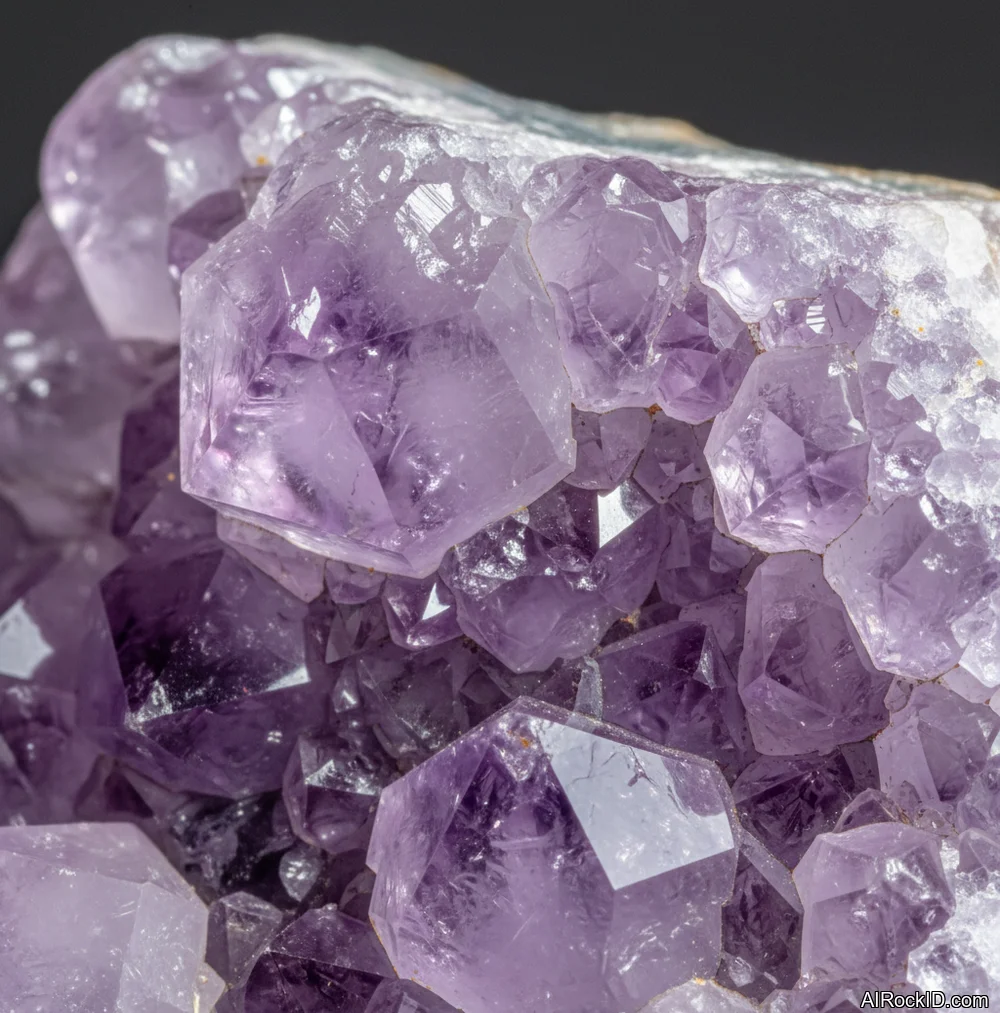
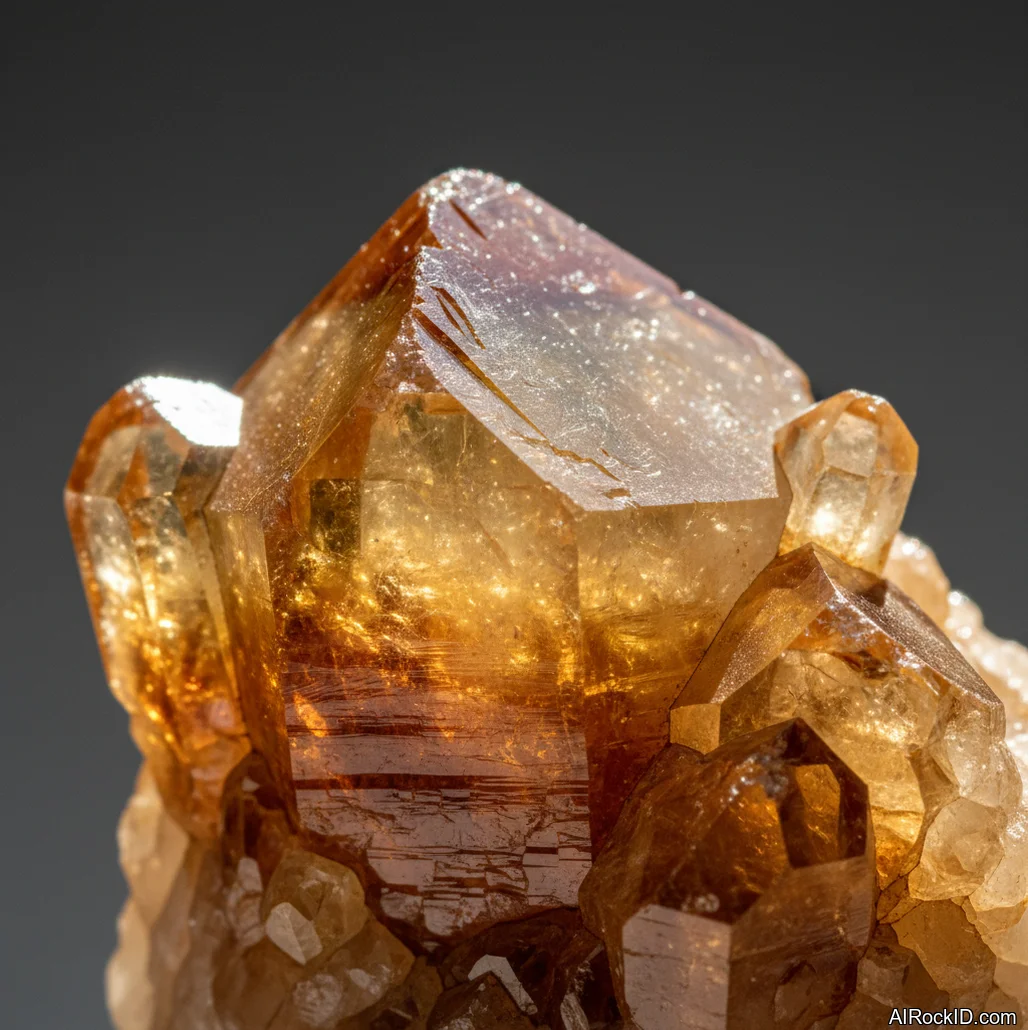
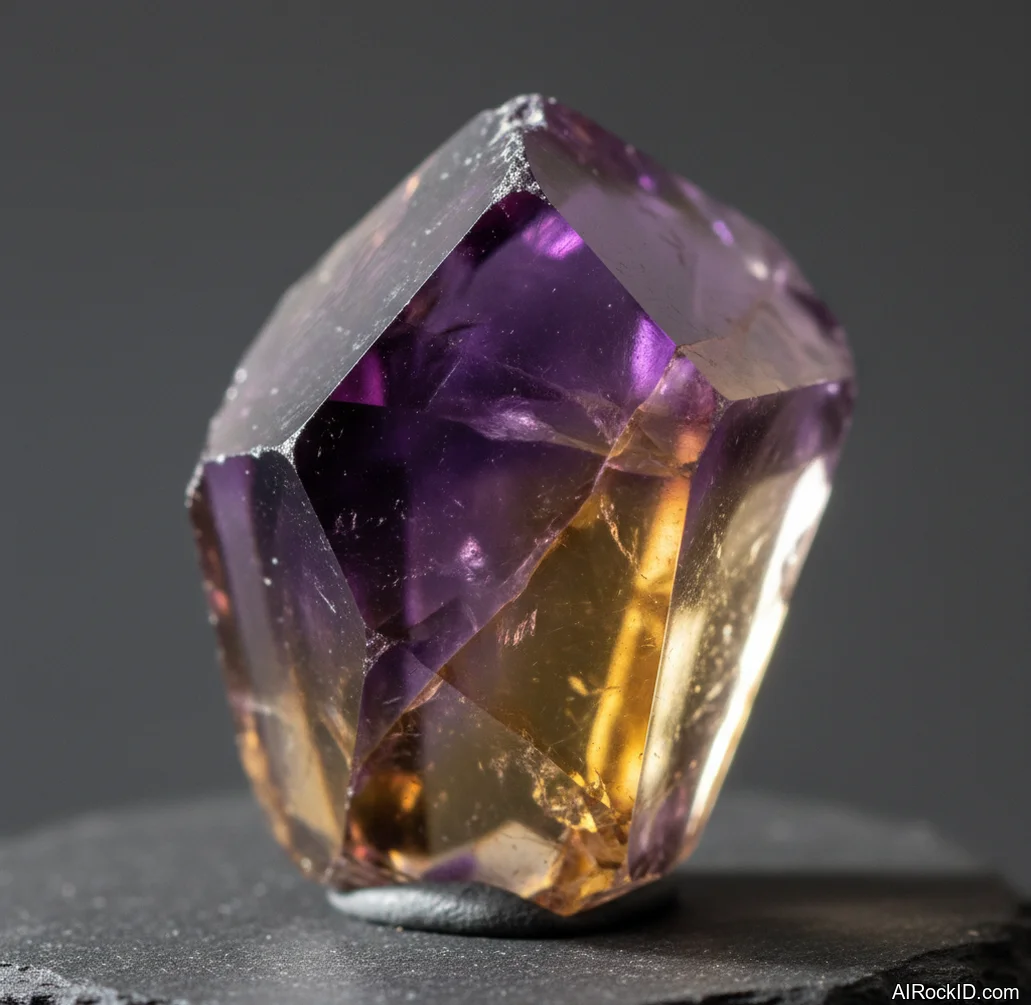
Ametrine is quartz that naturally grows in color zones, so you get amethyst purple and citrine yellow sitting in the same crystal. The first time you see it, it honestly looks like someone glued two different stones together. But turn a decent piece under a lamp and you’ll notice the dividing line doesn’t “float” around on the surface, it stays locked into the crystal’s internal growth zones.
Grab a faceted ametrine and you feel that familiar quartz hardness with that slick, glassy polish, basically the same hand-feel you get from amethyst. It’s not got that heavier, denser feel tourmaline can have. It’s the medium, straightforward quartz weight. And if the cutter nailed it, the purple and gold don’t smear into a weird muddy middle. They separate cleanly, sometimes as a wedge that tracks the crystal’s geometry (you can kind of see the intent when you tilt it back and forth).
But here’s the catch. A lot of what’s sold as ametrine is heated or irradiated quartz where the color’s been pushed around. Natural zoning usually looks a little uneven, like it actually grew that way, with the yellow leaning more champagne and the purple sitting in the lavender to medium violet range instead of that cartoon-grape color.
Origin & History
Most collectors will point you back to Bolivia for ametrine, and almost always to the Anahí mine. At shows, you’ll hear the same legend over and over: a Spanish conquistador, a princess named Anahí, and a gift that’s supposed to explain the stone. Fun story. But the nuts-and-bolts truth is that commercial quantities with that crisp two-tone look mostly hit the market from that Bolivian deposit in the 20th century.
The name’s as straightforward as it gets: amethyst plus citrine. You’ll also spot “bolivianite” on tags, usually when a dealer wants it to sound like its own separate gem, but it’s quartz either way. When I first started noticing it showing up regularly on tables, it was usually big, bright faceted stones sitting in those shallow plastic display trays that get scuffed up and cloudy at the corners, because clean natural crystals are tougher to find than cut material. Harder to come by.
Where Is Ametrine Found?
Commercial natural ametrine is strongly associated with Bolivia’s Anahí mine, with smaller occurrences reported from a few other quartz-producing regions.
Formation
Look at that sharp line where the color flips and you’re seeing chemistry locked in place, like someone hit pause mid-growth. Ametrine grows in quartz veins and little pockets where iron is around, and the conditions while it’s forming change just enough that one section turns amethyst-purple and another section turns citrine-yellow.
The purple zone comes from iron plus radiation-related color centers inside the quartz. But the yellow zone shows up when the temperature and oxidation conditions shift. So in plain terms, one crystal can grow through a “purple phase” and later switch into a “yellow phase” as the fluids move, the heat changes, and the redox environment drifts.
And quartz is trigonal, so the color zoning often follows the crystal faces and growth sectors. That’s why the best specimens don’t look like a messy tie-dye job (you’ve probably seen those). They look planned. Almost too neat, right?
How to Identify Ametrine
Color: Ametrine shows natural zoning of purple (amethyst) and yellow to golden (citrine) within one quartz crystal, often with a fairly sharp boundary. Colors can be pastel to medium saturation, with the yellow commonly leaning champagne rather than neon.
Luster: Vitreous, like other clean quartz.
Pick up a stone and tilt it under a single point light. Natural ametrine usually has zoning that stays consistent with the internal growth pattern, while treated material can look too even or “painted” across the whole stone. The real test is a loupe: look for subtle growth lines and tiny internal features crossing the color boundary in a way that makes sense, instead of a perfectly uniform split with no internal texture.
Properties of Ametrine
Physical Properties
| Crystal System | Trigonal |
| Hardness (Mohs) | 7 (Hard (6-7.5)) |
| Density | 2.65 g/cm3 |
| Luster | Vitreous |
| Diaphaneity | Transparent to translucent |
| Fracture | Conchoidal |
| Streak | White |
| Magnetism | Non-magnetic |
| Colors | Purple, Violet, Yellow, Golden, Champagne, Colorless |
Chemical Properties
| Classification | Silicates |
| Formula | SiO2 |
| Elements | Si, O |
| Common Impurities | Fe |
Optical Properties
| Refractive Index | 1.544-1.553 |
| Birefringence | 0.009 |
| Pleochroism | Weak |
| Optical Character | Uniaxial |
Ametrine Health & Safety
Ametrine is a non-toxic quartz, so it’s safe to handle for normal use. But if you’re grinding, carving, or sanding it, don’t breathe in the dust. That fine powder gets in your nose fast (and you’ll taste it), so take basic precautions.
Safety Tips
If you’re going to cut or drill, put on a real respirator (the kind that seals around your nose and cheeks, not a floppy dust mask). And keep things wet with a little water so the dust doesn’t go airborne.
Ametrine Value & Price
Price Range
Rough/Tumbled: $5 - $60 per tumbled stone; $20 - $250+ for small display specimens
Cut/Polished: $10 - $80 per carat (commercial); $80 - $250+ per carat (fine color, clean, well-cut)
Price mostly comes down to how clean the stone is, how crisp that purple to yellow split looks, and if the cutter actually lined up the zoning so it reads clearly when you look straight down at the face. The natural rough that’s nicely zoned gets priced higher, because a ton of rough comes out patchy, washed-out, or just too pale to make a good cut.
Durability
Durable — Scratch resistance: Excellent, Toughness: Good
It’s stable like most quartz, but prolonged heat and strong sunlight can nudge colors over time, especially in lighter material.
How to Care for Ametrine
Use & Storage
Keep it in a pouch or a lined box so it doesn’t get scuffed by harder stuff like topaz or loose corundum in the same tray. And don’t park it in direct sun on a windowsill for months if you care about keeping the color crisp.
Cleaning
1) Rinse with lukewarm water and a drop of mild soap. 2) Use a soft toothbrush to get into crevices or behind settings. 3) Rinse well and pat dry with a microfiber cloth.
Cleanse & Charge
Running water is fine for a quick reset, and moonlight is a safe option if you like leaving stones out overnight. I skip prolonged sun for ametrine because some pieces lighten.
Placement
On a desk it’s great because the zoning reads clearly in indoor light. In a display case, put it where a single spot light can hit it from an angle so the split shows.
Caution
Skip steam cleaners and ultrasonic cleaners if the piece has any stones set in it, and keep it away from the high heat you get during jewelry repair work. Quartz is fine for everyday wear, sure, but one sharp smack (like when it clips a countertop) can still chip the edge of a facet.
Works Well With
Ametrine Meaning & Healing Properties
Next to plain amethyst or plain citrine, ametrine honestly feels like a “two-channel” stone when you’re holding it. That’s not science. It’s just the vibe most of us get after you’ve had one rolling around in your hand for a while. The purple side usually comes off quieter, more inward. The yellow side feels brighter, kind of awake. Set a palm stone on the table and your eyes ping back and forth between the zones, especially if the overhead light catches that faint sheen on the polished face. Hard not to stare.
Thing is, metaphysical talk gets weird fast, because people slide from “this helps me focus” into medical promises. And that’s where it turns into a mess. In my own use, ametrine works best as a physical reminder tool. I’ll park one right by my notebook when I’m trying to split time between creative work and boring admin, and you can feel that cool, smooth weight when you pick it up again. Touch the stone, notice the boundary line, choose the next task. That’s it.
Look, if you stare at where the colors meet, it can work as a meditation anchor, kind of like watching your breath. Some pieces have this crisp diagonal split that looks almost graphic, and it’s weirdly easy to hold your attention on it for a few minutes. But if what you really want is deep purple for “calming,” a straight-up Uruguayan amethyst will usually hit harder. Ametrine’s charm is the contrast. And the fact that it’s real geology, not a dye job, when you get a good one (you can usually tell when the transition isn’t muddy).
Identify Any Crystal Instantly
Snap a photo and get properties, value, care instructions, and healing meanings in seconds.