Anapaite
What Is Anapaite?
Anapaite is a rare hydrated calcium iron phosphate mineral with the formula Ca2Fe(PO4)2·4H2O.
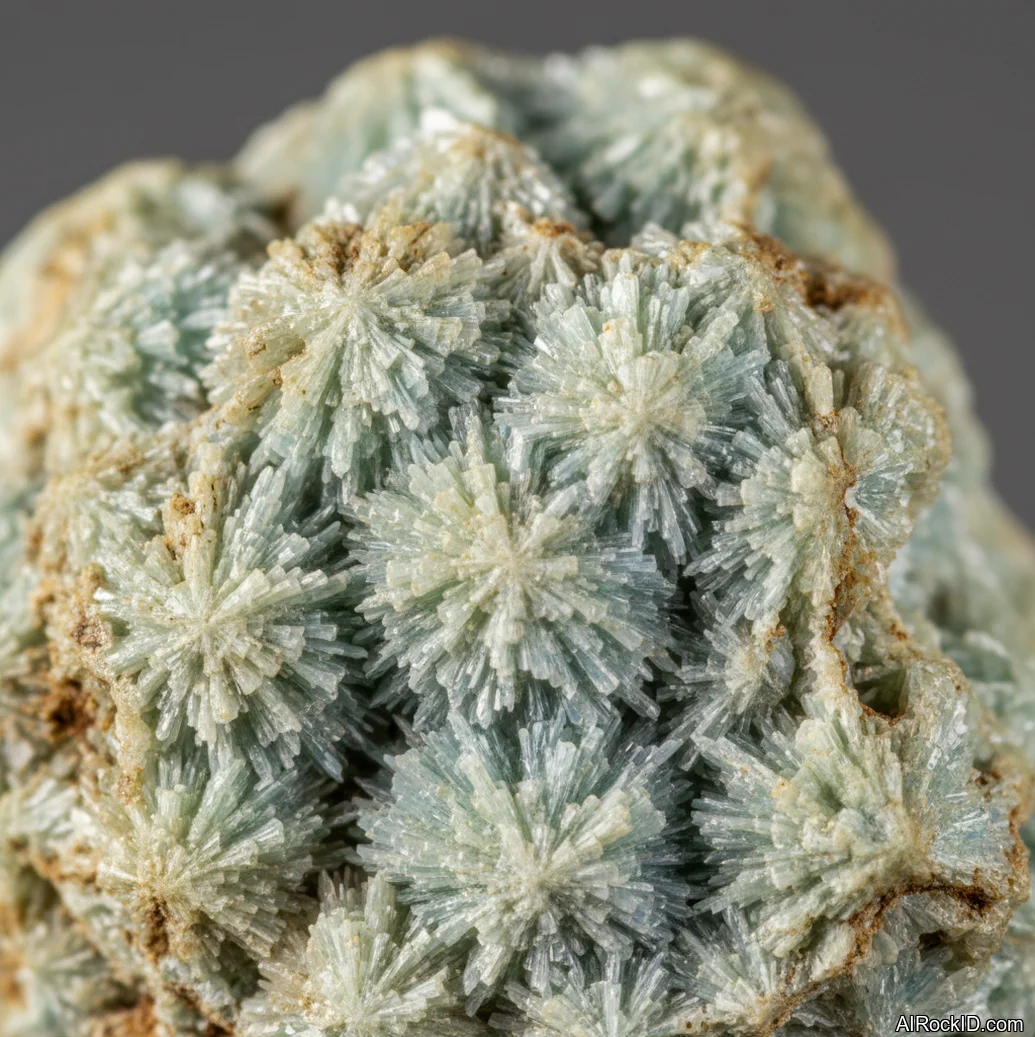
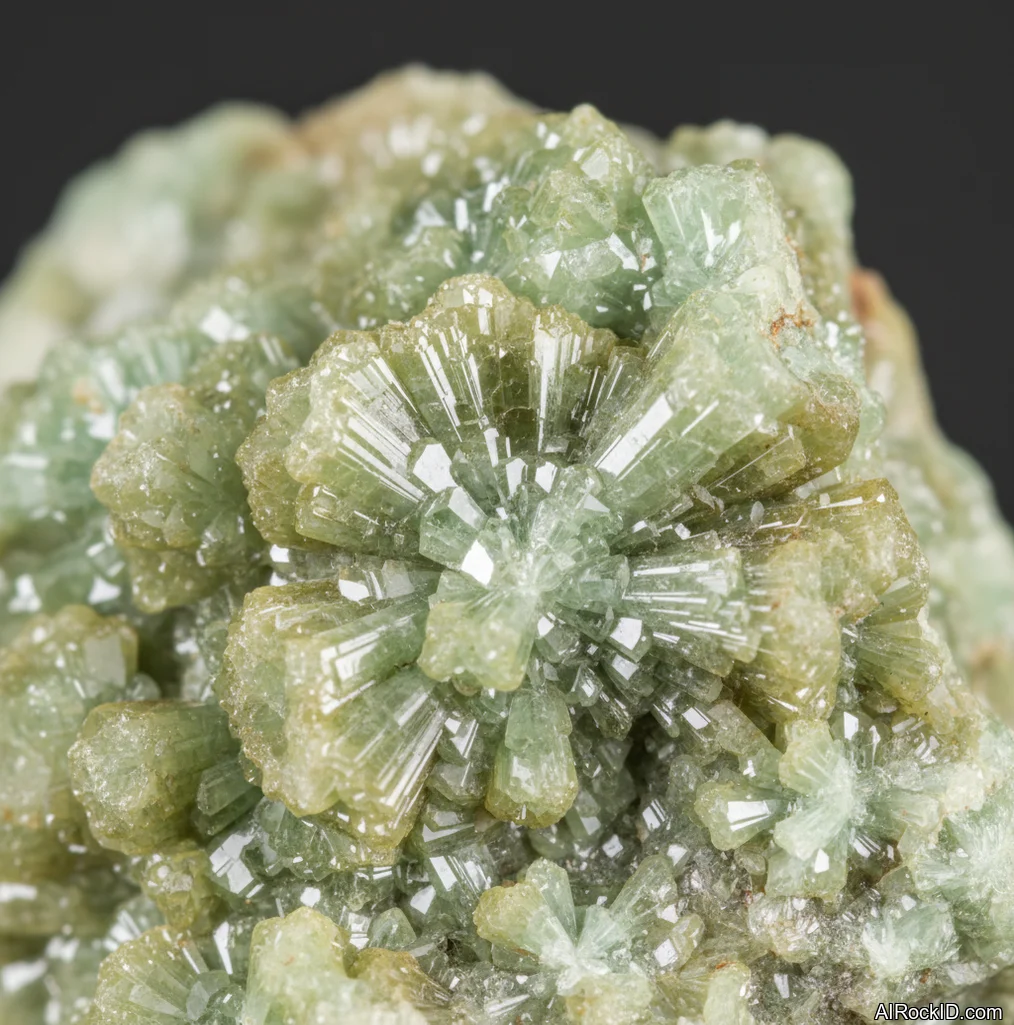
First time you see it, it honestly looks like a dusting of mint-green sugar glued onto a rock. But tip it under a lamp and the crystal faces flash back at you with this crisp, glassy shine, the kind that screams “yeah, that’s legit” instead of dyed or painted. If you pick a piece up, it doesn’t feel particularly heavy for its size, and the crystals have this fragile, almost crumbly vibe (I wouldn’t go scraping them with a fingernail unless you like regrets).
Most specimens I’ve handled are small clusters or thin crusts, not big, dramatic single crystals. And that’s okay. The whole point with anapaite is the color and the little jolt of surprise when you realize it’s naturally green and it’s a phosphate, not just some coppery stain on the matrix. People breeze past it at a show all the time. Then you point it out, and they do the double take.
Origin & History
Anapaite got its first formal description in 1906, based on material collected near Anapa on Russia’s Black Sea coast. The name is literally just the place name, the kind of mineral label that quietly points back to the map if you catch it.
It’s never really been a “jewelry” stone, and you don’t run into it in older lapidary books the way you do quartz or garnet. Thing is, its value is mostly for collectors and for science: it’s a hydrated calcium iron phosphate that forms at low temperatures, and it can show up right alongside fossils or in organic-rich sediments.
Where Is Anapaite Found?
It turns up in a handful of sedimentary and low-temperature phosphate environments worldwide, but good display pieces are sporadic and very locality-dependent.
Formation
Look, if you really pay attention to where anapaite turns up, a pretty clear pattern pops out: wet chemistry, phosphate-heavy fluids, and enough iron and calcium around to actually build the stuff. It’s a hydrated mineral, so it isn’t forming in some blazing-hot environment. Low temperatures are the norm. Think sedimentary rocks, phosphorite settings, or anywhere phosphate solutions can seep through cracks and pores, then react once they hit the right ingredients.
But compared to the “hot” minerals that grow in veins or pegmatites, anapaite comes off like the result of slow, stubborn groundwater doing its thing for ages. You don’t usually get big showy pieces. More like thin crusts in a little cavity, plus tiny bladed crystals that look a bit like brittle needles when you catch them in the light. And because there’s water in its structure, it can be kind of touchy about heat and also about being kept bone-dry for years. Why risk it?
How to Identify Anapaite
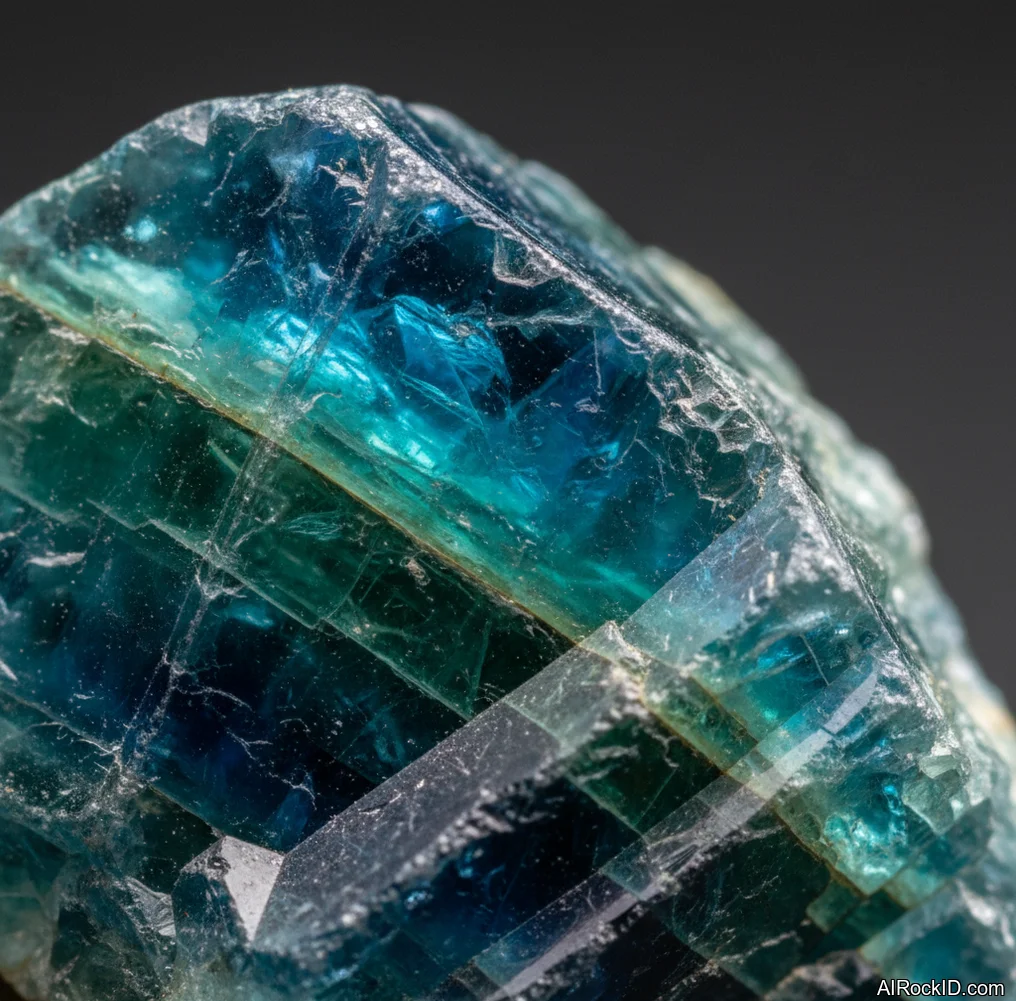
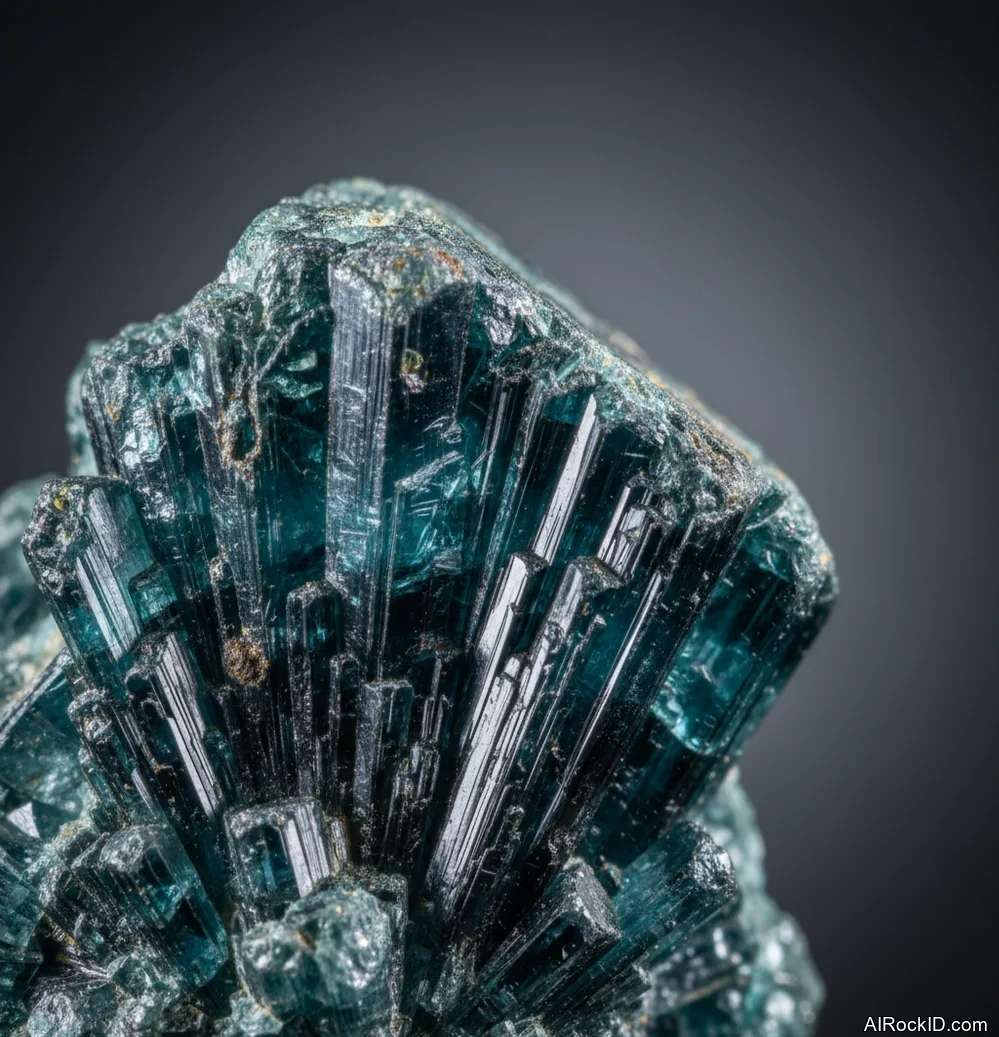
Color: Usually pale green to yellow-green, sometimes with a slightly bluish mint tone. The green is typically even, not banded, and it can look softer than the brighter greens of copper minerals.
Luster: Vitreous on clean crystal faces, sometimes slightly pearly on aggregates.
Pick up a piece and use a hand lens. Anapaite often shows small bladed to tabular crystals in tight clusters rather than fibrous sprays. If you scratch it with a copper penny, it can mark, and that softness is a big clue when people confuse it with harder green silicates. The real test is to compare it next to apatite: anapaite’s green can be similar, but apatite feels tougher and won’t give up to a scratch as easily.
Properties of Anapaite
Physical Properties
| Crystal System | Triclinic |
| Hardness (Mohs) | 3.5 (Soft (2-4)) |
| Density | 2.70 - 2.80 g/cm3 |
| Luster | Vitreous |
| Diaphaneity | Transparent to translucent |
| Fracture | Uneven |
| Streak | White |
| Magnetism | Non-magnetic |
| Colors | Pale green, Yellow-green, Mint green, Greenish white |
Chemical Properties
| Classification | Phosphates |
| Formula | Ca2Fe(PO4)2·4H2O |
| Elements | Ca, Fe, P, O, H |
| Common Impurities | Mn, Mg |
Optical Properties
| Refractive Index | 1.60 - 1.64 |
| Birefringence | 0.030 |
| Pleochroism | Weak |
| Optical Character | Biaxial |
Anapaite Health & Safety
Normal specimen handling is pretty low risk. But don’t grind or sand any phosphate mineral unless you’ve got proper dust control in place, because that fine powder gets everywhere (your clothes, the bench, even up your nose).
Safety Tips
Wash your hands after you’ve handled the specimens (I usually do it right after I brush the dust off my fingers). And keep them out of reach of kids who might shove a rock in their mouth and start chewing on it. If you ever cut or grind minerals, don’t do it in a closed-up room. Use proper ventilation and wear a respirator.
Anapaite Value & Price
Price Range
Rough/Tumbled: $40 - $300 per specimen
Prices jump fast when the crystals are clean and glassy, with good color sitting on a stable matrix. Thing is, most dealers treat it like a niche collector phosphate when they price it. Size matters, sure. But crystal quality matters more.
Durability
Fragile — Scratch resistance: Poor, Toughness: Fair
It’s a soft, hydrated mineral, so it can be damaged by abrasion and may not love heat or very dry, hot display conditions.
How to Care for Anapaite
Use & Storage
Store it in a perky box or a cabinet spot where it won’t rub against harder minerals. I keep mine away from quartz points for the same reason you don’t toss a soft fossil in a pocket with coins.
Cleaning
1) Use a soft, dry brush or a puff of air to remove loose dust. 2) If it needs more, rinse quickly in cool water and pat dry, no soaking. 3) Let it finish air-drying out of direct sun before putting it back in a closed box.
Cleanse & Charge
If you do the metaphysical routine, keep it gentle: smoke, sound, or a short moonlight sit works. Skip salt and skip long water baths since it’s soft and hydrated.
Placement
Best on a stable shelf where it won’t get bumped, with light that shows the glassy faces. Avoid a sunny windowsill if your room gets hot in the afternoon.
Caution
Don’t use an ultrasonic cleaner or a steam cleaner on this. And skip the dryer, too, no tumbling. When you put it away, don’t just toss the pieces together where the crystals can rub and scrape against each other (you’ll hear that awful gritty scuffing if they do).
Works Well With
Anapaite Meaning & Healing Properties
Most folks who buy anapaite for “energy” things are responding to the color first. That washed-out, pale green just looks calm. In my own cabinet, it’s one of the only green minerals that feels quiet instead of loud, probably because it isn’t that flashy coppery green that practically yells at you.
If you’re working with it in a personal practice, I’d think of it as a support stone for cooling down emotional static and getting back to baseline. Not some miracle fix. More like that moment you step outside after being stuck in a noisy room too long and your shoulders drop without you even noticing. And when you actually pick up a specimen, it stays cool in your hand for a bit, that slightly chilly, smooth feel against your palm, and honestly that simple physical sensation is part of why people keep reaching for it.
But stay grounded: anapaite is a mineral specimen, not a medical tool. If someone’s trying to sell it as a cure for anything, that’s your cue to back away. What it can do is give you a small, real object to focus on. And the fact that it’s a phosphate that formed in watery, low-temperature settings is a nice mental hook (if you’re the type who likes symbolism that’s tied to actual geology).
Identify Any Crystal Instantly
Snap a photo and get properties, value, care instructions, and healing meanings in seconds.