Vivianite
What Is Vivianite?
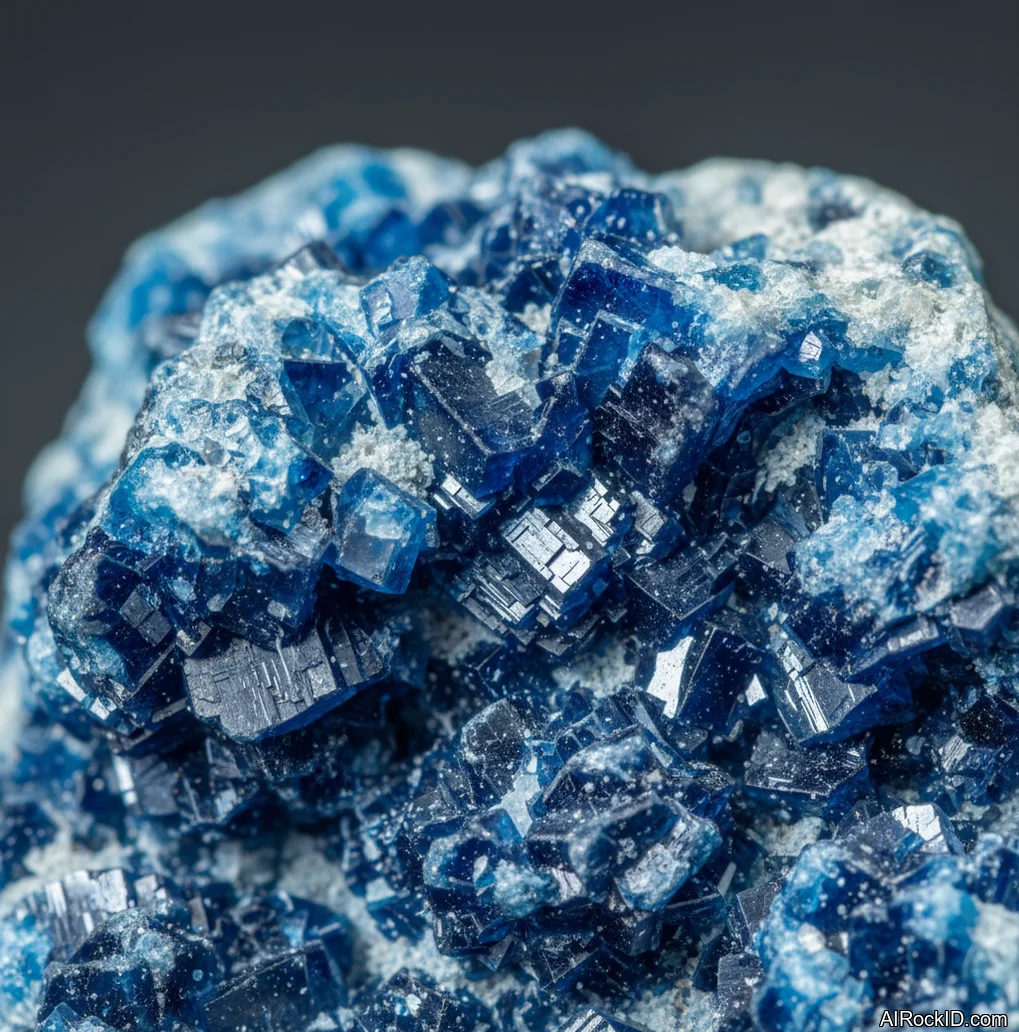
Vivianite is a hydrated iron phosphate mineral, Fe3(PO4)2·8H2O. When it’s freshly broken it can look pretty plain, sort of pale green or gray-green, and then it does its party trick. Leave it out in air and light and the color sinks into that inky blue-green collectors are always hunting for.
Grab a chunk and you feel it immediately. It’s iron-rich, so even a modest cabinet piece has that unexpected weight in your palm, especially if you’re used to something like calcite at the same size. If you tilt it under a lamp you’ll catch a glassy flash on the crystal faces, but it’s soft stuff, so the gloss gets rubbed up quick if it’s been sliding around in a dealer flat (you can see the little scuffs along the edges).
Thing is, the color you buy isn’t always the color you keep. I’ve picked up “green” vivianite that slowly shifted bluer over a couple months sitting in a display case, and I’ve also watched nice blue plates fade and bruise after they spent too long under hot shop lights. Dramatic, right?
Origin & History
Most labels peg the name to 1817, when Abraham Gottlob Werner described vivianite and named it after John Henry Vivian, an English mineral collector. In older European collections, you’ll sometimes see it tucked under those early phosphate names (the kind written in fading ink on a little paper tag), but “vivianite” stuck since it’s clean and specific.
Historically, it turns up in a strange grab bag of spots: bog iron deposits, clay beds, and archaeological sites too. Conservators run into vivianite as a blue staining mineral on old bones and artifacts, and once you’ve seen that blue-green smear, it’s hard to forget. So what does that tell you? Basically, it lines up with the chemistry and how easily it forms when iron and phosphate meet in wet, low-oxygen conditions.
Where Is Vivianite Found?
Vivianite shows up in low-oxygen, iron-rich settings and also in some ore deposits. Collector-grade crystals most often come from a handful of classic European localities and a few standout mines in South America.
Formation
Vivianite usually shows up in places where groundwater is quietly doing its thing, slowly, in the dark. Think bogs, peat, clay layers, or iron-rich sediments where there just isn’t much oxygen around. In that kind of low-oxygen muck, iron can move around, phosphate gets supplied by decaying organic material or nearby rocks, and then vivianite starts forming as nodules, earthy masses, or those sharp, clean crystals.
And in mining districts, you’ll run into it in hydrothermal or secondary zones too, sometimes tucked back in little cavities alongside other phosphates and sulfides (the kind of tight pocket you only notice when you crack the rock just right). But here’s the annoying part: it doesn’t stay “fresh” once it’s exposed. A crystal that formed pale can turn blue-black later, so you have to separate how it actually formed underground from what happened after it got dug up.
How to Identify Vivianite
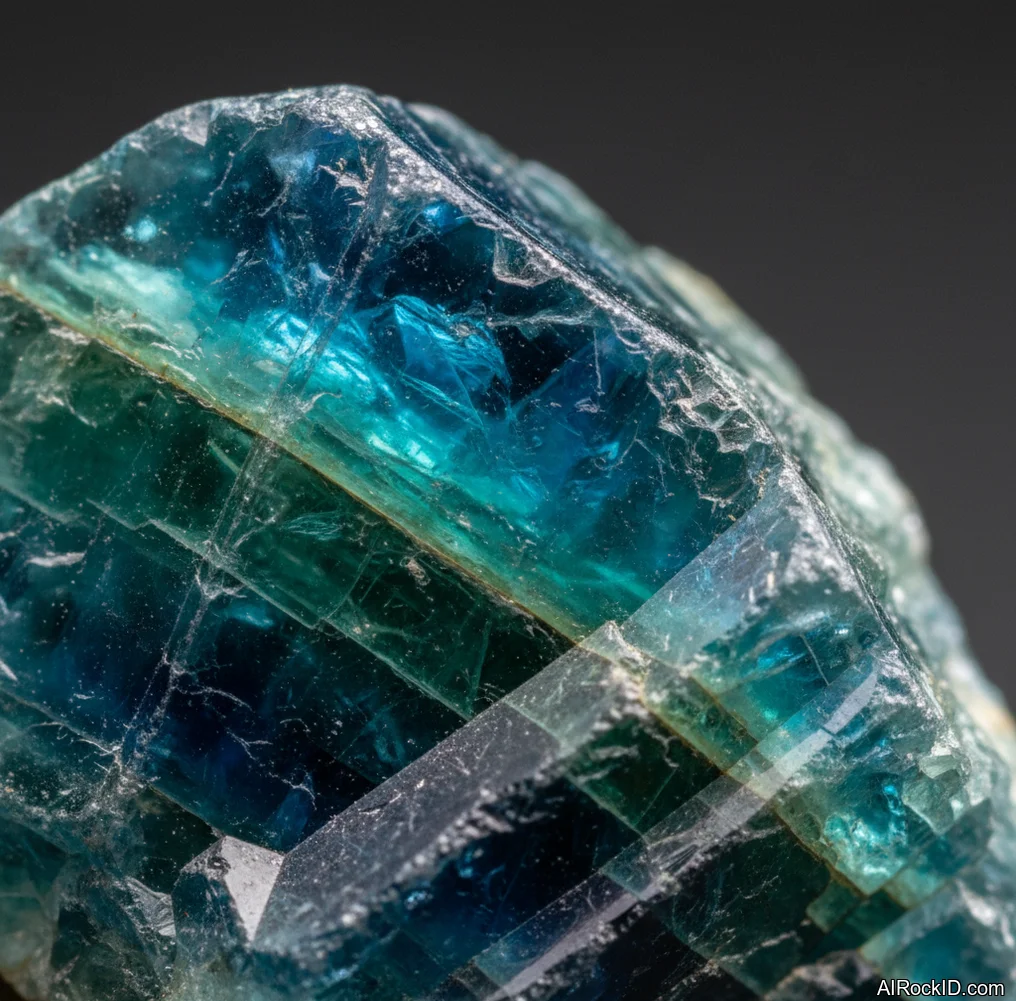
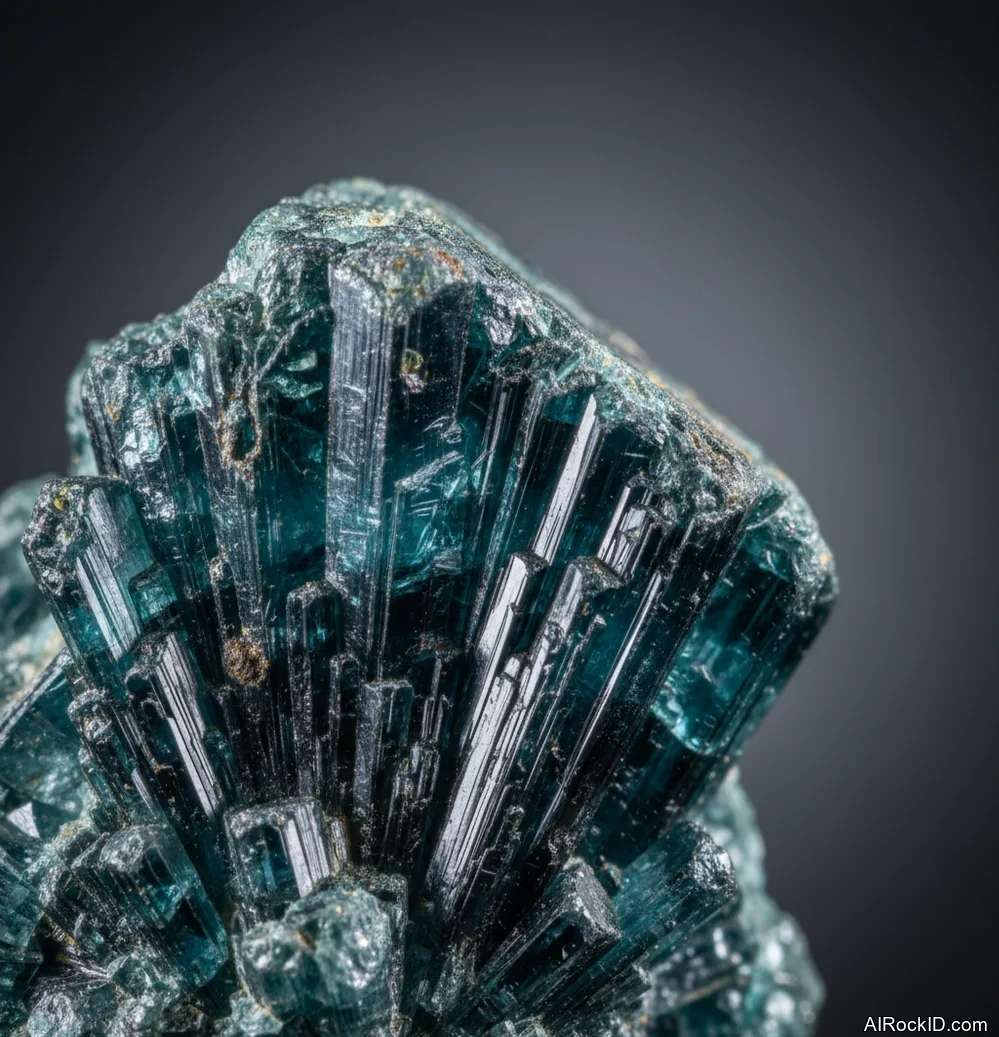
Color: Color ranges from colorless to pale green when fresh, commonly shifting to blue-green, deep blue, or blue-black with oxidation and light exposure. Some pieces show color zoning, like green cores with blue rims.
Luster: Vitreous to pearly on good crystal faces, often duller on cleaved or altered surfaces.
Look closely for that “ink stain” blue-green that seems to sit just under the surface, especially along cracks and edges where oxidation hits first. If you scratch it with a copper coin, it’ll usually mark because it’s soft. And in-hand, real vivianite often feels colder and heavier than you’d guess from the color, but don’t rub it hard since fingerprints and grit can haze the faces fast.
Properties of Vivianite
Physical Properties
| Crystal System | Monoclinic |
| Hardness (Mohs) | 1.5-2 (Very Soft (1-2)) |
| Density | 2.66-2.68 g/cm3 |
| Luster | Vitreous |
| Diaphaneity | Transparent to translucent |
| Fracture | Uneven |
| Streak | white to pale bluish white |
| Magnetism | Non-magnetic |
| Colors | colorless, pale green, green, blue-green, deep blue, blue-black |
Chemical Properties
| Classification | Phosphates |
| Formula | Fe3(PO4)2·8H2O |
| Elements | Fe, P, O, H |
| Common Impurities | Mn, Mg, Ca |
Optical Properties
| Refractive Index | 1.579-1.633 |
| Birefringence | 0.054 |
| Pleochroism | Strong |
| Optical Character | Biaxial |
Vivianite Health & Safety
Normal handling’s fine. Just treat it like any soft mineral, and don’t do anything that kicks up dust (scraping it with a dry cloth, brushing it hard, that sort of thing). The bigger “risk” for most collectors isn’t safety, it’s looks: light can fade it, and fingerprints leave those oily smudges you only notice once you tilt it under a lamp.
Safety Tips
Wash your hands after you’ve handled it, and don’t set it down anywhere near where you’re prepping food. If a piece feels crumbly (like it’s shedding grit when you pick it up), don’t brush it off or scrape it while it’s dry. Just use a couple light puffs of air or a soft, clean makeup brush.
Vivianite Value & Price
Price Range
Rough/Tumbled: $20 - $800 per specimen
Cut/Polished: $30 - $200 per carat
Prices can jump all over the place depending on color, crystal size, and how clean the faces are. The really blue plates are jaw-dropping, sure. But the pieces that are stable (no wobble on the matrix), not dinged up, and properly documented from a classic locality are the ones that actually bring the serious money.
Durability
Fragile — Scratch resistance: Poor, Toughness: Poor
Vivianite can darken, fade, or develop surface damage with light, heat, and handling, so long-term display takes a little discipline.
How to Care for Vivianite
Use & Storage
Store vivianite in a padded box or a perky/flat with foam so it can’t slide around. I keep my best ones in the dark most of the time, then bring them out for short show-and-tell sessions.
Cleaning
1) Blow off loose dust with a bulb blower or gentle canned air held far back. 2) If needed, use a very soft brush with light strokes, no pressure. 3) Avoid ultrasonic cleaners, steam, and scrubbing; pat dry if it ever gets damp.
Cleanse & Charge
If you do energy-style cleansing, stick to smoke, sound, or a quick pass over selenite. Skip long sun baths since light can shift the color and dull faces over time.
Placement
Low light is your friend. A shaded shelf or a cabinet with indirect LEDs keeps it looking good longer than a sunny windowsill.
Caution
Super soft, and it’ll scratch if you so much as look at it wrong. So skip wearing it next to jewelry, don’t toss it in a pocket, and keep the rough handling to a minimum (keys and grit are brutal). And try not to leave it under strong light or near heat, since that can mess with the color and dry out the surface.
Works Well With
Vivianite Meaning & Healing Properties
People don’t walk into my shop asking for vivianite because they want some cheesy “love stone.” They’re usually after something quieter. Something turned inward.
In my own stash, vivianite is what I reach for when my brain’s running hot. Not to hype myself up. More to slow down, crack open a notebook, and actually take decent notes.
Grab a clean plate of it and the first thing you notice is the temperature. It stays steady and cool in your hand, almost like it’s been sitting on a windowsill in the shade. That’s not magic, it’s just the mineral being dense and holding onto that coolness, but honestly the vibe people describe matches the physical feel pretty well. And I’ve found it pairs really nicely with journaling and studying because it doesn’t have that buzzy, caffeinated energy some stones give off. It’s more like, sit down. Focus. Tell yourself the truth (even if it’s annoying).
But I’m not going to act like it’s medicine. If someone’s dealing with serious anxiety, sleep issues, or anything medical, that’s a doctor conversation, full stop. For me, vivianite is a personal anchor for reflection: short sessions, low light, and a lot of respect for how fragile the stuff is. Seriously. You can feel how easy it would be to mess up the surface just handling it too roughly.
Identify Any Crystal Instantly
Snap a photo and get properties, value, care instructions, and healing meanings in seconds.