Chinese Bladed Calcite
What Is Chinese Bladed Calcite?
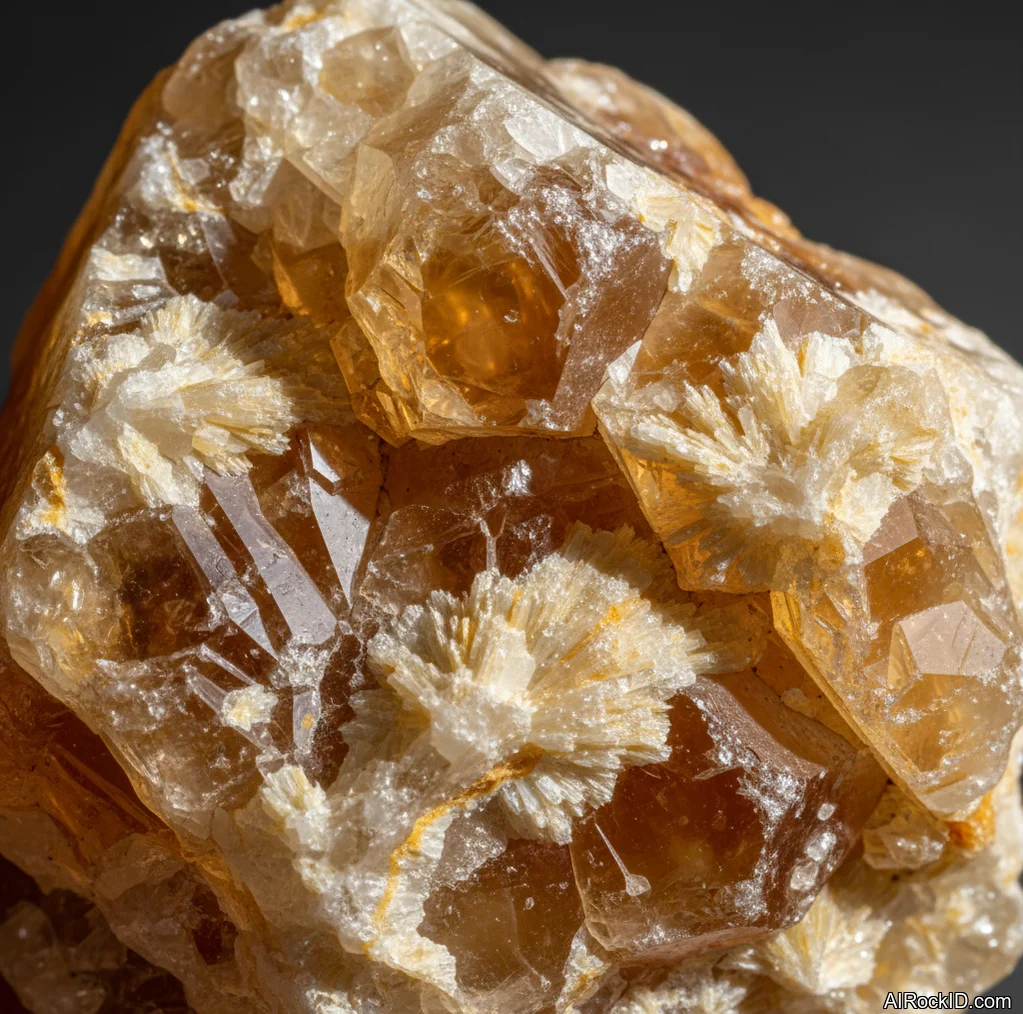
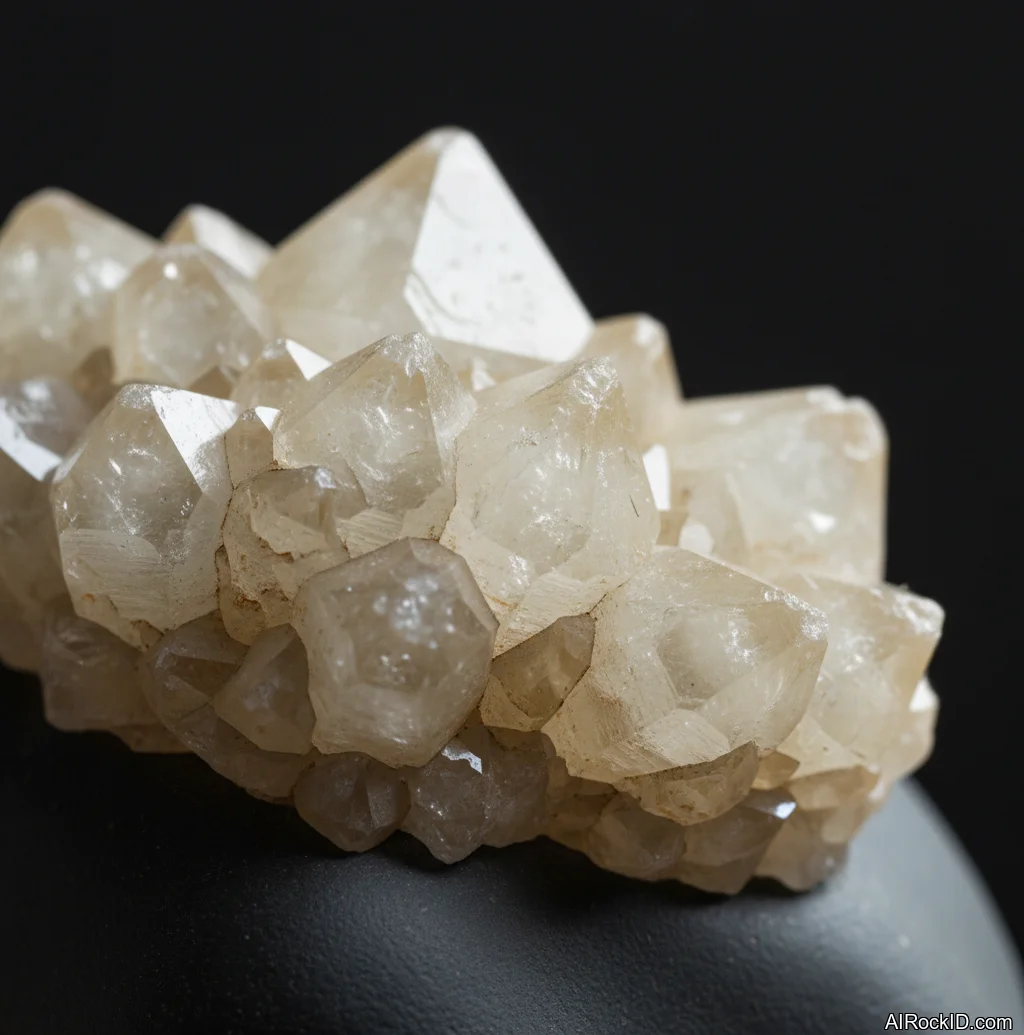
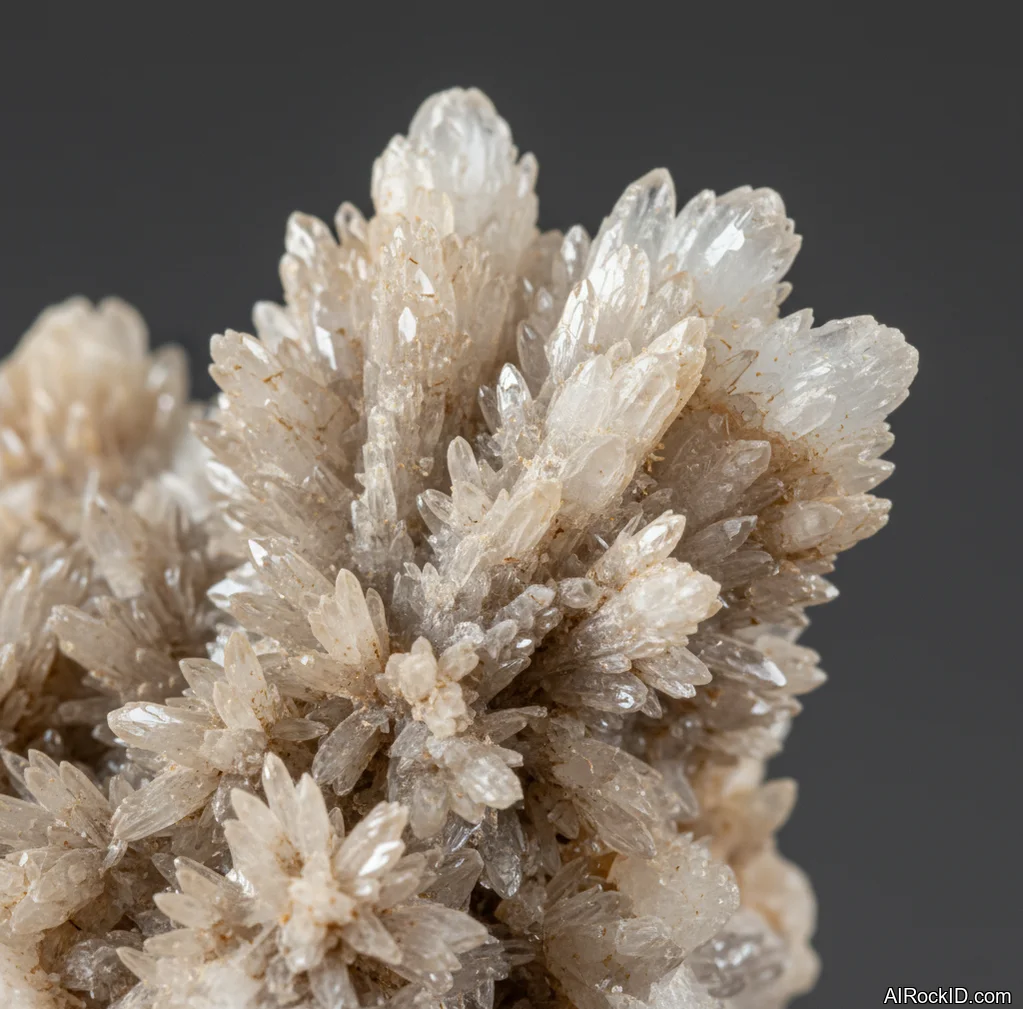
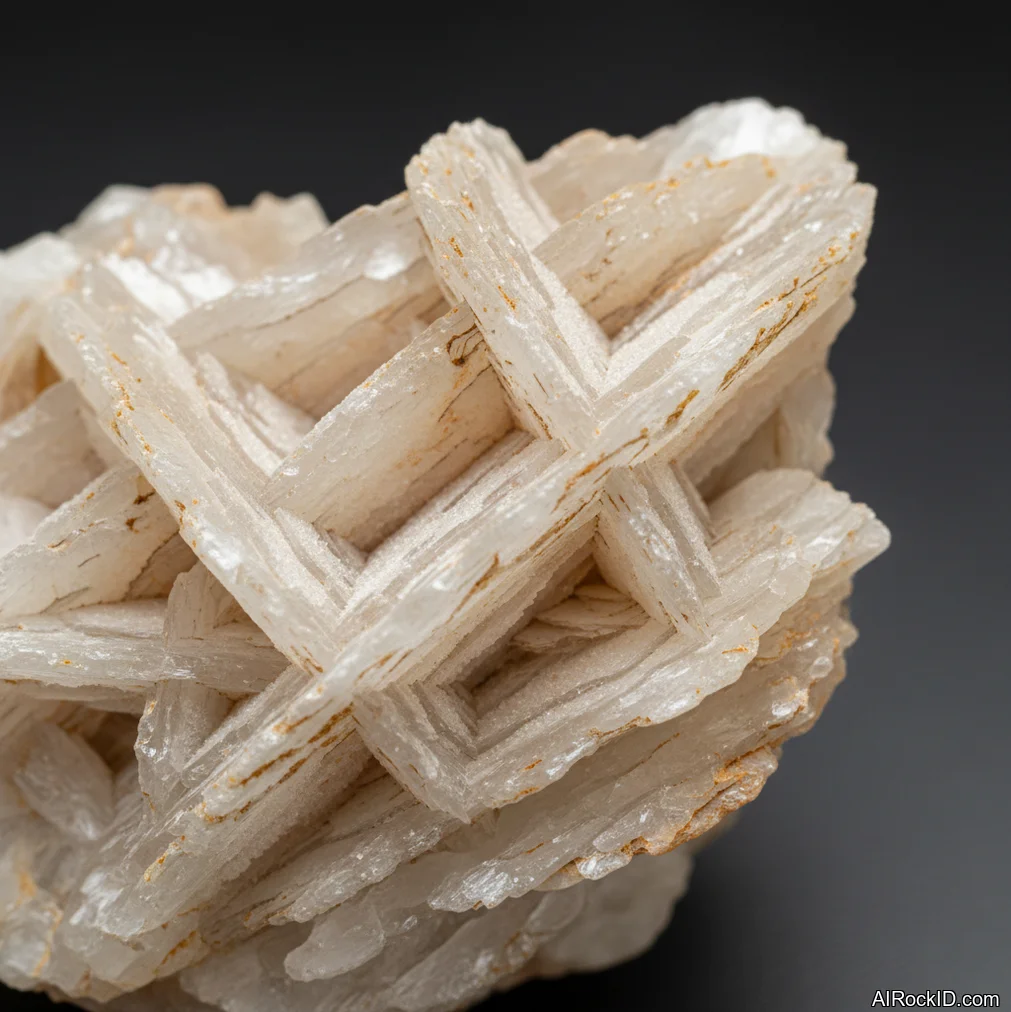
Chinese Bladed Calcite is just calcite (CaCO3), and it usually grows as thin, knife-like blades packed into flat, platey clusters. Most of what you see for sale is labeled from Chinese localities.
Pick up a piece and two things hit you fast. First, it’s weirdly light for how “solid” the cluster looks in the tray. Then, when you tilt it under a lamp, the blades kick back these quick little flashes. That sparkle isn’t from polish. It’s the cleavage faces catching the light, and if you turn it a tiny bit (like, barely), the bright pop just disappears.
People take one look and call it “cockscomb.” Sometimes that’s fair, sure, but that name gets tossed around way too loosely in the market. The Chinese bladed stuff I’ve handled is usually more like stacked wedges or thin fins, with sharp little edges that chip if you even think about rubbing them. Gorgeous. But not something you keep in your pocket.
Origin & History
“Calcite” got its name in the 19th century, pulled from the Latin *calx* (meaning lime), and mineralogists have had the species formally described since the early days of modern classification.
“Chinese bladed calcite” isn’t some separate mineral name. It’s just a trade and collector nickname for those bladed calcite clusters that started showing up everywhere through the Chinese mineral market in the late 20th and early 21st century.
Most dealers leaned on the phrase because the habit is dead easy to spot when you’re staring into a flat of show material under those harsh overhead lights. You see the thin blades stacked up like shingles, the kind that catch the light on the edges, and you almost don’t even need to ask where it probably came from. But the exact mines? Those shift. And show labels can lag behind what’s actually coming out of the ground (it happens more than people admit).
Where Is Chinese Bladed Calcite Found?
On the market, most “Chinese bladed calcite” labels point to southern China (often Hunan or Guangxi). Similar bladed habits also show up in carbonate districts worldwide.
Formation
Bladed calcite like this usually forms in open pockets where mineral-rich water has some elbow room to build crystals, like little vugs in limestone or hollow spots in hydrothermal veins. Calcite’s a carbonate, so it shows up where calcium and carbonate are moving through water together and the chemistry nudges just enough for crystals to start piling on layer by layer.
Chunky rhombs and blades are the same mineral, just a different growth habit. Thing is, small shifts in temperature, the mix of stuff dissolved in the fluid, or how cramped the cavity gets can push calcite to grow into thin wedges instead of squat blocks. And sometimes the specimen basically tells you that whole timeline if you look close: the blades down near the base start out thicker, then they pinch thinner as the pocket tightens up and the growth space disappears. That “squeezed” look? It’s real.
How to Identify Chinese Bladed Calcite
Color: Most Chinese bladed calcite I see is white, cream, pale honey, or light tan, sometimes with faint iron staining on the edges. Transparent blades exist, but a lot of pieces are translucent with milky zones.
Luster: Vitreous to pearly, with bright flashes off cleavage faces.
If you scratch it with a copper penny, it’ll usually mark, and a steel nail will bite it easily since calcite is Mohs 3. Look closely at broken edges: real calcite likes to step along cleavage planes, and those steps catch light in sharp, flat glints. The real test is a tiny drop of dilute acid: calcite will fizz, but don’t do this on a display piece unless you’re okay with a scar.
Properties of Chinese Bladed Calcite
Physical Properties
| Crystal System | Trigonal |
| Hardness (Mohs) | 3 (Soft (2-4)) |
| Density | 2.71 g/cm3 |
| Luster | Vitreous |
| Diaphaneity | Transparent to translucent |
| Fracture | Uneven |
| Streak | White |
| Magnetism | Non-magnetic |
| Colors | White, Cream, Honey, Tan, Colorless, Pale yellow |
Chemical Properties
| Classification | Carbonates |
| Formula | CaCO3 |
| Elements | Ca, C, O |
| Common Impurities | Fe, Mn, Mg |
Optical Properties
| Refractive Index | 1.486–1.658 |
| Birefringence | 0.172 |
| Pleochroism | None |
| Optical Character | Uniaxial |
Chinese Bladed Calcite Health & Safety
It’s safe to handle, but watch the blades. They’re sharp, and they’re kind of brittle too, so if you bang it against something, little chips can flake off. And don’t let it touch acids, because acid will etch the surface (you’ll see it right away).
Safety Tips
Handle it over a table, not a tile floor (trust me, it’ll slip faster than you think). And if you have to rinse it, use plain water, just enough to do the job. But don’t use acids or any acidic sprays anywhere near it.
Chinese Bladed Calcite Value & Price
Price Range
Rough/Tumbled: $15 - $250 per specimen
Price swings mostly come down to how sharp the blades are, any damage, the size, and whether the cluster has those clean, sparkly faces instead of that chalky coating you can actually feel when you rub a thumb over it. Tight, uniform blades with barely any edge chipping go for way more money. The crumbly stuff? Not so much.
Durability
Nondurable — Scratch resistance: Poor, Toughness: Poor
Calcite is stable in normal room conditions but scratches easily and can etch in weak acids, including vinegar and some household cleaners.
How to Care for Chinese Bladed Calcite
Use & Storage
Store it in a box with padding or on a stable shelf where it won’t get bumped. I keep bladed calcite away from “grab and go” trays because the edges love to snag and chip.
Cleaning
1) Use a soft, dry brush (makeup brush works) to lift dust off the blades. 2) If it needs more, rinse briefly with lukewarm water and a tiny drop of mild soap, then rinse again. 3) Pat dry and let it air-dry fully before putting it back on a stand.
Cleanse & Charge
If you do energy-style care, stick to smoke, sound, or a quick pass under running water. I avoid salt bowls with bladed calcite because grains get stuck in the crevices and you end up scraping at the edges.
Placement
Best on a low-traffic shelf with side lighting so the cleavage flashes show up when you walk past. Put it somewhere it won’t get hit by swinging cabinet doors.
Caution
Skip acids, vinegar-based cleaners, and ultrasonic cleaners. And don’t just chuck it into a pocket or bag, either. The blades will smack into keys and coins, chip, and you’ll end up with calcite confetti everywhere.
Works Well With
Chinese Bladed Calcite Meaning & Healing Properties
In crystal talk, calcite gets used for that mental “unclogging” feeling, like a gentle reset. And because bladed calcite grows in those flat, knife-like sheets, people love to frame it as something that helps you cut through the noise. I can’t make medical claims, and I wouldn’t treat a rock like therapy. Still, I get it. Sometimes you just want one clean, simple object to park your attention on.
Here’s the practical part, straight from my own shelf time. After a show, when I’m sorting flats and my brain’s turning to mush, bladed calcite is the piece I keep where I can see it. The way it throws light, those little bright flashes off the edges, makes me slow down. So I pay attention. Up close you can trace the natural lines in the blades, and that’s the whole trick. Lines give a tired brain something easy to hold onto. Like a visual metronome.
But there’s a limit, and it’s a real one. It’s fragile. That matters if you’re the type who wants a stone in your pocket every day. I’ve watched plenty of people buy a piece, fall in love with it, then come back irritated because it shed a few blades on the drive home. If you’re going for the “calm focus” routine, treat it like a desk piece. Not a worry stone. Why fight the material? (It’s going to win.)
Identify Any Crystal Instantly
Snap a photo and get properties, value, care instructions, and healing meanings in seconds.