Dogtooth Calcite
What Is Dogtooth Calcite?
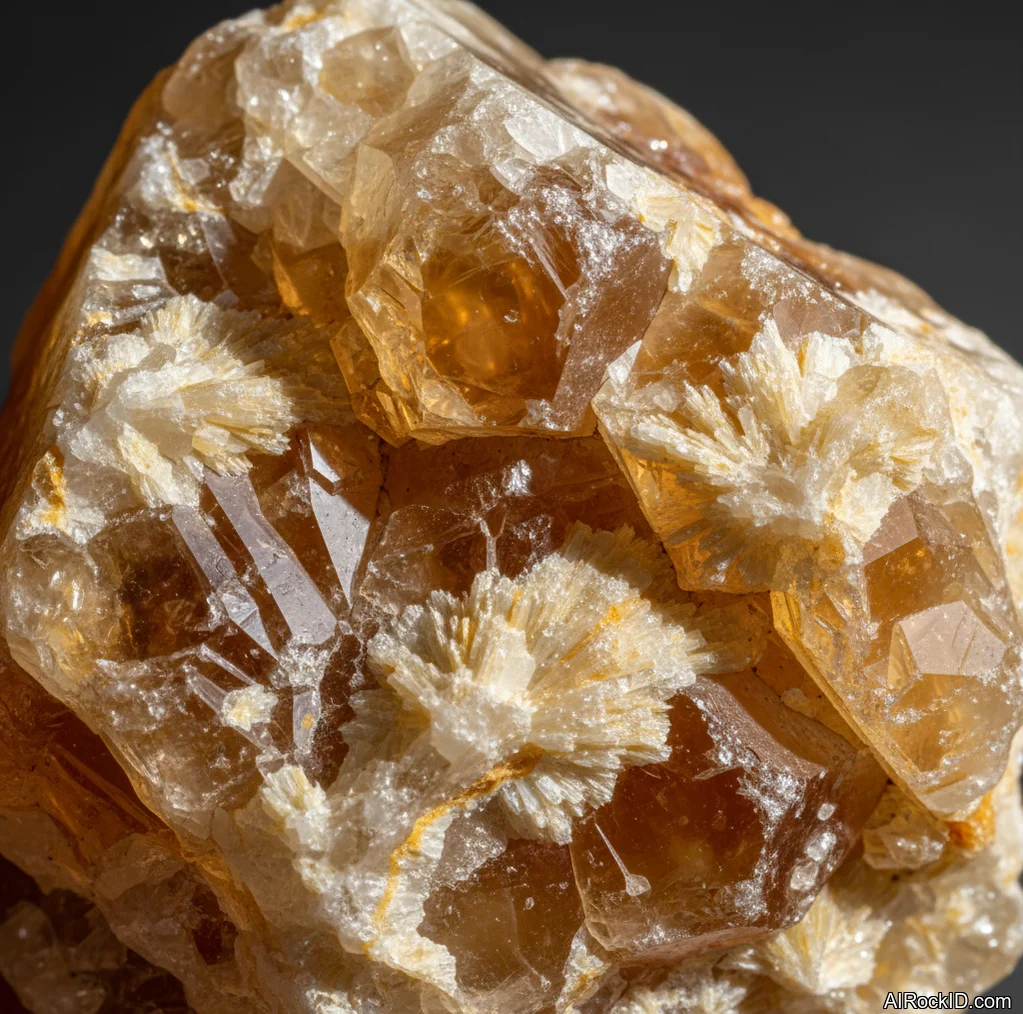
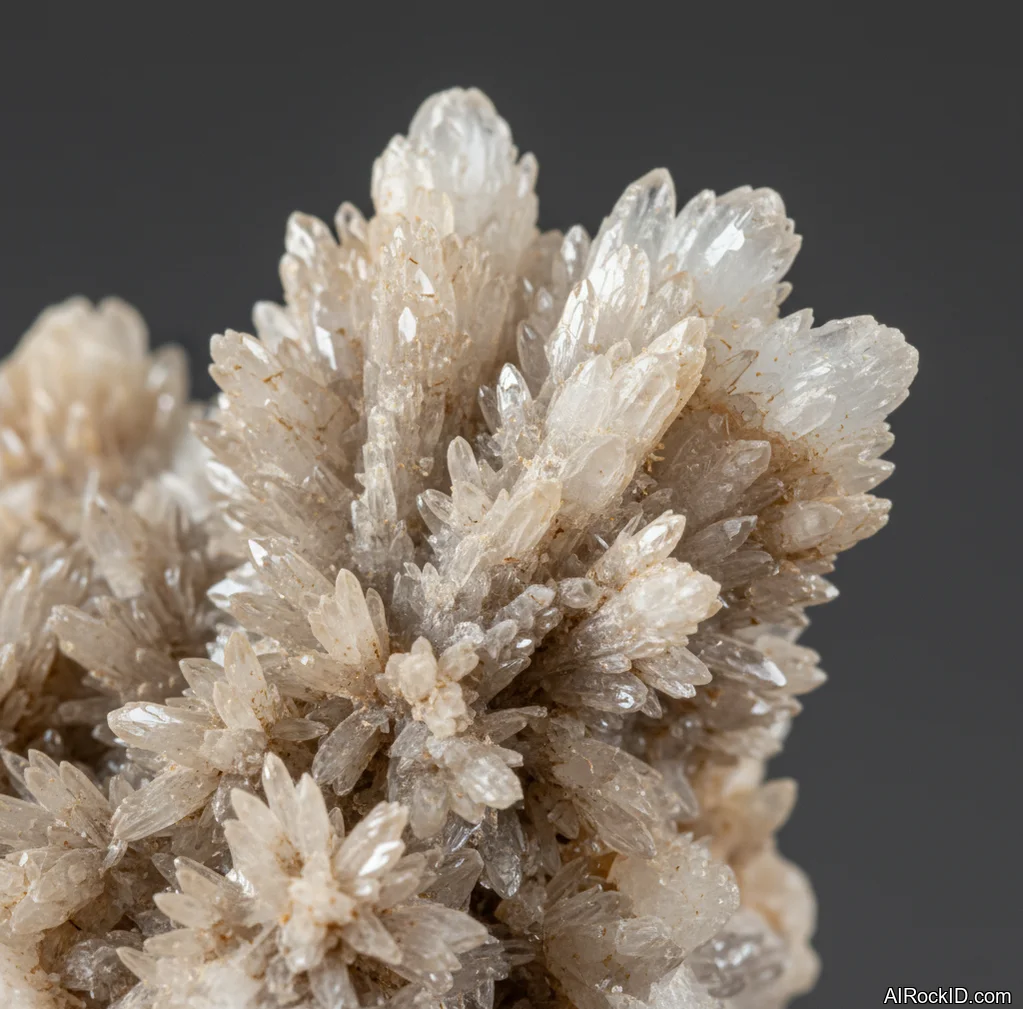
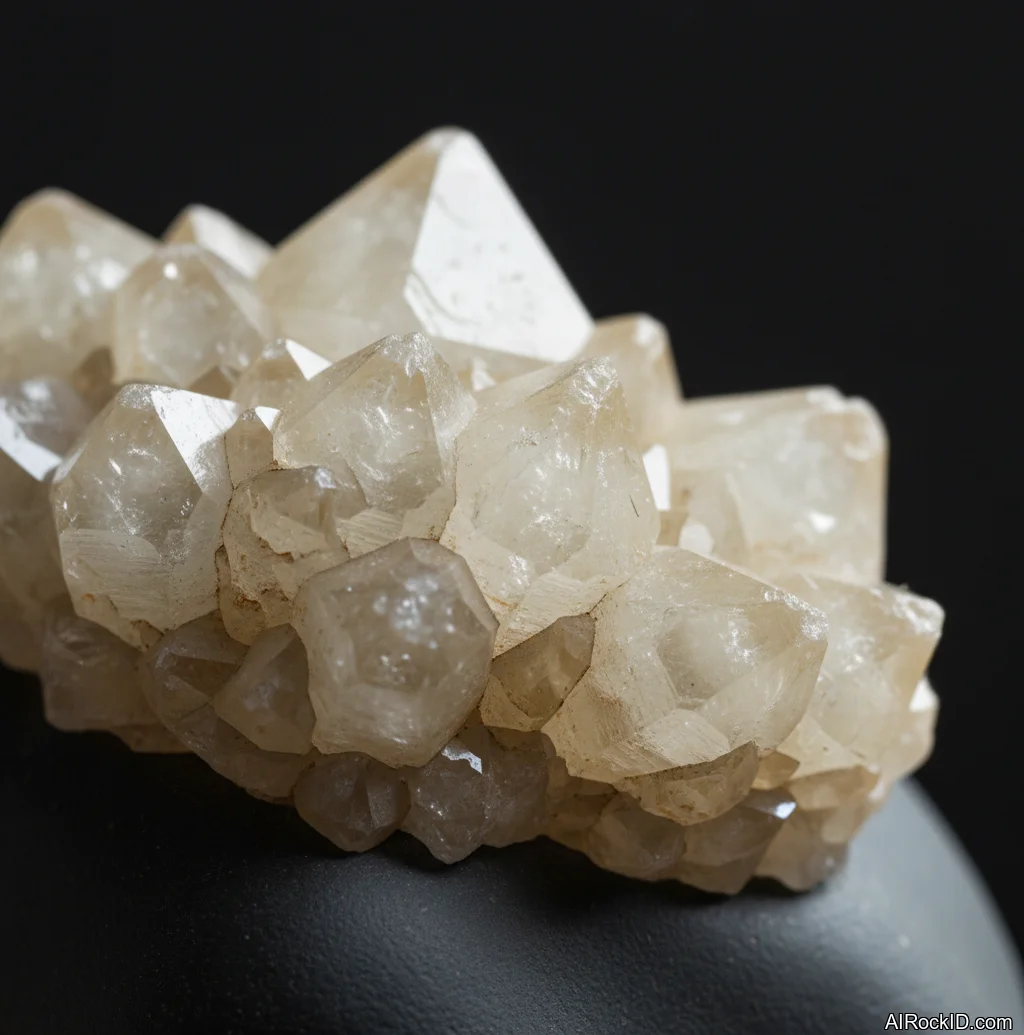
Dogtooth Calcite is calcite (CaCO3) that grows as pointed, scalenohedral crystals, so the whole thing comes out in these tooth-like spikes.
Pick up a cluster and two things hit you fast. It’s lighter than most people expect. And the tips feel sharper than they look, especially when you run a finger along the edges (you’ll stop doing that pretty quick). Turn it under a lamp and the faces don’t sparkle like sugar. They blink. Big flat planes flashing on and off as you move it a couple degrees. That’s the calcite cleavage and those flat growth faces doing their thing.
At first glance people call them “quartz points,” but it doesn’t act like quartz at all. A steel nail will bite into it, and one careless bump can snap a tip clean off. Still, when you find a good piece with clean, steep spikes, it’s one of the most satisfying shelf minerals out there.
Origin & History
“Dogtooth spar” is one of those old-time miner and collector nicknames, basically a field label for calcite that grows into sharp, canine-tooth points you can snag a fingertip on if you’re not paying attention. “Spar” was a catch-all for minerals that looked bright and split cleanly, and calcite is the classic example.
Calcite as a species got its formal description in the 18th century, and the name traces back to the Latin *calx*, meaning lime. The dogtooth look is just a crystal habit, specifically a scalenohedron, so it’s still calcite, just wearing a certain shape, not a separate mineral.
Where Is Dogtooth Calcite Found?
Dogtooth calcite turns up anywhere calcite likes to grow with open space: limestone cavities, ore veins, and vugs in hydrothermal deposits. Good, sharp clusters are common from classic mines and limestone quarries.
Formation
Most dogtooth calcite shows up when calcium-heavy fluids slip through cracks and little hollows in limestone or dolostone, then leave calcite behind once the conditions shift. Temperature matters. CO2 pressure does too. So does how fast that fluid is moving. When the growth is slow and the pocket stays open, you end up with those sharp, stretched spikes with crisp faces you can catch the light on if you tilt the piece in your hand.
Look, if you stare at a cluster for a minute (and rotate it a bit), you’ll usually spot clues that it didn’t all grow in one go. Some crystals have that cloudy core, then clearer outer faces, like the pocket chemistry changed halfway through. And sometimes the tips look lightly dusted, either with iron staining or a thin druse layer, from a later mineralizing event. Kind of gives the ends a different texture, doesn’t it?
How to Identify Dogtooth Calcite
Color: Most pieces are colorless to white, honey-yellow, amber, or light brown; iron can push it more orange, and manganese can give pale pink tones. Color zoning happens, especially with honey calcite clusters where the bases look darker than the tips.
Luster: Vitreous to slightly pearly on cleavage faces.
If you scratch it with a copper coin or a steel nail, it’ll mark easily because calcite is Mohs 3. The real test is a drop of weak acid: even household vinegar will fizz slowly, and dilute hydrochloric acid fizzes fast. And when you tilt it, the flat faces throw big mirror flashes, but the moment you hit a cleavage break it turns into a bright, stepped surface instead of a clean conchoidal chip.
Properties of Dogtooth Calcite
Physical Properties
| Crystal System | Trigonal |
| Hardness (Mohs) | 3 (Soft (2-4)) |
| Density | 2.71 g/cm3 |
| Luster | Vitreous |
| Diaphaneity | Transparent to translucent |
| Fracture | Uneven |
| Streak | White |
| Magnetism | Non-magnetic |
| Colors | Colorless, White, Honey-yellow, Amber, Light brown, Pale pink, Gray |
Chemical Properties
| Classification | Carbonates |
| Formula | CaCO3 |
| Elements | Ca, C, O |
| Common Impurities | Fe, Mn, Mg |
Optical Properties
| Refractive Index | 1.486-1.658 |
| Birefringence | 0.172 |
| Pleochroism | None |
| Optical Character | Uniaxial |
Dogtooth Calcite Health & Safety
Dogtooth calcite is usually fine to handle, and it isn’t toxic. The real issue is physical: those pointy tips can poke you, and if the crystal snaps you can end up with tiny sharp chips (they’re the kind that like to hide in your palm).
Safety Tips
If you’re trimming matrix or scrubbing with tools, put on eye protection. And rinse the grit off first so you’re not grinding calcite dust back into the faces (it’s basically sandpaper at that point).
Dogtooth Calcite Value & Price
Price Range
Rough/Tumbled: $5 - $250 per specimen
Clean, sharp tips and those bright, glassy faces you can catch in the light are what really push the price, way more than size ever does. And pieces from old-mine spots with tight, symmetrical clusters usually run higher than the chunky quarry stuff.
Durability
Nondurable — Scratch resistance: Poor, Toughness: Poor
It’s stable in normal room conditions, but it chips easily and the perfect cleavage means drops and pressure can break it fast.
How to Care for Dogtooth Calcite
Use & Storage
Store it so the points can’t knock into anything. I keep mine in a flat box with foam or in a display case where nothing can fall onto it.
Cleaning
1) Rinse quickly with lukewarm water to remove loose dust. 2) Use a soft brush (makeup brush works) with a drop of mild soap. 3) Pat dry and let it air-dry fully; avoid acids and vinegar for cleaning because they etch calcite.
Cleanse & Charge
If you do energetic cleaning, stick to smoke, sound, or a dry selenite plate. Water is fine for a quick rinse, but don’t soak it with salt or acidic additives.
Placement
Put it somewhere stable, away from high-traffic edges and curious pets. Side lighting makes the faces flash and shows the geometry better than overhead light.
Caution
Skip acids, harsh bathroom cleaners, and leaving it sitting in vinegar for a long time, because that’ll dull the surface and start pitting the faces. And don’t run it through an ultrasonic cleaner. Also, don’t just chuck it loose in a bag where it can bang around against harder stones.
Works Well With
Dogtooth Calcite Meaning & Healing Properties
In the shop, dogtooth calcite is what I put in someone’s hand when they ask for something “bright” but don’t want glitter or flash. It feels clean and kind of architectural. The points look like a mess at first, then you stare for a beat and the symmetry snaps into place, and your brain goes, oh. Okay.
A lot of people connect calcite with clarity and mental organization, and honestly, I see the appeal. When I’m sorting flats after a show, I’ll park a dogtooth cluster on the counter as a quick visual reset, like giving my eyes something orderly to land on. But it’s still a mineral, not a treatment. If you’re dealing with anxiety, sleep stuff, or anything medical, sure, crystals can sit on the nightstand, but they don’t replace a professional.
One practical thing, from handling piles of the stuff: that “energy” people talk about sometimes matches the physical reality in a funny way. The points chip. They snap if you bump them wrong, and you’ll find little gritty calcite crumbs in the bottom of the tray (ask me how I know). So you end up being gentle with it. You slow down, you pay attention, you don’t clack it against other pieces. And that by itself can feel calming, even if you keep it in the lane of personal practice.
Identify Any Crystal Instantly
Snap a photo and get properties, value, care instructions, and healing meanings in seconds.