Green Tiger Eye
What Is Green Tiger Eye?
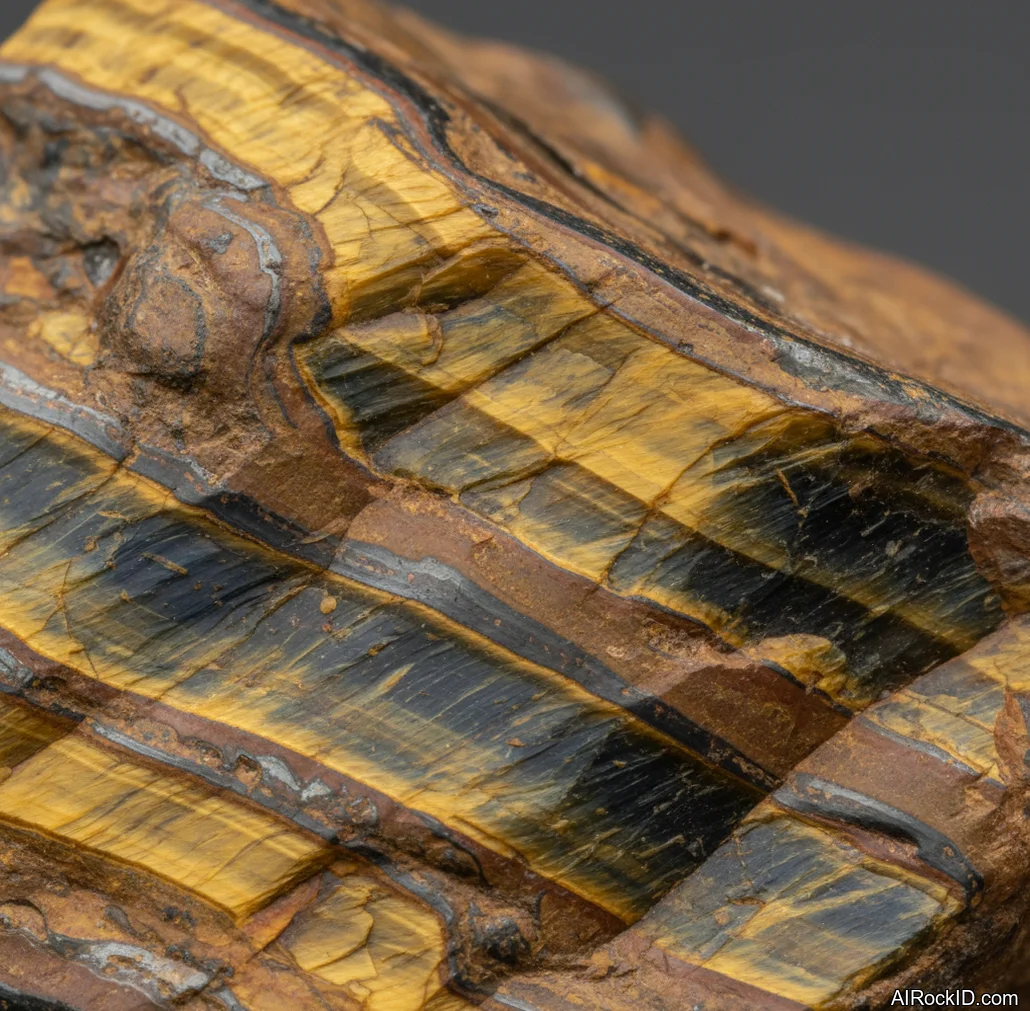
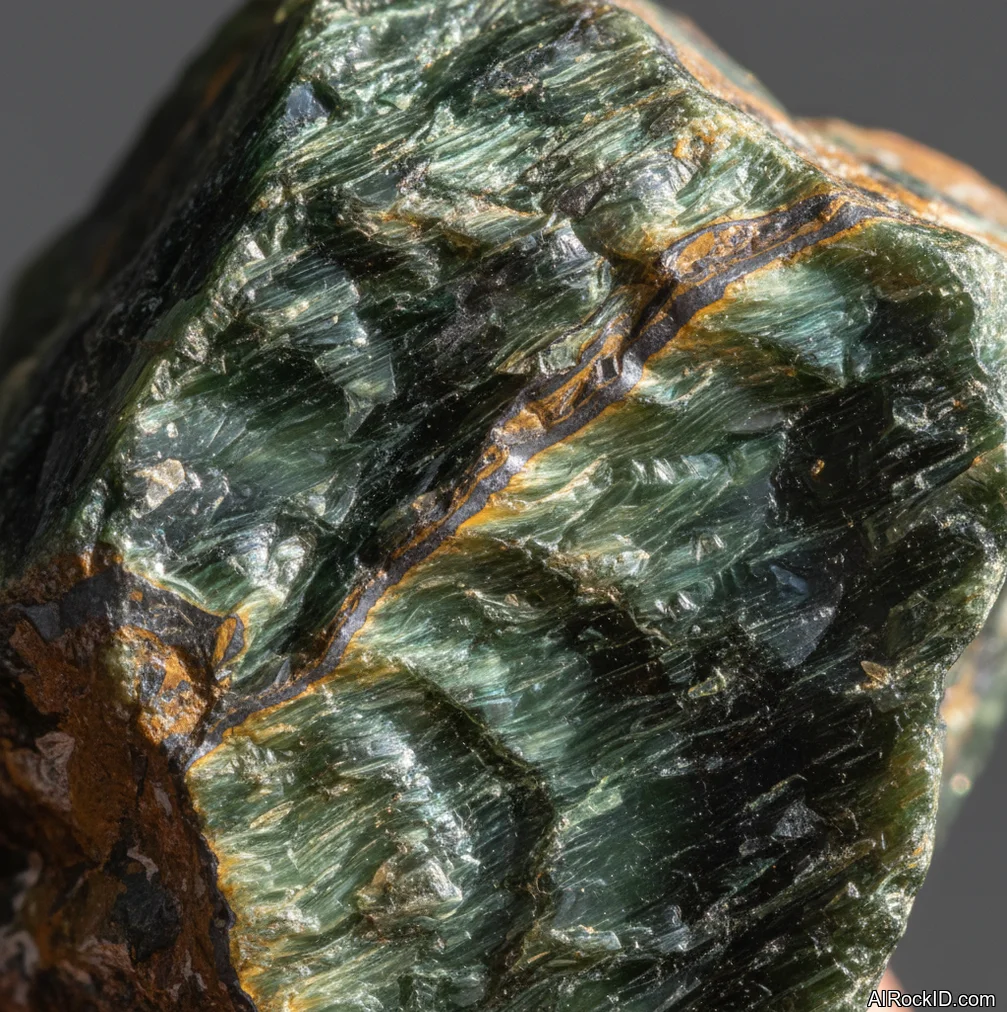
Green Tiger Eye is a chatoyant type of quartz, and it throws that moving band of light across a green to olive-brown base.
Hold a polished stone in your hand and you feel it instantly. Smooth. Almost slick, with that glassy-waxy quartz finish (the kind that makes your thumb sort of glide). Then you tilt it under a lamp and the “cat’s eye” stripe slides across the face like it’s chasing the light. The nicer pieces kick back a clean green with a little gold tucked into the bands, but the rougher ones? They go dull and muddy, like olive paint got dragged through brown.
Next to the classic golden tiger eye, the green stuff reads quieter and a little moodier. But that’s exactly why people like it. In a tray of stones, it breaks up all those honey-gold stripes with something more earthy, especially in a cabochon cut where the chatoyancy really pops.
Origin & History
Most of what’s sold as tiger eye really hit the gem trade hard in the 1800s and early 1900s, once South African material started showing up everywhere. “Tiger eye” itself is trade talk for the look, not a formal mineral species. And it stuck for a simple reason: people see that moving stripe and they get it instantly.
Green Tiger Eye is mostly a market name. Sometimes it’s just tiger eye that runs a little greener, and sometimes it’s hawk’s eye that’s been pushed toward green with treatment or dye. Dealers don’t always spell that out, which is the one part that drives me nuts. If you’ve worked a few shows, you’ve seen it up close: one table calls it “natural green,” then the next person quietly admits it’s dyed after you ask twice (and wait through the little pause).
Where Is Green Tiger Eye Found?
Most commercial tiger eye comes out of Southern Africa, with more material from Australia and smaller amounts from other quartz-bearing metamorphic terrains.
Formation
Tiger eye material forms when fibrous amphibole (historically tied to crocidolite fibers) gets swapped out for silica, but the fibers themselves stay lined up the whole time. That lined-up look is exactly what gives you chatoyancy. It’s more about texture than one perfect crystal doing the work.
Look, if you stare at a solid cabochon under a desk lamp and roll it a little, you can practically “read” the rock’s grain as that bright band slides across the surface. Those parallel fibers behave like tiny mirrors. But the green color? That’s where things get slippery. It can come from natural tones tied to iron-bearing material, it can be a shift from the bluer hawk’s eye hues, or it can be dye soaked in after the stone’s been cut rough (yeah, it happens). The structure stays the same. The color is what makes the market messy.
How to Identify Green Tiger Eye
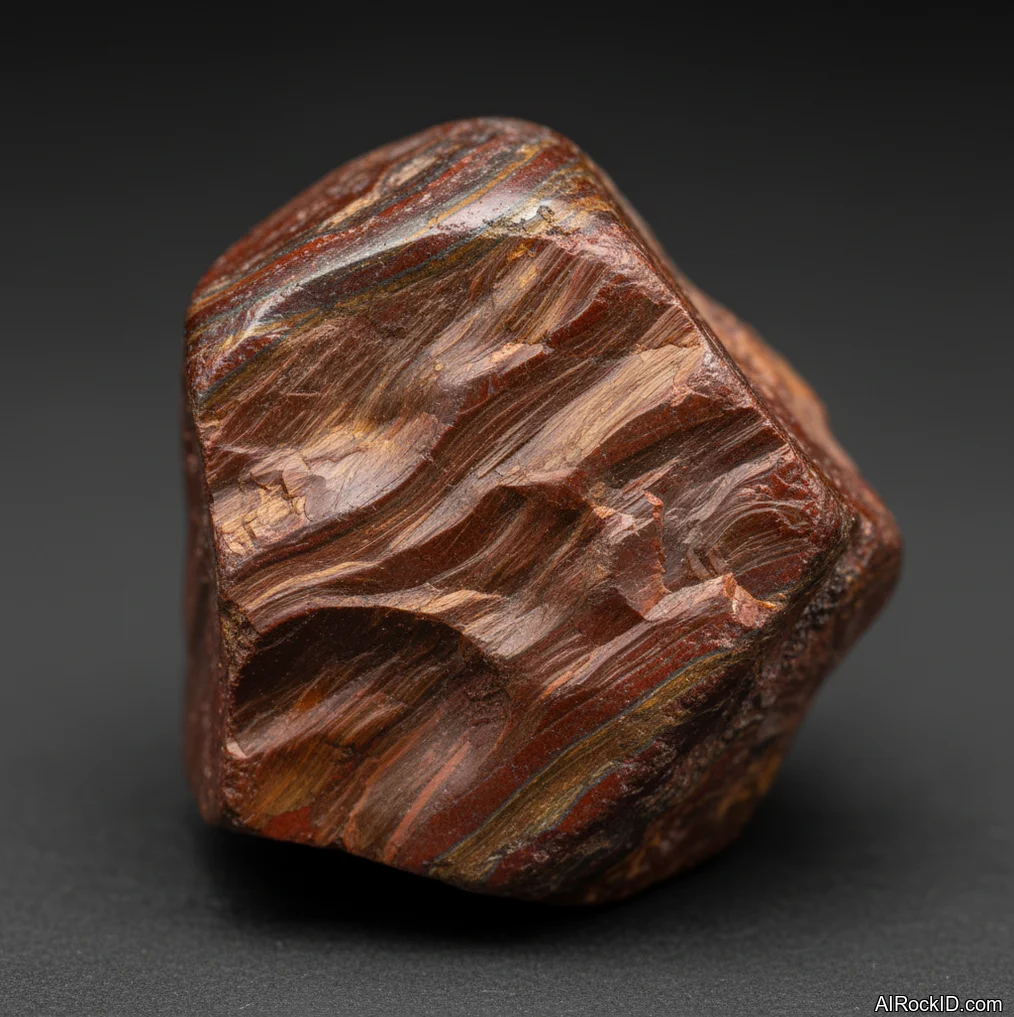
Color: Typically olive green, mossy green, or green-brown with lighter silky bands that can flash gold or yellow-green. Some pieces are more blue-green if they’re closer to hawk’s eye.
Luster: Silky to vitreous when polished, with a bright moving “eye” band.
Pick up the stone and roll it under a single light source. A real piece shows one tight band that glides smoothly, not a glittery sparkle across the whole surface. The real test is the temperature and weight: quartz stays cool in your hand and feels a little heavier than plastic or resin fakes. And if the green looks too even, like it was painted on, check the drill holes or fractures for darker dye concentration.
Properties of Green Tiger Eye
Physical Properties
| Crystal System | Trigonal |
| Hardness (Mohs) | 7 (Hard (6-7.5)) |
| Density | 2.58-2.66 g/cm3 |
| Luster | Silky |
| Diaphaneity | Opaque |
| Fracture | Conchoidal |
| Streak | White |
| Magnetism | Non-magnetic |
| Colors | Green, Olive, Green-brown, Yellow-green, Brown |
Chemical Properties
| Classification | Silicates |
| Formula | SiO2 |
| Elements | Si, O |
| Common Impurities | Fe |
Optical Properties
| Refractive Index | 1.544-1.553 |
| Birefringence | 0.009 |
| Pleochroism | Weak |
| Optical Character | Uniaxial |
Green Tiger Eye Health & Safety
Day-to-day handling and normal use are pretty low risk. But if you cut it or grind it, you can kick up silica dust (that fine, chalky stuff that hangs in the air and gets on your fingers). So treat it like any quartz when you’re doing lapidary work. Basic safety, same deal.
Safety Tips
Use water when you’re grinding. Wear a proper respirator when that fine dust starts hanging in the air (you can feel it catch in your throat if you don’t). And don’t sweep the slurry once it dries out. Scoop it up wet and clean it that way.
Green Tiger Eye Value & Price
Price Range
Rough/Tumbled: $5 - $40 per tumbled stone or small palm stone
Cut/Polished: $1 - $8 per carat
Price usually comes down to a few telltale things: how crisp the “eye” looks when you tilt it under a lamp, how clean the polish feels (slick, not draggy), and whether the color reads natural instead of kind of forced. And yeah, big cabochons with the band sitting dead-center tend to run higher. But a super bright green stone that’s obviously dyed can be cheap, even if it screams for attention from across the room.
Durability
Durable — Scratch resistance: Excellent, Toughness: Good
It holds up like other quartz, but dyed green pieces can fade or look blotchy if they live in strong sun for months.
How to Care for Green Tiger Eye
Use & Storage
Keep it in a pouch or a separate compartment if you don’t want it rubbing softer stones. Quartz is tough, and it’ll leave little scuffs on things like calcite or fluorite.
Cleaning
1) Rinse with lukewarm water and a drop of mild soap. 2) Use a soft toothbrush to get into grooves or around drilled holes. 3) Rinse well and dry with a soft cloth so water spots don’t dull the shine.
Cleanse & Charge
If you do energetic cleansing, a quick rinse and a wipe down works fine, or set it on a windowsill for indirect light. Skip harsh salt soaks if you’re not sure whether the piece is dyed.
Placement
On a desk it catches light nicely, especially near a lamp where you can actually see the band move. If it’s dyed green, I wouldn’t park it in a sunny window long-term.
Caution
Don’t use an ultrasonic cleaner if the stone’s already got fractures or it’s been heavily dye-treated. That buzzing vibration can shove the color around, and then you end up with these odd, blotchy patches that look plain wrong under the light. And for lapidary work, take silica dust seriously. Keep it under control and use water (wet grinding makes a huge difference).
Works Well With
Green Tiger Eye Meaning & Healing Properties
Green Tiger Eye gets labeled a “focus stone” a lot, and honestly, that’s pretty much how I see people use it in real life. It has this steady, no-nessing-around feel to it. When I’m sorting flats at a show and my brain’s basically toast, I’ll grab a palm stone with a strong eye and just give myself something dumb-simple to look at for a minute. The band slides as you tilt it, your eyes chase that stripe, and for once you’re not doom-scrolling. Five seconds of quiet. Sometimes that’s enough.
A lot of energy-work folks connect it with grounded confidence and decision-making, more “get it done” than “follow your heart into the clouds.” But look, I’m going to be blunt: tons of the green stuff out there is dyed. If you’re using it as a personal tool, that doesn’t automatically ruin anything, but it does matter if you care about natural material (or if you’re paying extra just for the color).
And no, it’s not medicine. I treat it like a reminder object, the same way some people keep a worry stone shoved in their pocket. The physical part is real, though. It has that cool, heavy quartz feel in your hand, and the surface gets this silky flash when the light hits it just right, like it’s been buffed forever. Hard to ignore. That’s why it ends up in so many pockets, or sitting in a bowl by the door where you’ll actually touch it on your way out.
Identify Any Crystal Instantly
Snap a photo and get properties, value, care instructions, and healing meanings in seconds.