Hawk Eye
What Is Hawk Eye?
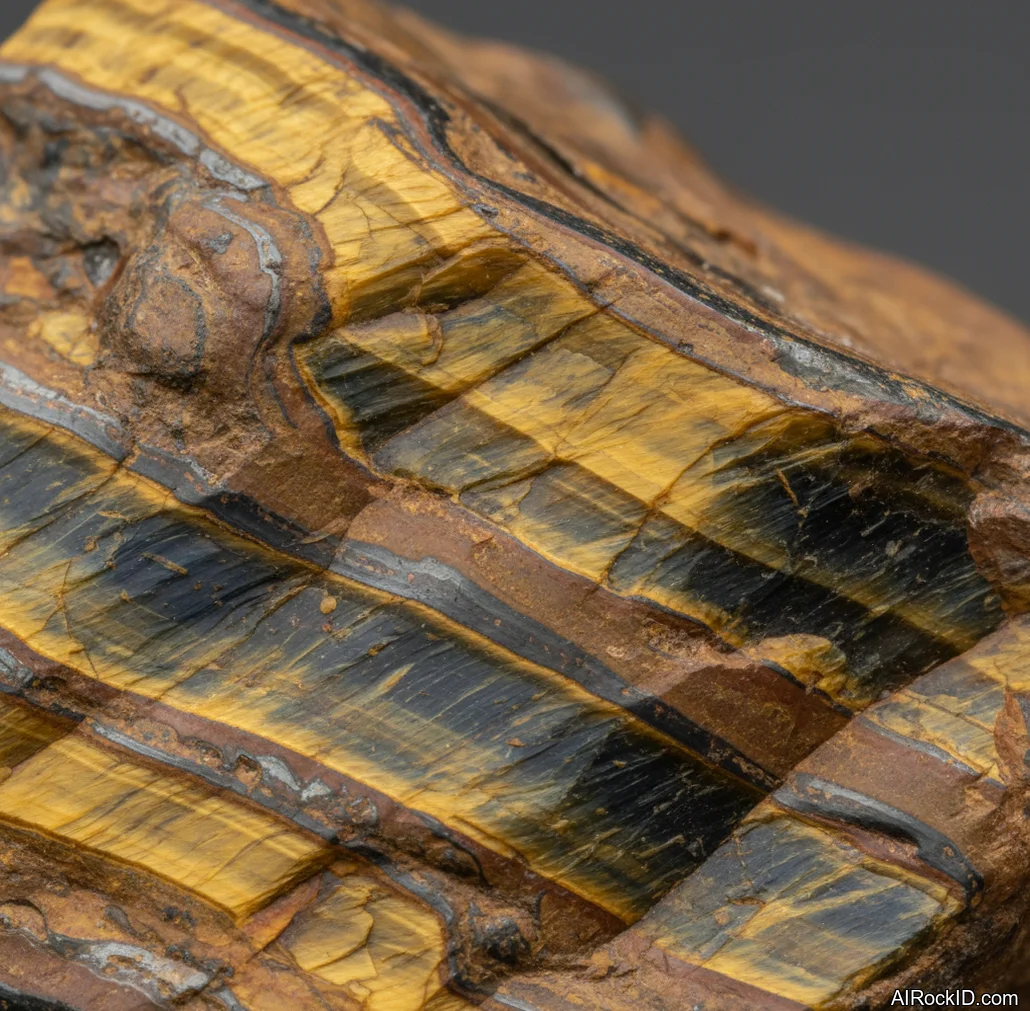
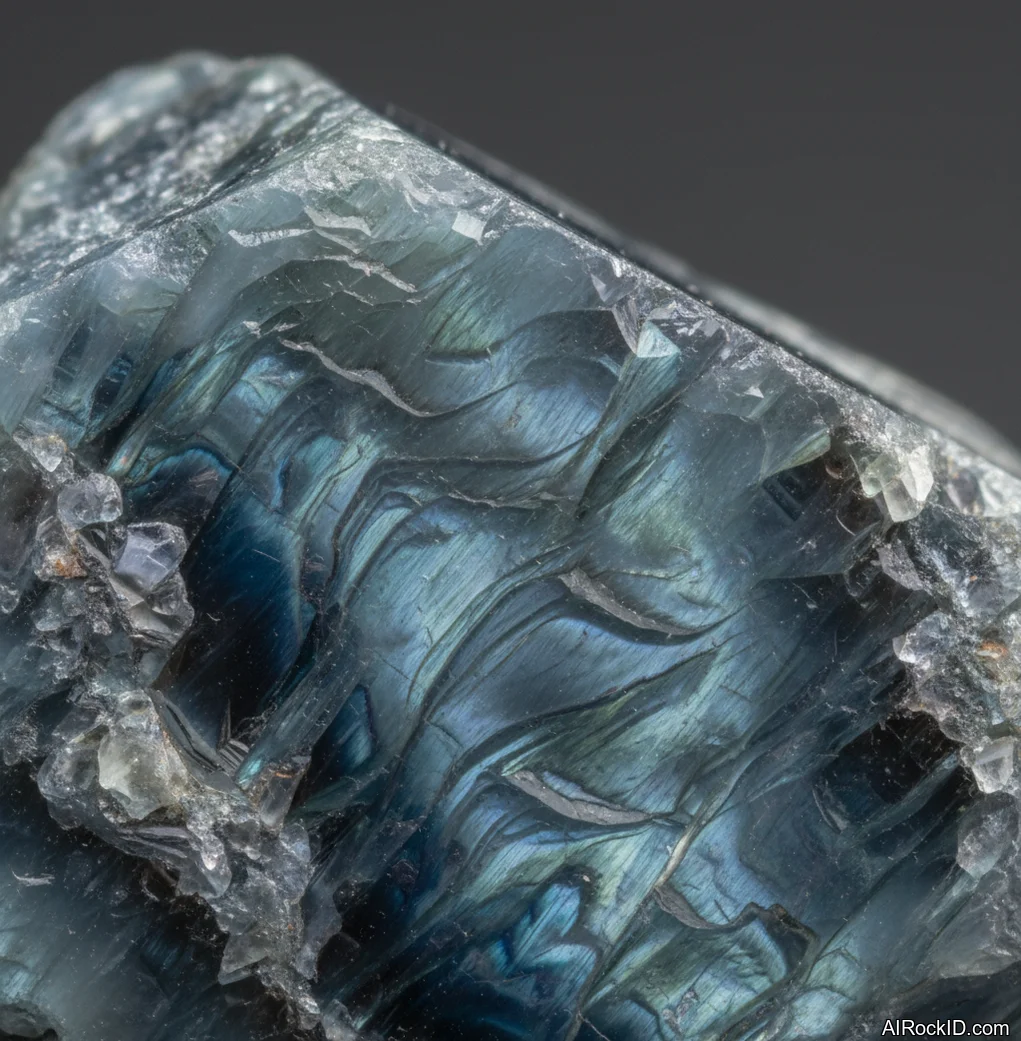
Hawk Eye is that blue-gray, chatoyant quartz that forms as a pseudomorph after crocidolite fibers.
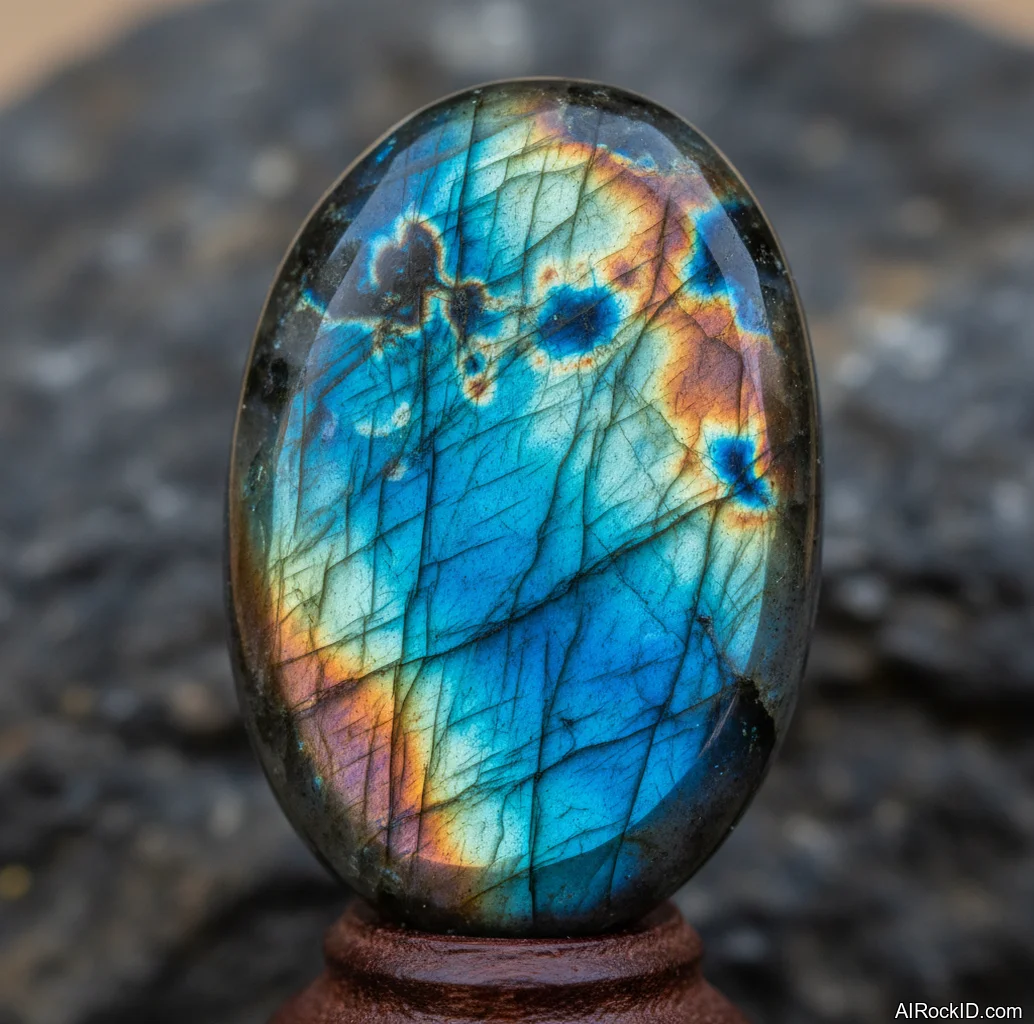
Hold a polished piece for a second and you notice it immediately: smooth, almost oily, like it’s trying to slip right out of your hand. Tip it under a lamp and that bright line of light clicks on, then disappears, then pops back again. Kind of like a cat’s eye effect, but colder. Steel instead of honey. The good pieces have tight, even banding and a clean line that actually moves when you move it. The cheap stuff? Flat. Like someone painted stripes and hoped you wouldn’t look too close.
Compared to golden tiger eye, Hawk Eye just feels more serious. Same general family vibe, only pushed into blues, smoke tones, and those gunmetal grays. And thing is, if you’ve handled enough of it, you’ll spot tiny rust freckles on some stones where the iron started oxidizing early. Is that “damage”? Not really. It’s just part of the story you get with a lot of natural material.
Origin & History
Look at the name for a second and it basically tells the story. Dealers and lapidaries latched onto the animal-eye vibe that was already stuck to tiger eye, so the blue material started getting sold as Hawk Eye or Hawk’s Eye. And yeah, you’ll still spot Falcon’s Eye on little paper tags at shows, usually clipped to a tray with those tiny metal binder clips.
When it was first described? It didn’t get that neat, one-person “discovered it on Tuesday” moment some minerals have. It sits in the long tradition of quartz varieties being labeled for how they look and how they move through trade. The science angle ties back to crocidolite (a blue asbestos amphibole) and the way silica can replace those fibers while keeping the original texture. That preserved texture is what creates the silky flash collectors are always chasing.
Where Is Hawk Eye Found?
Most of the commercial Hawk Eye you see is from South Africa and Australia, with smaller amounts from places like Namibia, Brazil, India, and the USA.
Formation
At first glance, yeah, it can pass for quartz that got a really glossy buffing. But the giveaway is the feel of it, that tight, silky banding you can see when you tilt it under a lamp. Hawk Eye starts out as crocidolite fibers laid down in bands. Then silica moves in and replaces those fibers molecule by molecule, but it keeps the same fibrous alignment. So when light hits it, it doesn’t just scatter. It slides into that sharp line.
Thing is, a lot of quick online explainers blow right past the “pseudomorph” bit. This isn’t quartz sitting next to crocidolite like two separate layers. It’s quartz that basically inherited crocidolite’s fiber structure, down to the way it holds that alignment. And the color shift? That comes down to how much iron oxidized during or after the replacement. If more of it oxidizes, it can drift toward golden tiger eye. If it doesn’t, it stays blue as Hawk Eye. Sometimes it lands in between.
How to Identify Hawk Eye
Color: Blue-gray to navy with smoky gray or black bands; some pieces show a teal cast or small rusty brown patches from iron oxidation.
Luster: Silky to vitreous with a strong chatoyant band on polished surfaces.
Pick up the stone and rotate it under a single point light, like a phone flashlight. Real Hawk Eye throws a crisp moving band that tracks across the surface in one direction, not a glittery sparkle. If the “shine” looks like scattered metallic flecks, you’re probably looking at glass or a coated composite. And if it feels warm right away and the band looks too perfect and plastic-smooth, I’d be suspicious.
Properties of Hawk Eye
Physical Properties
| Crystal System | Trigonal |
| Hardness (Mohs) | 6.5-7 (Hard (6-7.5)) |
| Density | 2.58-2.66 |
| Luster | Silky |
| Diaphaneity | Opaque |
| Fracture | Conchoidal |
| Streak | White |
| Magnetism | Non-magnetic |
| Colors | Blue-gray, Navy, Steel blue, Smoky gray, Black |
Chemical Properties
| Classification | Silicates |
| Formula | SiO2 |
| Elements | Si, O |
| Common Impurities | Fe, Na, Mg |
Optical Properties
| Refractive Index | 1.544-1.553 |
| Birefringence | 0.009 |
| Pleochroism | None |
| Optical Character | Uniaxial |
Hawk Eye Health & Safety
Finished stones are fine to handle day to day, and they can handle a quick rinse or a short splash in water without trouble. But if you’re cutting or grinding anything with a lot of silica in it, don’t breathe that dust in (it hangs in the air longer than you’d expect and it’s easy to miss until you feel it in your throat).
Safety Tips
If you’re going to cut it or sand it, do it wet, keep the area well ventilated (open a window and get a fan moving air), and wear a proper respirator that’s actually rated for fine particulates. Dust gets everywhere.
Hawk Eye Value & Price
Price Range
Rough/Tumbled: $5 - $60 per piece
Cut/Polished: $1 - $8 per carat
Price mostly comes down to how tight the banding is, how crisp that “moving eye” looks when you tilt it under a light, and whether the color stays a true blue instead of sliding off into brown. And the big, clean cabochons? Those cost more because the rough has to start out thick, with fibers that run even and consistent all the way through.
Durability
Durable — Scratch resistance: Good, Toughness: Good
It holds up well in daily handling, but sharp impacts can still chip edges because quartz breaks with a conchoidal fracture.
How to Care for Hawk Eye
Use & Storage
Store it away from softer stuff like fluorite or calcite so it doesn’t scuff them up. I keep polished Hawk Eye in a small pouch because the high gloss can get dull from rubbing against rough rocks.
Cleaning
1) Rinse with lukewarm water and a drop of mild soap. 2) Use a soft toothbrush to get into grooves or around drilled holes. 3) Rinse again and pat dry with a microfiber cloth.
Cleanse & Charge
For a low-drama cleanse, rinse and dry it, or set it on a piece of selenite. If you use sunlight, keep it brief because long window-sill time can fade a lot of stones over months.
Placement
On a desk it catches light nicely when you move it, so it works well as a worry stone or paperweight. If you’re displaying it, aim a small lamp from the side so the chatoyancy actually shows.
Caution
Skip harsh cleaners and ultrasonic cleaners if the jewelry’s glued together or has multiple parts fitted and assembled. That buzzing bath can work its way into seams and joints, and I’ve seen pieces come out with cloudy glue lines (not fun). And if you’re shaping it, don’t breathe in the dust. Quartz dust is a respiratory hazard, and that fine, gritty powder hangs in the air longer than you’d think.
Works Well With
Hawk Eye Meaning & Healing Properties
Most dealers will pitch Hawk Eye as “tiger eye but cooler,” and yeah, that’s basically the vibe. You can feel it the second it hits your palm. It’s not buzzy or frantic. It’s more like your brain stops flinching and you can just look at the problem straight on.
I’ve brought a Hawk Eye worry stone to shows on days I know I’ll be making calls nonstop, and it helps in a really simple way. The stone’s got that slick, almost soapy polish (you know, the kind that warms up fast in your pocket), and it gives your thumb something steady to do while you’re scanning tables and doing mental math.
Look at the banding for a second. The “eye” isn’t just pretty, it’s weirdly alive. It shows up as one bright line that slides across the surface, then vanishes the moment you tilt the stone off angle. That little physical trick is exactly why people link Hawk Eye with perception, perspective, catching small details that other folks miss.
If you meditate with stones, Hawk Eye usually nudges you toward the “zoom out and see the whole room” headspace, not the “sink into big feelings” one. But that’s personal practice stuff (and honestly, everyone’s different), not medical care.
Here’s the catch, though: a lot of what’s out there is tuned for shine, not accuracy. So you’ll run into dyed blues, coated surfaces, or mixed lots labeled kind of sloppy as Hawk Eye even when the piece is mostly golden tiger eye. If you’re picking one for intention work, grab a stone you genuinely like touching and looking at, because that’s the one you’ll actually keep using. And if anxiety or sleep is the real issue, stones can be a comfort object. Not a replacement for real support.
Identify Any Crystal Instantly
Snap a photo and get properties, value, care instructions, and healing meanings in seconds.