Hemimorphite
What Is Hemimorphite?
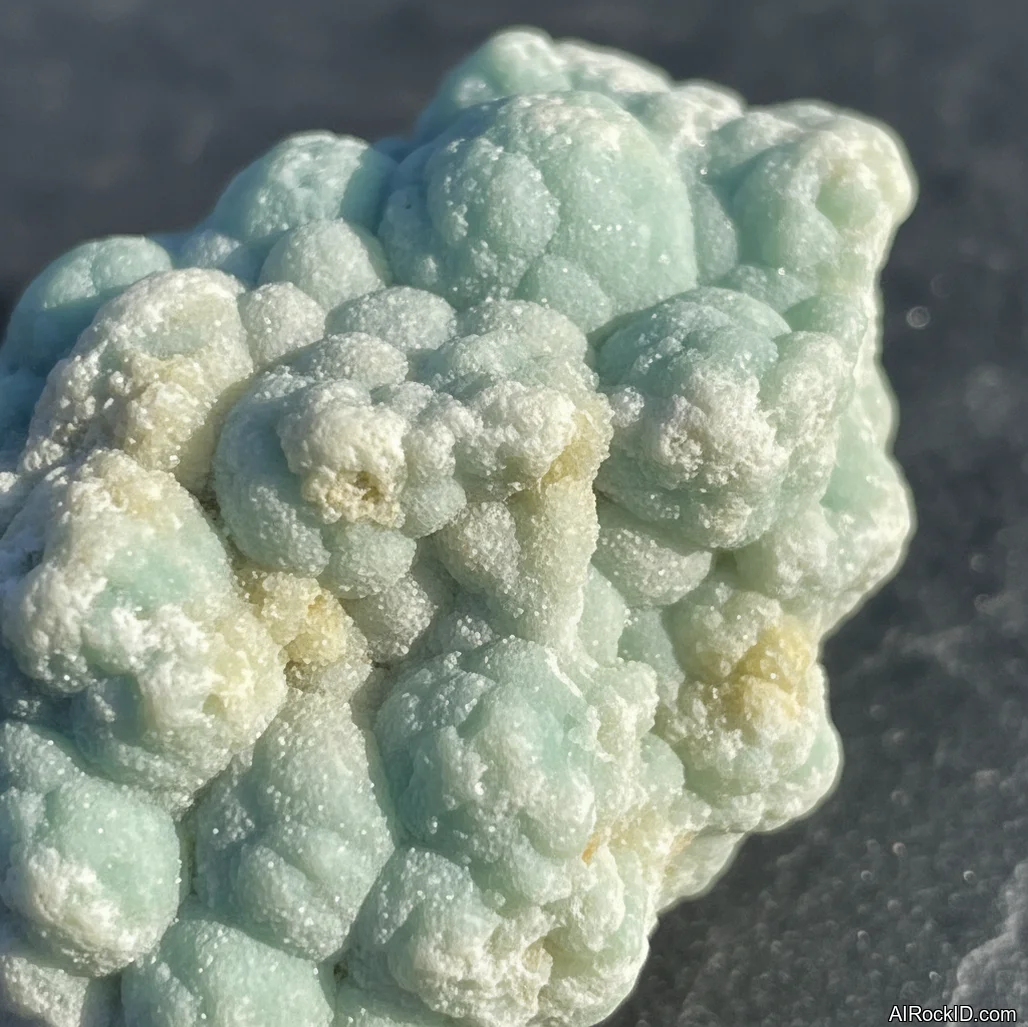
Hemimorphite is a hydrated zinc silicate, formula Zn4Si2O7(OH)2·H2O. Most folks run into it as pale blue botryoidal crusts, those bubbly, drippy-looking masses sitting on white limestone, and in the right light it honestly looks like frozen foam.
Pick up a chunk and you’ll probably do a quick double-take because it’s lighter than you expect for something that looks kind of “waxy.” And it stays cool in your hand. The skin of it can feel a little micro-bumpy too, almost like super fine sugar when it’s drusy (not sharp, just gritty in a tiny way). Tilt a botryoidal piece under a lamp and the sheen sort of slides over the rounded bumps, instead of popping bright like a flat cleavage face would.
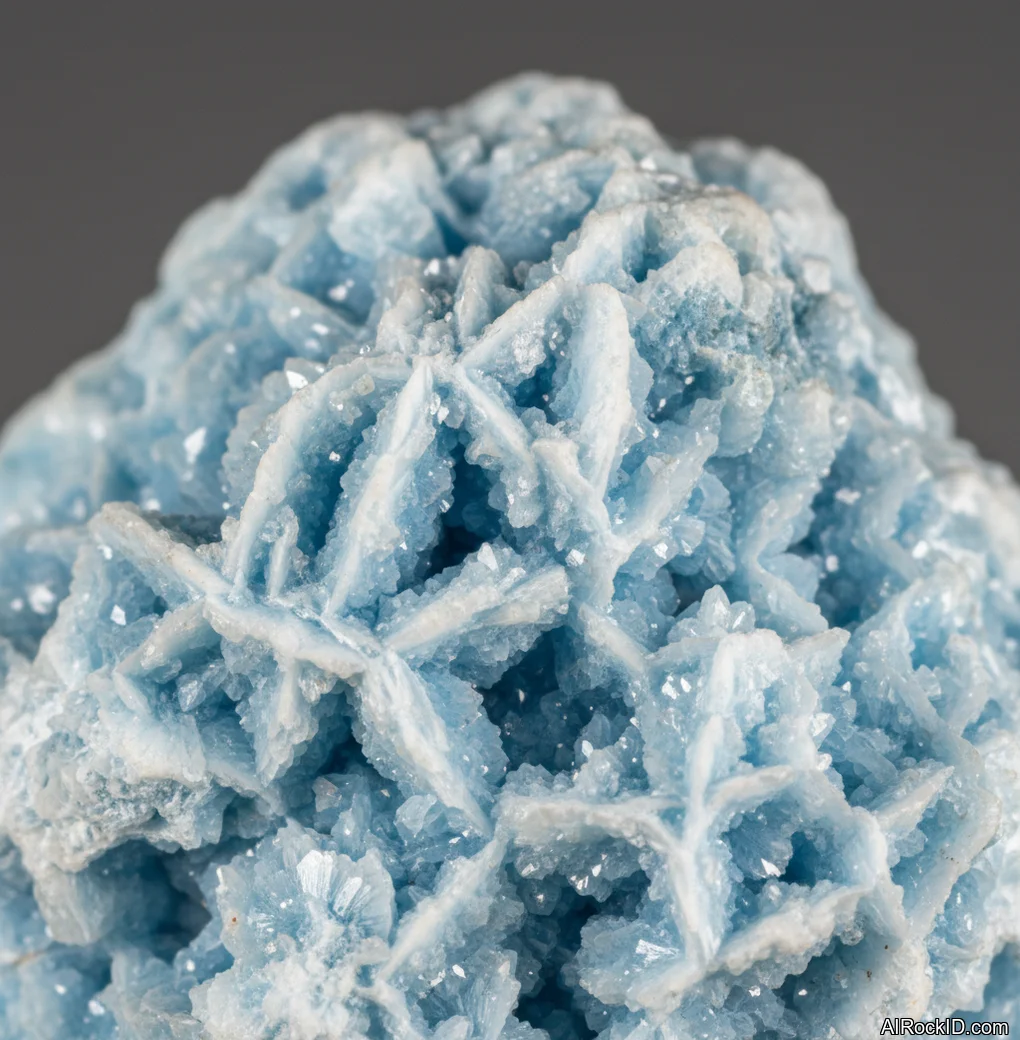
At a glance, people mix it up with smithsonite constantly, especially the soft blue material. But hemimorphite usually reads more glassy-silky in a display case, and a lot of pieces have these radiating sprays on broken edges that look like tiny paintbrushes. Once you’ve seen that, you don’t forget it.
Origin & History
Old mining books tossed the name “calamine” onto two totally different zinc minerals: hemimorphite and smithsonite. And yeah, that mix-up clogged up ore reports and museum labels for decades. You can still spot crusty little “calamine” tags at flea markets, usually on yellowed card stock with faded ink.
Hemimorphite didn’t even get treated as its own species until 1853, when Adolph Kenngott described it separately. The name’s pulled from Greek for “half shape,” because the crystals are hemimorphic. Meaning the two ends of a crystal don’t match. But here’s the thing: if you’re looking at the usual botryoidal stuff, that detail can be basically invisible. On sharp crystals, though? You can actually see one termination look different from the other, and it’s the kind of tiny, nerdy detail that makes collectors grin (me included).
Where Is Hemimorphite Found?
It forms in the oxidized zones of zinc deposits worldwide. The showy blue crusts most people chase often come from classic oxidized lead-zinc districts and carbonate host rocks.
Formation
Look at where it’s sitting in the rock and you can usually tell what happened. Hemimorphite is one of those late-stage oxidized-zone minerals that shows up after zinc sulfides, like sphalerite, start breaking down near the surface, and zinc-rich fluids slip through fractures and porous stone.
Most of the really good material turns up in carbonate rocks, especially limestone and dolostone, because the chemistry there just agrees with zinc silicates. You’ll run into it as thin crusts lining cavities (the kind that feel slightly waxy under a fingertip), as botryoidal coats draped over earlier minerals, or as those small radiating crystal fans that catch the light when you tilt them.
But it’s picky. If the fluids are short on silica, or the pH swings the wrong way, you end up with smithsonite or hydrozincite instead, and some dealers will still try to pass it off as hemimorphite if it’s the right shade of blue. Why wouldn’t they?
How to Identify Hemimorphite
Color: Common colors are white, colorless, pale blue, sky blue, and blue-green. Some pieces look almost milky with a hint of blue that only shows in daylight.
Luster: Luster ranges from vitreous to silky, and botryoidal surfaces can look waxy in photos.
Pick up the specimen and check the “skin” on botryoidal material: real hemimorphite often has a crisp, glassy-silky shine instead of the soft, greasy look some smithsonite gets. If you scratch it with a copper coin, you might get a faint mark on softer spots, but it won’t behave as soft as calcite and it won’t fizz in weak acid the way calcite does. The real test is a combo: hardness around 4.5 to 5, plus the common oxidized zinc association, plus that radiating internal texture you can spot on a fresh chip.
Properties of Hemimorphite
Physical Properties
| Crystal System | Orthorhombic |
| Hardness (Mohs) | 4.5-5 (Medium (4-6)) |
| Density | 3.4-3.5 g/cm3 |
| Luster | Vitreous |
| Diaphaneity | Transparent to translucent |
| Fracture | Uneven |
| Streak | White |
| Magnetism | Non-magnetic |
| Colors | Colorless, White, Pale blue, Sky blue, Blue-green, Gray |
Chemical Properties
| Classification | Silicates |
| Formula | Zn4Si2O7(OH)2·H2O |
| Elements | Zn, Si, O, H |
| Common Impurities | Cu, Fe, Mn, Pb, Cd |
Optical Properties
| Refractive Index | 1.613-1.635 |
| Birefringence | 0.022 |
| Pleochroism | Weak |
| Optical Character | Biaxial |
Hemimorphite Health & Safety
Normal handling is pretty low risk. But once you start cutting or sanding any mineral, you can kick up that super-fine dust that hangs in the air and ends up on your fingers and the bench, so you’ll still want the usual lapidary precautions.
Safety Tips
If you’re going to shape it or polish it, do it wet. Keep a spray bottle or a trickle of water going so the dust doesn’t puff up. And don’t skip ventilation, either, open windows, kick on a fan, whatever you’ve got. Use a proper respirator rated for particulates (not just a flimsy dust mask).
Hemimorphite Value & Price
Price Range
Rough/Tumbled: $20 - $600 per specimen
Cut/Polished: $10 - $60 per carat
Price shoots up fast if the piece has that clean blue color, a glossy botryoidal skin you can literally catch reflections on when you tilt it under a lamp, and solid provenance like Ojuela. But here’s the catch: a big chunk of what’s out there is just tiny crusts stuck to an ugly matrix, and those don’t move much price-wise.
Durability
Moderate — Scratch resistance: Fair, Toughness: Fair
It’s stable in normal room conditions, but the surface can bruise and scratch easier than people expect from how “glassy” it looks.
How to Care for Hemimorphite
Use & Storage
Store it so the botryoidal surface can’t rub against harder minerals. I keep mine in a small box with foam because those glossy curves pick up little scuffs fast.
Cleaning
1) Rinse briefly with lukewarm water. 2) Use a soft brush like a makeup brush or baby toothbrush to lift dust from crevices. 3) Pat dry and let it air-dry fully before putting it back in a closed container.
Cleanse & Charge
If you do energetic cleaning, stick to gentle methods like smoke, sound, or setting it on a piece of selenite. I avoid salt soaks because it’s unnecessary and can leave crusty residue in the druse.
Placement
Give it indirect light on a shelf where you can see the sheen roll across the surface. Don’t put it where it’ll get bumped, because edges chip easier than quartz.
Caution
Skip ultrasonic cleaners, strong acids, and scratchy polishing cloths. And don’t just drop it in your pocket rattling around with keys or any harder stones, because it’ll come out with little scuffs you can feel with your fingernail.
Works Well With
Hemimorphite Meaning & Healing Properties
Next to the louder stones, hemimorphite is quiet. When I’ve had a small tumbled piece in my pocket, it doesn’t hit like some huge surge of energy. It feels more like a nudge to slow down, shut your mouth for a second, and actually choose your words. And yeah, that’s just my read. It’s not medicine.
Most dealers selling it for metaphysical use link it to communication and emotional honesty, and I can see the logic. A lot of the pieces land in that soft, sky-blue range, and the surface just has this gentle feel to it. But look, crystal talk can get weird fast because people start promising the moon. Hemimorphite won’t fix anxiety, depression, or trauma by itself. What it can do, if you’re into this side of the hobby, is give you something physical to hold onto during journaling, therapy homework, or that one hard conversation you keep dodging.
Grab a polished cab and run your thumb over it for a minute. It’s slick right away, then you start catching those tiny temperature changes as your skin warms the stone (it’s subtle, but it’s there). That little sensory loop is honestly why I think some stones help people focus. It’s an attention tool. So if you want a practical use, park it next to your notebook and only touch it when you’re about to say or write something you actually mean.
Identify Any Crystal Instantly
Snap a photo and get properties, value, care instructions, and healing meanings in seconds.