Indonesian Blue Amber
What Is Indonesian Blue Amber?
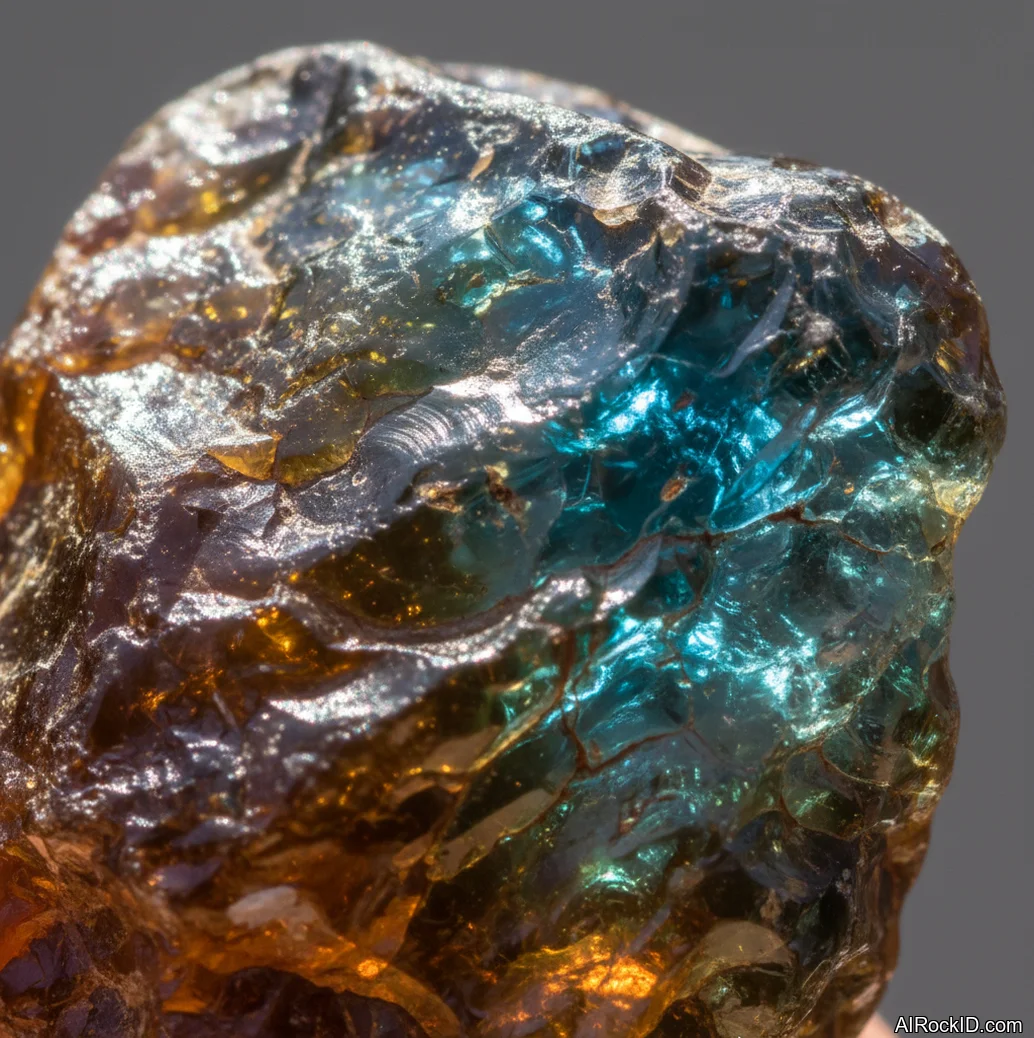
Indonesian Blue Amber is fossilized tree resin from Indonesia, and it throws off a blue glow (fluorescence) when you put it in strong sunlight or under UV light.
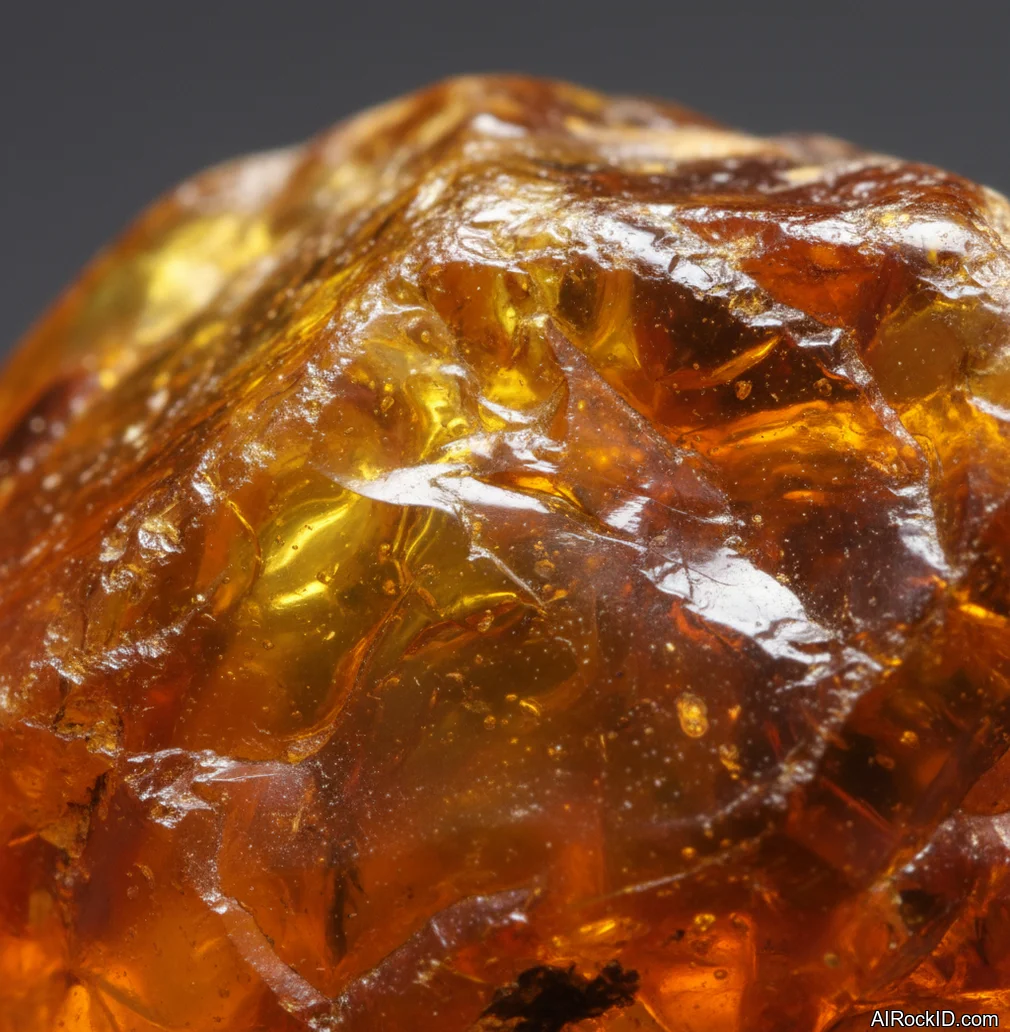
Most of the time, though, it doesn’t scream “blue” at you. You look at it and it’s just warm honey into cognac amber, sometimes with that tea-colored haze sitting in there like a fogged-up glass. But then you angle it by a window, or you hit it with a 365 nm UV torch, and the surface can snap into this electric blue. Not everywhere, either. It really pops along thin edges and where the polish curves.
Pick up a chunk and the first thing you notice is the weight. Or, honestly, how little weight there is. It feels almost toy-light next to quartz or calcite that’s the same size, which always throws people the first time.
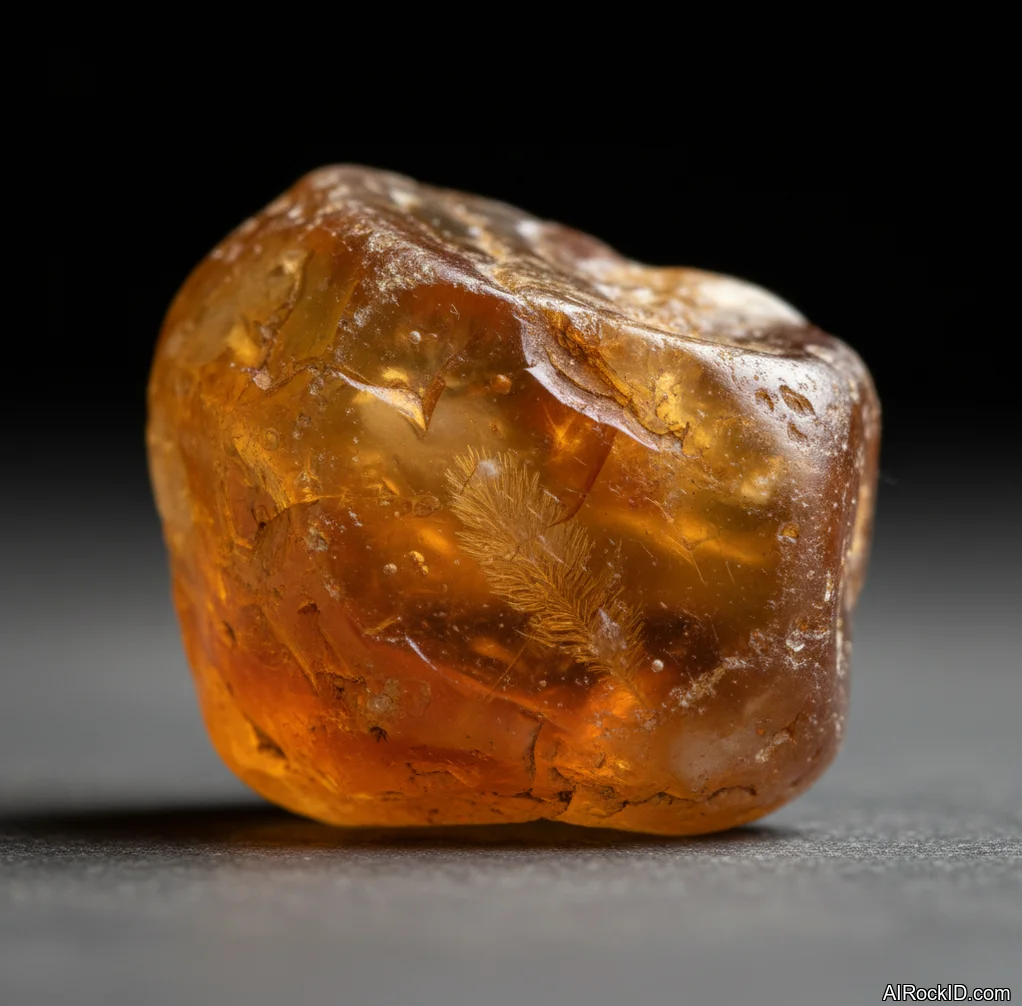
And if you get close, you’ll usually catch flow lines, tiny bubbles, or that wispy “smoke” trapped inside. That’s the good stuff. But it’s not tough. I’ve literally seen a nicely polished piece come out of someone’s pocket with a fresh scratch from their keys, and yeah, you don’t forget that.
Origin & History
Amber’s been written about and bought and sold since antiquity. But “blue amber” as a market term really came out of the gem trade, once people started calling attention to amber that throws off a strong blue fluorescence, especially the Dominican Republic stuff (the kind that can look almost electric under a UV lamp), and later pieces from other places too, including Indonesia.
The word “amber” itself has a funny paper trail. It runs back through Medieval Latin “ambra,” which originally meant ambergris, and only later settled into meaning fossil resin in European languages.
Indonesian material, though, gets pitched under a few different labels, and it changes with whoever’s doing the cutting and where it’s headed for export. Most dealers I’ve met don’t treat it like some separate species. They talk about it like it’s a fluorescence variety, then sort it by how strong the blue is and how evenly it shows under UV.
Where Is Indonesian Blue Amber Found?
Indonesian blue-fluorescent amber is traded from deposits in Indonesia, with material commonly associated with Sumatra and parts of Kalimantan.
Formation
Resin from certain trees oozed out as this sticky sap, the kind that grabs whatever it touches. You can actually picture it catching little air bubbles, crumbs of plants, and once in a while a tiny insect that got too close. Then it got buried under sediment, polymerized, and, over a long stretch of time, slowly turned into amber as oxidation and other chemical changes kicked in while pressure and time did their thing.
But amber isn’t like a crystal that grows in a little pocket of fluid. It’s basically organic plastic that nature cooked low and slow. That’s why it doesn’t have cleavage. It’s also why it can feel a little warm when you pick it up, and why you can sometimes get that resin smell if you rub it hard with a cloth (you know that faint piney, warmed-up scent?).
And that blue look? It isn’t a body color like sapphire. It’s about how light behaves. Fluorescent compounds in the amber soak up higher-energy light and then spit it back out as visible blue, so the effect can swing all over the place depending on the lighting and how thick the piece is.
How to Identify Indonesian Blue Amber
Color: Body color usually ranges from pale honey to deep cognac or tea-brown, while the “blue” shows up as surface fluorescence under sunlight or UV. The blue is strongest on thin edges and polished curves where light can skim the surface.
Luster: Resinous luster, often with a soft glow rather than a hard glassy shine.
Under UV light, real pieces can glow blue to blue-green, but don’t expect every chunk to look like a neon sign. The real test is weight and feel: amber is very light for its size and doesn’t have that cold, stony touch. If you scratch it with a copper coin or a steel needle in an inconspicuous spot, it’ll mark easily, and that softness is a big tell.
Properties of Indonesian Blue Amber
Physical Properties
| Crystal System | Amorphous |
| Hardness (Mohs) | 2.0-2.5 (Soft (2-4)) |
| Density | 1.05-1.10 |
| Luster | Resinous |
| Diaphaneity | Transparent to translucent |
| Fracture | Conchoidal |
| Streak | White |
| Magnetism | Non-magnetic |
| Colors | honey, cognac, tea-brown, yellow-orange, brown, blue fluorescence |
Chemical Properties
| Classification | Organic (fossil resin) |
| Formula | Variable organic polymers (no fixed formula) |
| Elements | C, H, O |
| Common Impurities | S, N |
Optical Properties
| Refractive Index | 1.54-1.55 |
| Birefringence | None |
| Pleochroism | None |
| Optical Character | Isotropic |
Indonesian Blue Amber Health & Safety
It’s usually fine to handle, and a quick splash of water won’t hurt it. The real problems come from physical wear: heat, alcohol-based cleaners, or anything abrasive that can scuff it up.
Safety Tips
Keep it away from acetone, perfume, and high heat. And don’t just chuck it in your pocket with coins or keys, because that’s how it gets scratched up fast.
Indonesian Blue Amber Value & Price
Price Range
Rough/Tumbled: $10 - $120 per piece
Cut/Polished: $2 - $15 per carat
Prices jump around based on how strong the fluorescence is, how clear the piece looks, and if you’re buying a clean cabochon or some chipped rough. Big, clear chunks that glow a hard blue under 365 nm UV go for more money. And sellers will tack on extra if there’s an insect inclusion and it’s actually intact (legs, wings, the whole thing).
Durability
Fragile — Scratch resistance: Poor, Toughness: Fair
It can scratch easily and can dull or craze with heat, solvents, or long sun exposure.
How to Care for Indonesian Blue Amber
Use & Storage
Store it in a soft pouch or a separate compartment so it doesn’t get rubbed by harder stones. And keep it out of hot cars, sunny windowsills, and near radiators.
Cleaning
1) Rinse quickly in lukewarm water if needed. 2) Wipe with a soft microfiber cloth and a tiny drop of mild soap. 3) Pat dry and let it air-dry fully before storing.
Cleanse & Charge
If you do energy-style cleansing, stick to gentle options like smoke, sound, or a quick moonlight sit. Skip salt bowls and avoid leaving it baking in direct sun for hours.
Placement
On a desk or shelf is great as long as it won’t get bumped. If you want to show the blue, set it where it’ll catch angled daylight, or keep a small UV light handy for display.
Caution
Skip ultrasonic cleaners and steam cleaners. Don’t use alcohol or acetone either, and keep it away from long stretches of heat or direct sunlight. Indonesian blue amber is soft, around Mohs 2 to 2.5, so it’ll scratch and pick up scuffs fast (even from something as simple as a gritty cloth).
Works Well With
Indonesian Blue Amber Meaning & Healing Properties
Next to heavier stones, amber just feels… easy. It sits in your hand without that cold, dense weight, and it almost looks warm before you even touch it. Light, comfortable, not fighting you. When I’m at a show sorting trays and my brain’s totally cooked, I’ll sometimes leave a little piece of amber in my palm for a minute, just because it’s calming in that plain, tactile way. Smooth. Quiet. Simple.
People in the crystal world tie amber to clearing mental clutter and taking the edge off stress. And yeah, I can see the logic. The blue-fluorescent stuff especially, it’s like this small trick of light you can “turn on” (that little pop when it catches the right angle), and it makes a good focus point for breathing or a quick meditation. But it’s still a vibe and tradition thing, not medicine. That part matters.
Thing is, there’s a practical angle too. Amber’s soft, so it makes you slow down whether you mean to or not. You don’t clack it against other stones, you don’t soak it in cleaners, and you don’t wear it the way you’d wear a sapphire ring. So the gentle handling becomes its own little ritual. And that’s usually where people say the “healing” part shows up for them. Funny how that works, right?
Identify Any Crystal Instantly
Snap a photo and get properties, value, care instructions, and healing meanings in seconds.