Ocean Picture Stone
What Is Ocean Picture Stone?
Ocean Picture Stone is just a trade name for picture jasper, an opaque microcrystalline quartz rock that shows off those scenic, ocean-ish patterns once it’s cut and polished.
Thing is, the first time you pick up a slab, you can tell right away it’s not “fluffy” like calcite or gypsum. It’s got that quartz feel in your hand. Cool on the fingertips at first, a bit heavier than most folks expect, and when you hit it with a good polish it gets that bright, almost-wet shine under a lamp (the kind where you keep tilting it to watch the light move).
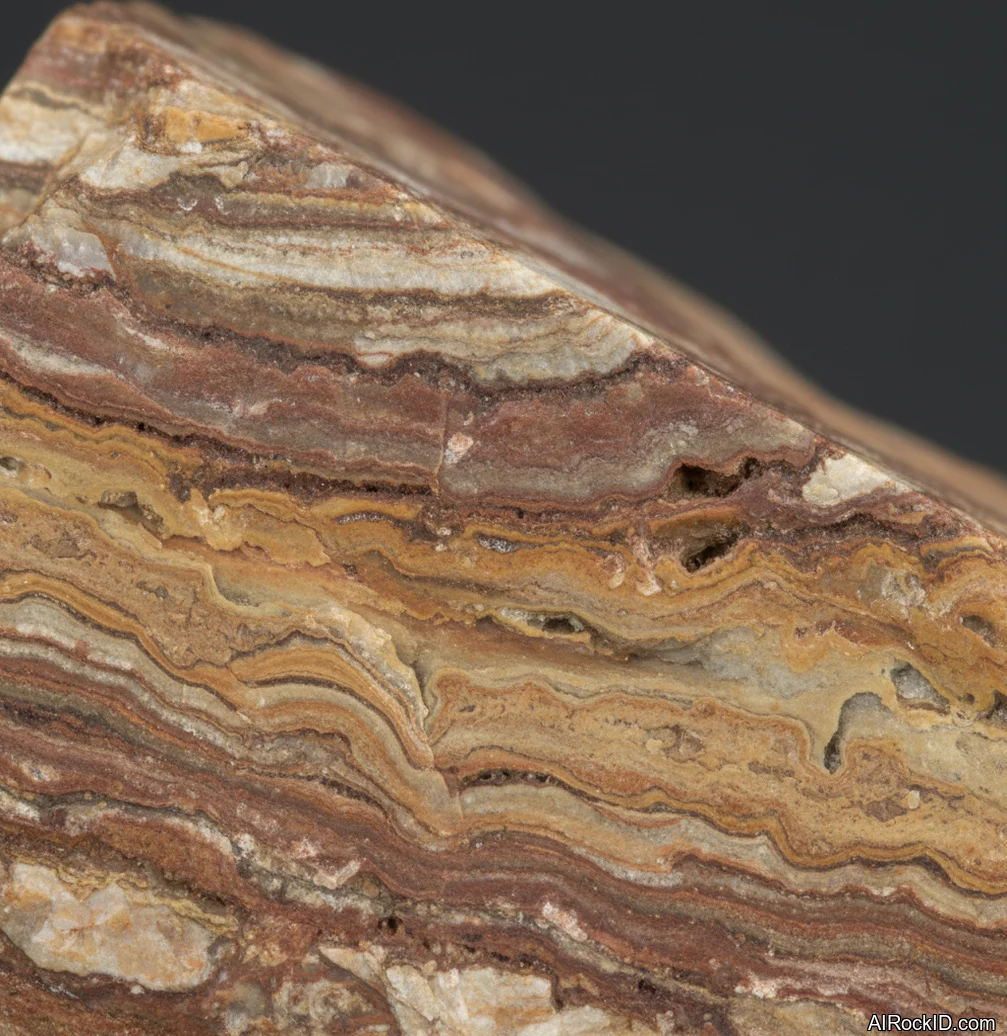
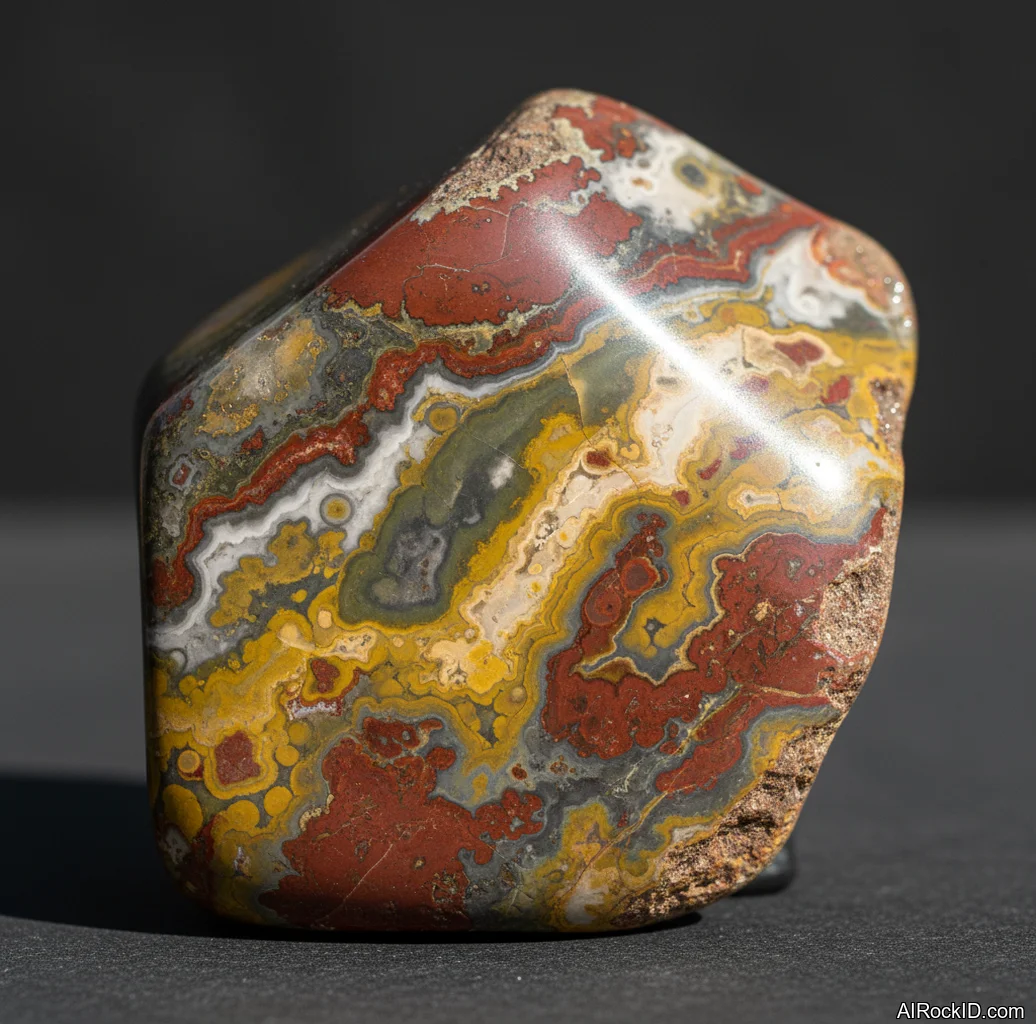
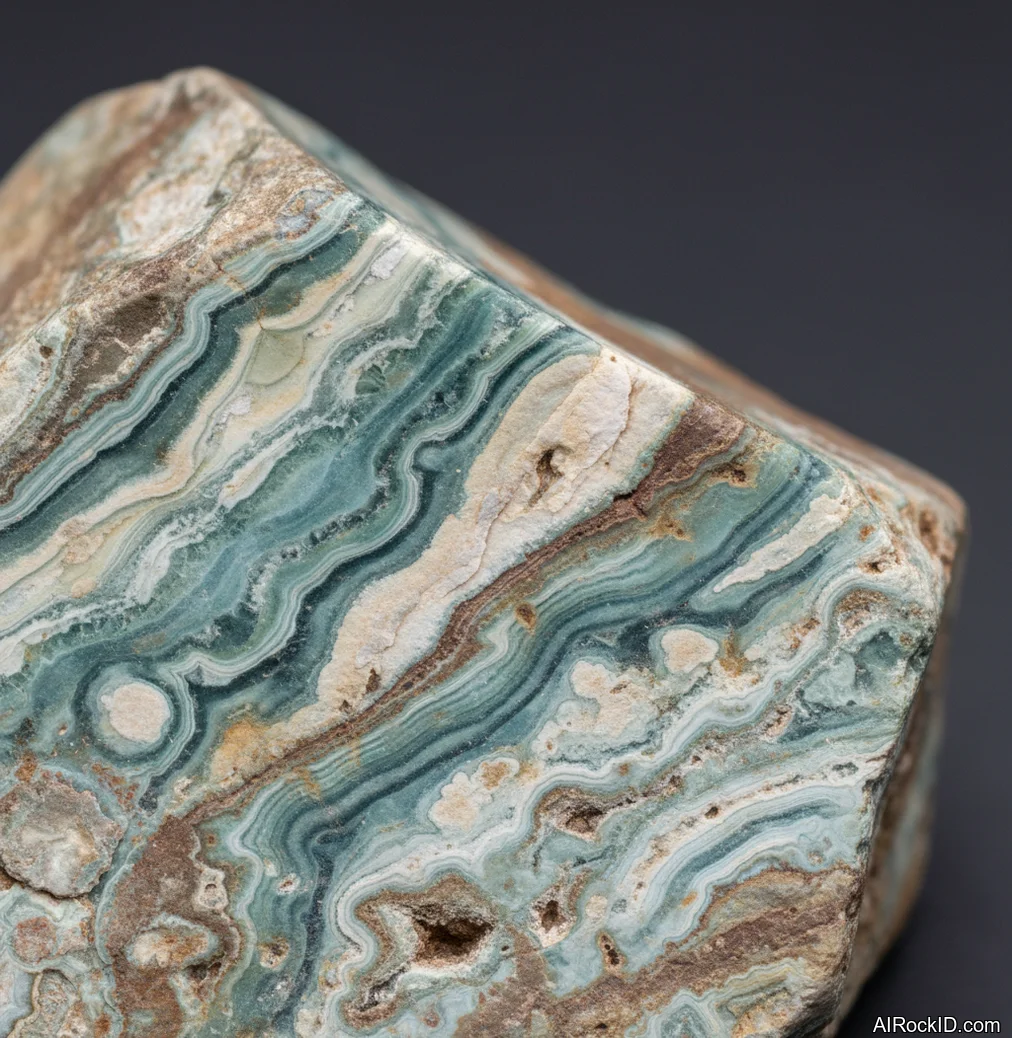
And visually? A lot of pieces read like a shoreline. Tan sand bands. Gray, stormy streaks. Blue-green patches that look like shallow water. But it’s not one mine, and it’s not some single recipe either. Dealers use the name for any picture jasper that lands in that ocean color range, so two “Ocean Picture Stones” from different sellers can honestly look like they came from different planets.
Origin & History
Most dealers treat “Ocean Picture Stone” as a descriptive lapidary name, not some officially defined mineral variety, and that’s basically the whole clue to its backstory. Picture jasper has been around the lapidary trade forever because it cuts clean, takes a polish nicely, and the patterns can look like landscapes, dunes, or clouds (the kind you end up tilting under a bench light to catch the shine).
The “ocean” part is just pattern talk. You’ll hear it at gem shows right when somebody flips open a tray of slabs and, sure enough, a few look like surf lines or sea cliffs, especially when the cut face still has that slightly chalky edge from the saw. I’ve seen sellers use the same term on material that’s clearly jasper from the American West, and on other stuff that reads more like banded chert. So the name stuck. Why? Because it’s easy to picture when you’re staring at a cab that looks like waves rolling in.
Where Is Ocean Picture Stone Found?
It’s sold as a lapidary material from several jasper-producing regions, especially the western United States and parts of Mexico; similar ocean-toned picture jaspers also show up in mixed lots from Madagascar.
Formation
Think silica mud and fluids squeezing through rock, then time taking forever to finish the job. Jasper shows up when microcrystalline quartz (chalcedony) replaces the host rock or plugs up little pockets in sedimentary or volcanic material, and iron oxides (plus other fine inclusions) settle in as thin layers.
Look, when you stare at a freshly cut face under decent light, those “wave lines” usually aren’t paint-swipe smooth. They’re tiny, slightly fuzzy borders where one silica-rich layer ran into the next, often with iron staining in reds, tans, browns, or with manganese and clay tinting things gray and muted green. And since it’s microcrystalline, you won’t see quartz crystals sparkling back at you. It reads more like a super tight mosaic, and it snaps and fractures the way quartz does. Kind of glassy. Kind of stubborn.
But the tricky part about trying to nail down one neat origin story is the name itself. “Ocean Picture Stone” is a label based on the look, so you’re really talking about a whole family of jaspers that ended up with a similar color-and-band pattern through similar processes in different places.
How to Identify Ocean Picture Stone
Color: Most pieces show layered tan, cream, gray, and blue-green bands, often with a shoreline or wave-break look across a flat face. Patterns are usually scenic and directional rather than random speckling.
Luster: Polished material has a glassy to waxy shine typical of jasper and chalcedony.
If you scratch it with a steel nail, it shouldn’t bite easily, and a fresh edge will scratch window glass. Pick up a tumbled piece and rub your thumb across it: real jasper feels slick and dense, not chalky. Cheap versions are usually dyed howlite or magnesite, and the giveaway is color pooling in tiny cracks or drill holes and a lighter, warmer feel in the hand.
Properties of Ocean Picture Stone
Physical Properties
| Crystal System | Trigonal |
| Hardness (Mohs) | 6.5-7 (Hard (6-7.5)) |
| Density | 2.58-2.65 |
| Luster | Vitreous |
| Diaphaneity | Opaque |
| Fracture | Conchoidal |
| Streak | White |
| Magnetism | Non-magnetic |
| Colors | tan, cream, brown, gray, blue-green, green, reddish-brown |
Chemical Properties
| Classification | Silicates |
| Formula | SiO2 |
| Elements | Si, O |
| Common Impurities | Fe, Mn, Al, Ca |
Optical Properties
| Refractive Index | 1.530-1.540 |
| Birefringence | None |
| Pleochroism | None |
| Optical Character | Uniaxial |
Ocean Picture Stone Health & Safety
You can handle it safely, and it’s totally fine if it gets wet. But if you start cutting or grinding it, you can kick up silica dust, the same gritty powder that clings to everything and ends up on your fingers. So treat it like any other quartz-based lapidary material.
Safety Tips
So, use wet cutting or wet grinding. If you’re going to kick up dust anyway, put on a properly fitted respirator that’s rated for fine particulates (and yeah, snug on the nose and cheeks, not just hanging there).
Ocean Picture Stone Value & Price
Price Range
Rough/Tumbled: $5 - $60 per piece
Cut/Polished: $1 - $8 per carat
Big, clean slabs are the ones that pull top dollar, especially when the “wave” scene reads sharp and clear and you’re not staring at a bunch of fractures when you tilt it under the light. But if the color looks muddy, the surface has a bunch of deep pits you can feel with your fingertip, or the pattern comes off blotchy up close, the price falls off in a hurry.
Durability
Durable — Scratch resistance: Good, Toughness: Good
It’s stable like most jasper and handles everyday wear well, but sharp edge impacts can chip polished corners.
How to Care for Ocean Picture Stone
Use & Storage
Store polished pieces in a pouch or a divided box if you don’t want them rubbing against softer stones or getting edge chips. And if it’s a slab, keep it flat so it doesn’t take a corner hit.
Cleaning
1) Rinse with lukewarm water to remove grit. 2) Wash with a drop of mild soap and your fingers or a soft toothbrush. 3) Rinse well and dry with a soft cloth.
Cleanse & Charge
If you do energetic cleaning, a quick rinse and a short rest on a windowsill with indirect light is plenty. Don’t bake it in harsh sun all day if you’re trying to keep colors from looking washed out over years.
Placement
I like it where light skims across the polish, like a shelf near a lamp, because the bands pop at an angle. In a bowl with other tumbled stones it can disappear unless the pattern is really bold.
Caution
Don’t breathe in the dust when you cut or sand this stuff. It hangs in the air and ends up tasting gritty in the back of your throat. Use water to keep the dust down, and crack a window or run a fan for ventilation. And skip harsh acids or bleach. They’ll dull the polish and they can stain those tiny micro-fractures (the little hairline ones you don’t always notice until the light hits just right).
Works Well With
Ocean Picture Stone Meaning & Healing Properties
Look, the reason people grab this one first is pretty obvious once you stare at it for a second. It’s the picture effect. When a stone already looks like surf lines and a far-off horizon, it ends up getting used like a visual anchor to calm down, slow your breathing, and step out of that spun-up headspace.
Pick up a palm stone and your grip almost loosens on its own because the surface is slick and steady, like it’s been rubbed smooth a thousand times. I’ve watched people at my table trace one “wave” band with their thumb over and over, the same way they’d use a worry stone. That’s practical. Real. No cosmic claims required.
But keep it in the right lane. Ocean Picture Stone isn’t a medical tool, and it won’t fix anxiety by itself. Thing is, what it can do (at least in my experience) is give you a physical cue to pause. Pair it with something simple like counting breaths or journaling, and the stone turns into a trigger for the routine, not the whole solution.
Identify Any Crystal Instantly
Snap a photo and get properties, value, care instructions, and healing meanings in seconds.