Peridot
What Is Peridot?
Peridot is the gem-quality green variety of the mineral olivine, a magnesium-iron silicate.
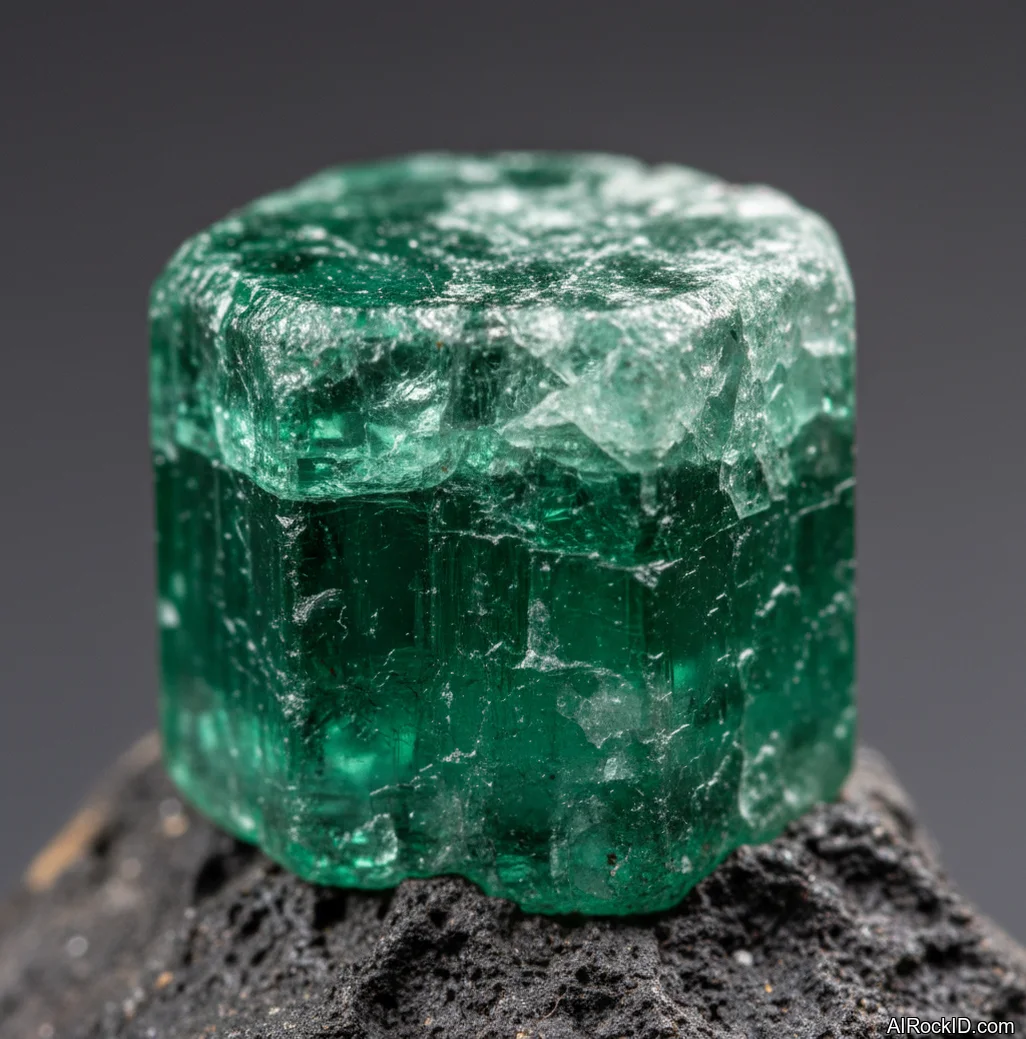
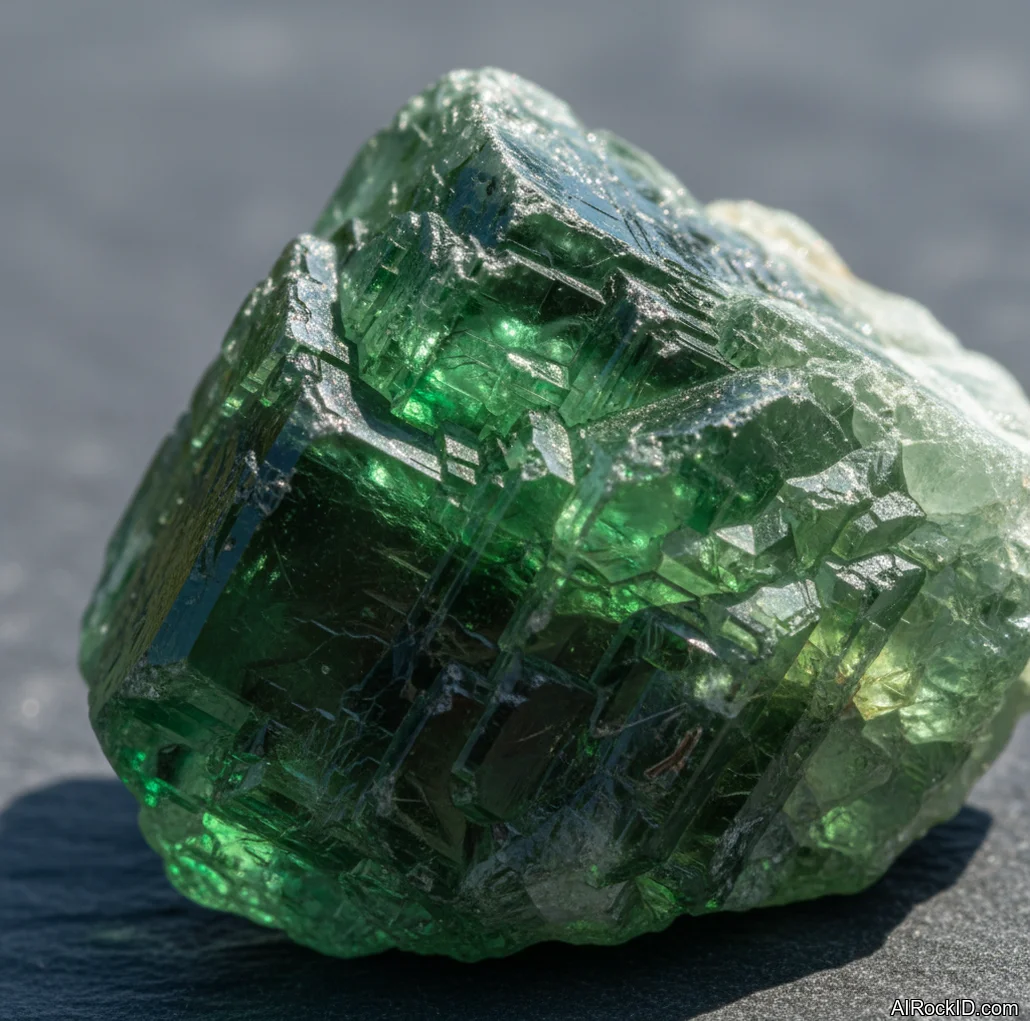
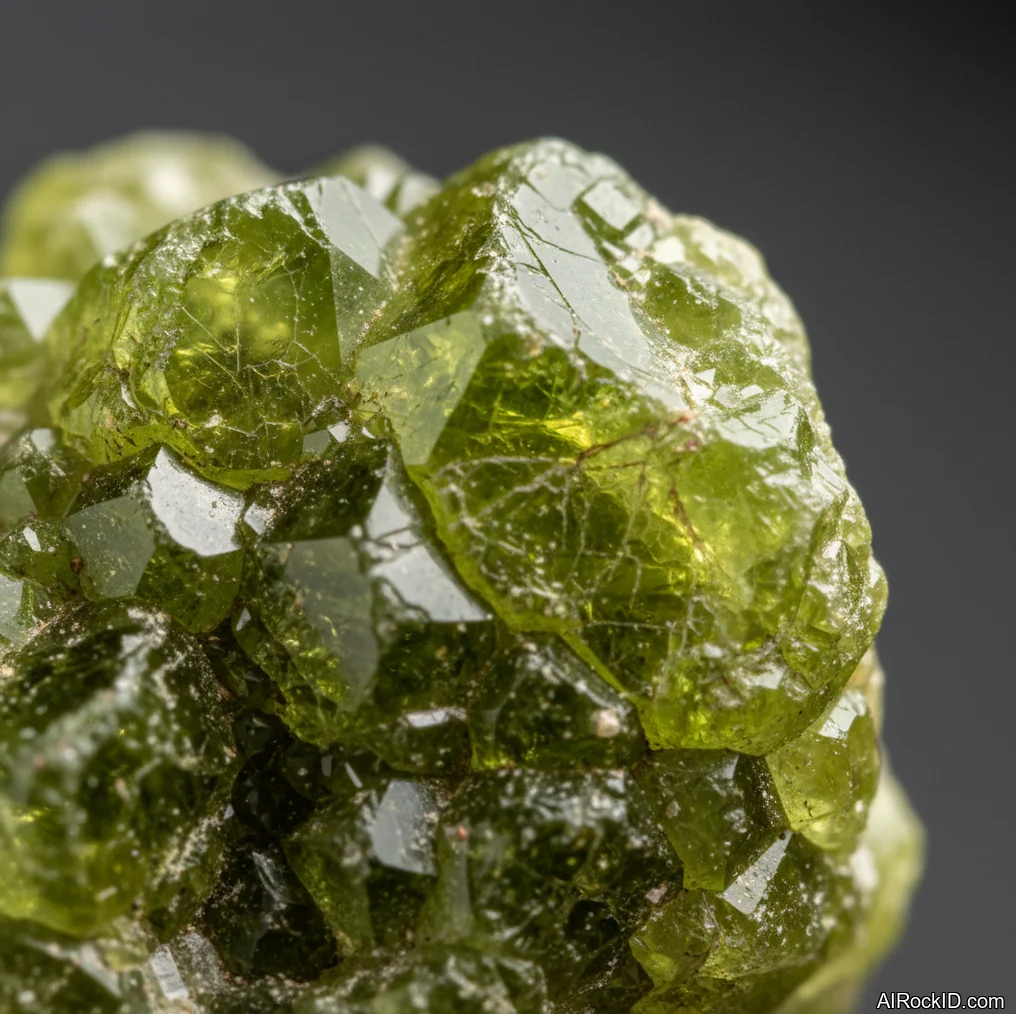
Pick up a nice peridot and you’ll catch it right away: the green usually leans a little yellow, like fresh lime peel, not that cooler blue-green you see in a lot of other “green stones.” In your hand, rough peridot feels glassy on the fresh broken faces, but kind of gritty where it’s weathered, and it tends to chip with those uneven, jagged-looking breaks instead of clean flat ones. I’ve gone through trays of tumbled “peridot” at shows where half the pile was just green glass, and the real pieces stayed cooler to the touch and had that slightly oily, high-gloss sheen when you tilt them under the lights (you know the look).
Most of what people run into is faceted. But the collector side is more fun. Raw crystals are usually short prisms or chunky grains, and honestly they don’t always look like much until you rotate them and catch a clean little window. Then it clicks. And when the material’s good, it’s hard not to just stare at it for a second.
Origin & History
“Peridot” starts popping up in French in the 18th century, and by the time mineralogy got a bit more buttoned-down, the word was already attached to that green gem coming out of places like Egypt’s Zabargad (St. John’s) Island. Before that, the trade name “chrysolite” got thrown around pretty casually for yellowish-green stones, and yeah, that led to centuries of jewelry mix-ups.
Look at enough antique pieces and you can tell peridot’s been on the move for a long time. Thing is, for ages people couldn’t even agree on what the stone actually was. Then chemistry and optics finally caught up, it landed where it belongs as olivine, and the gem name just stayed put.
Where Is Peridot Found?
Peridot turns up in basalt fields and mantle-derived rocks worldwide, with major gem sources in Pakistan and Arizona and classic historic material from Egypt.
Formation
Compared to a lot of crystal-shop darlings, peridot has a pretty no-nonsense backstory. It forms at high heat down in Earth’s mantle as olivine, then volcanoes haul it up closer to the surface. So it makes sense that so much peridot is tied to basalt flows, cinder cones, and those dark, heavy volcanic rocks that feel like a brick in your hand.
Raw basalt pieces with peridot in them? They can look downright ugly at first. Sometimes it’s just little green grains sprinkled through black rock, and sometimes you hit a pocket where the crystals actually had a bit of breathing room to grow. The best gem rough usually shows up as rounded pebbles or busted crystal chunks, not neat, pointy clusters like people expect. And yeah, peridot also turns up in meteorites (pallasites), but that’s a whole other collecting rabbit hole, and it’s priced like one too.
How to Identify Peridot
Color: Peridot is typically yellow-green to olive-green, and the best color is a clean green with a slight golden warmth rather than a cold bluish tone.
Luster: It has a vitreous (glassy) luster, sometimes with a faint oily look on good polished surfaces.
At first glance, people confuse it with green glass, tourmaline, or even some garnet, but peridot’s color usually stays “sunlit” even in shade. Look closely for round, lily-pad style inclusions or tiny reflective plates inside some stones, which you’ll see in natural material more often than in glass. The real test is a loupe and your hands: glass fakes often feel a bit warmer and show swirly bubbles, while peridot tends to have sharp-edged internal features and a crisp, glassy surface when freshly broken.
Properties of Peridot
Physical Properties
| Crystal System | Orthorhombic |
| Hardness (Mohs) | 6.5-7 (Hard (6-7.5)) |
| Density | 3.27-3.37 g/cm3 |
| Luster | Vitreous |
| Diaphaneity | Transparent to translucent |
| Fracture | Conchoidal |
| Streak | White |
| Magnetism | Non-magnetic |
| Colors | Yellow-green, Olive-green, Green, Brownish-green |
Chemical Properties
| Classification | Silicates |
| Formula | (Mg,Fe)2SiO4 |
| Elements | Mg, Fe, Si, O |
| Common Impurities | Ni, Mn, Cr |
Optical Properties
| Refractive Index | 1.654-1.690 |
| Birefringence | 0.036 |
| Pleochroism | Weak |
| Optical Character | Biaxial |
Peridot Health & Safety
Peridot (olivine) is usually fine to touch, and a quick rinse in water won’t hurt it. The bigger worry isn’t toxicity at all. It’s scratching or chipping the stone (those little edge dings you only notice once you catch it under a bright light).
Safety Tips
If you’re cutting or grinding it, handle it like any other lapidary job. Keep the dust out of your lungs. Run water over the cut and make sure you’ve got decent ventilation, because that fine powder hangs in the air longer than you think.
Peridot Value & Price
Price Range
Rough/Tumbled: $5 - $60 per piece (common tumbled/rough); $80 - $500+ for fine larger rough
Cut/Polished: $20 - $250 per carat (commercial to fine); $300+ per carat for top color and clarity in larger sizes
Color and clarity do most of the heavy lifting on price. And once you’re talking clean stones that are a few carats or more, the number climbs fast, like you can almost feel it the moment it hits the scale. Origin can matter, sure, but at the counter it’s really cut quality and that specific green that wins, the one that isn’t too yellow or too brown. That’s the one people stop on.
Durability
Moderate — Scratch resistance: Good, Toughness: Fair
Peridot is hard enough for everyday handling, but it can chip on edges and it doesn’t love hard knocks or abrasive dust.
How to Care for Peridot
Use & Storage
Store peridot away from harder stones like quartz, sapphire, or topaz since it can pick up scratches and edge chips. I keep mine in a small box with individual gem jars or soft pouches so the facets don’t kiss each other.
Cleaning
1) Rinse with lukewarm water and a drop of mild soap. 2) Use a soft toothbrush to gently scrub behind settings or along facet junctions. 3) Rinse well and pat dry with a soft cloth.
Cleanse & Charge
If you do the metaphysical side, a simple rinse and a quick rest on a windowsill out of direct sun works fine. But don’t bake it in sunlight all day, especially if it’s in a display case that heats up.
Placement
On a desk, peridot looks best under neutral white light where the yellow-green shows clean. For jewelry, protect rings from knocks and grit, since that’s where chips happen.
Caution
Skip ultrasonic or steam cleaners, especially if the stone’s faceted and has inclusions, or if it’s peridot sitting in a thin, sharp-edged setting. And don’t just toss it in your pocket with keys or sand, either.
Works Well With
Peridot Meaning & Healing Properties
Next to moodier greens like emerald or chrome diopside, peridot just reads brighter. Cleaner. Straight-up. When I’m sorting parcels at the desk and my brain gets stuck in that tight, irritated loop, it’s the stone I grab without thinking. It’s not subtle at all. It feels like clicking on an overhead light in a room that’s been dim for way too long.
Grab a piece and roll it between your fingers for a minute. I notice more of a “reset” than a “soothe” (if that makes sense). You can almost feel the edges and little facet junctions catching slightly on your fingertip as it turns. But there’s a line it can cross. If you get overstimulated easily, peridot can start to feel a little buzzy, especially the very bright yellow-green material under strong lighting. Like your eyes can’t quite relax.
Metaphysically, people tie peridot to emotional cleanup, self-honesty, and getting unstuck. Look, I’ll say it plainly: it’s not medicine, and it won’t replace sleep, therapy, or a real plan. But if you’re into this stuff, it can work as a physical cue. You see that clean green and you remember to unclench your jaw, take a breath, stop doom-scrolling. And honestly, isn’t that enough sometimes?
Identify Any Crystal Instantly
Snap a photo and get properties, value, care instructions, and healing meanings in seconds.