Picasso Jasper
What Is Picasso Jasper?
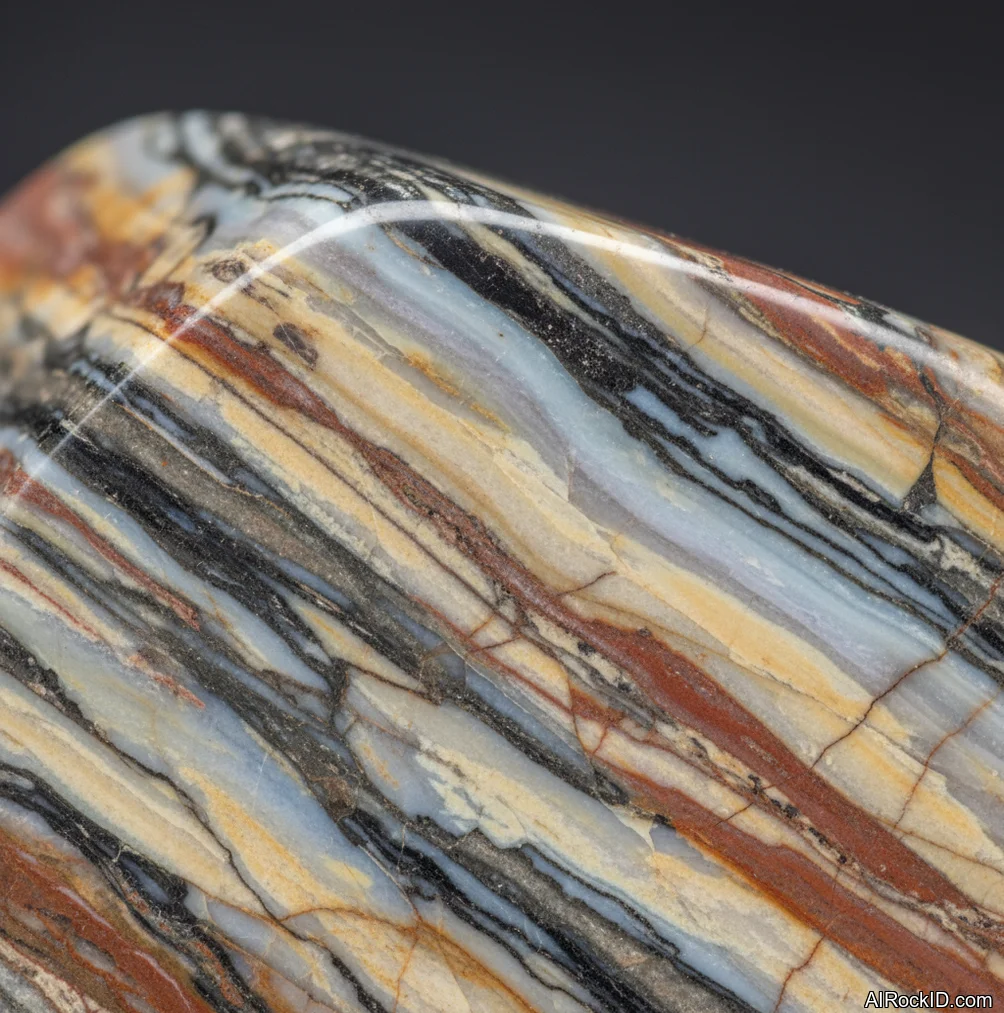
Picasso Jasper is a trade name for a patterned, jasper-like rock that’s made mostly of microcrystalline quartz (chalcedony), with darker veining running through it. Most of what you’ll run into is gray, cream, or tan, with black lines that honestly look like somebody dragged a charcoal pencil right across the face.
Hold a tumbled piece in your hand and you can feel that familiar quartz heft straight away. But it doesn’t have that slick, glassy vibe that clear quartz gets. It’s smoother, almost waxy to the touch, and the pattern doesn’t loop or repeat in that weird, too-perfect way dyed stuff does. At a glance, sure, it can read as “just another gray jasper.” But the better pieces have crisp, sketchy lines and those little blocky patches that really do look like abstract art (the name makes sense when you see one in good light).
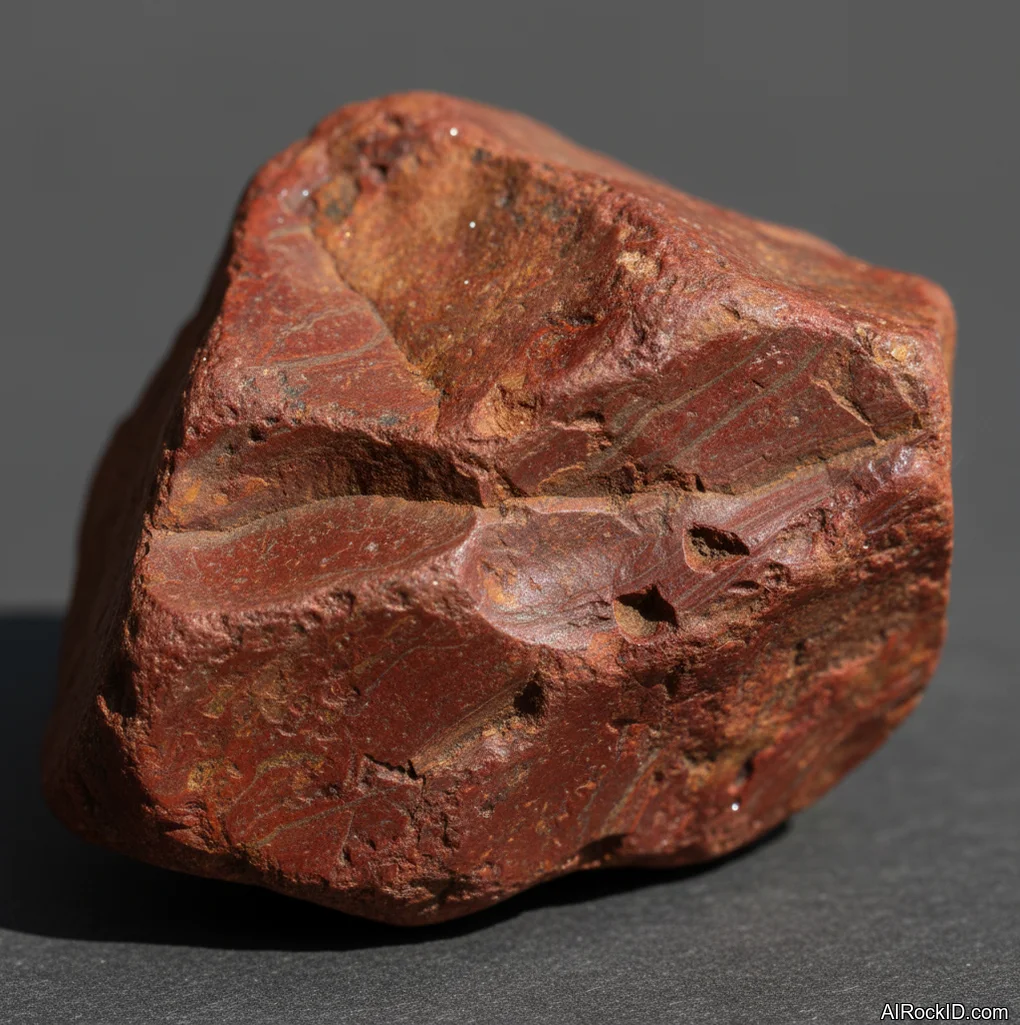
Most dealers move it as polished stones because the pattern really pops once it’s got a shine. Rough chunks are out there too, but they tend to look dull and kind of chalky on the outside until you cut a face into them. And yeah, it’s one of those stones that looks way better in person than it does in a flat online photo. Why is that always the case?
Origin & History
“Picasso Jasper” is really just a marketing name. It’s not an officially defined mineral species, and it’s not pinned to one classic spot the way Larimar is.
So why the name? It’s basically a wink at Picasso-style linework: quick black strokes, broken shapes, that sketchy, abstract look that feels like somebody dragged a marker across pale stone.
But then you’ll run into “Picasso marble” in the trade, and that’s where a lot of the confusion comes from. Some of what gets sold under this name is more calcite or dolomite rich and behaves more like marble, while a lot of what’s labeled Picasso Jasper is silica-rich and takes a jasper polish (the kind of smooth, glassier shine you notice when you tilt it under a light). Most shops don’t separate those carefully, so the label is really telling you the vibe and pattern, not a strict geology pedigree.
Where Is Picasso Jasper Found?
Commercial “Picasso Jasper” is commonly sourced from the western United States (often sold as Utah material) and from large lapidary deposits in Madagascar, with similar patterned stones also coming out of China and elsewhere.
Formation
Most of the silica-heavy material sold as Picasso Jasper follows the usual jasper and chalcedony setup: microcrystalline quartz that forms when silica-loaded fluids push through cracks and porous spots, then slowly harden up over time. The dark lines? Those are typically manganese or iron oxides that stained fractures, seams, or banding in the host rock.
Look, if you’ve got a polished slab in your hand and you tilt it under a lamp, you can sometimes tell the “drawing” isn’t a drawing at all. It’s a web of healed cracks and seams that got filled with minerals. Some pieces even look brecciated, like the rock snapped, shifted a bit, then got glued back together by silica. Odd, right?
But there’s a catch. Some “Picasso” material out there is more carbonate-rich, the so-called “marble” version, and that forms through metamorphism. It’ll be softer, and it’ll react more to acids.
How to Identify Picasso Jasper
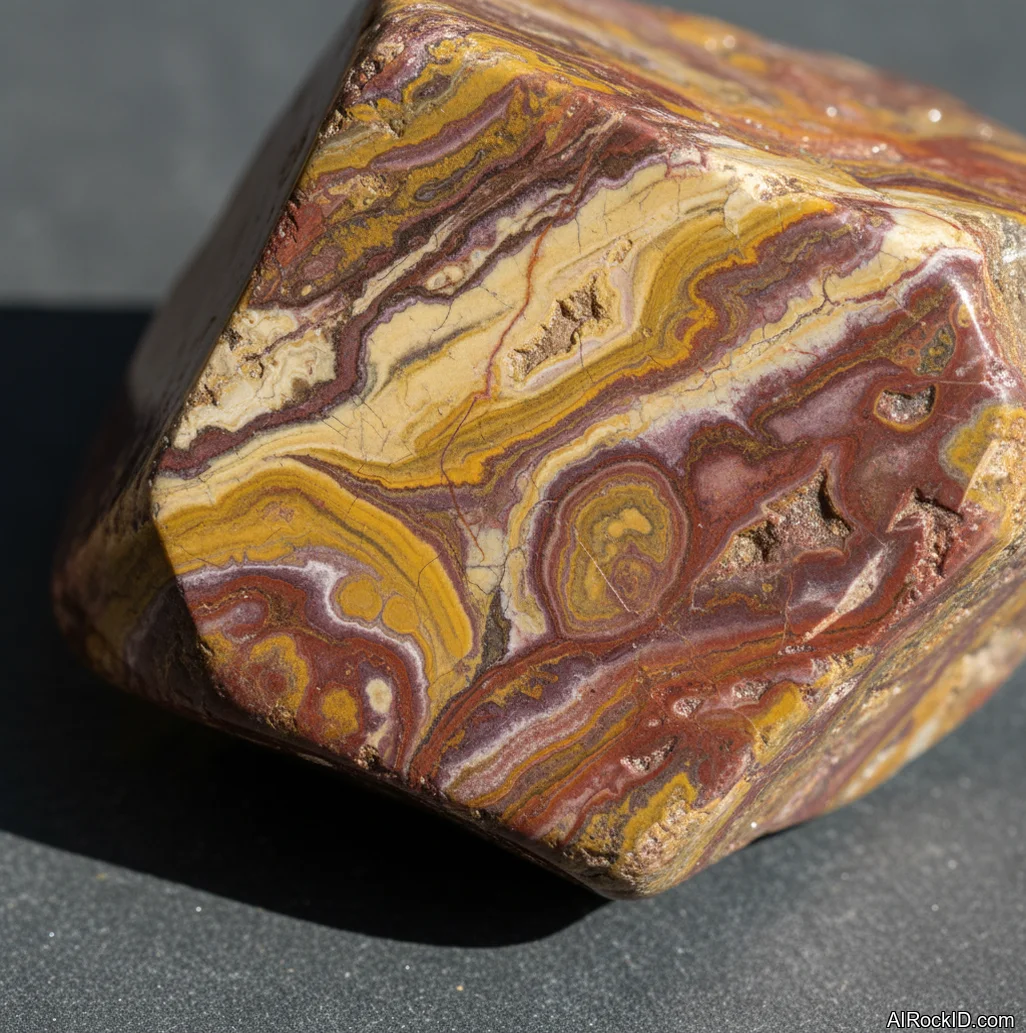
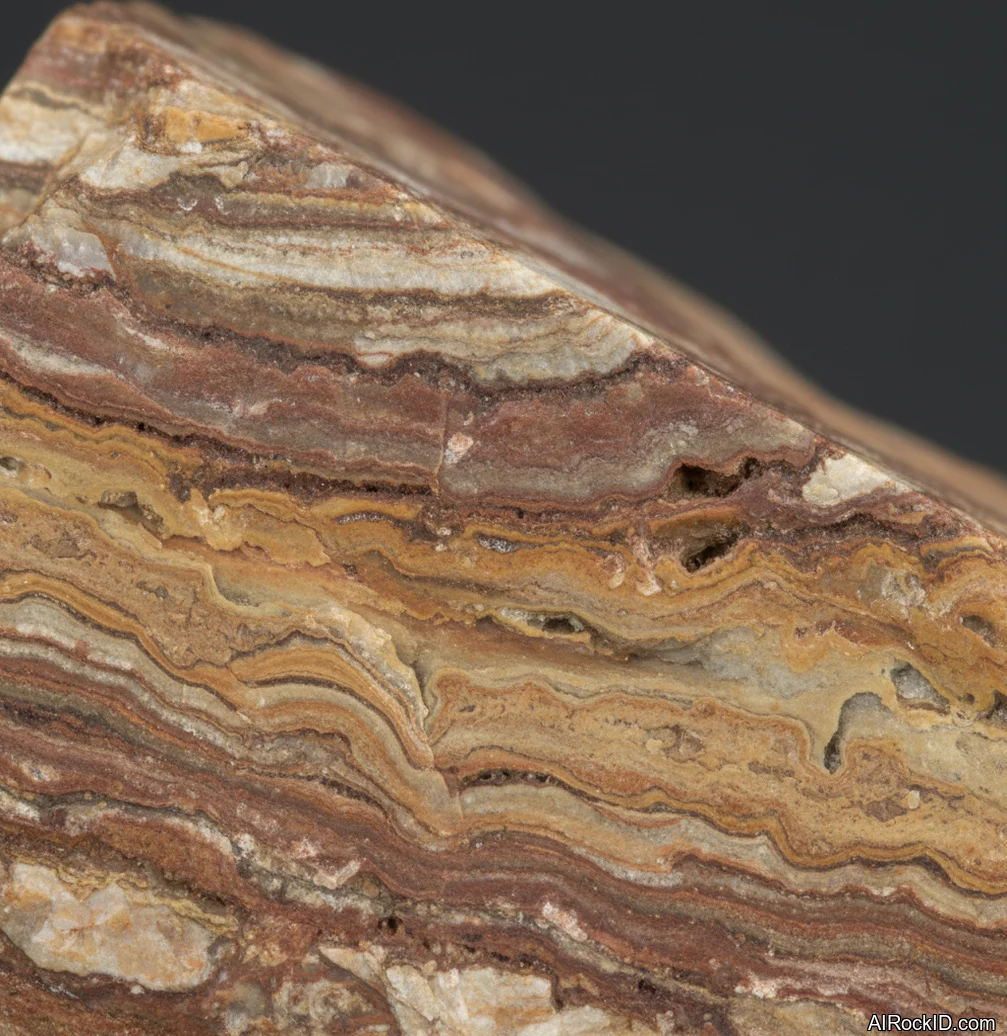
Color: Most pieces are medium to light gray with black webbing, plus cream, tan, or rusty brown patches. The pattern often looks like sketch lines, crosshatching, or blocky abstract shapes.
Luster: Polished pieces show a waxy to vitreous luster.
If you scratch it with a steel knife and it doesn’t bite, you’re probably in the silica-rich camp (around quartz hardness). If it scratches easily or fizzes with a tiny drop of vinegar on an unpolished spot, it’s more likely the “Picasso marble” type. The real test in the hand is temperature and feel: silica stays cool longer and feels slicker, while carbonate material warms faster and can feel slightly softer on edges.
Properties of Picasso Jasper
Physical Properties
| Crystal System | Trigonal |
| Hardness (Mohs) | 6.5-7 (Hard (6-7.5)) |
| Density | 2.58-2.65 g/cm3 |
| Luster | Waxy |
| Diaphaneity | Opaque |
| Fracture | Conchoidal |
| Streak | white |
| Magnetism | Non-magnetic |
| Colors | gray, black, cream, tan, brown, rust |
Chemical Properties
| Classification | Silicates |
| Formula | SiO2 |
| Elements | Si, O |
| Common Impurities | Fe, Mn, Al |
Optical Properties
| Refractive Index | 1.53-1.54 |
| Birefringence | None |
| Pleochroism | None |
| Optical Character | Uniaxial |
Picasso Jasper Health & Safety
Handling it is pretty low risk. But the second you start cutting or grinding, you can kick up respirable silica dust, the kind that hangs in the air and ends up in your lungs. So in lapidary work, wet cutting (that steady little trickle that turns the slurry gray) and proper respiratory protection are just standard safety.
Safety Tips
Cut and sand it wet when you can. Keep the area well ventilated (a fan pulling air out helps), and if you’re making dust, wear a properly fitted respirator rated for fine particulates.
Picasso Jasper Value & Price
Price Range
Rough/Tumbled: $3 - $25 per piece
Cut/Polished: $0.50 - $3 per carat
Price mostly comes down to pattern contrast and how clean the polish looks in your hand. Big slabs and matched cab pairs with sharp, crisp black linework usually run higher than those low-contrast gray tumbles that stay kind of hazy no matter how long you work them.
Durability
Durable — Scratch resistance: Good, Toughness: Good
It’s generally stable like other jaspers, but polished surfaces can dull if they rattle around with harder stones.
How to Care for Picasso Jasper
Use & Storage
Keep it in a pouch or a divided box if it’s polished, because quartz hardness means it can scratch softer neighbors and get scuffed by harder ones. I’ve pulled plenty of “mystery dull stones” out of a pocket and it was just jasper that got abraded by car keys.
Cleaning
1) Rinse with lukewarm water. 2) Use a drop of mild soap and a soft brush to get skin oils out of pits and seams. 3) Rinse again and pat dry; don’t bake it in direct sun to speed things up.
Cleanse & Charge
For a simple reset, rinse and let it air dry, or set it on a shelf overnight. If you use smoke cleansing, keep it brief so soot doesn’t cling to the polish.
Placement
It looks best where side light can rake across the face and show the lines, like near a lamp. If you’re using it as a worry stone, pick one with slightly rounded edges so it doesn’t bite your thumb.
Caution
If you think your piece could be that carbonate “Picasso marble,” skip acids and any of the harsher cleaners. And don’t leave it soaking for ages, either. Not sure? So try a tiny test on a hidden, rough little spot first.
Works Well With
Picasso Jasper Meaning & Healing Properties
Most people grab Picasso Jasper when they want something grounding that isn’t just a plain brown rock. In your hand, it feels steady. The patterns give your eyes a track to run on, and that’s why I keep seeing people use it as a tactile focus stone in meetings or while they’re journaling.
Pick up a palm stone and drag your thumb over one of those darker lines. You’ll catch tiny shifts in texture right where the veining hits the base color, even with a good polish. It’s subtle, but it’s there. And that little bit of feedback is kind of the point, because it pins your attention to what’s happening right now instead of letting your brain ricochet all over the place.
On the metaphysical side, it’s usually tied to organization, creative problem-solving, and sticking with a plan. But look, that’s tradition and personal practice, not medicine. If you’re the type who likes giving a stone a “job,” Picasso Jasper usually gets the “help me sort the mess” assignment, not the “blast me into the cosmos” one.
Identify Any Crystal Instantly
Snap a photo and get properties, value, care instructions, and healing meanings in seconds.