Preseli Bluestone
What Is Preseli Bluestone?
Preseli Bluestone is a blue-gray dolerite (diabase) from the Preseli Hills in Pembrokeshire, Wales, and it’s famous for being a source of some of the Stonehenge bluestones.
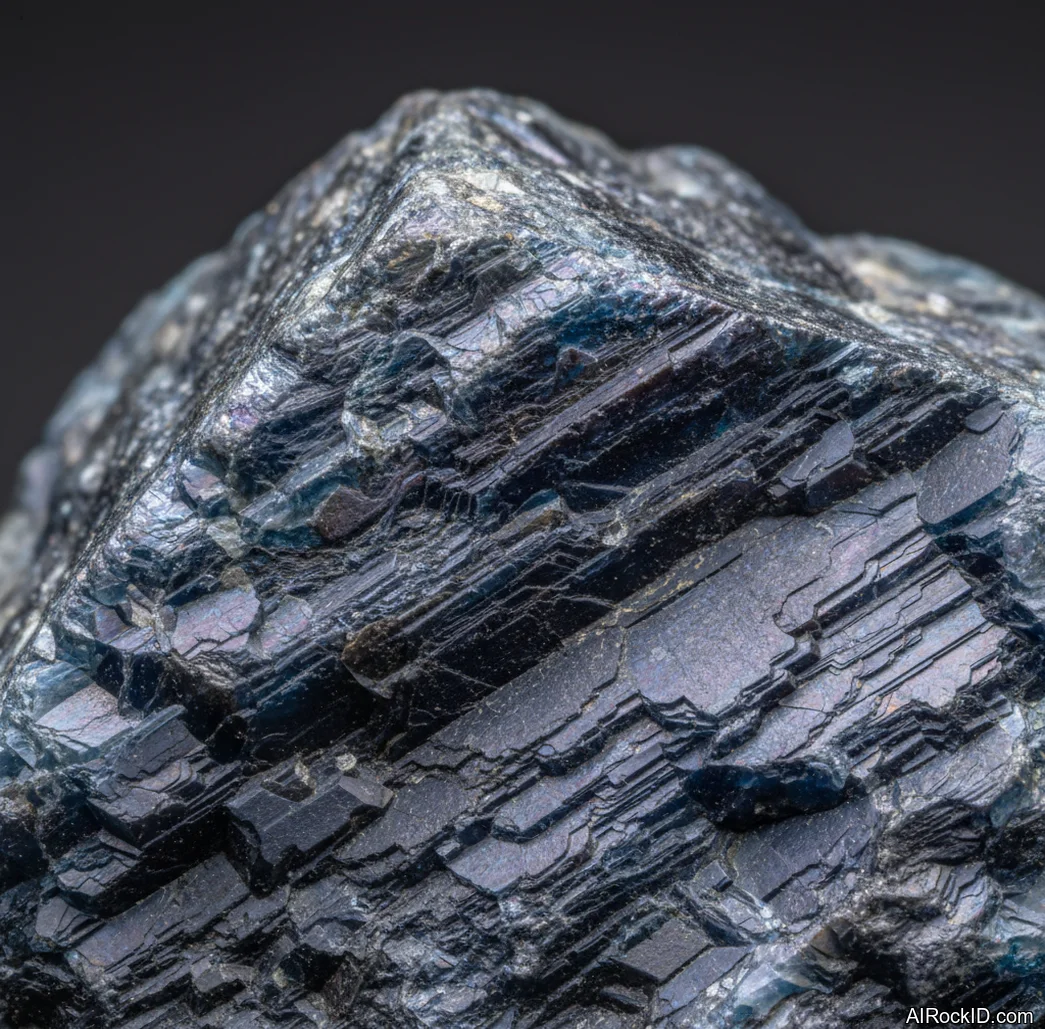
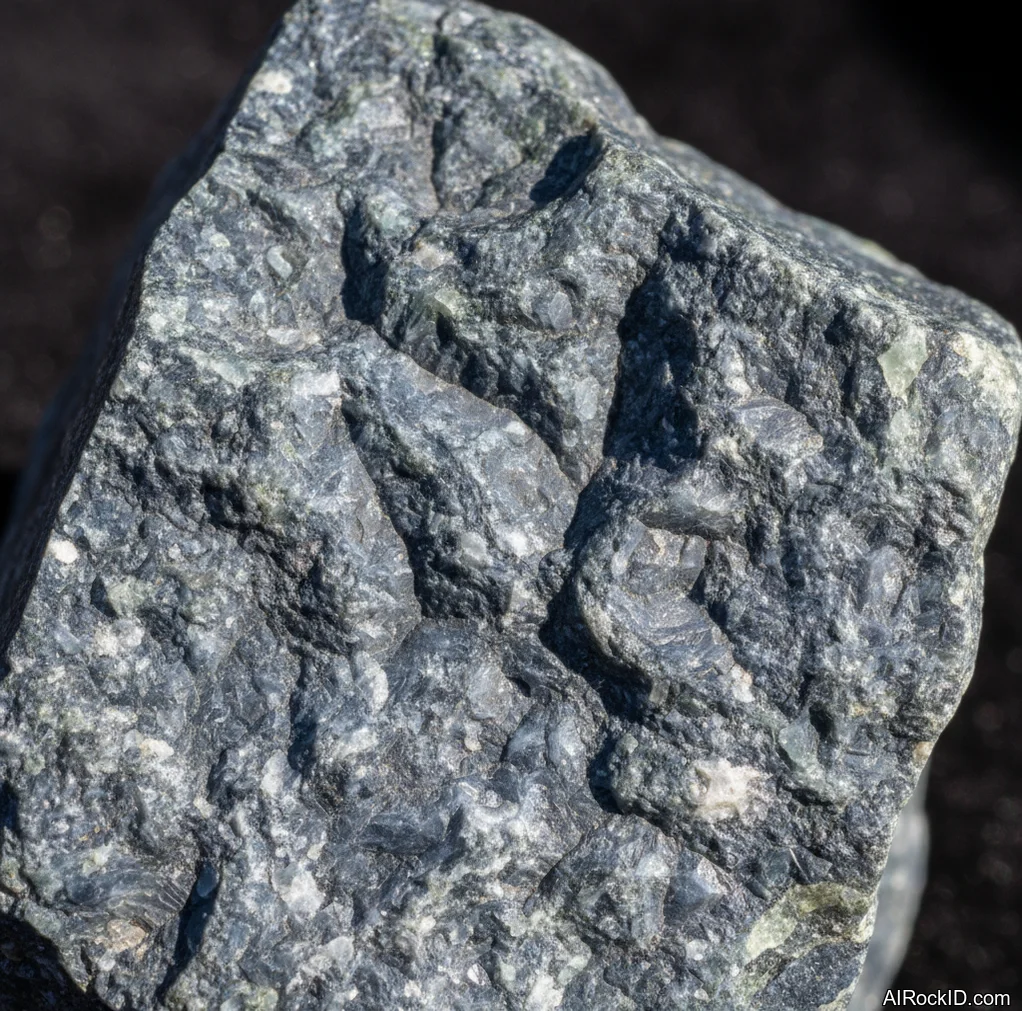
Pick up a decent hand sample and the first thing that hits you is the heft. It feels weirdly heavy for its size, like it’s been sneaking extra mass into your palm, and the surface has that tight, stubborn toughness you get from a rock that wants to be a tool stone, not something you set under glass. When it’s bone-dry it can look almost boring, honestly, running from dark gray to a greenish-gray. But rub it with a damp thumb (you can feel it go a little slick) and suddenly the “blue” part isn’t just marketing.
Look a little closer and you’ll usually catch tiny pale flecks of plagioclase sitting in a darker groundmass. Some chunks have that peppery scatter of black grains. Others show faint striping if the light hits at the right angle. And then there are the odd ones with those lighter blotches people call “spotted dolerite.” It doesn’t glitter like quartz. Not even close. It’s a solid, workhorse rock, the kind that looks better the longer you keep turning it over in your hand.
Origin & History
The word “bluestone” at Stonehenge comes from those early antiquarian write-ups where they basically lumped a handful of darker Welsh rocks into one bucket. Why? Because when you crack them fresh, or they’re soaked from rain, they can throw off that faint bluish cast you can actually see on the broken face. “Preseli” is just a place-name pointer. It’s referring to the Mynydd Preseli range up in north Pembrokeshire, where a few different outcrops line up well with what Stonehenge’s smaller standing stones are like.
But the modern sourcing stuff isn’t based on folklore or old stories. It’s petrography and geochemistry. Geologists have taken thin sections and compared the mineral textures and the chemistry of Stonehenge bluestones against outcrops in Preseli, and Carn Goedog plus Craig Rhos-y-felin keep coming up in the literature as key matches for particular Stonehenge stone types.
Where Is Preseli Bluestone Found?
Authentic Preseli Bluestone comes from the Preseli Hills in Pembrokeshire, Wales, where multiple dolerite and related igneous outcrops occur.
Formation
Preseli dolerite is an igneous rock that formed when mafic magma cooled under the surface. It cooled slowly enough that you can actually see grains with your eye, but not so slowly that it turned into a coarse gabbro. So what you’re holding is an old intrusion that later got pushed up, cracked apart, and then had the overlying material stripped off by erosion.
In a hand sample, it’s usually fine to medium-grained, mostly plagioclase and pyroxene. But it’s a rock, not one single mineral, so no two bits look exactly the same. Some pieces come off kind of “spotted,” others look pretty even. And a lot of them have that weathered rind on the outside, the duller skin that keeps the fresher blue-gray interior hidden until you knock a corner off (you can feel the difference when the chip snaps clean).
How to Identify Preseli Bluestone
Color: Usually dark gray to greenish-gray when dry, shifting to a clearer blue-gray when wet or freshly broken. Many pieces show pale feldspar specks against a darker matrix.
Luster: Mostly dull to slightly waxy on worn surfaces, with a weak vitreous look on fresh breaks in feldspar grains.
Pick up a piece and check the heft. Real dolerite feels denser than most “mystery blue stones” sold at shows, and it stays cool in your hand longer than glassy fakes. If you scratch it with a steel knife, it may mark slightly but it won’t gouge easily, and it’ll scratch common window glass. The problem with online listings is that lots of dark igneous rocks get called bluestone, so provenance from Wales is the big tell.
Properties of Preseli Bluestone
Physical Properties
| Crystal System | Amorphous |
| Hardness (Mohs) | 6-7 (Hard (6-7.5)) |
| Density | 2.9-3.1 g/cm3 |
| Luster | Dull |
| Diaphaneity | Opaque |
| Fracture | Uneven |
| Streak | grayish white |
| Magnetism | Non-magnetic |
| Colors | blue-gray, dark gray, greenish-gray, black, gray with white specks |
Chemical Properties
| Classification | Silicates |
| Formula | Rock mixture; common minerals include plagioclase ((Na,Ca)(Al,Si)4O8) and clinopyroxene (augite: (Ca,Na)(Mg,Fe,Al,Ti)(Si,Al)2O6) |
| Elements | Si, O, Al, Ca, Na, Mg, Fe |
| Common Impurities | Ti, Mn |
Optical Properties
| Refractive Index | None |
| Birefringence | None |
| Pleochroism | None |
| Optical Character | Isotropic |
Preseli Bluestone Health & Safety
Handling it is pretty low risk. The real headache is the dust if you’re sawing, grinding, or drilling, because that fine, gritty powder hangs in the air and gets everywhere (you’ll feel it on your teeth). And that’s just the usual silica dust hazard you run into with igneous rocks.
Safety Tips
If you’re going to cut or shape it, do it wet, put on a proper respirator, and don’t let that gritty slurry end up in your lungs or sitting in your sink trap (it hardens up like nasty gray mud).
Preseli Bluestone Value & Price
Price Range
Rough/Tumbled: $10 - $80 per piece
Price really comes down to provenance and finish. A labeled Wales piece with solid paperwork will cost more than some random tumbled “bluestone” tossed in a bin, and once you get into big, clean slabs (flat faces, crisp edges, no weird chips), the price shoots up fast.
Durability
Durable — Scratch resistance: Good, Toughness: Good
It’s stable in normal room conditions and doesn’t mind handling, but sharp impacts can chip edges along existing fractures.
How to Care for Preseli Bluestone
Use & Storage
Keep it in a tray or pouch if it’s polished, because it can scratch softer stones. Raw chunks can live on a shelf without drama.
Cleaning
1) Rinse under lukewarm water and rub with your fingers to lift grit. 2) Use a drop of mild soap and a soft brush for crevices. 3) Rinse well and towel dry so water spots don’t dull a polish.
Cleanse & Charge
If you do energy-style cleansing, running water or a short smoke cleanse works fine. I wouldn’t bother with salt baths because they don’t help and can leave crust in little pits.
Placement
On a desk or by the door it holds up well to daily touching. If you’ve got a polished face, angle it so light skims across it and the feldspar specks pop.
Caution
Don’t breathe in the dust if you’re cutting or grinding it. Treat it the same way you’d handle any rock that might have silica in it, because it does. And if it’s polished, go easy on the cleaners. No harsh acids, no strong bleach, unless you want that smooth, glossy surface to end up dull or blotchy (I’ve seen it happen).
Works Well With
Preseli Bluestone Meaning & Healing Properties
Most people grab Preseli Bluestone because of the Stonehenge tie-in, and yeah, I get it. It’s one of those stones that feels like you’re holding a place in your hand. When I’m going through my collection, this one reads way more “grounded” than “sparkly,” and honestly, that’s exactly why a lot of people want it.
Pick up a palm stone and it has this steady, heavy calm. Not sleepy, not floaty. More like that moment when you step off loose gravel and both feet hit solid rock again. If you use stones for meditation, this is the kind that keeps your attention from drifting, partly because it has real texture and weight, and partly because of those little pale grains you catch with your thumb as you rub the surface (they almost act like tiny markers).
But look, I’m going to be blunt about the market: plenty of sellers toss “Preseli” on any dark tumbled stone, and the “vibe” people talk about can be just as much story and expectation as the rock itself. So treat it like a personal practice tool, not a medical thing. And if what you like is that it’s a tough Welsh dolerite tied to a real archaeological puzzle, that’s already a solid reason to keep one around, right?
Identify Any Crystal Instantly
Snap a photo and get properties, value, care instructions, and healing meanings in seconds.