Purple Scapolite Marialite
What Is Purple Scapolite Marialite?
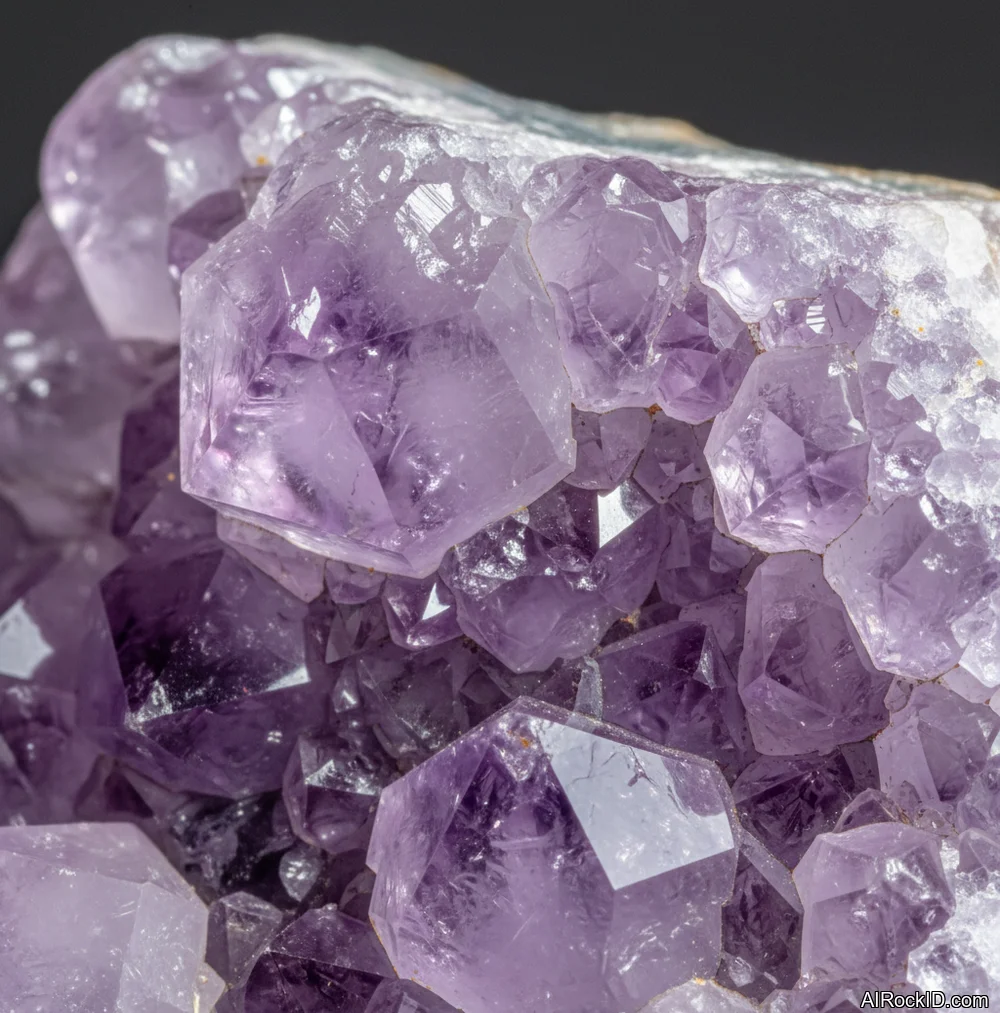
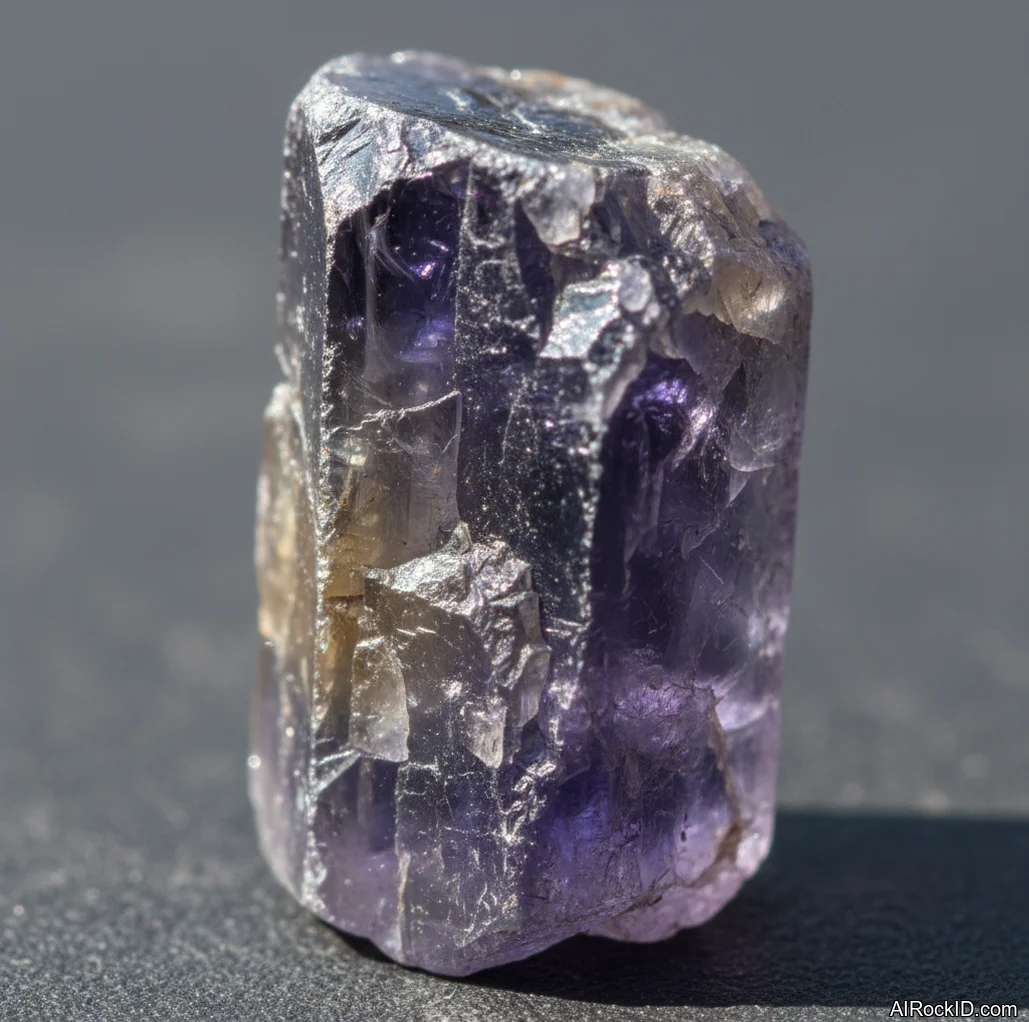
Purple Scapolite Marialite is the purple to violet kind of scapolite, sitting on the marialite rich end of the scapolite series.
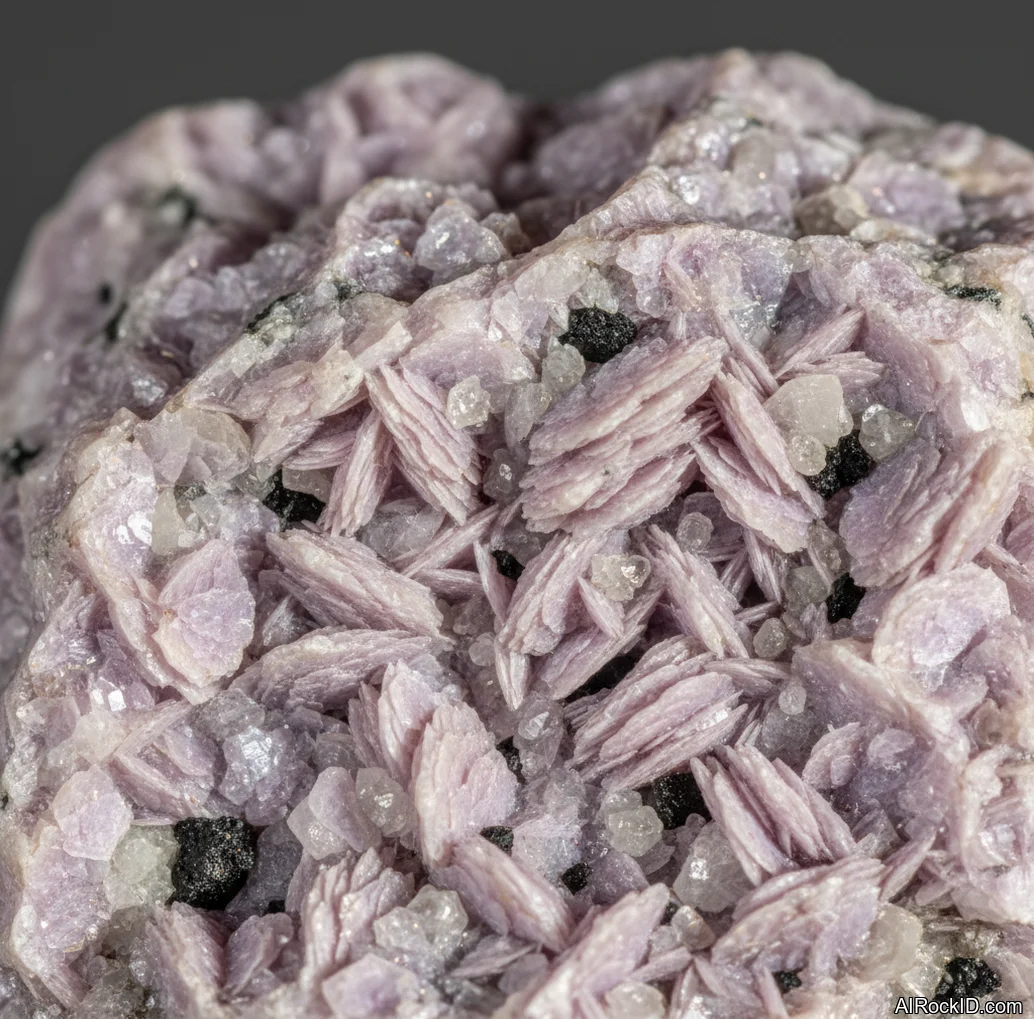
In your hand, it doesn’t feel like some glassy gem chunk. It feels like an actual mineral. Thing is, the cleavage gives it away: tilt it and you get those flat, platey flashes, and then the light falls off fast like somebody flicked a switch.
Grab a clean piece and you’ll notice it isn’t especially heavy for its size. But it has this crisp, blocky feel, kind of like feldspar, just with a better sparkle when you roll it between your fingers. The color can land anywhere from soft lavender to smoky violet, or that slightly grayish purple that looks stronger under warm indoor bulbs than it does in daylight (annoying, right?).
And if all you’ve ever handled is tumbled scapolite, raw marialite can catch you off guard. The edges can look sharp and architectural. So sharp, honestly, that you expect it to be tougher than it is. Then you knock it against harder stuff in a tray and it immediately tells you where the weak spots are.
Origin & History
Scapolite got its formal description back in the late 1700s, and the name’s pulled from the Greek “skapos,” meaning shaft or stem. That’s basically a wink at how it grows, with those column-ish crystals that look like little prismatic posts when you’ve actually had a piece in your hand and turned it under a lamp.
Marialite is the sodium and chlorine rich end-member of the scapolite group. It was named in the 1800s by J.D. Dana, and he named it for Maria, the wife of a mineral collector who’d supplied the specimens (the kind of backstory you only find tucked into old references, right?).
Thing is, scapolite’s always felt like an insider mineral for collectors. You’ll spot it in older European collections labeled from Alpine localities, and most modern material shows up at shows as tumbled stones or beads, with the occasional faceted gem when the clarity’s actually good enough.
Where Is Purple Scapolite Marialite Found?
Purple marialite shows up in metamorphic terrains and skarn-related zones where scapolite forms, with collectible material coming out of places like Minas Gerais and classic Alpine regions.
Formation
Most scapolite shows up when older rocks get heated up and chemically messed with, usually during regional metamorphism or in skarns where hot fluids chew through limestone or other calcium-rich rock. So you’re dealing with a setup where chlorine and sodium can actually get into the mix, and that’s when the marialite side of the chemistry starts taking over.
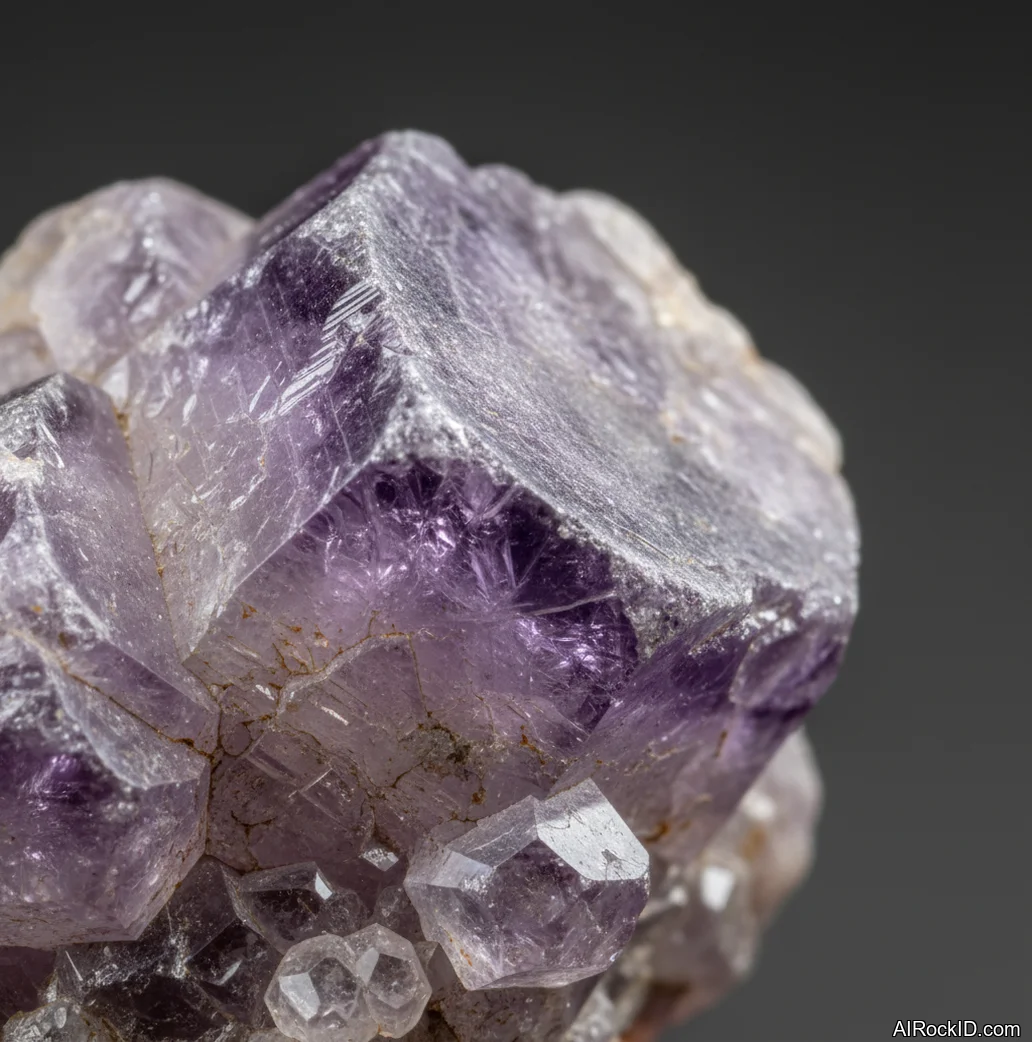
Look, stare at a lot of scapolite and the zoning basically tells on itself. Color shows up in bands, or it collects along fractures and those healed little cracks you can catch when you tilt the piece under a light. I’ve held chunks where one face is nearly colorless, then you flip it over and the other side has this faint violet wash. That isn’t “magic.” It’s just the growth conditions shifting while the crystal was still building itself.
How to Identify Purple Scapolite Marialite
Color: Typical color ranges from pale lavender to medium violet, sometimes with gray or smoky undertones and uneven zoning. Some pieces look more purple under warm light and more washed out in daylight.
Luster: Vitreous on fresh faces, with bright flashes on cleavage planes.
If you scratch it with a steel blade, it’ll usually resist a little, but it won’t feel as bulletproof as quartz. The real test is the cleavage flash: rotate it under a single overhead light and you’ll catch broad, flat reflections that come and go fast. And compared to amethyst, purple scapolite often looks less “juicy” and more airy inside, with a slightly feldspar-like vibe rather than a quartz glow.
Properties of Purple Scapolite Marialite
Physical Properties
| Crystal System | Tetragonal |
| Hardness (Mohs) | 5.5-6 (Medium (4-6)) |
| Density | 2.55-2.75 g/cm3 |
| Luster | Vitreous |
| Diaphaneity | Transparent to translucent |
| Fracture | Uneven |
| Streak | White |
| Magnetism | Non-magnetic |
| Colors | Lavender, Violet, Purple, Grayish purple, Colorless (in zones) |
Chemical Properties
| Classification | Silicates (tectosilicates) |
| Formula | Na4Al3Si9O24Cl |
| Elements | Na, Al, Si, O, Cl |
| Common Impurities | K, Ca, S, Fe, Mn |
Optical Properties
| Refractive Index | 1.540-1.555 |
| Birefringence | 0.010-0.015 |
| Pleochroism | Weak |
| Optical Character | Uniaxial |
Purple Scapolite Marialite Health & Safety
Purple scapolite marialite is safe to pick up and handle, so normal day-to-day contact isn’t something to worry about. But if you’re cutting or grinding it, don’t breathe in the fine dust, same as you’d avoid mineral dust from any rock (that gritty stuff gets everywhere).
Safety Tips
Use wet cutting and basic respiratory protection if you’re going to lap or saw scapolite. Rock dust gets everywhere, too, so wash your hands when you’re done (especially before you eat or touch your face).
Purple Scapolite Marialite Value & Price
Price Range
Rough/Tumbled: $15 - $120 per piece
Cut/Polished: $20 - $150 per carat
Price shoots up fast when the clarity’s there and the purple is actually purple, not washed out. But it falls off a cliff just as quickly if the stone’s riddled with fractures or it’s mostly gray once you tilt it under the light. Clean, facetable marialite is where things get genuinely competitive.
Durability
Moderate — Scratch resistance: Fair, Toughness: Fair
It’s generally stable in normal room conditions, but cleavage and internal fractures mean it can chip if you knock it around in a pocket or display tray.
How to Care for Purple Scapolite Marialite
Use & Storage
Store it in a padded box or a compartmented case so harder stones don’t rub it up. I’ve seen scapolite get little edge bites just from riding in a mixed flat at a show.
Cleaning
1) Rinse with lukewarm water and a drop of mild soap. 2) Use a soft toothbrush to get into pits and along cleavage steps. 3) Pat dry and let it air-dry fully before putting it back in a closed container.
Cleanse & Charge
If you do energetic cleansing, stick to gentle options like running water, smoke, or a short rest on selenite. Avoid long sunbaths if your piece seems prone to fading or looks better in lower light.
Placement
A small stand with side lighting works great, because cleavage flashes show up best from an angle. Keep it away from the edge of a shelf where it can take a fall.
Caution
Don’t hit faceted scapolite with an ultrasonic or a steam cleaner. Those little fractures and cleavage planes are just waiting to pop, and that’s how you end up with a fresh chip on a facet edge. And don’t just drop it in your pocket with quartz or corundum either, unless you’re cool with random scratches showing up later (ask me how I know). Quartz and corundum are hard, and in a pocket they’ll rub right against the scapolite like sandpaper.
Works Well With
Purple Scapolite Marialite Meaning & Healing Properties
At first glance, most folks toss purple scapolite into the same bucket as the usual purple stones, but in my hand it doesn’t read like amethyst at all. It’s not a “soft blanket” vibe. It feels more like a mental tidy-up. When I leave a piece on my desk, it nudges me to straighten out my thoughts, close a few of those open tabs, and just get on with it. Practical. No fluff.
But look, I’m not going to pretend there aren’t limits. Any metaphysical angle here is personal and based on tradition, not medical. If you’re buying purple marialite because you want a guaranteed outcome, you’re probably going to walk away annoyed. What it does really well in a collection is bring in a calmer, cooler purple presence that still looks mineral-real (not dyed, not glassy).
Pick up a raw crystal and roll it between your fingers for a minute. You can feel the edges and those flat planes right away, and that makes an easy focus cue for meditation: notice the texture, catch the way the light shifts as you turn it, and then pull your attention back to right now. That’s the kind of “working with it” I actually see people keep doing, because it’s tied to something you can literally observe. Why fight that?
Identify Any Crystal Instantly
Snap a photo and get properties, value, care instructions, and healing meanings in seconds.