Iolite
What Is Iolite?
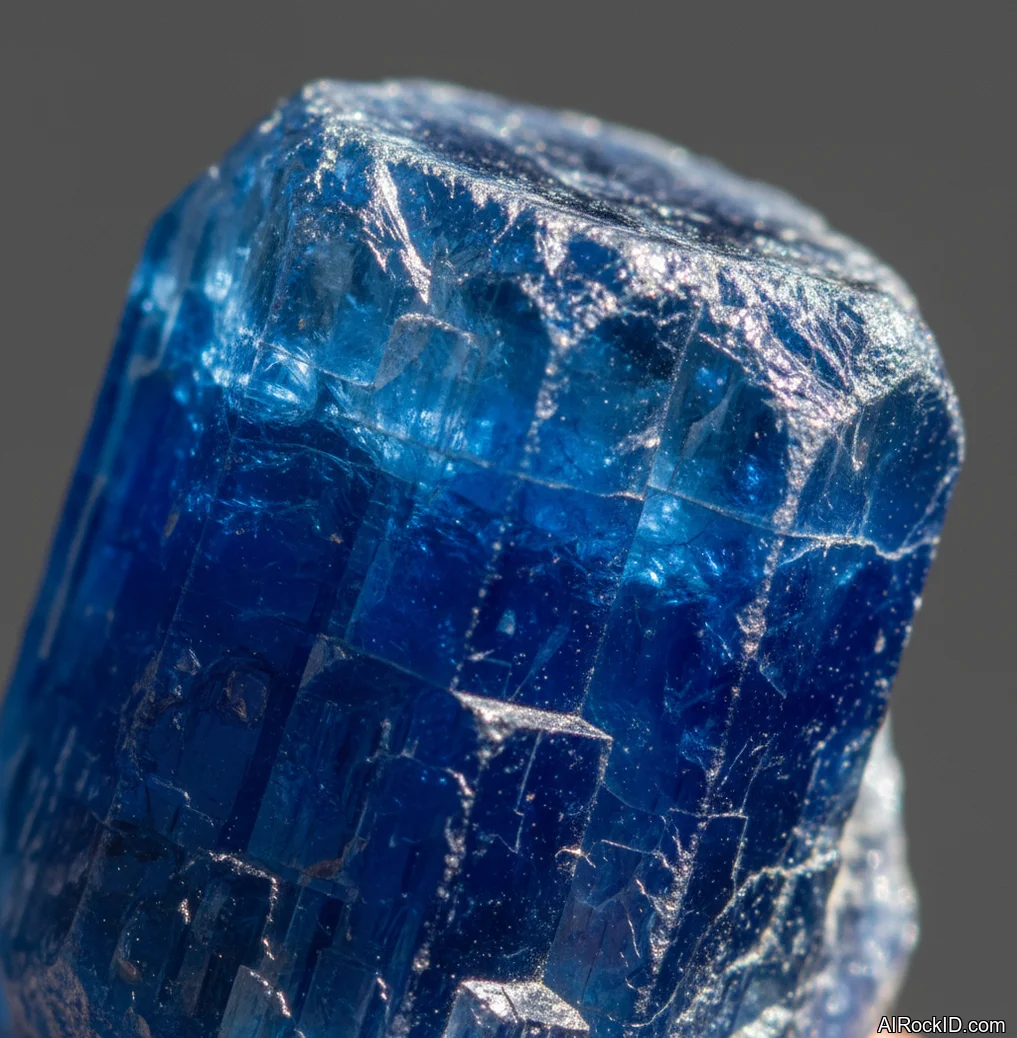
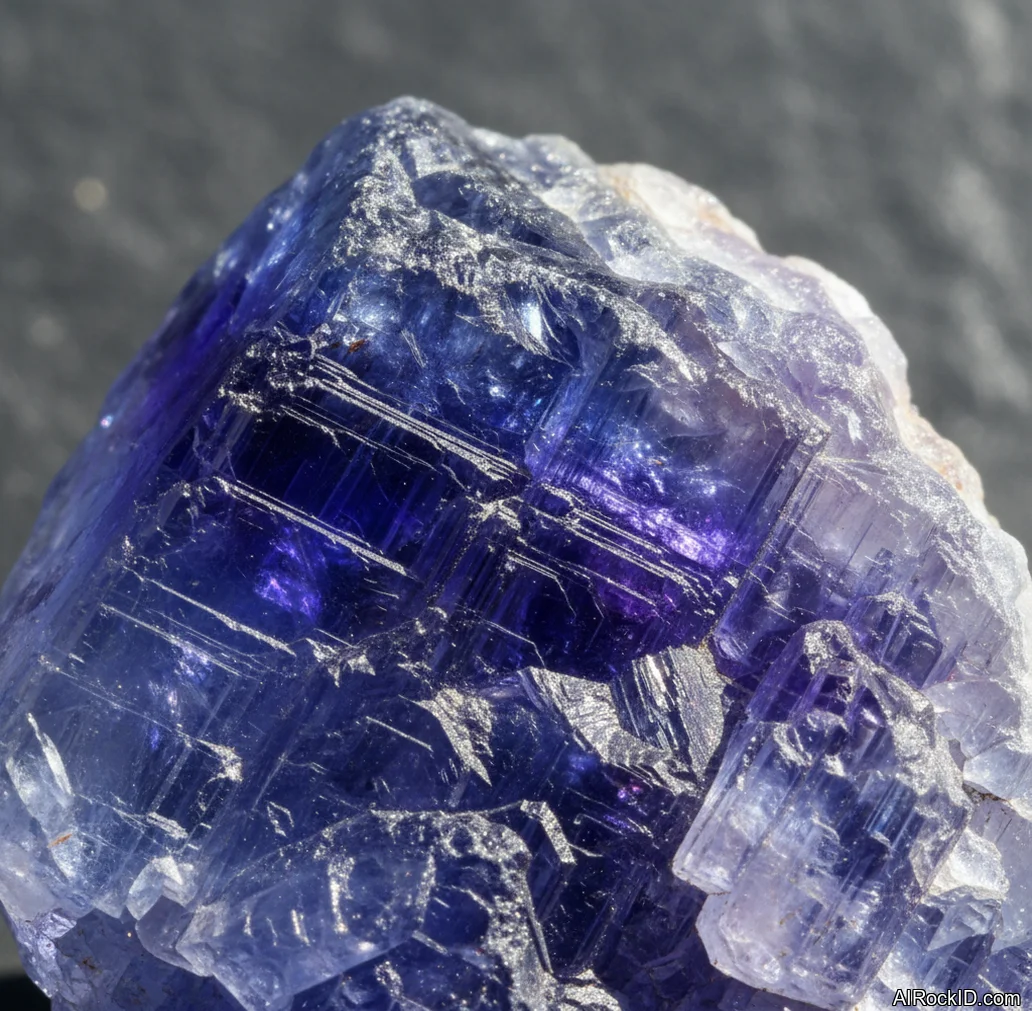
Iolite is the gem-quality, blue to violet-blue form of the mineral cordierite. From across the room it can pass for a softer sapphire. But tilt it under a lamp and it pulls its usual stunt: one angle turns inky and smoky, then another snaps back to a cleaner, brighter blue.
Grab a clean tumbled piece and it has that quartz-like heft, not the dense, sinky feel you get with garnet. It stays cool in your palm. And if the cutter left even tiny little windows (you know, those flat spots that catch the light), you can rotate it and literally watch the color flip from denim-blue to a grayish violet. That pleochroism is the whole reason I bother with iolite.
Thing is, a lot of what’s out there is dark. Too dark. In a tray at a show, plenty of stones read almost black until you pull them out from under the overheads and into daylight. So when you finally hit a lighter, more open-color piece that still has good saturation, it’s obvious why anyone puts up with the hunt.
Origin & History
Back in the early 1800s, Louis Cordier nailed cordierite down as its own mineral species, and the name just… stayed. The gem name, iolite, comes from the Greek “ios,” meaning violet, which tracks the second you tilt the stone and catch that purple face in the pleochroic mix.
And yeah, you’ll still see the older trade name “dichroite” on labels now and then, basically calling out how hard it can flash two different colors. “Water sapphire” pops up too. It sounds sweet, but it can mess with people’s expectations, because sapphire durability and value are a whole different thing. I’ve heard “water sapphire” tossed across a gem table while someone’s sliding a little folded paper tag forward, trying to nudge a sale. So I always ask them to say “iolite” out loud, and to write it that way on the tag. Why leave room for confusion?
Where Is Iolite Found?
Gem iolite shows up in metamorphic belts and some pegmatite settings, with steady commercial supply from India and Madagascar and scattered finds across North America and Europe.
Formation
Most iolite you’ll run into started out in high‑grade metamorphic rocks, where heat and pressure basically bake aluminum‑rich sediments into gneiss and schist. Cordierite really likes that setup, especially when there’s enough magnesium and iron around to build the structure.
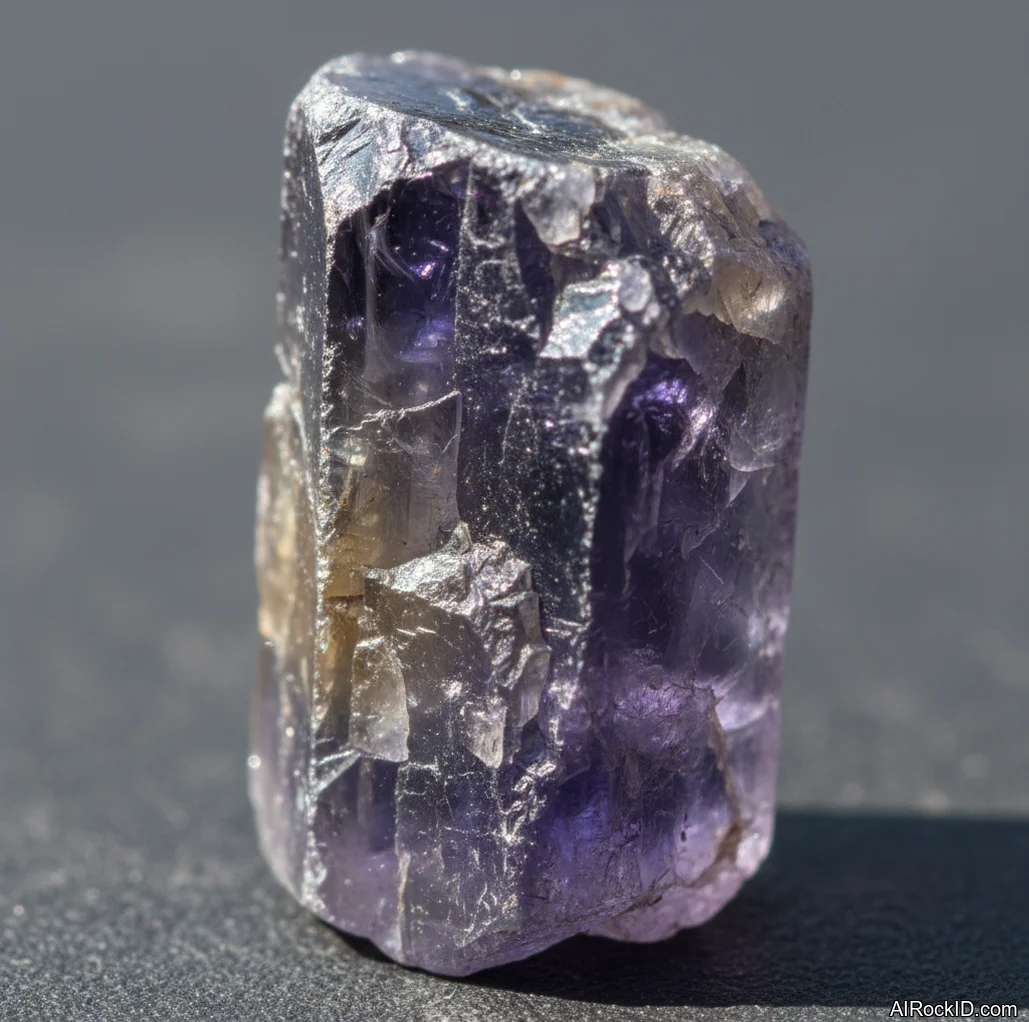
If you get a good look at rough, it’s often hanging out with mica, quartz, feldspar, and sometimes garnet. But out in the field it can be a pain, because cordierite weathers and alters into pinite. So you crack open a rock that looks totally ordinary and, instead of that clean gemmy blue, you’re staring at a patchy, dull altered zone. Kind of deflating, right?
Raw stuff from metamorphic zones can show chunky, stubby crystal habits, but cutters usually end up working from broken nodules and fragments. And if you’ve ever had rough in your hands, you know the cleavage can catch you off guard. It’s not the worst splitter in the world, but it’s enough that one careless knock on a hard table can turn a promising piece into two.
How to Identify Iolite
Color: Blue to violet-blue is the headline color, but it commonly shifts to gray, yellowish, or smoky tones when viewed from different directions. In darker stones, one direction can look almost ink-black.
Luster: Vitreous luster on clean faces or polished surfaces.
Pick up the stone and rotate it under a single light source. If the color swings hard between blue-violet and grayish or yellowish tones, you’re probably looking at iolite or something trying to imitate it. The real test is viewing direction: iolite’s pleochroism is strong enough that even a small cabochon will “blink” as you tilt it. If you scratch it with a steel needle, it shouldn’t gouge easily, and it should scratch glass with a firm drag. And watch for mislabels: blue glass won’t give you that clean directional color change and it often feels a bit warmer in the hand compared to a real mineral piece sitting on a show table all morning.
Properties of Iolite
Physical Properties
| Crystal System | Orthorhombic |
| Hardness (Mohs) | 7-7.5 (Hard (6-7.5)) |
| Density | 2.57-2.66 g/cm3 |
| Luster | Vitreous |
| Diaphaneity | Transparent to translucent |
| Fracture | Uneven |
| Streak | White |
| Magnetism | Non-magnetic |
| Colors | Blue, Violet-blue, Gray, Yellowish, Greenish-blue, Brownish |
Chemical Properties
| Classification | Silicates |
| Formula | (Mg,Fe)2Al4Si5O18 |
| Elements | Mg, Fe, Al, Si, O |
| Common Impurities | Mn, Ti |
Optical Properties
| Refractive Index | 1.542-1.551 |
| Birefringence | 0.008-0.012 |
| Pleochroism | Strong |
| Optical Character | Biaxial |
Iolite Health & Safety
Iolite’s usually fine to handle, and it can deal with a quick splash of water without any drama. But if you’re cutting or grinding it, treat it like any other lapidary job: wear a mask, control the dust, and keep your usual shop precautions in place (that dry grit gets everywhere, doesn’t it?).
Safety Tips
If you’re going to shape or sand it, keep it wet and wear a respirator, because that fine mineral dust gets in the air fast and you really don’t want to breathe it in.
Iolite Value & Price
Price Range
Rough/Tumbled: $5 - $60 per piece
Cut/Polished: $15 - $200 per carat
Price jumps around mostly because of brightness and cut, since stones that run too dark just look sleepy in your hand, like the light can’t get out. Cleaner material with that open, lighter blue you can see even under a desk lamp, plus a cut that keeps the inky streak from taking over when you tilt it, moves fast and usually costs more.
Durability
Moderate — Scratch resistance: Good, Toughness: Fair
Iolite is stable in normal wear, but it can chip or cleave if it takes a sharp hit and it doesn’t love rough treatment in rings.
How to Care for Iolite
Use & Storage
Store iolite away from harder gems like sapphire, spinel, and topaz so it doesn’t pick up scratches. I keep mine in a small gem box or a soft pouch because faceted edges can chip when they knock together.
Cleaning
1) Rinse with lukewarm water. 2) Use mild soap and a soft brush to clean around settings or facets. 3) Rinse again and pat dry with a soft cloth.
Cleanse & Charge
For metaphysical-style care, I stick to gentle options like smoke cleansing or setting it on a clean shelf overnight. If you use moonlight, don’t park it in a hot windowsill where temperature swings can stress a thin stone.
Placement
On a desk or nightstand, iolite looks best where you can pick it up and rotate it, because the color shift is the whole show. Keep it out of direct sun if you’re worried about long-term fading in dyed companions or display materials nearby.
Caution
Skip ultrasonic cleaners and skip the nasty chemicals, especially on jewelry. Just because someone calls it “water sapphire” doesn’t mean it can take the same beating a real sapphire can.
Works Well With
Iolite Meaning & Healing Properties
Next to loud, flashy stones, iolite is the quiet one. It doesn’t shout. When I reach for it, it’s usually because my thoughts are bouncing off the walls and I just want them to line up long enough to see the next obvious move. That’s what people are after with it: clarity, direction, a calmer kind of focus. And yeah, that’s personal experience and tradition, not medicine.
Hold a palm stone and the color feels weirdly “honest” in your hand, like it isn’t trying to impress you. Then you tilt it and it totally changes its mind. I’ve leaned on that a lot as a reminder to look at the same problem from a different angle, especially when I’m locked into one story about what’s happening (you know the one). But look, if you want a stone that stays bright and perky no matter what, iolite will get on your nerves. The dark axis is real. It can read moody.
A lot of people tie iolite to intuition and inner sight, mostly because it basically makes you pay attention to what you’re actually seeing. In meditation, I’ve had better results just holding it with my eyes open and letting the pleochroism be a simple visual anchor, instead of trying to turn it into some huge mystical production. And if you’re dealing with anxiety or sleep stuff, treat crystals like comfort objects and routines, not a replacement for real care.
Identify Any Crystal Instantly
Snap a photo and get properties, value, care instructions, and healing meanings in seconds.