Spirit Quartz
What Is Spirit Quartz?
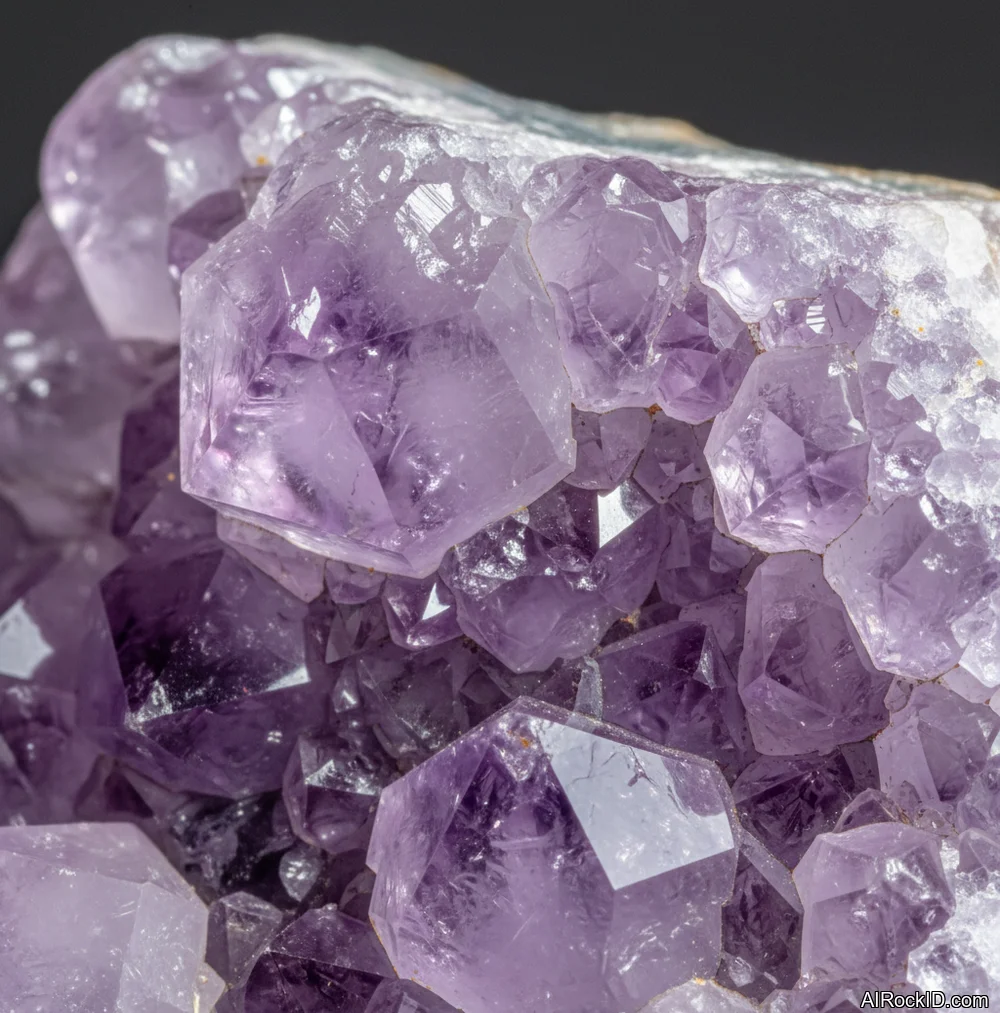
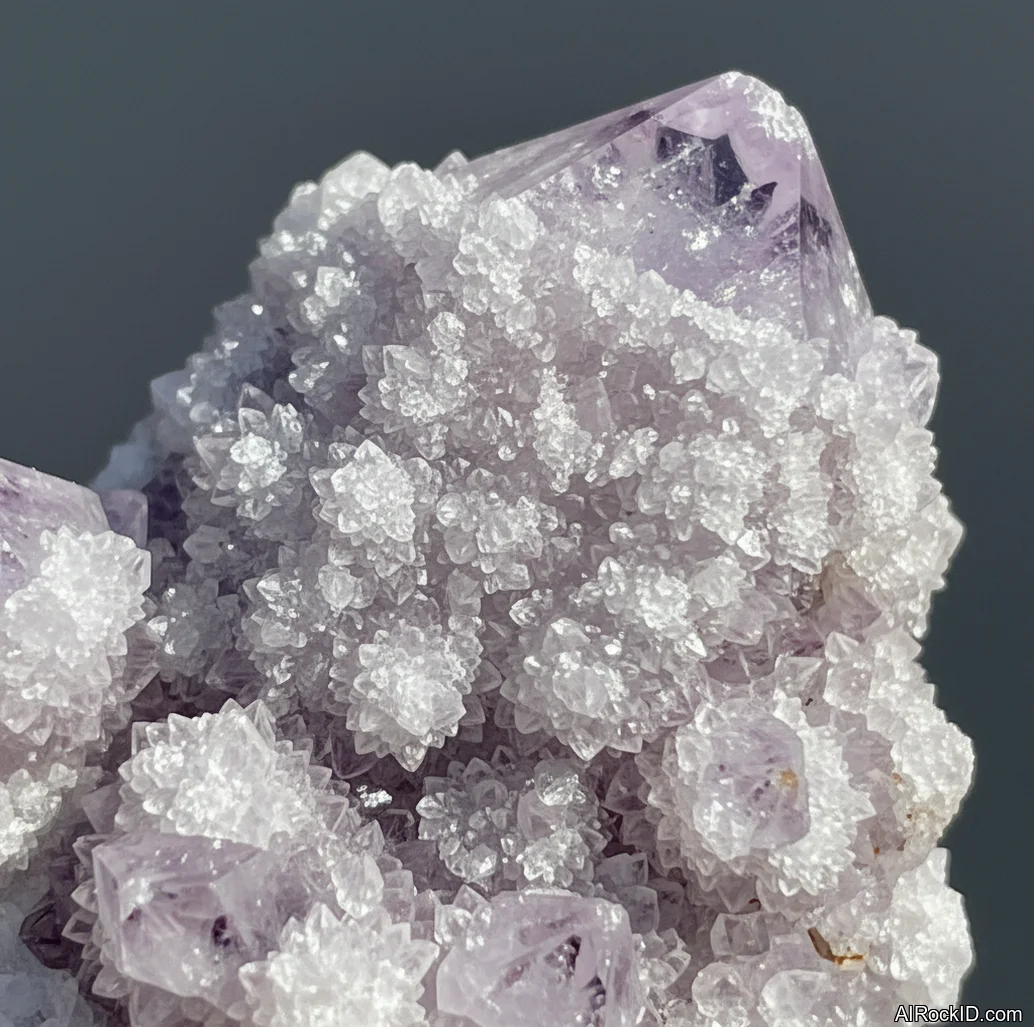
Spirit Quartz is a quartz growth habit where one bigger, central crystal ends up coated in a glittery skin of tiny quartz points.
Pick up a piece and the first thing you notice is the feel. It isn’t slick like a single terminated point. It’s more like super-fine sandpaper that stays put, and when you tilt it, the sparkle comes as a scatter of tiny flashes instead of one big mirror-like face.
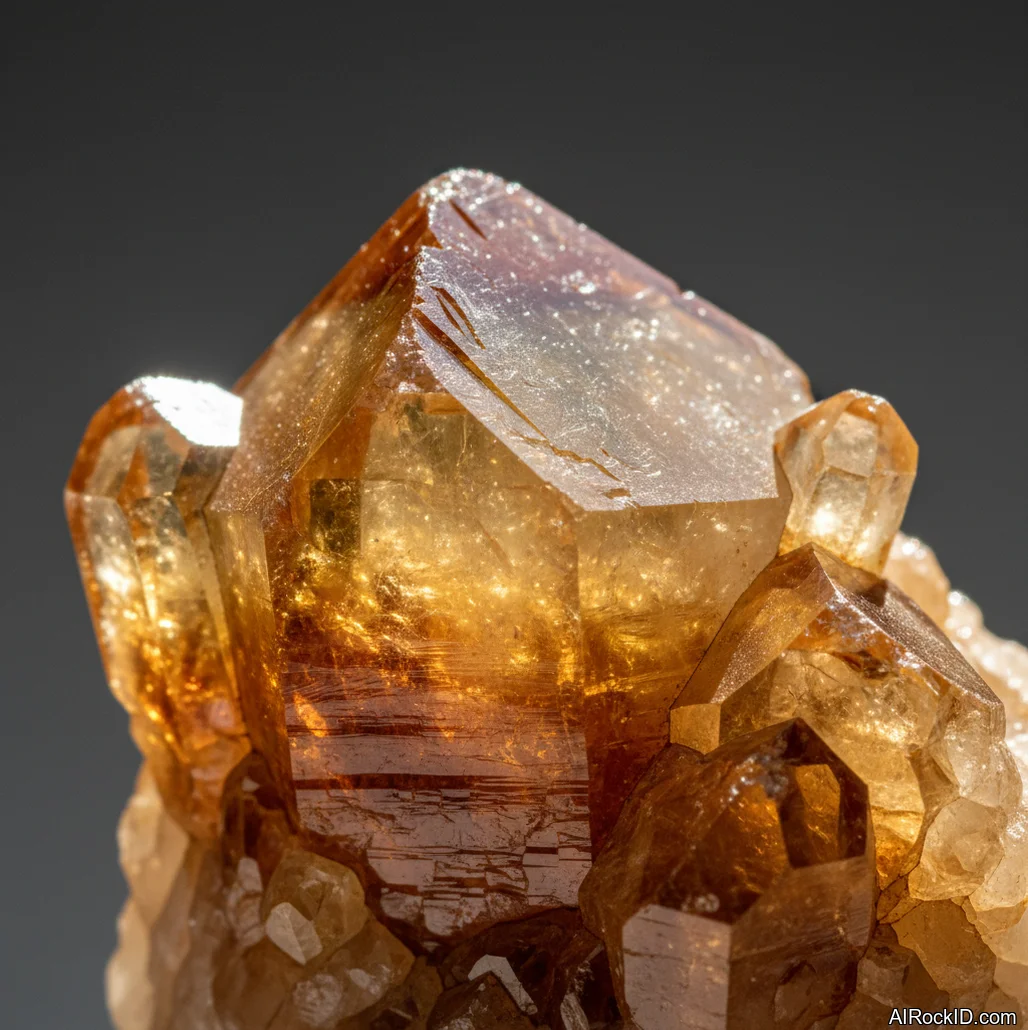
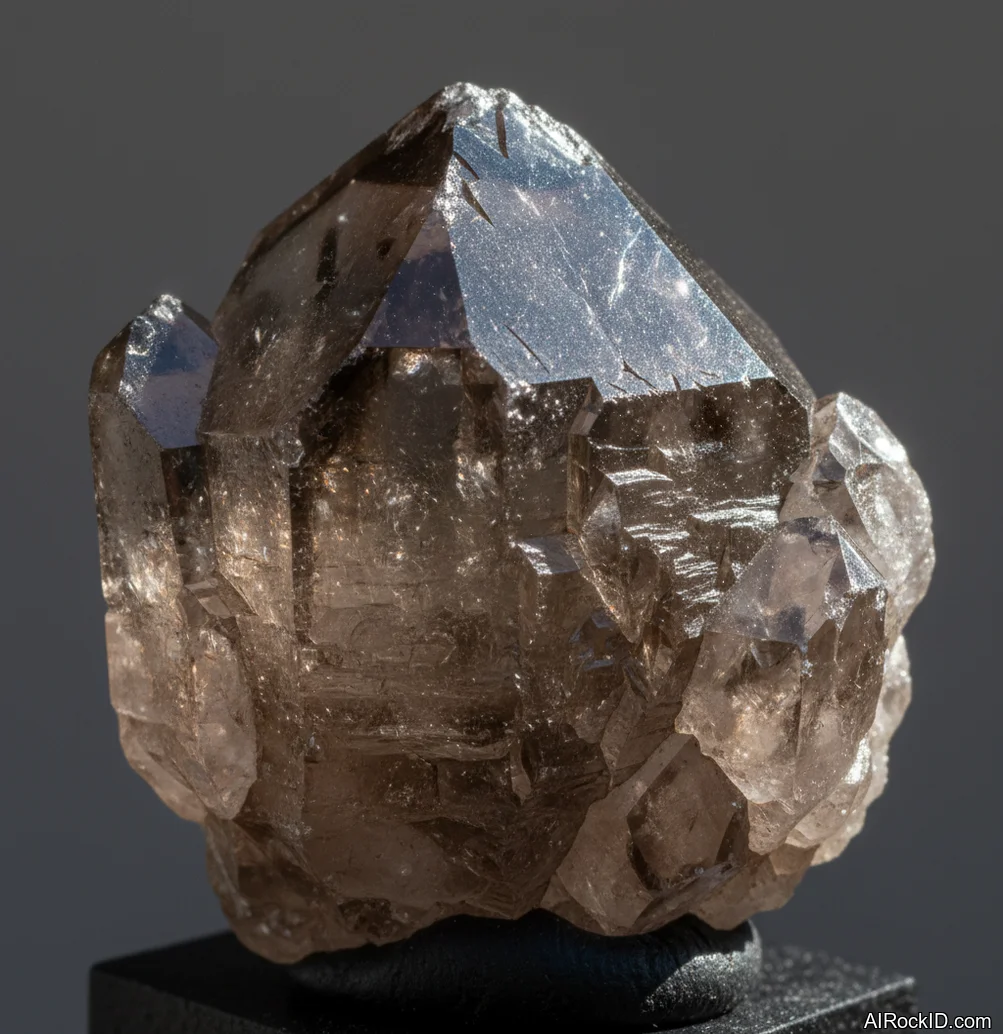
At first glance, people shrug and call it “just druzy,” but it’s more organized than that. You’ve got a main crystal (often with a pretty decent termination), then this tight little halo of miniature crystals growing all over it. Colors show up as pale lavender, smoky gray, or that champagne-citrine look, and on the better pieces the tips still grab the light even in a dim room.
Origin & History
Most dealers didn’t start calling it “Spirit Quartz” until the South African stuff showed up in the late 1990s and early 2000s, with most of it coming out of the Magaliesberg area. Before that, “Cactus Quartz” was the old trade nickname, because all those tiny crystals make the whole piece look prickly, like you wouldn’t want to brush it against your sleeve.
Thing is, it’s not a separate mineral species, and that’s where people get tripped up. It’s quartz. Just a weird habit, and usually that specific look tied back to one main source.
I still remember the first time I saw a flat of them at a show. Every piece looked like it’d been dusted with sugar, that slightly gritty sparkle under the lights, and people were packed around the table like it had just dropped out of the sky.
Where Is Spirit Quartz Found?
Most classic Spirit Quartz on the market comes from the Magaliesberg region of South Africa, with smaller amounts and similar habits reported in nearby parts of southern Africa.
Formation
Raw pieces from South Africa tend to grow in cavities, the kind with just enough open room for silica-rich fluids to do their slow, patient work. First, a bigger quartz crystal pushes out into that empty space. Then, later on, new pulses of silica roll through and lay down a skin of tiny crystals right over the older one, almost like a dusting that actually locks in place.
Look closely at the growth and you can sometimes read it in layers. The small crystals aren’t just random grit stuck on there. They line up and crowd together, like a little crystal garden that coated the older point once the conditions changed. But it’s still quartz doing quartz things: low-temperature hydrothermal growth, lots of dissolved silica, and time.
How to Identify Spirit Quartz
Color: Common colors are pale lavender to purple (amethyst tint), smoky gray, and champagne to honey tones that can resemble citrine. Many specimens show subtle color zoning, with deeper color toward the base or around the core crystal.
Luster: Vitreous luster with a bright, glittery drusy sparkle from the tiny surface crystals.
Pick up a piece and run a fingertip lightly over it. Real Spirit Quartz feels prickly and evenly drusy, not like glued-on sugar grains. The real test is the underlayer: you should see a central point with the tiny crystals growing out of it, not a rough coating sitting on top. And if you scratch it with a steel blade, it won’t bite easily, quartz should resist and the blade will skid.
Properties of Spirit Quartz
Physical Properties
| Crystal System | Trigonal |
| Hardness (Mohs) | 7 (Hard (6-7.5)) |
| Density | 2.65 g/cm3 |
| Luster | Vitreous |
| Diaphaneity | Transparent to translucent |
| Fracture | Conchoidal |
| Streak | White |
| Magnetism | Non-magnetic |
| Colors | Lavender, Purple, Smoky gray, Clear, Champagne, Honey yellow, Brown |
Chemical Properties
| Classification | Silicates |
| Formula | SiO2 |
| Elements | Si, O |
| Common Impurities | Fe, Al, Mn, Ti |
Optical Properties
| Refractive Index | 1.544-1.553 |
| Birefringence | 0.009 |
| Pleochroism | None |
| Optical Character | Uniaxial |
Spirit Quartz Health & Safety
Spirit Quartz is just quartz, and it’s non-toxic, so it’s fine to hold and handle. But use basic mineral common sense if you’re ever cutting it or grinding it, because the silica dust you kick up (that gritty, chalky-looking stuff that gets on everything) is an inhalation hazard.
Safety Tips
If you’re lapping, drilling, or grinding quartz, keep it wet and wear proper respiratory protection, because that fine dust gets everywhere (you can practically taste it if you mess up). But for just displaying it or picking it up and moving it around, you don’t need any special precautions.
Spirit Quartz Value & Price
Price Range
Rough/Tumbled: $15 - $250 per specimen
Price jumps around depending on the color (clean lavender and even those champagne tones move quick), how crisp the terminations are, and whether the drusy layer actually coats the whole crystal evenly, not patchy with those little bald spots or snapped tips you see when it’s been knocked around.
Durability
Durable — Scratch resistance: Excellent, Toughness: Fair
It’s chemically stable quartz, but the tiny drusy points chip and scuff if it rattles around in a pocket or a loose box.
How to Care for Spirit Quartz
Use & Storage
Store it so it can’t rub against harder pieces or metal, because the surface points are easy to nick. I keep mine in a compartment box with foam or in a little display case where nothing touches the druse.
Cleaning
1) Rinse briefly with lukewarm water to loosen dust. 2) Use a very soft toothbrush and gentle dish soap, brushing in one direction without mashing the tips. 3) Rinse well and air-dry completely, then check the crevices for trapped water.
Cleanse & Charge
If you do energetic cleansing, smoke, sound, or a quick rinse works fine. Avoid aggressive salt scrubs because they snag on the drusy layer and can snap tiny points.
Placement
Set it somewhere it won’t get bumped, like a shelf away from swinging doors. Low, angled light makes the sparkle pop, while harsh overhead light can flatten the look.
Caution
Don’t just chuck it into a bag with other stones. It’ll come back with that chalky, scuffed look, like it’s been dragged around against grit. And don’t hit it with a sudden temperature jump either, like pouring hot water right onto a cold specimen. That kind of shock can pop fractures open along stress lines that were already there.
Works Well With
Spirit Quartz Meaning & Healing Properties
Next to a single-point quartz, Spirit Quartz feels like “group energy” sitting in your palm, and honestly, I get why people say that. When I’m sorting trays at a show, it’s the one I’ll park near the register, because the sparkle grabs people from a few feet away and the vibe comes off gentle, not intense.
A lot of folks use it for meditation or just to calm down a room. And if you’re doing that, keep your feet on the ground: it’s not medicine, and it won’t replace therapy, sleep, or hydration. But as something you can hold and lock your attention onto, it really works. The texture helps a ton, too. Those tiny points feel kind of like fine sandpaper on your thumb, so your hand has something to do besides fidgeting.
But here’s where it gets messy: sellers will sometimes slap “Spirit Quartz” on any drusy quartz they have. Real Spirit Quartz usually has that central crystal with a pretty even coat of aligned mini crystals, and the classic source is South Africa. If the surface just looks like random sparkly grit, or like it got rolled in glitter (you know the look), I treat it as generic druzy quartz until somebody can prove otherwise.
Identify Any Crystal Instantly
Snap a photo and get properties, value, care instructions, and healing meanings in seconds.