Tiger Iron
What Is Tiger Iron?
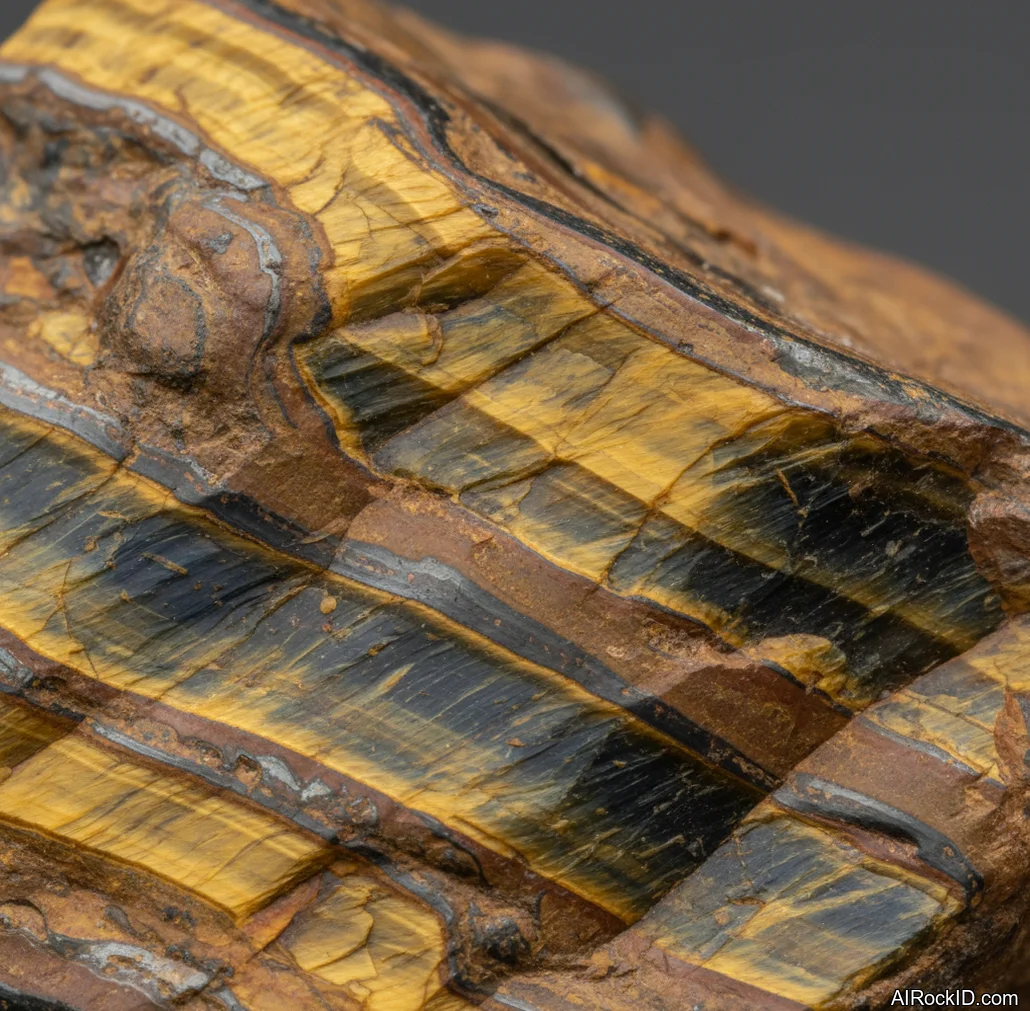
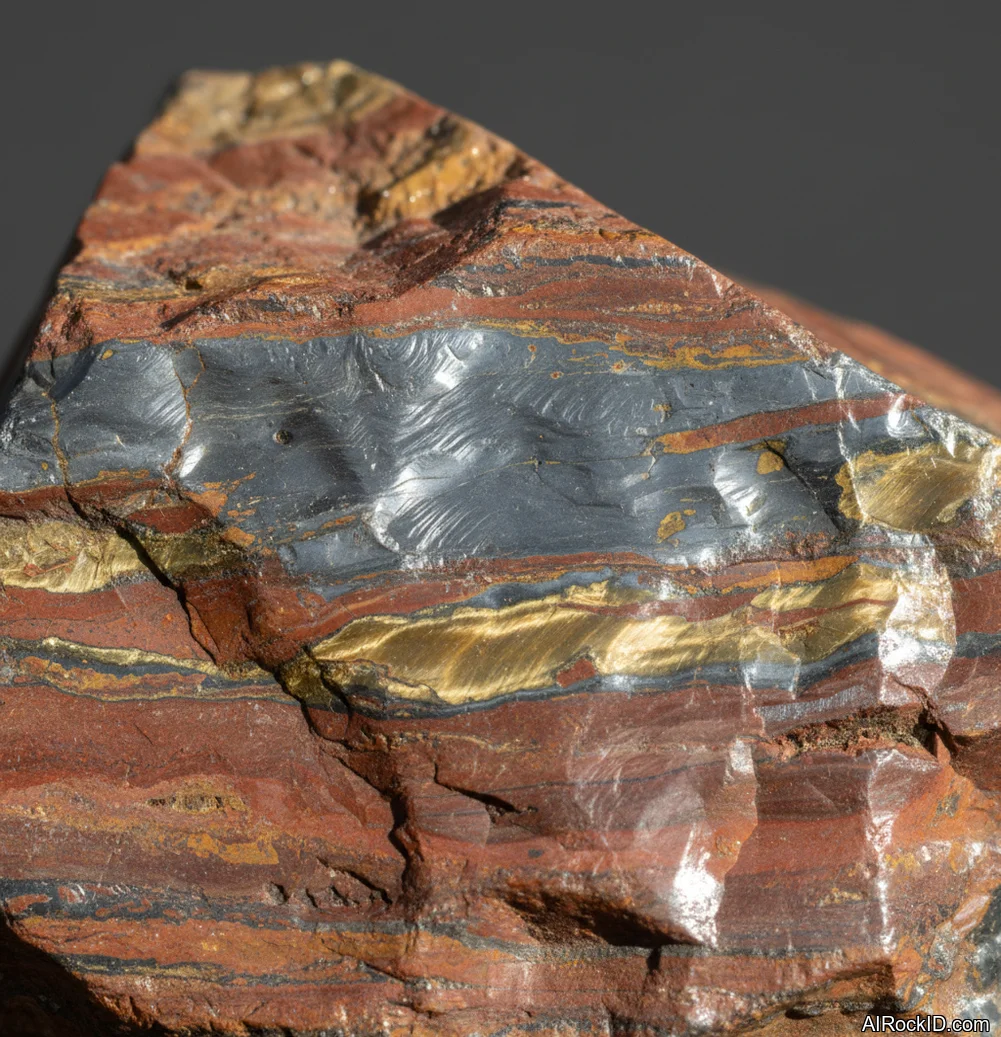
Tiger Iron is a banded rock made of tiger eye (quartz), hematite, and red jasper or chert. It looks like somebody squashed a sunset into a slab: gold ribbons, brick-red bands, plus those darker, iron-heavy stripes that catch the light like metal.
Grab a palm stone and the first thing you feel is the heft. It’s weirdly heavy for its size, and the polish tends to feel glass-smooth on the quartz bands but a little “greasy” where the hematite takes over (if you’ve handled one, you know exactly what I mean). Tip it under a shop light and the tiger eye layers do that shifting stripe trick, like a flashlight beam sliding across the face.
Most of what you’ll see for sale is already cut and polished, because raw Tiger Iron can look kind of blah until it’s oriented and finished. But cut it at the right angle and the banding snaps into focus. Cut it wrong? Muddy brown brick. That’s the gamble.
Origin & History
Most dealers call it “Tiger Iron” as a trade name, not some strict geology label. It showed up in the lapidary and metaphysical world because it’s basically a grab-and-go combo stone: you get tiger eye’s chatoyancy, jasper’s body color, plus hematite’s heft, all sitting together in one slab that feels noticeably heavier in your palm than you expect.
As an actual rock type, it’s linked to banded iron formations with silica-rich layers that got altered later on. And the “tiger” bit is borrowed straight from tiger eye, which got its own name from that cat-eye effect. You know the one, where the light hits just right and a narrow bright band snaps into view like an animal’s slit pupil.
Where Is Tiger Iron Found?
Most classic Tiger Iron on the market is cut from Australian material, especially Western Australia. Similar banded mixes of quartz, iron oxides, and jasper also show up in South Africa and a few other iron-rich regions.
Formation
Look close and the whole “recipe” is sitting right there: layers of silica, layers that are iron-rich, and then a later round of alteration that turns some of that silica into fibrous quartz, which is what throws off that tiger eye shimmer when you tilt it in the light.
A lot of it starts out in ancient banded iron formation settings. That’s where iron and silica get laid down in repeating beds, over and over, like stripes stacking up one on top of the next.
But the real magic happens later. Fluids move through, metamorphism kicks in, and iron oxides like hematite end up concentrating into those darker bands. The quartz can hang onto fibrous textures or flat-out replace them, and once you polish the surface smooth, those fibers line up and you get chatoyancy (that cat’s-eye flash you see as a bright band sliding across the stone). It’s kind of wild when you actually handle a polished piece and watch that light bar snap from one side to the other, isn’t it?
And since it’s a rock, not a single mineral, pieces can vary a lot. One chunk might be very “tiger eye forward,” all shimmer and silky bands, while another is basically hematite and jasper with just a little flash tucked in.
How to Identify Tiger Iron
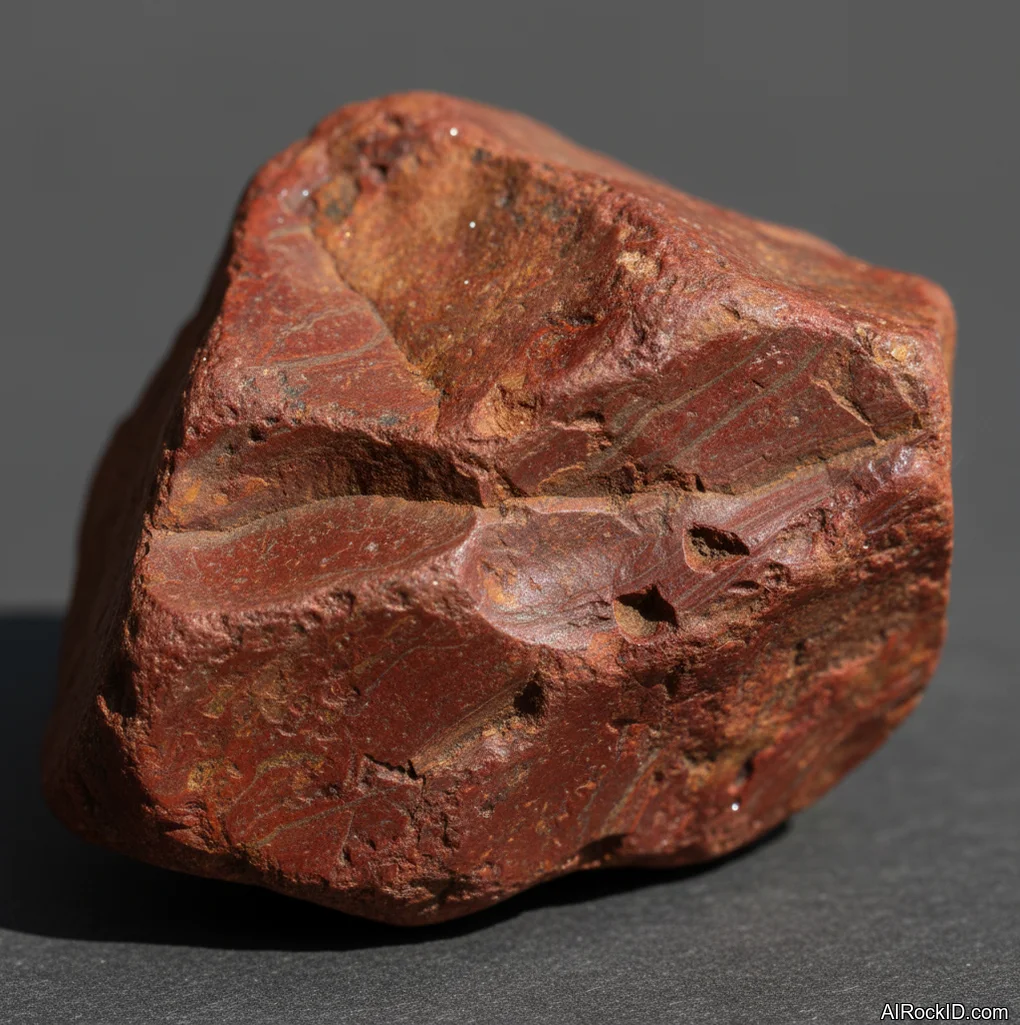
Color: Typical colors are golden brown to bronze (tiger eye), deep red to reddish brown (jasper/chert), and black to steel gray (hematite). The colors usually appear as clean, parallel bands rather than blotches.
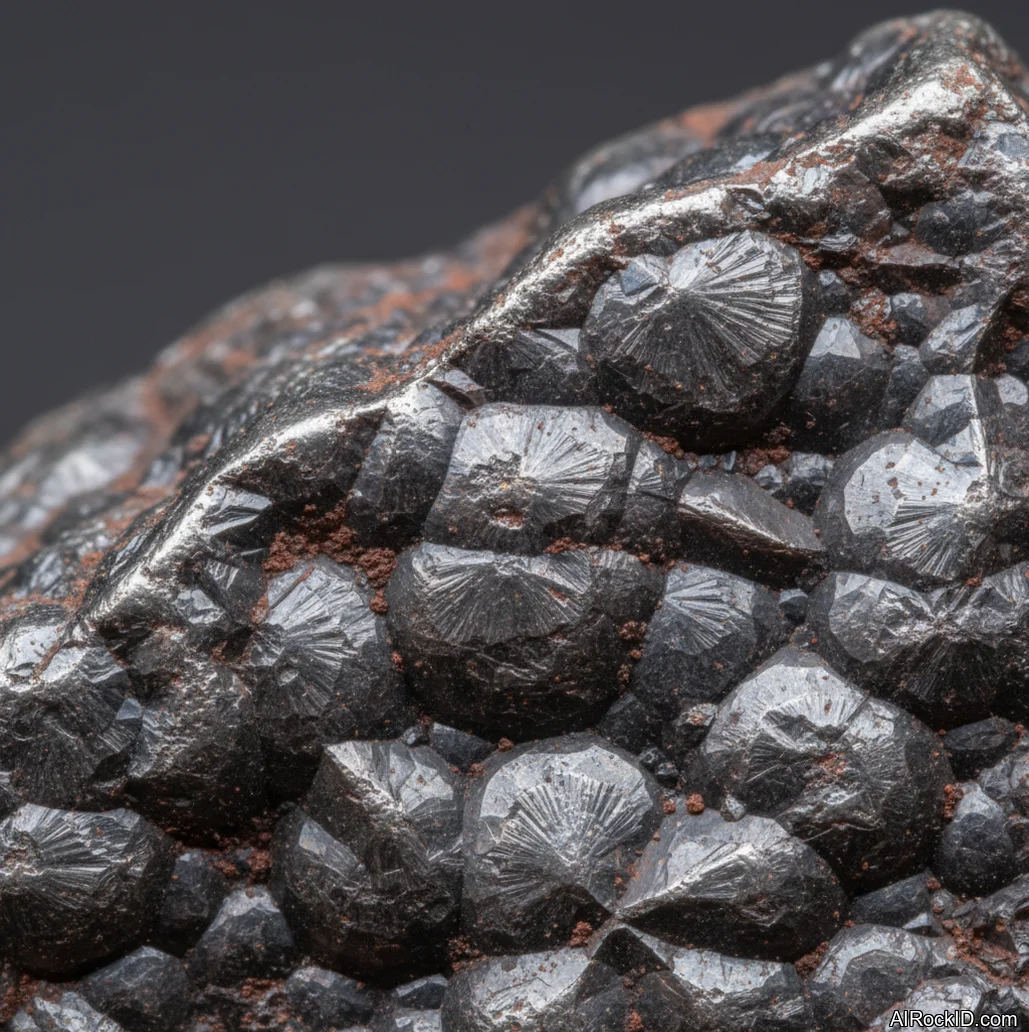
Luster: Polished surfaces show a mix of silky chatoyancy on the tiger eye bands and metallic to submetallic sheen on hematite-rich layers.
Pick up a piece and tilt it under a single point light. If the gold bands don’t “move” as you rotate it, it’s probably just banded jasper sold under the name. The real test is the weight: hematite-heavy Tiger Iron feels denser than plain tiger eye. And if you scratch it with a steel nail, you usually won’t get far, but the softer red jasper bands can show a faint line before the quartz bands do.
Properties of Tiger Iron
Physical Properties
| Crystal System | Amorphous |
| Hardness (Mohs) | 6.5-7 (Hard (6-7.5)) |
| Density | 3.0-3.8 g/cm3 |
| Luster | Silky |
| Diaphaneity | Opaque |
| Fracture | Uneven |
| Streak | reddish brown to brown |
| Magnetism | Weakly Magnetic |
| Colors | golden brown, bronze, red, reddish brown, black, steel gray |
Chemical Properties
| Classification | Oxides and Silicates (rock mixture) |
| Formula | SiO2 + Fe2O3 (mixture) |
| Elements | Si, O, Fe |
| Common Impurities | Al, Mn |
Optical Properties
| Refractive Index | 1.544-1.553 |
| Birefringence | 0.009 |
| Pleochroism | None |
| Optical Character | Uniaxial |
Tiger Iron Health & Safety
Tiger Iron is safe to handle, and it holds up just fine around water in everyday use. But if you’re cutting or grinding it, that’s when you need to be careful, because like any silica-rich stone, you don’t want to breathe in the dust (it gets everywhere, even in the little creases around tools).
Safety Tips
If you need to cut or sand it, do it wet and wear a properly fitted respirator (one that actually seals to your face). And instead of sweeping up dry dust, wipe the surfaces down with a damp rag.
Tiger Iron Value & Price
Price Range
Rough/Tumbled: $5 - $60 per piece
Cut/Polished: $2 - $10 per carat
Price mostly comes down to how much chatoyant tiger eye you’re actually getting, how crisp and clean the banding looks, and if the cutter bothered to orient the slab so that moving light stripe really sweeps across it when you tilt it. And yeah, you can tell when they did it right: you tip the piece under a lamp and the “eye” glides in one smooth band instead of breaking up or going dull at the edges (that mushy look is a giveaway). Big, thick slabs with a strong flash and hardly any fractures will run higher than the usual tumbled stones.
Durability
Durable — Scratch resistance: Good, Toughness: Good
It’s generally stable, but the hematite-rich layers can take a slightly duller polish over time compared to the quartz bands if it gets knocked around.
How to Care for Tiger Iron
Use & Storage
Store it like you would any polished quartz-based stone: separate from softer stuff so it doesn’t scuff them, and don’t let it clang against other rocks in a pouch. If it’s a slab, keep it flat so it doesn’t chip at the corners.
Cleaning
1) Rinse with lukewarm water and a drop of mild soap. 2) Use a soft toothbrush to get into any pits along the banding. 3) Rinse well and dry with a microfiber cloth.
Cleanse & Charge
For a simple reset, rinse it and let it dry, or set it on a piece of selenite overnight. If you use sunlight, keep it brief since heat can stress tiny fractures in any banded material.
Placement
On a desk it’s great because you can actually see the chatoyancy as you move around. In a pocket, go for a rounded tumble so the edges don’t chew up your fabric.
Caution
Skip harsh cleaners and don’t toss it in an ultrasonic machine, especially if you can see seam lines or there are tiny little pits on the surface (those spots love to trap gunk). And if you’re cutting or polishing it, don’t inhale the dust. Seriously, why risk that?
Works Well With
Tiger Iron Meaning & Healing Properties
Most people grab Tiger Iron when they want that “okay, let’s go” feeling without getting jittery or all over the place. In crystal shop language, it’s a blend stone. You’ve got that hematite-style grounded feel, jasper’s steady backbone, and then the tiger eye layers that give it a bit more bite in the focus department. That’s the idea, anyway.
Thing is, a solid piece in your hand on a dragging day can feel weirdly reassuring in a very literal, body-level way. Heavy. Cool to the touch. I’ve passed it to people at shows, and nine times out of ten they mention the weight first, before they even really look at the color. And if you’re into simple habits, it’s great as a worry stone, because those silky bands almost “track” under your thumb (you can feel where the stripes shift).
But keep your feet on the ground. This isn’t medical care, and a rock won’t replace sleep, food, or an actual plan. What Tiger Iron can do, if you’re someone who genuinely clicks with stones, is be a tactile nudge to stay steady and finish what you started, especially when you’ve got too many plates spinning at once. Why not use it like that?
Identify Any Crystal Instantly
Snap a photo and get properties, value, care instructions, and healing meanings in seconds.