Titanium Aura Quartz
What Is Titanium Aura Quartz?
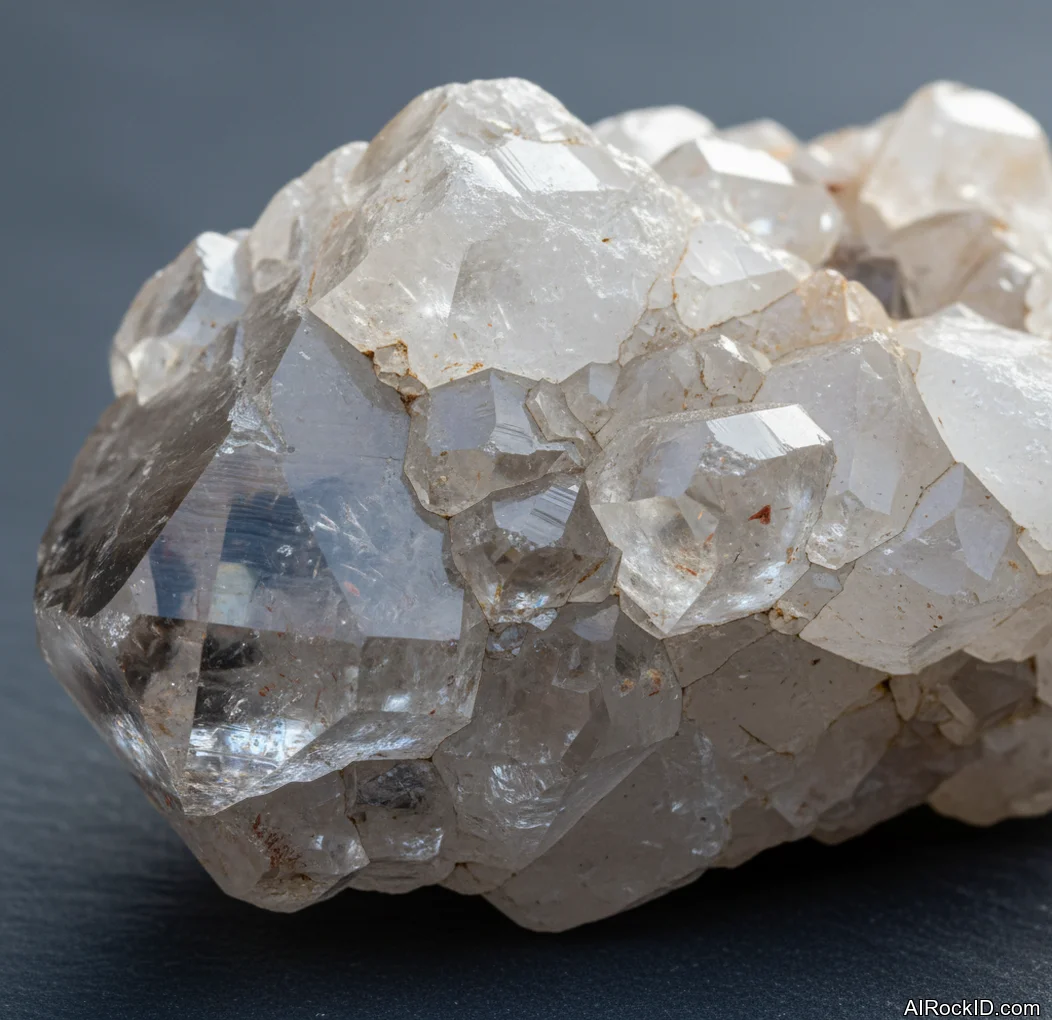
Titanium Aura Quartz starts out as regular, natural quartz. Then it gets coated with a super thin layer of titanium (and sometimes other metals), which is what gives it that slick, rainbow-shimmer surface.
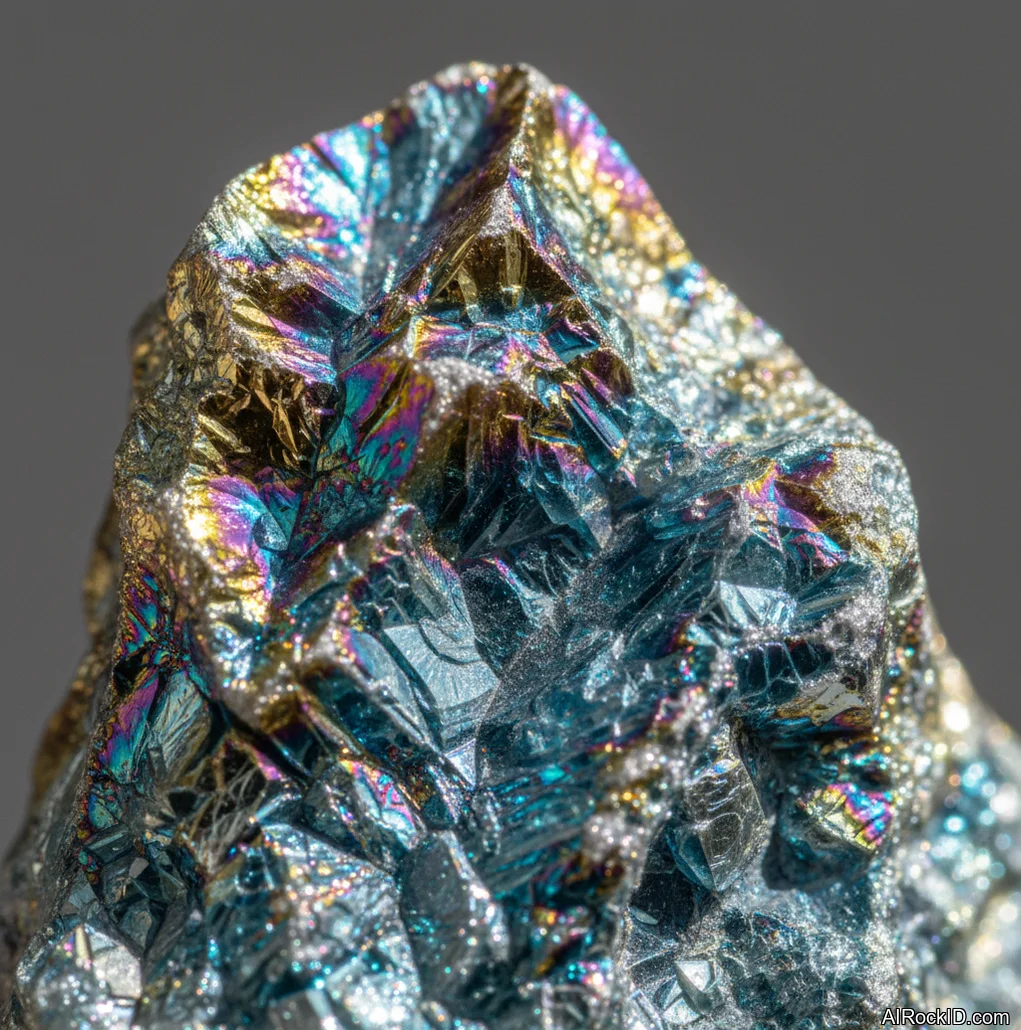
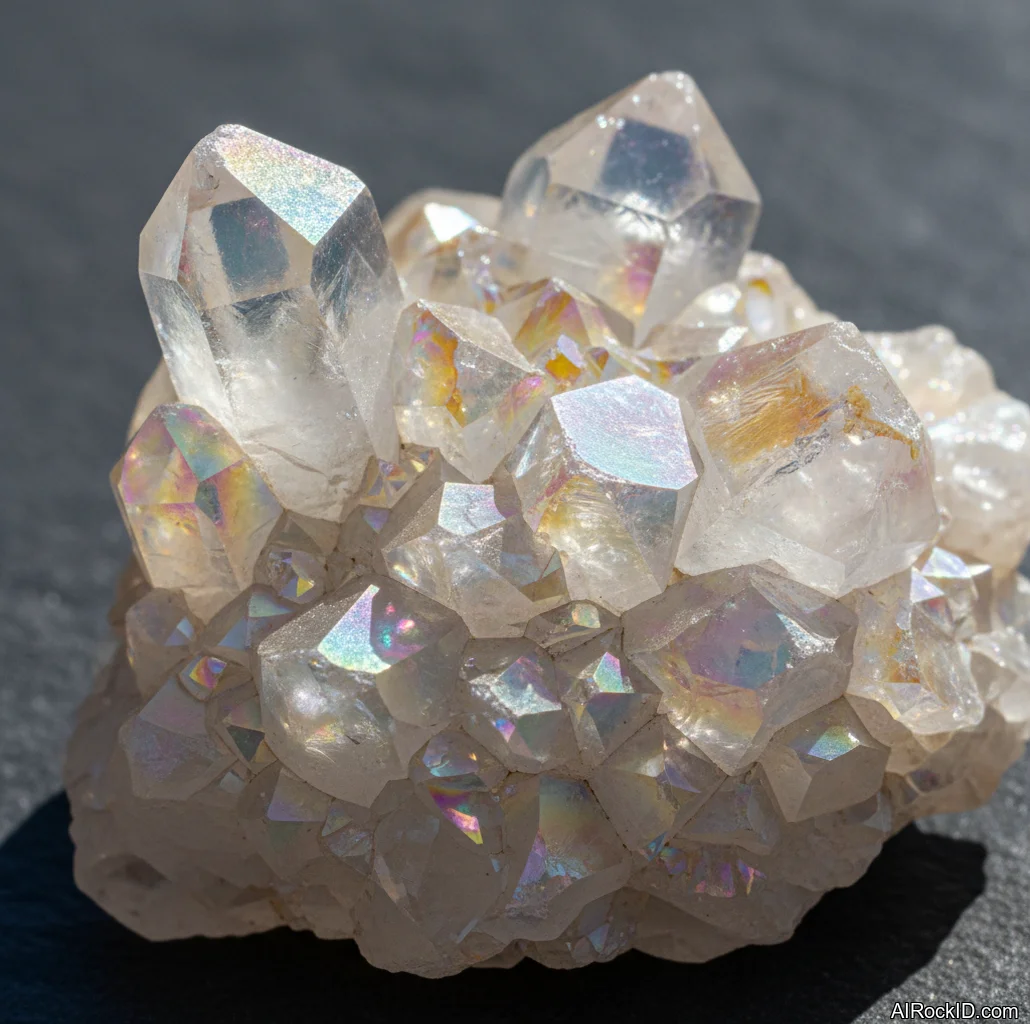
Pick up a point and you notice it right away: the color isn’t coming from inside the crystal. It’s sitting on the outside. Tip it under a lamp and the blues and golds skate across the faces like oil on water, while the core still reads as plain clear quartz underneath. If you’ve handled a lot of quartz, the feel won’t surprise you. It’s cool in the palm. The faces feel a bit slick. And when you lightly tap it against another piece, you get that hard, glassy click you’d expect.
Thing is, people get this part wrong all the time: it’s not a separate mineral species. It’s a treatment. That doesn’t mean it’s fake, it just means the rainbow look is a man-made surface layer on a real quartz crystal. I’ve seen it at shows labeled “natural rainbow quartz” (with a little wink, like everyone’s in on it). But if the color looks like a chrome soap bubble and it sits evenly on every ridge, yep, that’s aura coating.
Origin & History
Aura-coated quartz is a pretty modern lapidary/materials trick, not some old mine find with a hundred-year paper trail. Quartz itself has been studied forever, sure. But the titanium coating comes straight out of vacuum-chamber tech, the kind where you’re running pumps, watching gauges, and depositing a thin film onto the surface. Thin-film deposition really took off in the late 20th century, mostly for optics and industrial coatings.
Most dealers use “aura” the same loose way people in the hobby toss around “titanium.” It’s a trade name for the look, not a strict, nailed-down recipe. “Titanium Aura” usually means titanium is the main metal used, and the coating gets bonded to the quartz at high temperature in a vacuum, so it’s not just paint you can wipe off with your thumb (or a rag).
Where Is Titanium Aura Quartz Found?
The quartz base material is mined anywhere good clear quartz occurs, with a lot of commercial points coming from Brazil. The titanium aura layer is applied in a lab, not formed in the ground.
Formation
Normal quartz starts out pretty plain: silica-rich fluids push through fractures and little open pockets in the rock, then quartz begins growing as the fluid cools or the chemistry shifts. So you end up with points, clusters, and those classic striations etched along the prism faces. And if you’re aiming for “aura grade” rough, it’s usually clear rock crystal, because the coating looks best over a clean, bright surface you can actually see into.
Then comes the aura step, and that’s not a natural thing at all. It happens in a vacuum chamber. The crystal gets cleaned first (if there’s any film left on it, you’ll notice), then a metal like titanium is vaporized and laid down as an ultra-thin coating. It bonds right to the surface, and that thin layer creates thin-film interference, which is why the colors shift when you tilt it. Look at a coated cluster up close and it’s obvious: the strongest color sits on the outer faces and the tips, but down in those tight little crevices it goes softer and patchier because the vapor just doesn’t hit every spot evenly.
How to Identify Titanium Aura Quartz
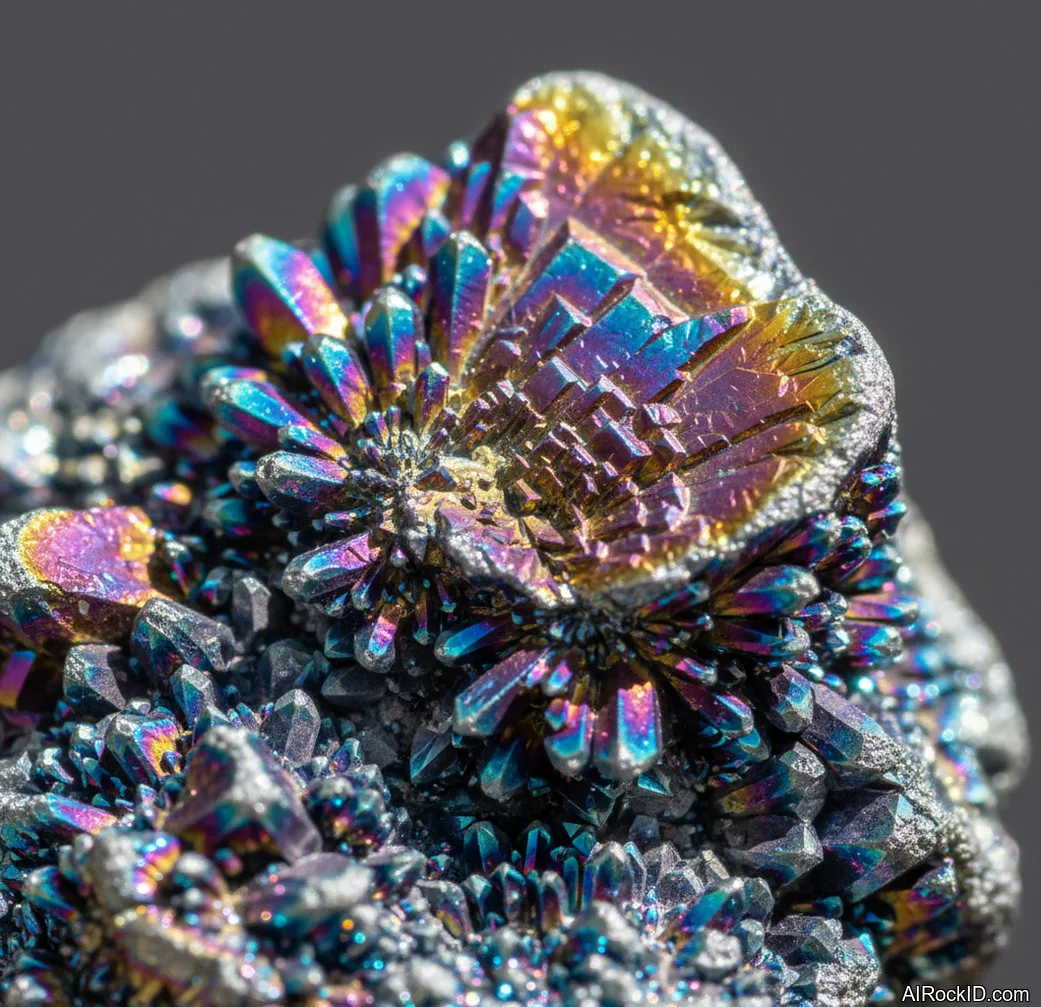
Color: Rainbow iridescence on the surface, often with electric blues, golds, magentas, and green flashes that shift with viewing angle. The interior is usually clear to slightly included quartz.
Luster: Glassy quartz luster underneath with a metallic-leaning iridescent sheen on the coated faces.
Look closely at chips and edges. If the rainbow effect seems like a skin that stops at a scratch, that’s the coating doing its job. The real test is to compare it to plain quartz: same weight, same cool touch, same hardness, but aura pieces look “too uniform” in color compared to anything geological. Most dealers won’t mind if you use a loupe. Under 10x you can sometimes see tiny patchiness on the film near contact points, especially on clusters where crystals rub during shipping.
Properties of Titanium Aura Quartz
Physical Properties
| Crystal System | Trigonal |
| Hardness (Mohs) | 7 (Hard (6-7.5)) |
| Density | 2.65 g/cm3 |
| Luster | Vitreous |
| Diaphaneity | Transparent to translucent |
| Fracture | Conchoidal |
| Streak | white |
| Magnetism | Non-magnetic |
| Colors | clear, rainbow iridescence, blue, gold, purple, green, pink |
Chemical Properties
| Classification | Silicates |
| Formula | SiO2 |
| Elements | Si, O |
| Common Impurities | Fe, Al, Ti |
Optical Properties
| Refractive Index | 1.544-1.553 |
| Birefringence | 0.009 |
| Pleochroism | None |
| Optical Character | Uniaxial |
Titanium Aura Quartz Health & Safety
As a finished piece, it’s pretty low risk, basically on par with regular quartz. But if you start grinding or drilling it, use common sense, because silica dust is nasty stuff for your lungs.
Safety Tips
If you’re going to cut it or polish it, keep a bit of water on it and wear proper respiratory protection that’s actually rated for fine silica dust. Don’t let the gray slurry sit there and dry into that chalky powder that puffs up everywhere. Scoop it up and clean it while it’s still wet.
Titanium Aura Quartz Value & Price
Price Range
Rough/Tumbled: $10 - $120 per piece
Cut/Polished: $2 - $15 per carat
Price mostly comes down to size, the shape, and how tidy the coating looks. Clean points and symmetrical clusters usually cost more. And honestly, the quartz underneath matters a lot more than people expect. If the terminations are natural and sharp under that coating, the whole piece has this crisp, glassy look. But if the quartz is cloudy, it just reads kind of dead, even with a rainbow finish sitting on top.
Durability
Durable — Scratch resistance: Excellent, Toughness: Good
The quartz is tough for daily handling, but the thin metallic coating can scuff on high points if it’s tossed in a pouch with harder stones.
How to Care for Titanium Aura Quartz
Use & Storage
Store it so the coated faces aren’t rubbing against other crystals. I keep mine in individual boxes or wrapped in soft cloth because the rainbow film can pick up little scuffs over time.
Cleaning
1) Rinse briefly in lukewarm water with a drop of mild soap. 2) Use your fingers or a very soft brush to remove dust from crevices. 3) Rinse, then pat dry with a microfiber cloth instead of paper towel.
Cleanse & Charge
If you do energetic cleansing, smoke, sound, or a quick pass under running water are the least fussy options. Skip salt bowls, since abrasion is the enemy here, not chemistry.
Placement
Put it where it catches angled light: a windowsill that gets indirect sun or a shelf with a small lamp. If it sits in flat overhead light, it can look weirdly gray and the rainbow doesn’t pop.
Caution
Skip abrasive cleaners, ultrasonic cleaners, and don’t toss it into a tumble mix. And don’t go at the surface with a gritty cloth that feels like sandpaper between your fingers. Store it separately too, not rattling around loose next to corundum or diamond jewelry (those will chew it up fast).
Works Well With
Titanium Aura Quartz Meaning & Healing Properties
At first glance, Titanium Aura Quartz looks like straight-up eye candy. But I get why people grab it when their head feels fuzzy. It’s got this bright, high-contrast shine that yanks your attention right away. When I’m sorting stones on my desk, the coated point is the one I keep reaching for without even thinking about it. Like a reset for my eyes. (Hard to explain until you’ve done it.)
If you’re into metaphysical stuff, most people treat it like clear quartz with an extra kick of “uplift” and mood. I can’t call it medicine, and I’m not going to pretend it is. But as a focus object for meditation or breathwork, it works because those shifting colors give your brain something steady to land on. And you don’t have to baby it the way you would a soft mineral. It scratches glass easily.
But look, there’s a real limitation here. The aura layer can be a letdown if you expect it to act like a natural rainbow inclusion or that opal-style play of color. It’s a surface film. If you tap the tip against a countertop, you can scuff the coating even when the quartz underneath is totally fine. I’ve also seen people get uneasy about treatments, and yeah, that’s fair. So my view is pretty simple: call it what it is, enjoy it for the look, and don’t let anybody charge “rare natural” prices for something made in a vacuum chamber.
Identify Any Crystal Instantly
Snap a photo and get properties, value, care instructions, and healing meanings in seconds.