Lazulite
What Is Lazulite?
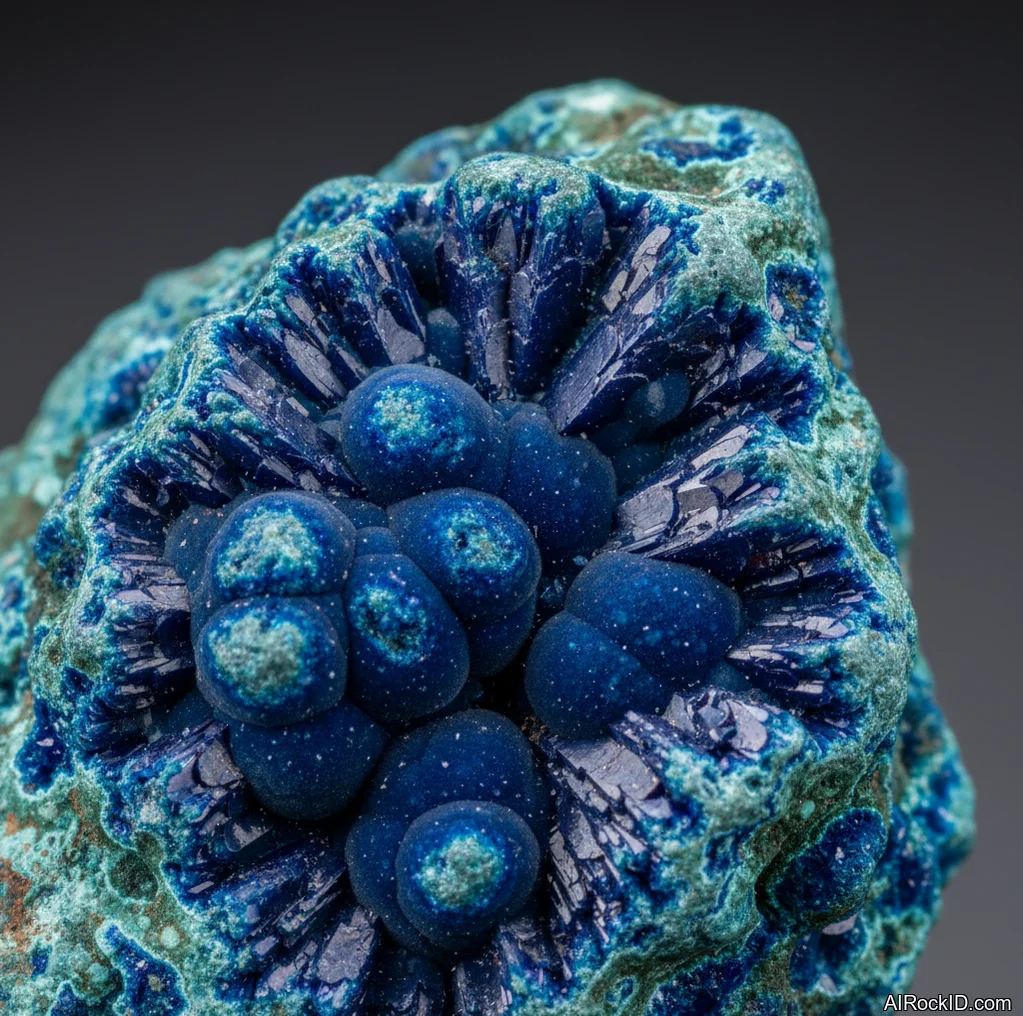
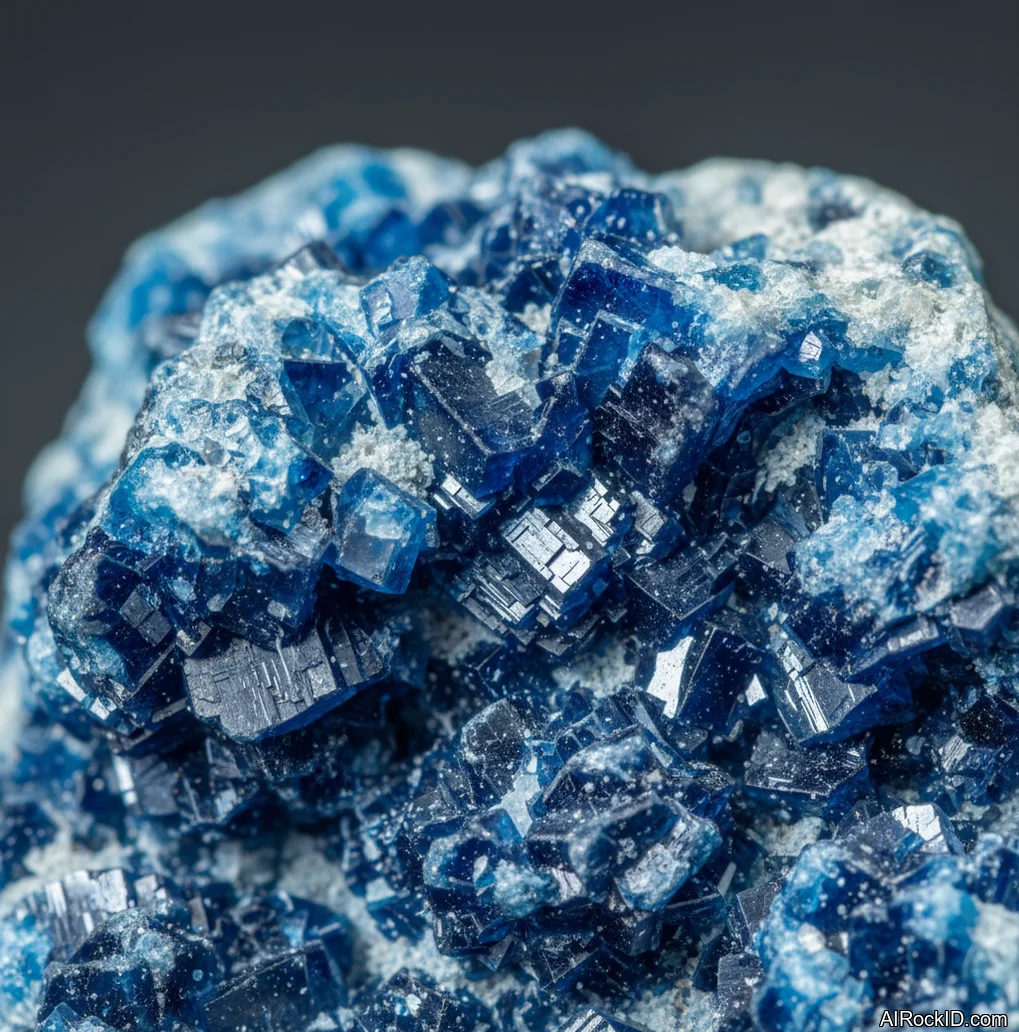
Lazulite is a blue magnesium aluminum phosphate mineral with the formula MgAl2(PO4)2(OH)2, and most people clock it right away by that inky-to-sky-blue color and those glassy crystal faces.
Grab a decent chunk and, honestly, the first surprise is how hard it feels for a blue mineral that isn’t sapphire. It’s not got that hematite heft, but it also doesn’t have that chalky, crumbly vibe. When I’m sorting flats at a show, lazulite has this cool, slick feel on the crystal faces, especially if it’s perched on white quartz or that sugary-looking pale matrix.
And yeah, people confuse it with lapis or azurite at first because, well, blue is blue. But lazulite usually turns up as small wedgey crystals, short prisms, or little sharp shards in metamorphic rock, not big massive blobs. Thing is, the color can shift when you tilt it. Some pieces kick greener-blue at one angle, then swing to a deeper navy at another, and once you’ve handled a few, that’s basically the tell.
Origin & History
Back in 1795, Martin Heinrich Klaproth described lazulite from the Salzburg area of Austria. Klaproth’s name shows up all over mineral history, and he was sharp about teasing out “new” species from the stuff everyone kept tossing into the same bucket.
The name comes from “lazulum,” which ties into that old word chain for blue (same family as “azure”). And yeah, that trips people up, because lazulite isn’t lapis lazuli. I’ve seen it happen at a show: someone leans over a tray, taps a crystal with a fingernail, and goes, “ooh, lapis crystals,” and the dealer has to nudge them back to reality. Happens more than you’d think.
Where Is Lazulite Found?
You’ll see lazulite from alpine metamorphic zones in Europe and from pegmatite and metamorphic settings in places like Brazil, the USA, and Madagascar.
Formation
Look at where lazulite actually turns up and the pattern gets pretty obvious: it wants phosphate-rich chemistry, plus either high-grade metamorphism or a late-stage hydrothermal setup. You’ll usually find it in high-grade metamorphic rocks like schists and gneisses, especially in spots where there’s a real phosphate source in the mix. But it can pop up in some granitic pegmatites too.
Quartz will grow basically anywhere it can squeeze in. Lazulite won’t. It’s fussier. Most of the time it shows up as crystals tucked into little seams or pockets, or sitting right along foliation planes (the kind you can feel with your fingertip when you run it over the rock). And it tends to hang around other collector-type minerals that make you stop and pull out a loupe: kyanite, rutile, quartz, sometimes tourmaline, plus other phosphates depending on the deposit. Why else would people keep looking for it?
How to Identify Lazulite
Color: Usually medium to deep blue, sometimes leaning greenish-blue; lighter sky-blue material happens, but it’s less common in sharp crystals.
Luster: Vitreous to slightly greasy on clean faces.
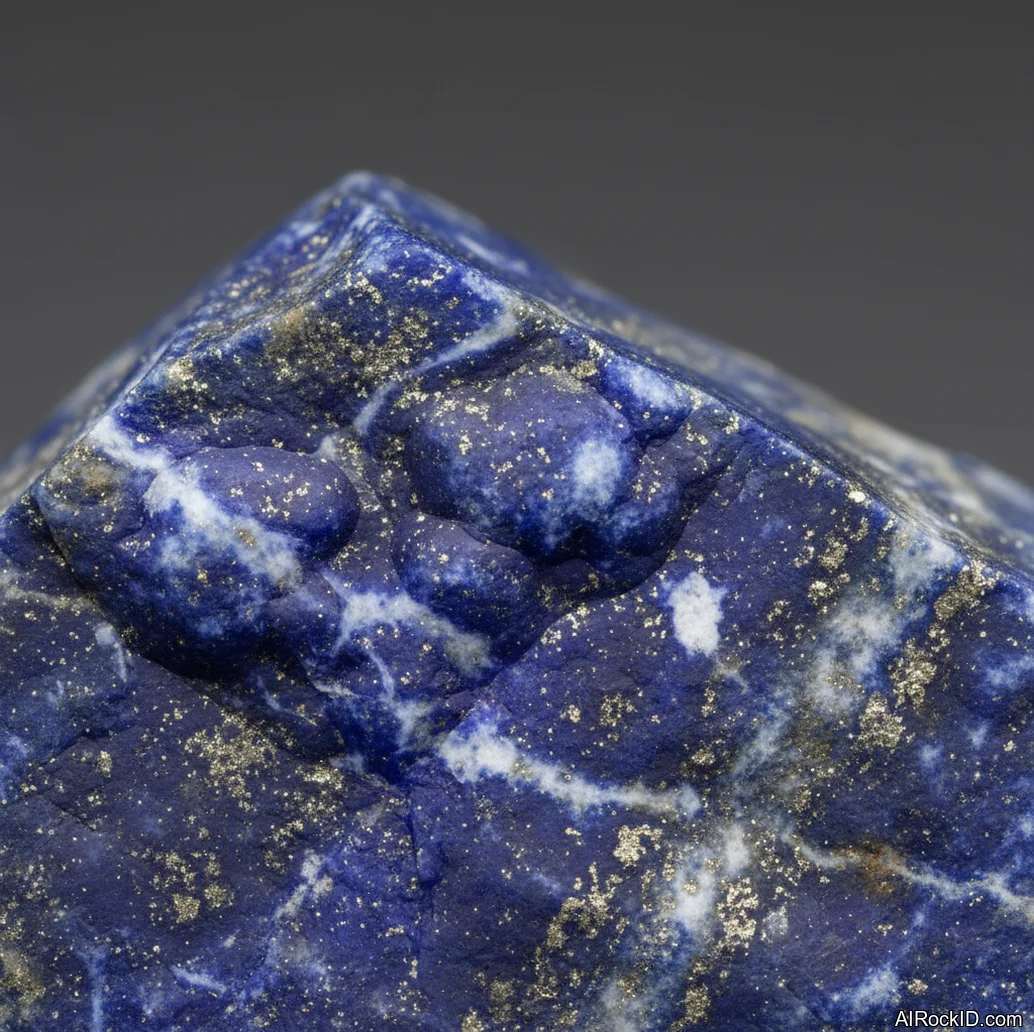
Pick up the specimen and rotate it under a single overhead light. Lazulite often shows noticeable color shift with angle because of pleochroism, and the blue can go from denim to a slightly green-toned blue. If you scratch it with a steel needle, it generally won’t take a mark, but it also won’t laugh off quartz like corundum does. And don’t rely on “blue = lapis” because lazulite is a crystal mineral, not a rock mixture with pyrite specks.
Properties of Lazulite
Physical Properties
| Crystal System | Monoclinic |
| Hardness (Mohs) | 5.5-6 (Medium (4-6)) |
| Density | 3.00-3.10 g/cm3 |
| Luster | Vitreous |
| Diaphaneity | Transparent to translucent |
| Fracture | Uneven |
| Streak | White |
| Magnetism | Non-magnetic |
| Colors | Blue, Greenish-blue, Sky blue, Deep navy |
Chemical Properties
| Classification | Phosphates |
| Formula | MgAl2(PO4)2(OH)2 |
| Elements | Mg, Al, P, O, H |
| Common Impurities | Fe, Mn |
Optical Properties
| Refractive Index | 1.602-1.640 |
| Birefringence | 0.018 |
| Pleochroism | Strong |
| Optical Character | Biaxial |
Lazulite Health & Safety
Lazulite isn’t considered toxic, so it’s fine to handle. Just stick to basic mineral-collecting hygiene. Wash your hands after you’ve been holding it (especially if you’ve got that faint blue dust on your fingertips), and don’t eat or rub your eyes while you’re working with it. That’s it.
Safety Tips
Look, if you’re grinding or sanding any mineral, keep water on it to knock the dust down. And wear a respirator, because you really don’t want to be breathing that stuff in.
Lazulite Value & Price
Price Range
Rough/Tumbled: $15 - $250 per specimen
Cut/Polished: $20 - $120 per carat
Prices jump all over the place depending on crystal size, how clean the faces are, and how much that blue actually pops against the matrix. The tiny stuff can be pretty cheap. But once you’ve got sharp, thumbnail-sized crystals with solid color, the price climbs fast.
Durability
Moderate — Scratch resistance: Fair, Toughness: Fair
It’s generally stable in normal indoor conditions, but it can chip on edges and doesn’t love rough handling in a pocket.
How to Care for Lazulite
Use & Storage
Store it in a perky box or wrapped so the crystal edges don’t knock into harder stuff like quartz. If you toss it loose in a case, you’ll find new chips later.
Cleaning
1) Rinse briefly with lukewarm water. 2) Use a soft toothbrush with a drop of mild soap to lift dirt from crevices. 3) Rinse again and pat dry, then air-dry fully before boxing it.
Cleanse & Charge
If you do energy-style care, I’d keep it simple: smoke, sound, or a short rest on clean quartz. Skip anything that involves salt grit rubbing on the faces.
Placement
Looks best under a small directional light so the pleochroism shows when you tilt it. Keep it out of direct sun if you’re worried about any long-term color dulling.
Caution
Skip ultrasonic cleaners and strong acids. They can chew up the delicate matrix and leave the surface looking kind of dull and worn. And don’t toss it in your pocket with your keys or loose change, either.
Works Well With
Lazulite Meaning & Healing Properties
Next to the flashier blue stones, lazulite always comes off like a quiet desk stone. I keep a piece near me when I’m labeling flats or grinding through paperwork, because that blue snaps my focus back in this clean, no-nonsense way. It’s not trying to put on a show. It just sits there and holds steady.
People love tying blue minerals to communication and clear thinking, and yeah, lazulite fits that in a practical, day-to-day sense. The pattern I actually notice is simpler: it nudges folks to slow down and put a name on the problem they’re trying to solve. I’ve caught myself doing it at shows, too. I’ll stare at those tiny blue crystals for a minute (the little glassy faces, the sharp edges), then walk back into a negotiation with my head a bit straighter. Coincidence? Maybe. Still works.
But look, here’s the line I draw in the shop every time: none of this is medical. If you’ve got anxiety, sleep stuff, or anything physical going on, crystals are comfort tools at best. That said, lazulite does feel “cool” in your hand in a way you can actually test. On a hot day, a clean crystal face stays noticeably cool longer than you’d expect, especially compared to a worn, dusty surface, and that sensory part is real. Not mystical. Just how it feels.
Identify Any Crystal Instantly
Snap a photo and get properties, value, care instructions, and healing meanings in seconds.