Yellow Jade
What Is Yellow Jade?
Yellow Jade is just jade that happens to be yellow. That can mean nephrite or jadeite, and the color usually comes from iron-related staining or tiny trace elements.
In your hand, it doesn’t feel like quartz. Not even close. Grab a decent piece and the first thing you notice is that “dense soap” feel, smooth but with this slight drag, like your thumb catches a little on a polished face instead of skating over it.
Thing is, a lot of the yellow jade sitting on tables gets sold as one thing when it’s actually something else. Some of it really is jadeite. Some is nephrite. And some is serpentine or even dyed quartz, just borrowing the name. Real yellow jade usually has a quiet, creamy color, with cloudy zones, tiny freckles, and sometimes a greenish patch or two (especially when you tilt it under the light). If you press your phone flashlight right up to an edge, it can glow a bit, but it typically won’t look glassy or crisp the way chalcedony does.
And there’s the sound. People don’t talk about that enough. Tap two pieces together and the better material gives a higher, cleaner clink, while serpentine tends to answer with a duller thunk. How many times have you heard that difference once you know it?
Origin & History
“Jade” comes to us by way of Spanish. The phrase was *piedra de ijada*, basically “stone of the side,” because people used it back in the day for kidney pain and aches in your side. Nephrite got its name from the same basic idea too, just through Greek, with *nephros* meaning kidney.
Jadeite showed up later as its own separate mineral. It was described in the 1800s, when mineralogists finally sorted out that the old catch-all “jade” label was really covering two different materials.
Thing is, “yellow jade” as a trade name gets sloppy fast, because it’s based on color first, not on what the stone actually is. Most dealers are talking about the look in the hand and under the light, not whether it’s nephrite or jadeite. And in Chinese carving circles, you’ll hear color nicknames like “honey” or “chicken fat” for that warm yellow stuff. Those labels can be totally straight, or… let’s just say they can get a little optimistic (depending on who’s selling).
Where Is Yellow Jade Found?
Yellow jade shows up wherever nephrite or jadeite occurs, with well-known trade material coming from Myanmar (jadeite) and China and Canada (nephrite). Color can vary a lot even within one river run or boulder.
Formation
Most nephrite shows up in metamorphic zones, where calcium magnesium rocks get hit by silica-rich fluids, usually around serpentinite bodies. It isn’t “one crystal” so much as a nasty-tough felt of amphibole fibers from the tremolite-actinolite series, all jammed together and intergrown until it acts like a single solid lump. That’s the whole reason you can smack nephrite around and it still won’t fall apart.
Jadeite comes from a different setup. Think high pressure and lower temperature, the kind of conditions you get in subduction zones. It’s a pyroxene, and the good stuff is a tight little mosaic of tiny crystals.
And that yellow color, in either nephrite or jadeite, usually comes down to iron plus weathering and staining. So, yeah, some of the nicest yellow can just be a surface thing, like a thin rind you only notice once you’ve actually cut the boulder and see the inside go pale (or even drift greenish). Kind of disappointing, right?
How to Identify Yellow Jade
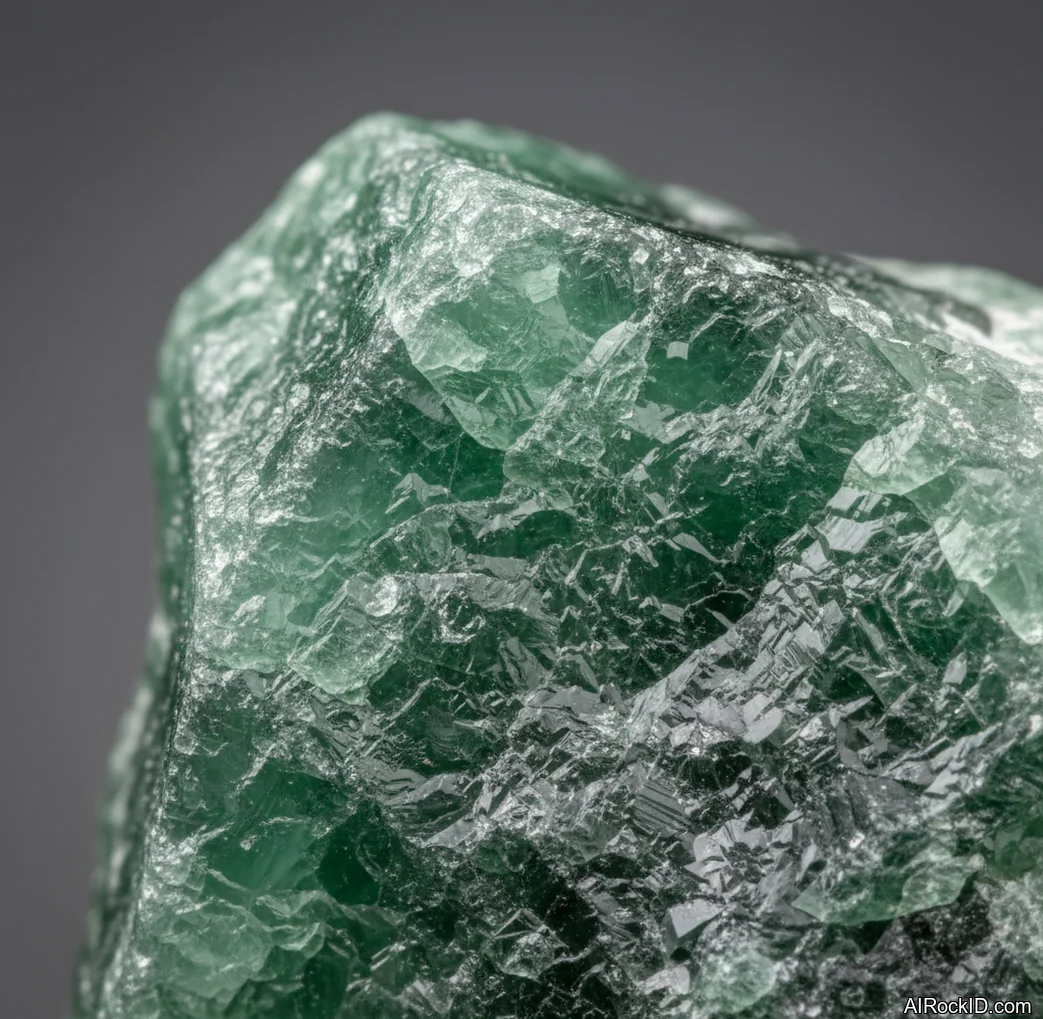
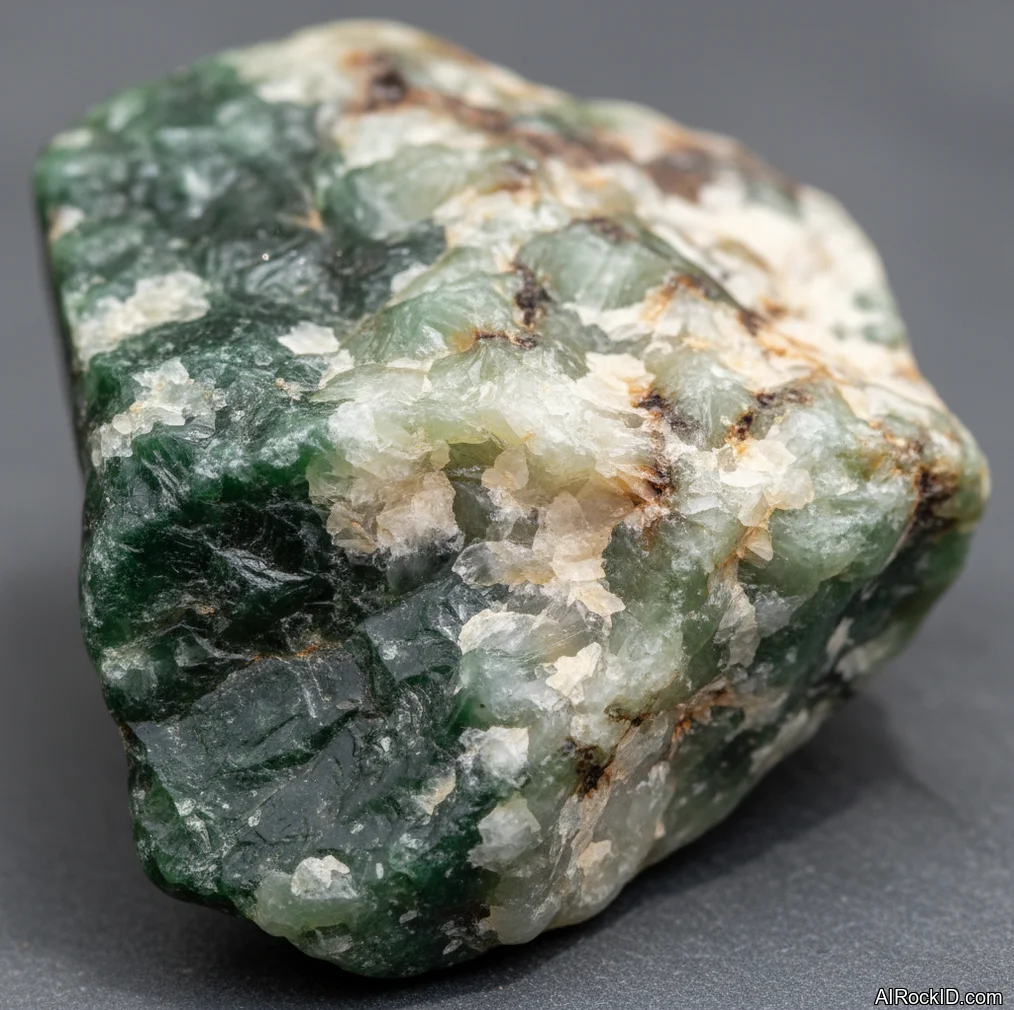
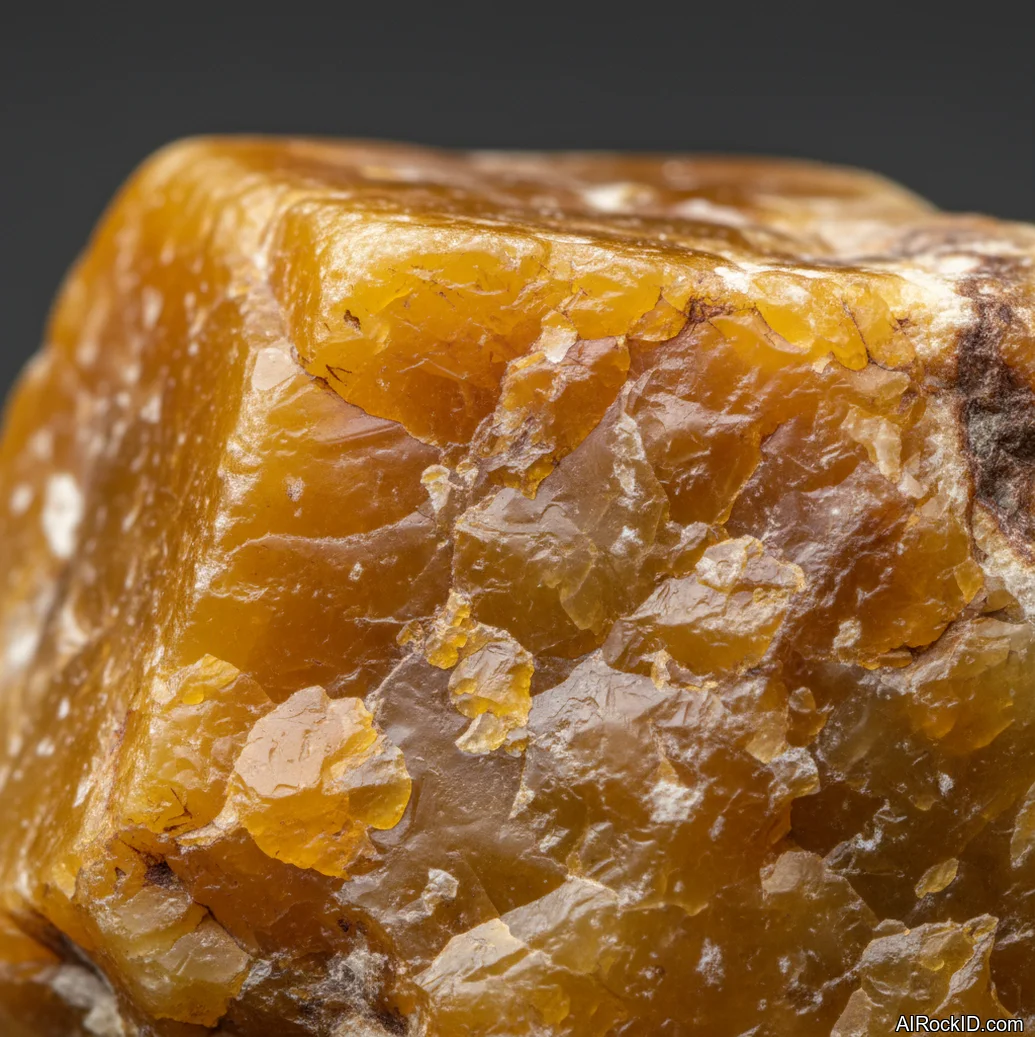
Color: Yellow jade ranges from pale straw and creamy butter to deeper honey or mustard, often with mottling, cloudy zones, or green-gray patches. Uniform, neon-yellow color is a red flag for dye in low-grade material.
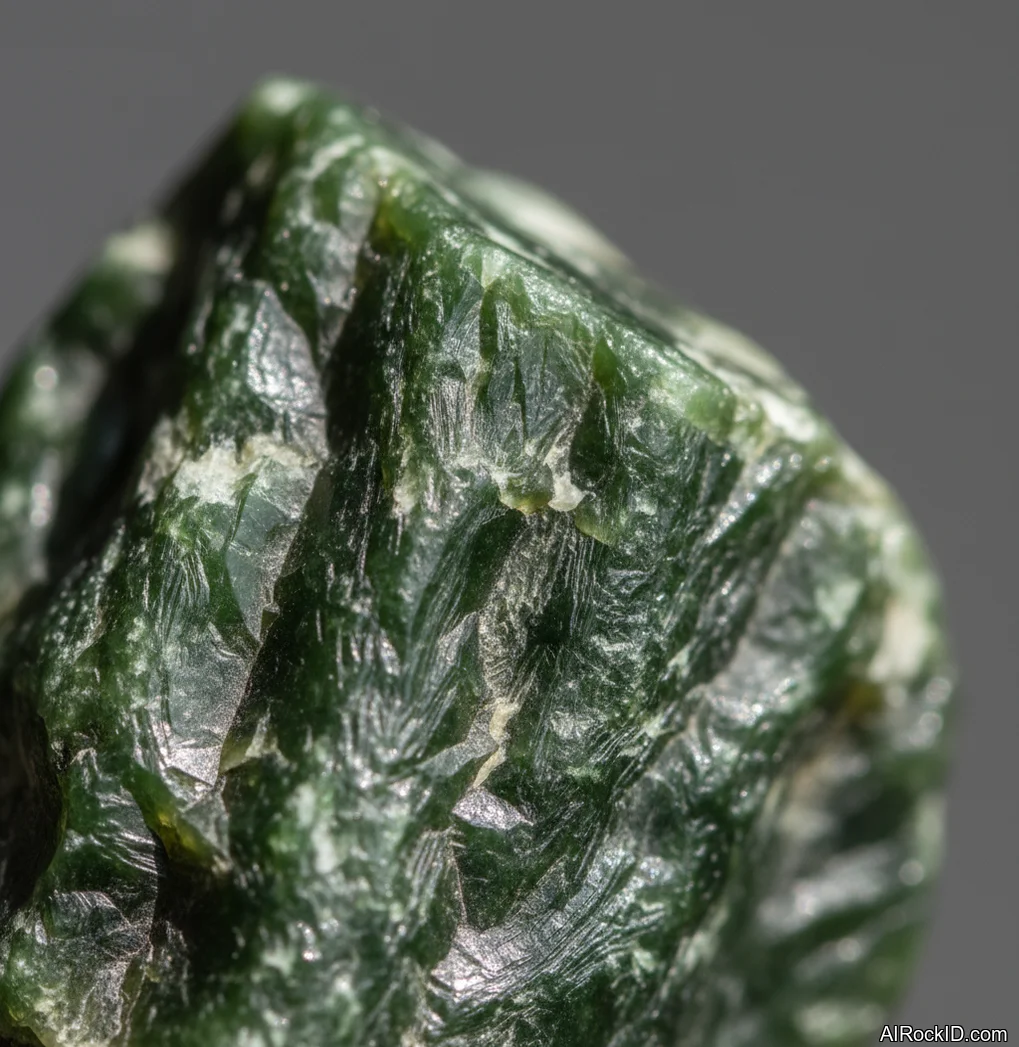
Luster: Typical luster is waxy to greasy when polished, not bright-glassy.
Pick up a piece and judge the heft. Jade feels heavier than it looks for its size, and it stays cool in your palm longer than most fakes. Look closely at the texture under strong light: nephrite often shows a “fibrous” or silky internal look, while jadeite can look more granular or sugary, but both should look tightly knit, not bubbly or swirly like glass. The real test is a loupe plus skepticism: if the color is parked in cracks or around drill holes, or if a cotton swab with acetone lifts yellow, you’re probably looking at dye.
Properties of Yellow Jade
Physical Properties
| Crystal System | Monoclinic |
| Hardness (Mohs) | 6.0-7.0 (Hard (6-7.5)) |
| Density | 2.90-3.38 |
| Luster | Waxy |
| Diaphaneity | Translucent to opaque |
| Fracture | Splintery |
| Streak | White |
| Magnetism | Non-magnetic |
| Colors | Yellow, Cream, Honey, Mustard, Yellow-green, Greenish yellow, Brownish yellow |
Chemical Properties
| Classification | Silicates |
| Formula | Ca2(Mg,Fe)5Si8O22(OH)2 (nephrite) or NaAlSi2O6 (jadeite) |
| Elements | Ca, Mg, Fe, Si, O, H, Na, Al |
| Common Impurities | Fe, Cr, Mn, Ti |
Optical Properties
| Refractive Index | 1.606-1.632 |
| Birefringence | 0.020 |
| Pleochroism | Weak |
| Optical Character | Biaxial |
Yellow Jade Health & Safety
Handling it is pretty low-risk. But if you’re cutting or sanding it, that fine stone dust that hangs in the air is the last thing you want in your lungs.
Safety Tips
If you’re going to shape or drill jade, put on a real respirator, not just a paper mask. And keep the work wet while you cut so the dust doesn’t kick up into the air.
Yellow Jade Value & Price
Price Range
Rough/Tumbled: $10 - $300 per piece
Cut/Polished: $5 - $200 per carat
Price swings usually boil down to a few things: is it confirmed jadeite or nephrite, how clean the color looks in person, how translucent it is when you hold it up to a light, and whether it’s been dyed or polymer-treated. And carved pieces are their own beast, because the workmanship can end up costing more than the rough stone itself.
Durability
Very Durable — Scratch resistance: Good, Toughness: Excellent
Jade is stable in normal wear, but dyed or polymer-impregnated material can fade or discolor with heat, solvents, and long sun exposure.
How to Care for Yellow Jade
Use & Storage
Store it in a soft pouch or a divided box so it doesn’t get scuffed by harder stones like quartz or corundum. If it’s a bangle, keep it from knocking against metal jewelry in the same drawer.
Cleaning
1) Rinse with lukewarm water and a drop of mild soap. 2) Use a soft toothbrush for carvings and recessed areas. 3) Rinse again and dry with a microfiber cloth.
Cleanse & Charge
For a simple reset, rinse briefly and let it dry fully, or leave it on a shelf overnight away from direct sun. If you suspect dye or treatment, skip salts and harsh cleansers.
Placement
On a desk, yellow jade looks best where side-light can catch the cloudy depth, like near a lamp rather than in a dark corner. I also like it in a bowl with other tough stones because it can take the occasional bump.
Caution
Don’t use bleach, acetone, or an ultrasonic cleaner on jade unless you personally checked it’s untreated. Those cleaners can mess up dyed or polymer-filled pieces, and they can slowly knock the shine down too (you’ll notice the polish looking a bit tired after a while).
Works Well With
Yellow Jade Meaning & Healing Properties
Next to bright citrine, yellow jade comes off way quieter for a lot of people. More steady. Less “sparkly.” I’ve carried a small yellow nephrite worry stone in my pocket on long drives, and what stands out isn’t some big mystical jolt, it’s the physical part: it warms up slowly from your body heat and stays slick and smooth even after months of fidgeting. That matters, because you actually end up using it.
In modern crystal talk, yellow stones tend to get linked with confidence, willpower, and money themes. With jade specifically, people also pull in the older cultural associations of good fortune and protection, especially with carved pieces and bangles. But look, you can’t really separate the feeling from the object. A heavy, well-polished piece you genuinely like holding is going to settle your nerves more than some chalky dyed pebble that leaves a weird chemical smell on your fingers when you rub it (you know the type?).
So keep it grounded. If you’re using yellow jade as a personal reminder to stay steady, save money, or speak up, that’s a practical way to work with it. It’s not medical care, and it won’t fix a real problem by itself. But as a daily touchstone, it does its job, especially if you choose a piece in a color you actually like and a shape your hand keeps going back to without thinking.
Identify Any Crystal Instantly
Snap a photo and get properties, value, care instructions, and healing meanings in seconds.