Dianite Blue Jade
What Is Dianite Blue Jade?
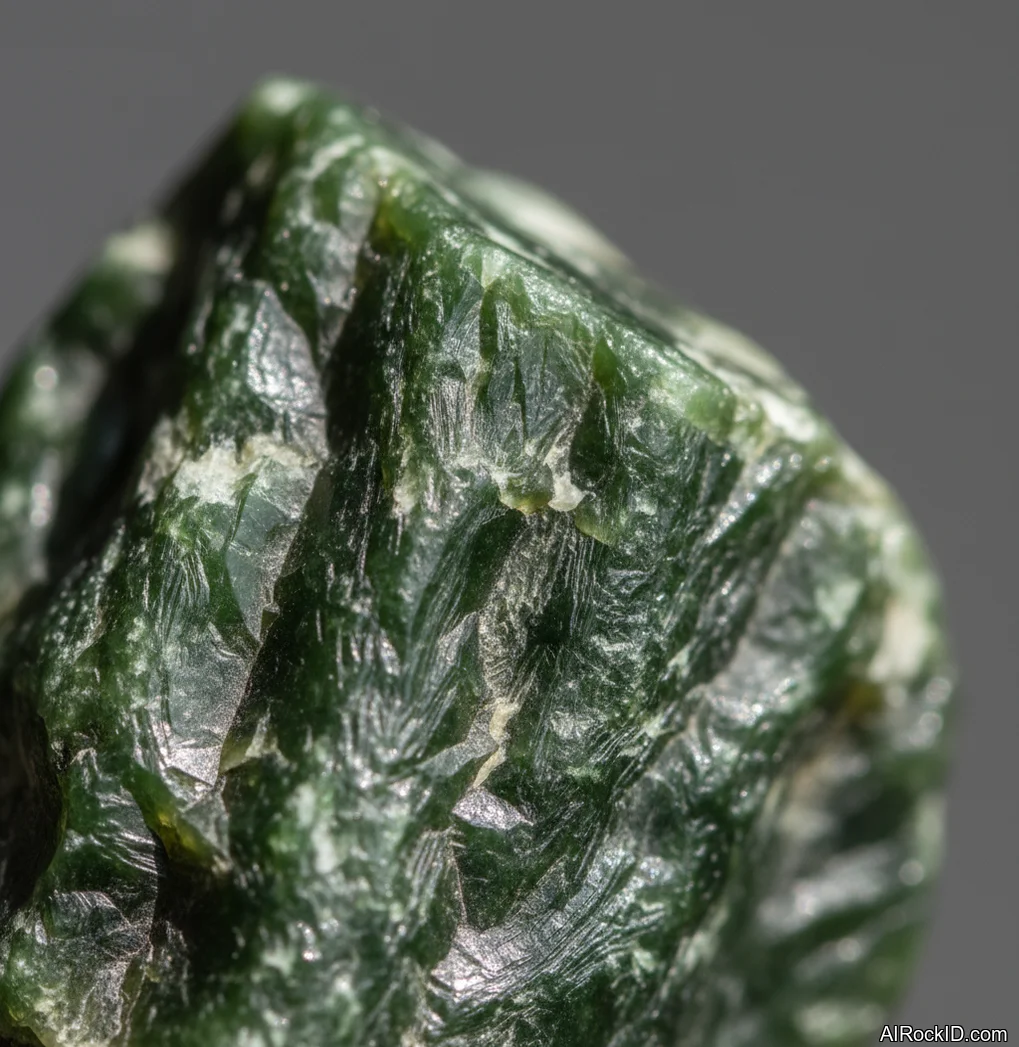
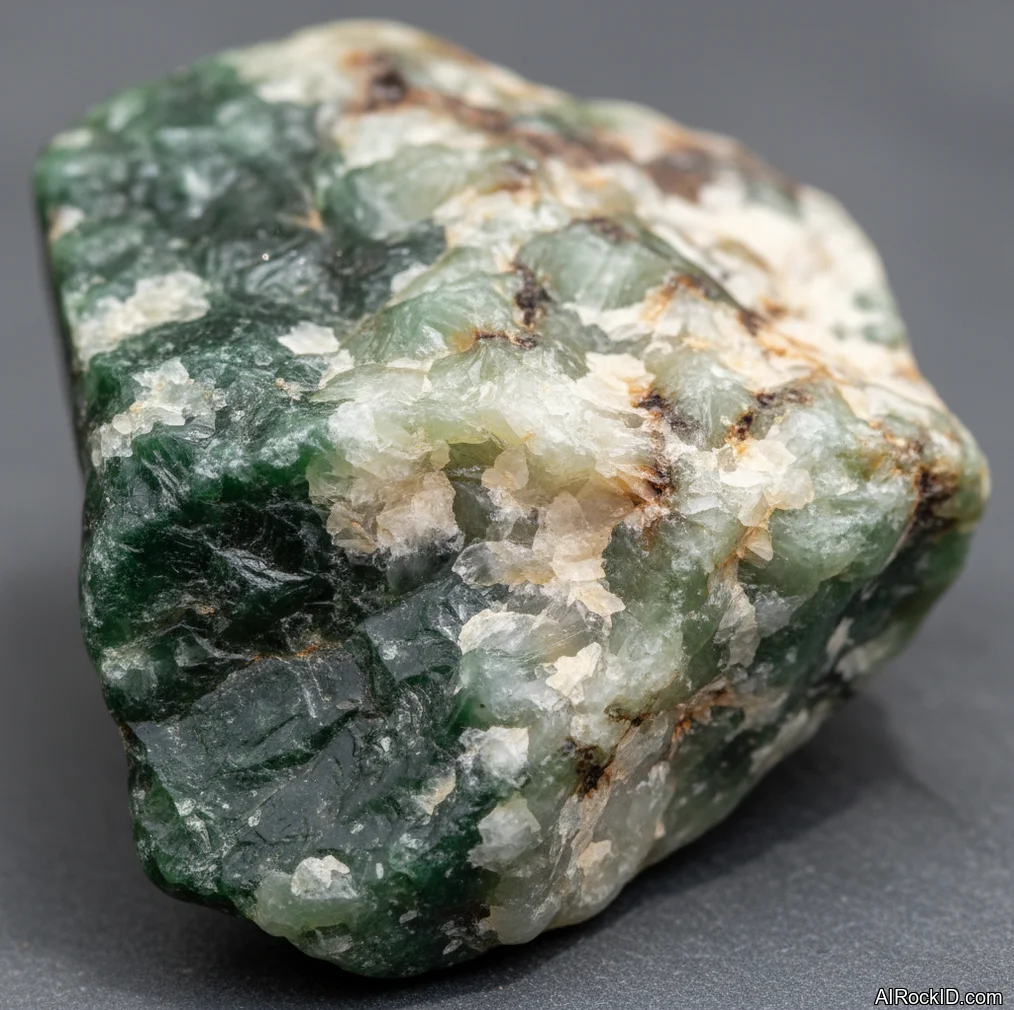
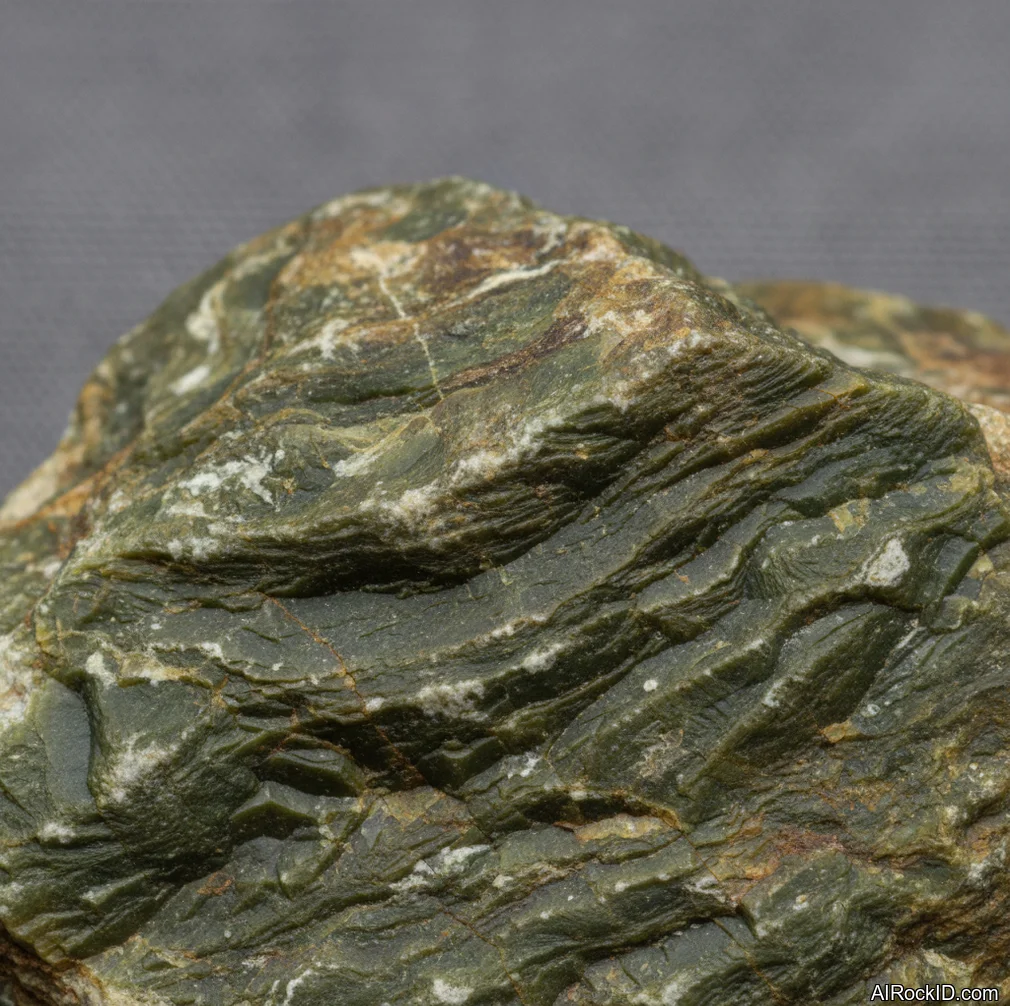
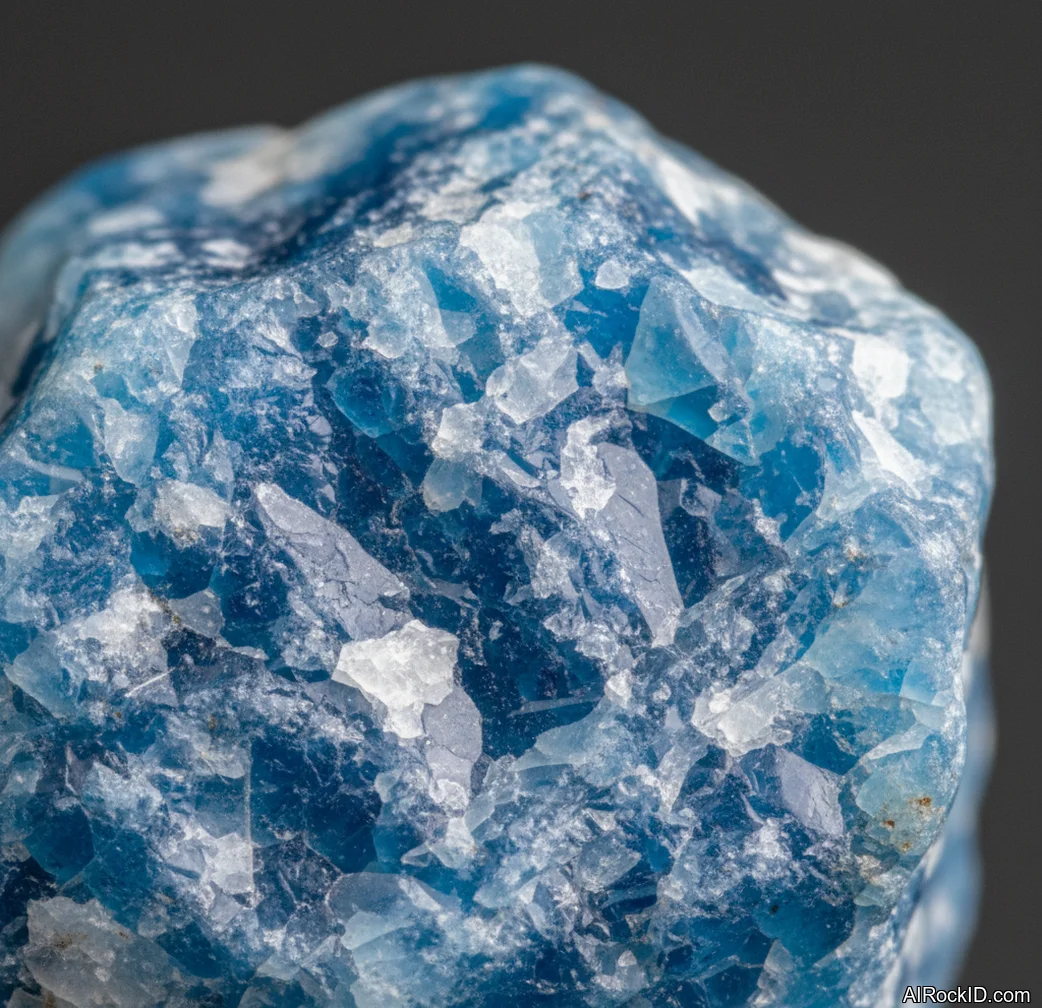
Dianite Blue Jade is just a trade name for blue to blue-green nephrite jade, which is an intergrown amphibole (tremolite-actinolite) rock that people like because it’s tough and takes a waxy polish.
Grab a palm stone and you’ll notice the feel first. It’s smooth, sure, but there’s also that slightly “buttery” drag under your thumb that good nephrite has, and it stays cool in your hand longer than glass or dyed quartz (you can feel it hang onto the cold). The color isn’t neon, either. It usually sits in that denim-to-seafoam blue-green range with cloudy patches, and sometimes you’ll see thin, darker seams that honestly look like little brush strokes.
People sometimes expect it to act like jadeite at first glance, but it won’t. Nephrite usually looks a bit softer when light hits it, and inside it tends to be more fibrous. And if you’ve ever looked at a fresh chip on the edge of a bangle, you can sometimes spot that tiny, splintery texture on the break instead of a clean conchoidal snap. Why does that matter? It’s one of those small tells that lines up with nephrite.
Origin & History
“Dianite” isn’t an official mineral name. It’s just a market label you’ll see in the modern gem trade for blue-toned nephrite. So no, you won’t find “dianite” listed as a valid species in the IMA lists, and that’s where people get tripped up.
The word “jade” is older, and honestly kind of a mess. “Nephrite” traces back to that old kidney connection (Spanish piedra de ijada, then French nephrite), because people used to link jade with kidney problems. And dealers later leaned hard into the “blue jade” wording since it’s a lot easier to sell than “blue-green tremolite rock,” even if the second one is closer to the actual geology.
Where Is Dianite Blue Jade Found?
Blue-toned nephrite shows up in classic nephrite belts, especially in parts of Russia, western China, and Canada. Most retail material is cut and polished near where it’s traded, not where it’s mined.
Formation
Most nephrite shows up right where serpentinite bodies are jammed up against silica-rich rocks and the whole mess gets heated and squeezed. It’s metamorphism plus metasomatism happening along those contact zones, with calcium and magnesium moving around, and enough pressure to grow those tight amphibole fibers.
Compared to a clean, single-crystal mineral, nephrite isn’t like one tidy chunk at all. It’s more like nature made felt. Microscopic tremolite-actinolite fibers interlock and knot into each other, and that’s the whole reason it’s so tough even though the hardness sits in the mid-6s. I once saw a dealer at a show tap two cabochons together, edge to edge, right under those harsh booth lights, and nephrite basically shrugged it off. Plenty of other “jade” lookalikes would’ve chipped on the spot, no question.
How to Identify Dianite Blue Jade
Color: Usually blue-green to gray-blue with cloudy, uneven mottling; some pieces lean more teal, others more slate. Color is commonly patchy rather than a flat, uniform blue.
Luster: Waxy to greasy when polished, not sparkly like quartz.
Pick up a piece and feel the temperature. Real nephrite stays cool longer and feels denser than dyed chalcedony or glass. The real test is the texture under a bright light: nephrite often shows a fine, fibrous “sugary” structure at the edges or in thin sections, while glass looks too clean and dye tends to pool in fractures. If you scratch it with a steel knife, it should resist more than calcite or serpentine, but a quartz point can still scratch it.
Properties of Dianite Blue Jade
Physical Properties
| Crystal System | Monoclinic |
| Hardness (Mohs) | 6.0-6.5 (Hard (6-7.5)) |
| Density | 2.90-3.10 g/cm3 |
| Luster | Waxy |
| Diaphaneity | Translucent to opaque |
| Fracture | Splintery |
| Streak | White |
| Magnetism | Non-magnetic |
| Colors | blue-green, gray-blue, teal, green, gray |
Chemical Properties
| Classification | Silicates (amphibole group) |
| Formula | Ca2(Mg,Fe)5Si8O22(OH)2 |
| Elements | Ca, Mg, Fe, Si, O, H |
| Common Impurities | Fe, Cr, Mn |
Optical Properties
| Refractive Index | 1.60-1.62 |
| Birefringence | 0.020 |
| Pleochroism | Weak |
| Optical Character | Biaxial |
Dianite Blue Jade Health & Safety
Solid nephrite is safe to pick up and use, and it holds up around water just fine in everyday situations. But it’s still a stone, so if you’re cutting or sanding it, don’t breathe in the dust (that fine powder gets everywhere, even on your hands).
Safety Tips
If you’re going to grind or carve it, do it wet and wear a proper respirator that actually seals to your face (check the straps and that nose bridge). And when you’re done, mop up the slurry while it’s still damp instead of letting it dry out and sweeping it around.
Dianite Blue Jade Value & Price
Price Range
Rough/Tumbled: $10 - $120 per palm stone or small carved piece
Cut/Polished: $5 - $60 per carat
Prices jump when the color’s even, the translucency looks good, and the polish comes out clean with zero little pits or pinholes you can feel if you run a fingernail across it. But a big chunk of that “blue” premium is basically just a label people slap on it, so don’t pay extra until you’ve compared a couple pieces side by side and actually see the difference.
Durability
Durable — Scratch resistance: Good, Toughness: Excellent
Nephrite is very tough for daily wear, but it can still scratch from quartz dust and abrasive grit.
How to Care for Dianite Blue Jade
Use & Storage
Store it in a soft pouch or separate compartment so quartz and topaz don’t scuff the polish. And keep it out of grit, because grit is what actually scratches jade.
Cleaning
1) Rinse with lukewarm water and a drop of mild soap. 2) Use a soft toothbrush to get into carvings and seams. 3) Rinse again and dry with a microfiber cloth.
Cleanse & Charge
If you do energetic cleansing, rinse briefly under water or use smoke from incense, then let it rest somewhere cool and shaded. Don’t bake it in sun on a windowsill just because someone said “charge it,” since heat and UV can dull some finishes over time.
Placement
It looks best under soft light where the waxy glow shows up, like a shelf lamp instead of direct sun. In a pocket, it holds up well, but keys and sand will rough it up fast.
Caution
Skip ultrasonic cleaners and stay away from harsh acids. And don’t just take it for granted that every piece sold as “blue jade” is nephrite, because dyed stuff and glass lookalikes show up all the time.
Works Well With
Dianite Blue Jade Meaning & Healing Properties
In the metaphysical scene, people connect blue-toned jade with a calm, steady kind of confidence. Not the “big speech” energy. More like that tiny wave of relief when you finally reply to an email you’ve been dodging and, honestly, it was fine.
Hold a cool, dense piece in your hand and you get why it shows up in grounding and stress routines. It’s tactile. The surface has this smooth drag to it, like there’s a little resistance under your thumb, and it naturally makes you slow down. And that pause, even for ten seconds, can snap you out of a spiral.
But look, I’m going to be blunt: none of that replaces therapy, sleep, or actual medical care. Not even close.
Thing is, a lot of people mix it up with “communication stones” like blue lace agate just because it’s blue. Nephrite usually doesn’t have that airy, banded look. It feels heavier in the hand and the pattern reads quieter, less flashy, kind of muted. So it makes sense that plenty of folks reach for it for steadiness, patience, and emotional balance instead of those hypey “activation” claims.
Identify Any Crystal Instantly
Snap a photo and get properties, value, care instructions, and healing meanings in seconds.