Tanzanite
What Is Tanzanite?
Tanzanite is the blue-to-violet gem variety of the mineral zoisite. Most of the stuff you see set in jewelry leans inky blue with a violet edge, but twist it under a lamp and the color can change fast, sometimes even throwing a burgundy flash or a grayish cast depending on the cut and the light.
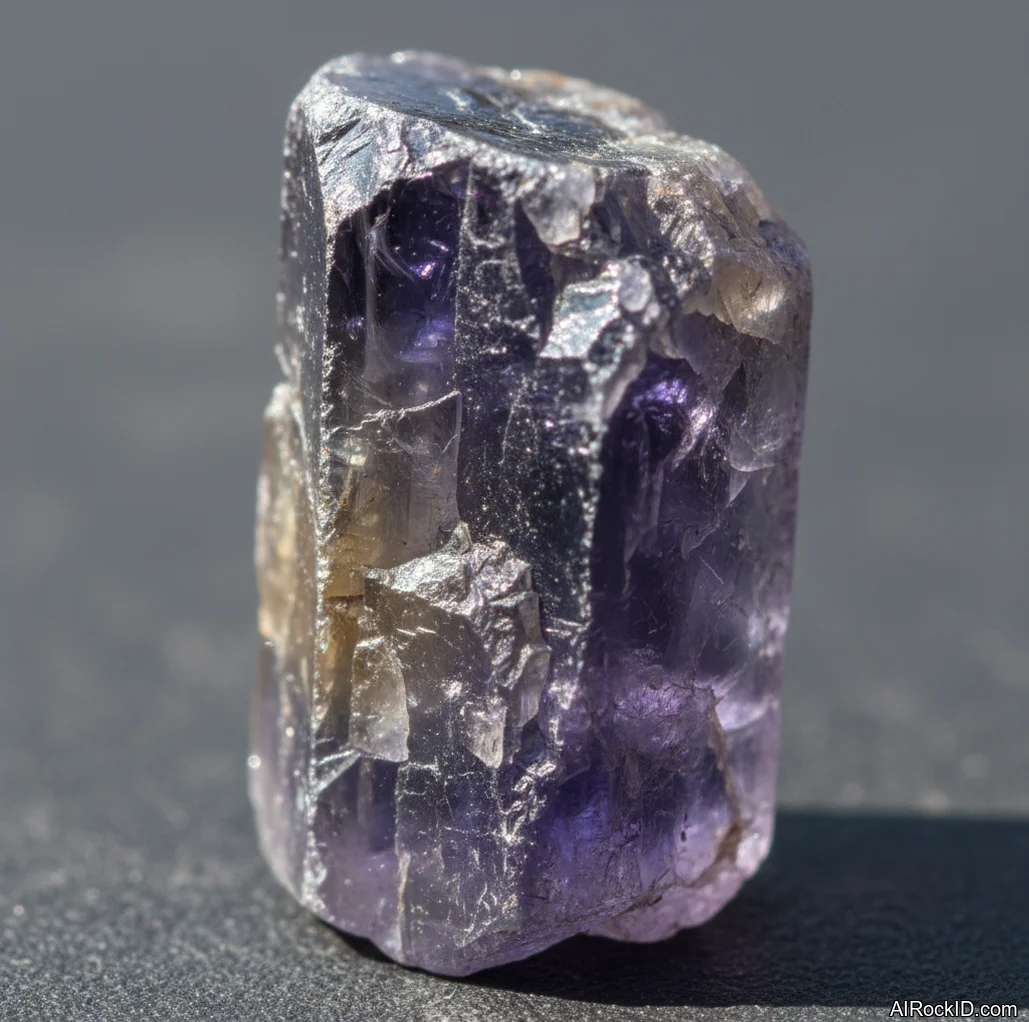
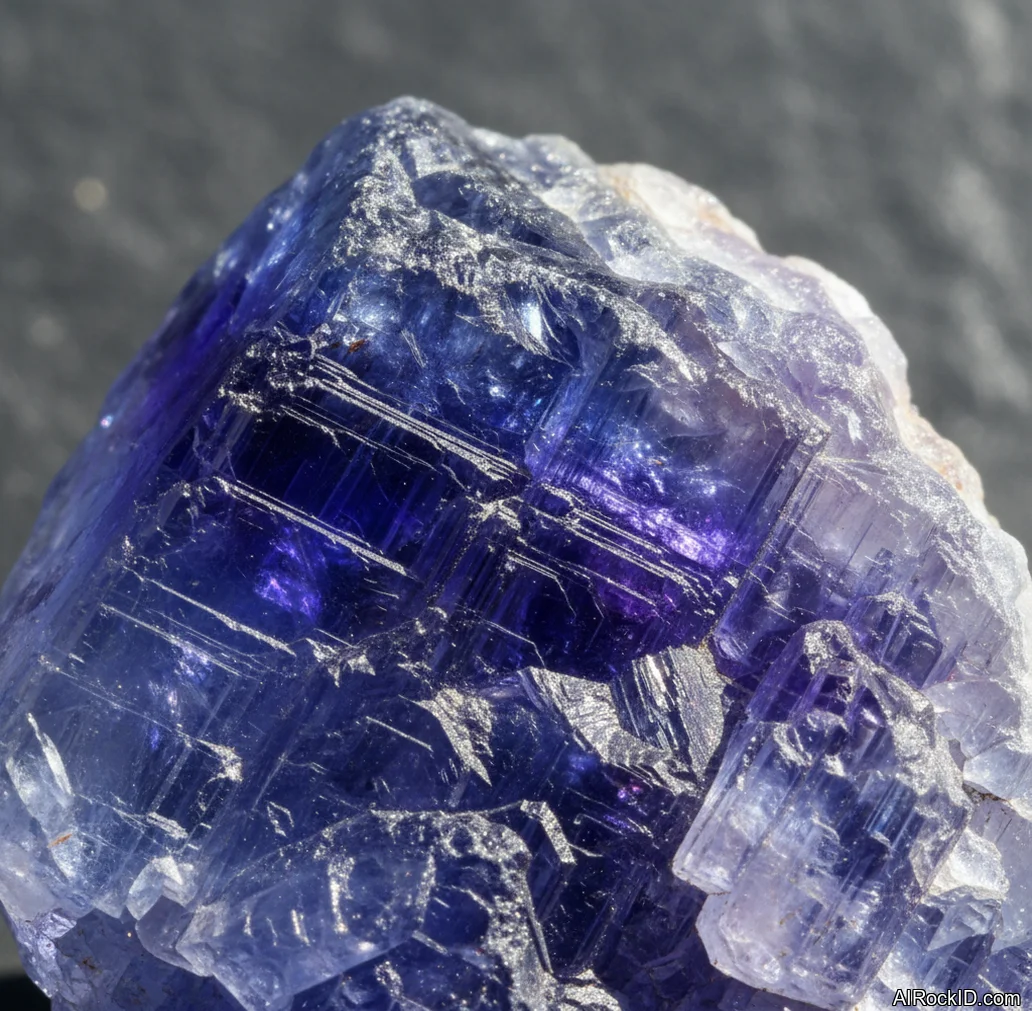
Hold a loose stone for a second and a couple things jump out right away. It stays cool against your fingertips, and the color has layers instead of looking painted on. Tip it and the “good” side lights up almost electric, then you roll it just a few degrees and it settles down like someone nudged a dimmer switch. The rough isn’t usually pretty in that quartz-point way either. It’s blocky, you can feel the striations with your nail, and it looks kind of stubborn until you catch it at the right angle. Weirdly plain. Then suddenly not.
And here’s the collector reality: a lot of tanzanite on the market has been heat-treated to push out brownish tones and bring up the blue. That doesn’t mean it’s fake. It’s just how the trade works. But it does mean you can’t judge a rough piece from one quick look in bad lighting. (Ask me how I know?)
Origin & History
1967 is the big year. That’s when blue-violet zoisite turned up near the Merelani Hills in northern Tanzania, and the gem trade moved on it fast.
And the name? “Tanzanite” didn’t just appear out of thin air. Tiffany & Co. pushed it as a trade name tied straight to Tanzania, and it stuck.
I’ve had a few older stones pass through my hands in estate lots, and you can spot the difference if you’ve actually looked at them under a lamp. They often lean a touch more purple in incandescent light compared to the newer, very blue-cut material you see everywhere now. It’s not an ancient backstory like emerald, but it still matters. Thing is, it’s basically a one-location gemstone that got branded into the mainstream.
Where Is Tanzanite Found?
Gem-quality tanzanite is essentially limited to a small mining area in the Merelani Hills of northern Tanzania, where it occurs in metamorphic rocks.
Formation
Think metamorphism, not little volcanic pockets. Tanzanite forms as zoisite in a high-grade metamorphic setting, where calcium-aluminum silicate chemistry is already doing its thing, and trace elements like vanadium slip in and push the color toward that blue-violet. It’s not sitting there growing cute terminated crystals in a vug like fluorite.
Most pieces start out in metamorphosed rocks, the gneiss and schist kind of country rock, then you find them in veins and lenses cutting through. If you’ve seen photos from the Merelani mining area, you know what I mean: narrow hard-rock tunnels, tight headings, walls that look scraped and dusty under work lights, not some huge open-pit operation. And that’s a big reason clean, larger stones don’t just rain down onto the market.
How to Identify Tanzanite
Color: Blue to violet is the classic look, with strong color change by angle because the stone is strongly pleochroic. In some lighting it leans more purple; in other lighting it reads more sapphire-blue.
Luster: Polished tanzanite has a glassy, vitreous luster.
Look closely and rotate it under a single point light. Real tanzanite will usually show obvious pleochroism, meaning different colors in different directions, not just one uniform blue. The real test is the “angle game”: a good stone flashes blue, then violet, then a muted tone as you roll it. And if you’re holding a rough chunk, watch for perfect cleavage planes because zoisite can split cleanly and that’s a big tell compared to a lot of blue glass fakes.
Properties of Tanzanite
Physical Properties
| Crystal System | Orthorhombic |
| Hardness (Mohs) | 6-7 (Hard (6-7.5)) |
| Density | 3.10-3.38 g/cm3 |
| Luster | Vitreous |
| Diaphaneity | Transparent to translucent |
| Fracture | Uneven |
| Streak | White |
| Magnetism | Non-magnetic |
| Colors | Blue, Violet, Blue-violet, Purplish blue, Grayish violet, Reddish purple (pleochroic direction) |
Chemical Properties
| Classification | Silicates |
| Formula | Ca2Al3(SiO4)(Si2O7)O(OH) |
| Elements | Ca, Al, Si, O, H |
| Common Impurities | V, Cr, Fe, Mn, Ti |
Optical Properties
| Refractive Index | 1.691-1.700 |
| Birefringence | 0.008-0.013 |
| Pleochroism | Strong |
| Optical Character | Biaxial |
Tanzanite Health & Safety
It’s usually fine to pick up and put on display. The real worry isn’t anything dangerous, it’s just that it can chip or snap if you bump it, since cleavage makes it break a lot easier than you’d guess from hardness alone.
Safety Tips
Skip ultrasonic cleaners, and don’t just chuck it into one of those mixed crystal bowls where the harder stones can clack against it and leave little dings.
Tanzanite Value & Price
Price Range
Rough/Tumbled: $20 - $300 per gram
Cut/Polished: $200 - $1200 per carat
Color (that blue-violet balance), clarity, and how the cut lines up with pleochroism can swing the price in a hurry. Size matters, sure, but I’ve seen plenty of big stones with that sleepy, washed-out look that still lose to a smaller one that actually lights up the second you tilt it under the light.
Durability
Moderate — Scratch resistance: Good, Toughness: Fair
Tanzanite has good hardness for wear but it can chip or split along cleavage if it takes a sharp knock.
How to Care for Tanzanite
Use & Storage
Store it in a soft pouch or a separate gem box compartment. If you let it rub against quartz or sapphire, you’ll eventually see little edge dings and facet wear.
Cleaning
1) Rinse with lukewarm water. 2) Use a drop of mild soap and a soft brush to clean around the setting or along facet junctions. 3) Rinse again and pat dry with a microfiber cloth.
Cleanse & Charge
If you do energetic cleansing, stick to gentle options like smoke, sound, or a quick pass over a selenite plate. Skip harsh salt soaks and anything that involves knocking it around.
Placement
Keep it out of direct sun if you’re displaying it for long stretches, mostly to protect the overall look of your collection and avoid unnecessary heat cycling. A shelf with stable temperature is fine.
Caution
Skip ultrasonic and steam cleaning. And go easy on rings, because one careless smack on a door frame can pop a little chip right off a corner. Thing is, cleavage means it’ll split cleanly if you hit it from the wrong angle. Sounds dramatic, but it happens fast.
Works Well With
Tanzanite Meaning & Healing Properties
Next to a lot of the “calm” stones people reach for, tanzanite feels sharper in real life. More head-and-throat than soft-and-sleepy. When I’m sorting a tray under those brutal show lights (the kind that make everything look a little too honest), I’ll sometimes keep a small tumbled piece in my pocket because it’s easy to zero in on: cool, smooth, and that color shift gives your brain something to grab.
People usually connect it with communication and insight, especially when you’re trying to talk through messy, complicated stuff without spiraling. But look, I’ll say the quiet part out loud. It’s not a medical tool. If you’re anxious or depressed, treat it like a reminder object, not a stand-in for actual care.
Thing is, the two big headaches with tanzanite in spiritual circles are the price and how fragile it can be. Folks want to carry it every day like a worry stone, then act shocked when it comes back with little chips along the edge. I’ve watched it happen. So if you want the feel without the stress, a small cabochon or a protected pendant holds up way better than a sharp-edged faceted piece rattling around with your keys.
Identify Any Crystal Instantly
Snap a photo and get properties, value, care instructions, and healing meanings in seconds.