K2 Jasper
What Is K2 Jasper?
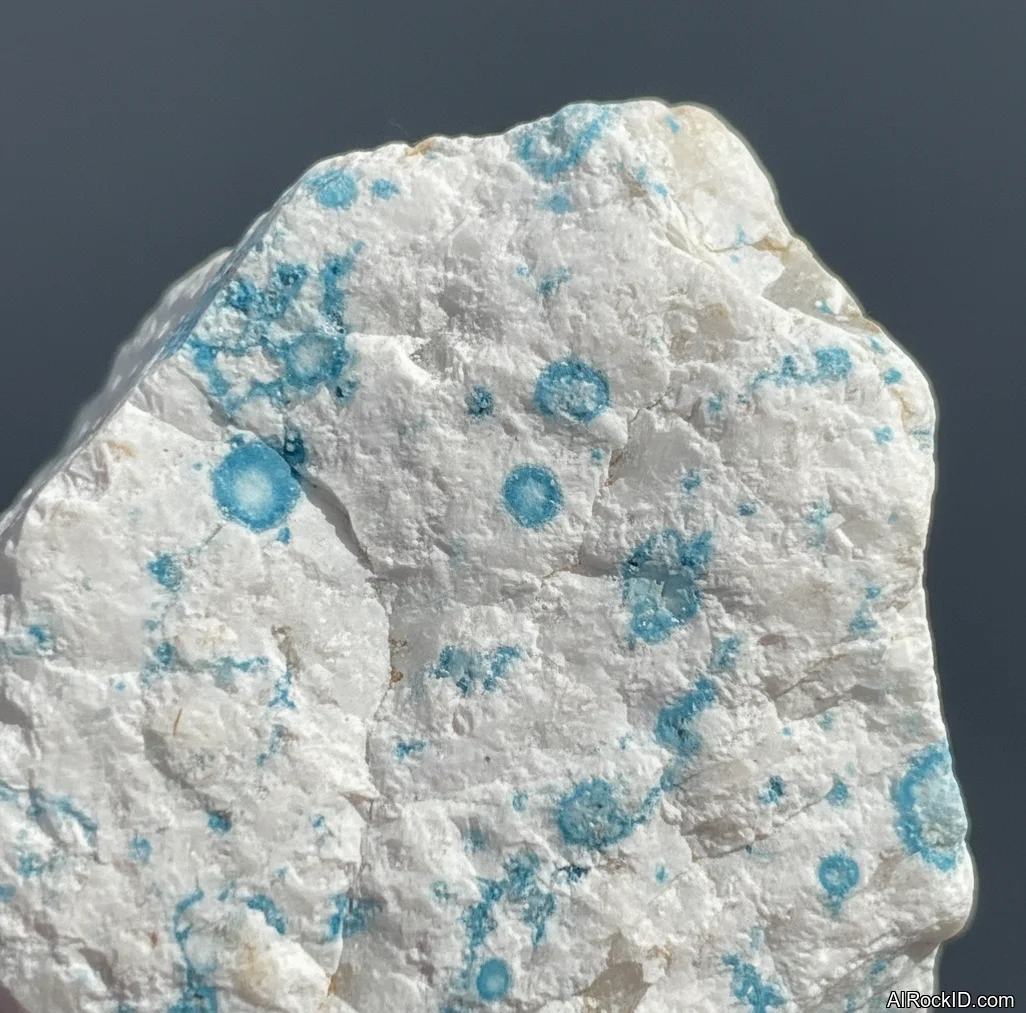
K2 Jasper is just a trade name for a white granite with round, blue azurite inclusions, and the stuff everyone talks about comes from near K2 in northern Pakistan.
Hold a piece for a second and, yeah, it feels like an actual rock because it is. It’s usually cool in the hand, heavier than you expect, a dense little palm stone with a sugary white base. Look closer and you’ll spot black grains scattered through it, plus those inky-to-sky-blue dots that honestly look like someone flicked paint across the surface. The really good material has crisp, sharply edged blue orbs, and they don’t feather out or smear into the surrounding granite.
People take one look and call it “jasper,” but it doesn’t act like a classic jasper slab. Under a loupe you can see quartz and feldspar grains in that white base, and the blue is azurite, not dye. Most pieces for sale are tumbled or cut into cabs, so the pattern comes out looking neat (almost too neat). Raw chunks are out there, sure, but they’re a lot less common in shops, and they don’t photograph nearly as well.
Origin & History
K2 material really started showing up all over the gem and mineral scene in the early 2000s, right around the time Pakistani dealers began shipping it out as lapidary rough. It wasn’t “discovered” in the sense of a brand-new mineral species, so there isn’t some official first-description paper floating around like you’d see for benitoite.
The name’s taken from the K2 area in Gilgit-Baltistan, close to the Karakoram Range. And “K2 Jasper” is basically a sales-friendly nickname. Most dealers will tell you it’s granite with azurite, but the jasper tag stuck because it moves product and those bright blue spots look insanely crisp once the stone’s been cut and polished.
Where Is K2 Jasper Found?
Commercial K2 Jasper is sourced in northern Pakistan, in the high Karakoram region around Skardu and the K2 area.
Formation
Look at that white base for a second. That’s granite. It started as silica rich magma and cooled slow enough that you can actually see the grains with your eyes, not just a microscope.
Most of the pale background is quartz and feldspar. Then you get those tiny black specks sprinkled through it (the peppery bits). They’re usually biotite or other dark minerals.
Now the blue spots. That’s azurite, and it showed up later, after the granite was already solid. For that to happen, copper bearing fluids have to move through little fractures or small pockets, and the chemistry has to hit the right window for azurite to drop out.
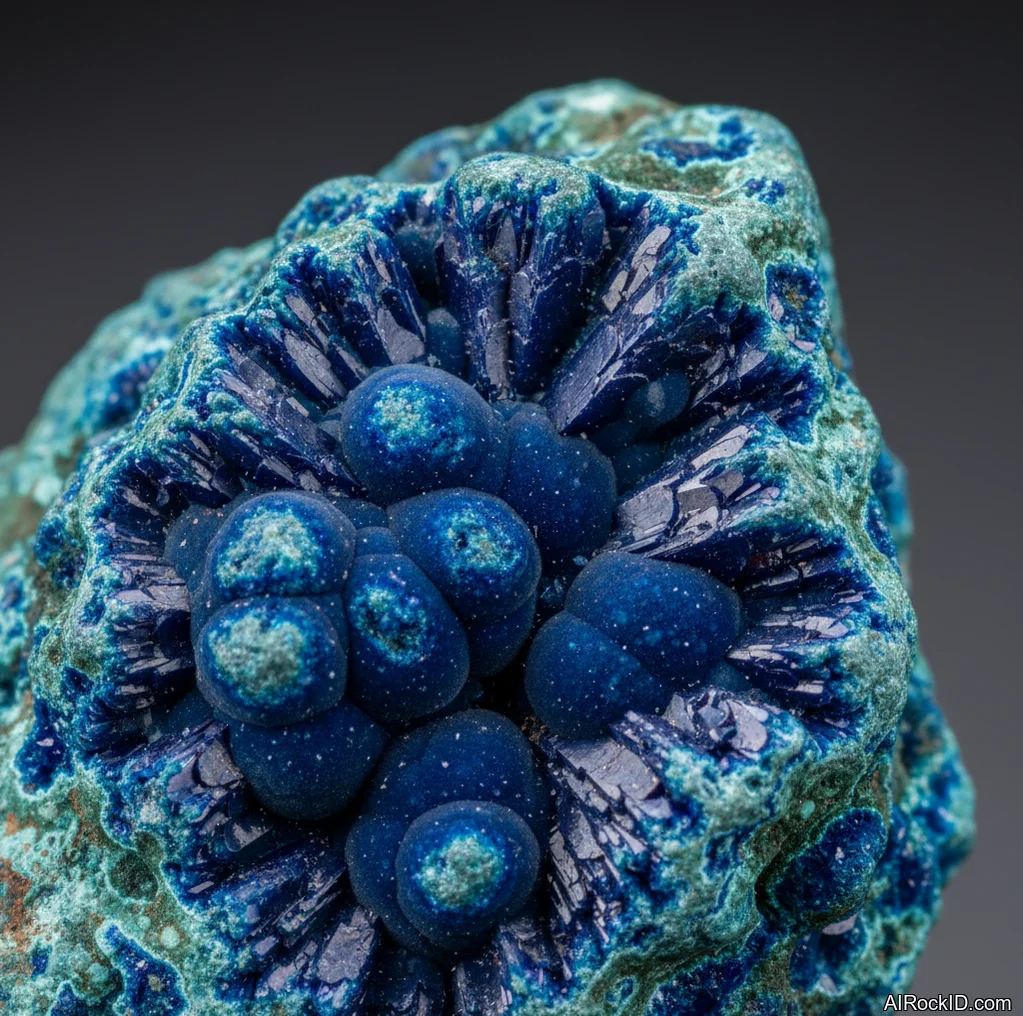
So the blue doesn’t spread evenly like dye in water. It pops up as rounded blebs, dots, and thin seams instead. And yeah, on some pieces you’ll see a little green too, where malachite tags along with the azurite.
How to Identify K2 Jasper
Color: Most pieces are white to light gray granite with scattered black specks and bright azure-blue azurite spots or orbs; occasional green malachite can appear.
Luster: Polished surfaces show a vitreous-to-waxy shine, while rough surfaces look dull and granular.
Pick up a polished palm stone and tilt it under a strong light. You should see tiny quartz and feldspar grains in the white base, not a flat, painted-looking white. The real test is the blue: azurite spots often have slightly uneven edges and may show tiny pits or softer wear compared to the granite if the piece has been handled a lot. If the blue looks like perfectly uniform ink with no texture at all, assume dye until proven otherwise.
Properties of K2 Jasper
Physical Properties
| Crystal System | Amorphous |
| Hardness (Mohs) | 6.0-7.0 (Hard (6-7.5)) |
| Density | 2.65-2.75 g/cm3 |
| Luster | Vitreous |
| Diaphaneity | Opaque |
| Fracture | Uneven |
| Streak | White |
| Magnetism | Non-magnetic |
| Colors | white, light gray, blue, black, green |
Chemical Properties
| Classification | Silicates (granite host) + Carbonates (azurite) |
| Formula | Variable (granite: mainly SiO2 + feldspars; azurite: Cu3(CO3)2(OH)2) |
| Elements | Si, O, Al, K, Na, Ca, Cu, C, H |
| Common Impurities | Fe, Mg, Mn |
Optical Properties
| Refractive Index | 1.54-1.55 |
| Birefringence | None |
| Pleochroism | None |
| Optical Character | Isotropic |
K2 Jasper Health & Safety
Normal handling is pretty low risk. But if you’re grinding or sanding it, don’t inhale the dust. That fine, dry powder gets everywhere, sticks to your fingertips, and you can taste it in the back of your throat if you’re not careful. Copper-bearing mineral dust is not something you want sitting in your lungs. Why take that chance?
Safety Tips
If you’re going to cut or sand it, keep things wet, crack a window or run a fan for airflow, and wear a real respirator that’s rated for fine particulate (not just a dusty old paper mask).
K2 Jasper Value & Price
Price Range
Rough/Tumbled: $5 - $60 per piece
Cut/Polished: $2 - $12 per carat
Price jumps around depending on how clean that white base looks and whether the blue azurite spots are really saturated and nicely round. And you can feel it in your hand too: those big palm stones with several crisp blue orbs (the kind you can pick out from across the table) cost more. But the low-grade stuff, with that gray cast and muddy blue that looks a bit washed out, usually ends up tossed in the bargain bins.
Durability
Durable — Scratch resistance: Good, Toughness: Good
It holds up well as a handled stone, but the azurite areas are softer and can dull or pit faster than the granite if it rides around in a pocket.
How to Care for K2 Jasper
Use & Storage
Store it like you would any polished stone: separate from softer stuff and keep it from bouncing against harder quartz points. A small cloth bag works fine.
Cleaning
1) Rinse briefly in lukewarm water. 2) Use a drop of mild soap and your fingers or a soft brush to lift skin oils. 3) Rinse again and dry completely with a soft cloth.
Cleanse & Charge
For non-water methods, smoke, sound, or leaving it on a shelf overnight are common collector habits. If you use sunlight, keep it short since the azurite can look tired after long, harsh exposure.
Placement
On a desk it’s great because the pattern reads from across the room. If you display it near a window, rotate it once in a while so one side doesn’t take all the light.
Caution
Skip harsh acids, vinegar, or any heavy-duty cleaner. Azurite’s a carbonate, so it can react and leave little etched spots (the kind you only notice when the light hits it just wrong). And don’t just drop it loose in your pocket with your keys. Trust me, that mirror-like polish will haze up fast.
Works Well With
K2 Jasper Meaning & Healing Properties
Most dealers sell K2 Jasper with the same little script: “grounding granite” plus “third-eye azurite.” That’s basically the pitch. And look, when you’ve actually got a piece in your hand, you get why that line lands. The white base reads calm and kind of no-nonsense, then the blue dots pop hard, like someone flicked ink onto it or a cartoon thought bubble froze in place.
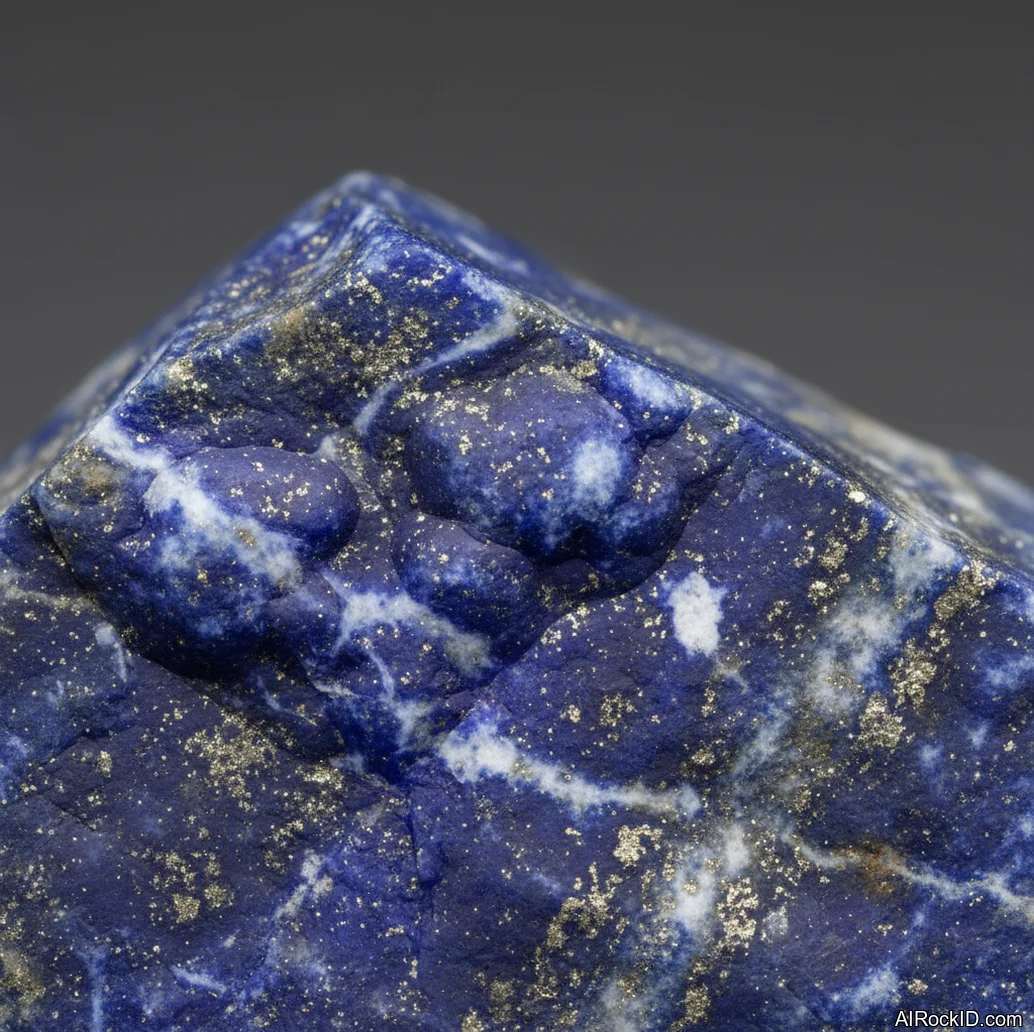
For me, it acts more like a focus stone than some “high vibe” thing. I’ll park a palm stone right on my desk when I’m trying to write or map out a plan, because my eyes keep sliding back to the pattern and it nudges my attention into place. Handy. But if you’re expecting the hit you get from pure azurite or lapis, it’s not that. It’s heavier, quieter, and you can feel the granite calling the shots when you’re holding it (that solid, weighty, almost blunt feel).
Thing is, none of this is medical. If you’re buying K2 for anxiety or headaches or whatever, treat it as a reminder object, not a cure. The practical upside is simple: it’s tough enough to handle every day, so it fits into a routine without you babying it the way you would a soft blue copper mineral.
Identify Any Crystal Instantly
Snap a photo and get properties, value, care instructions, and healing meanings in seconds.