Lazurite
What Is Lazurite?
Lazurite is a blue feldspathoid mineral with the formula Na3Ca(Al3Si3O12)S, and it’s the main blue ingredient in lapis lazuli. In your hand, a good piece feels weirdly smooth for a “rock,” almost like soap if it’s been naturally worn down, but crack it fresh and the break turns more chalky and blunt, not glassy.
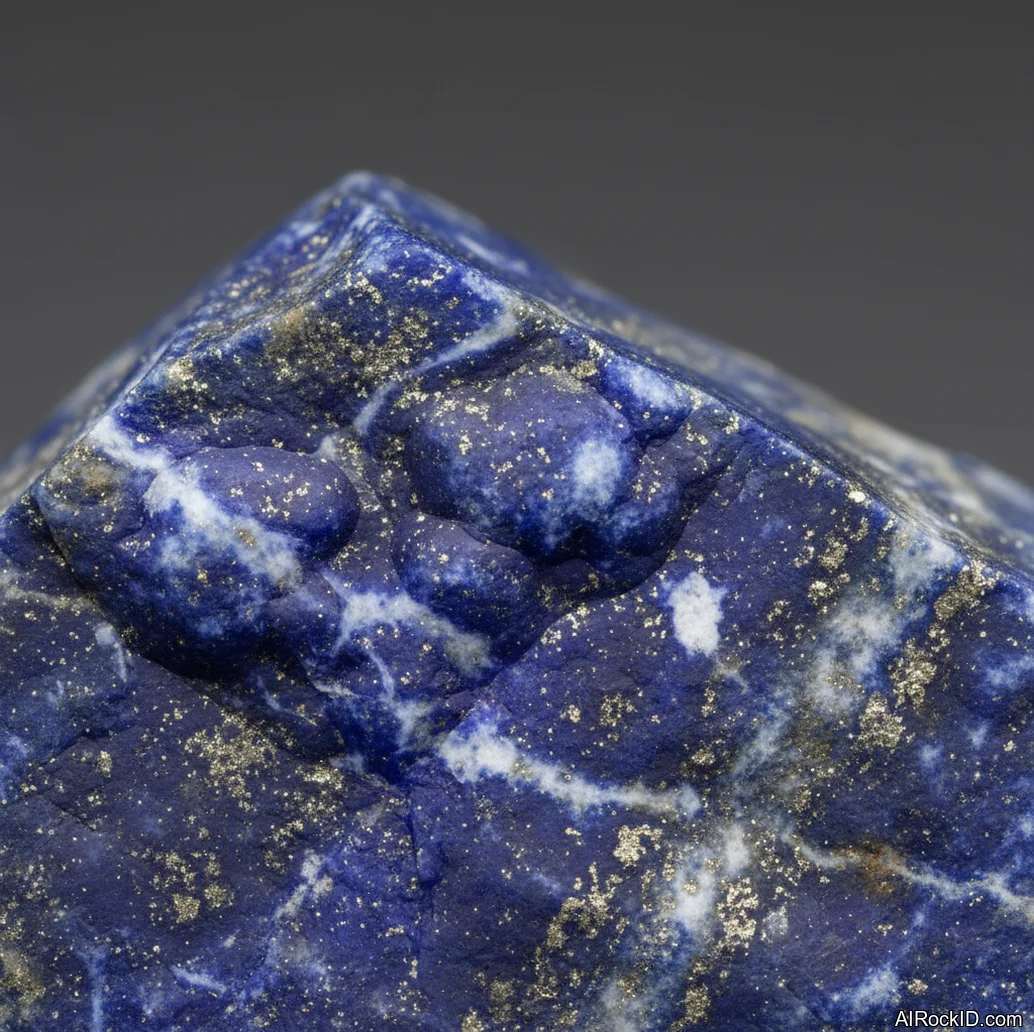
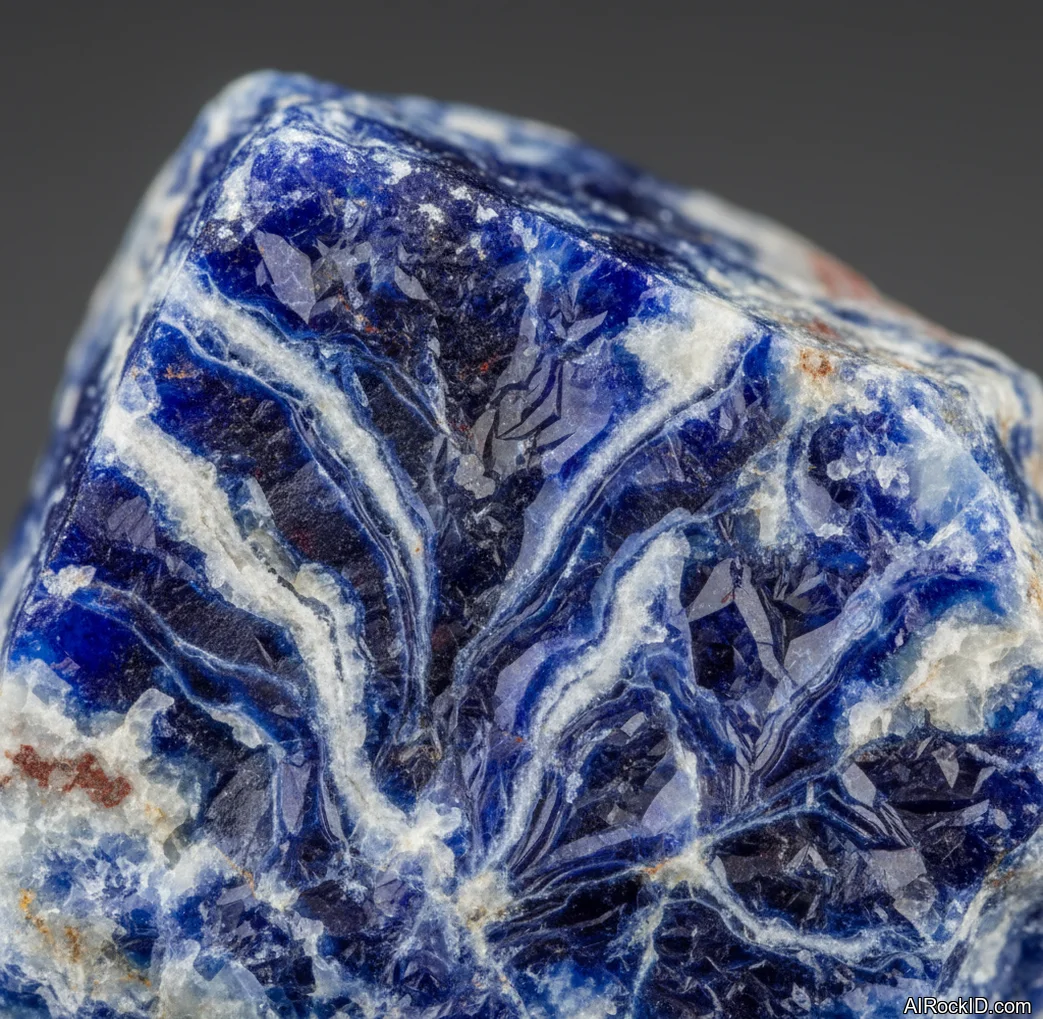
People will look at anything dark blue and call it “lapis.” But lazurite is the mineral that’s actually doing the hard work with the color. Grab a rough chunk and you’ll notice it’s usually not a clean, solid blue. You get pale calcite streaks, a little peppering of pyrite, and sometimes dull gray patches where the blue just fades out. And if you tilt a sawn face under a shop light, the blue can swing from inky to slightly violet depending on the grain and how well it’s polished (kind of surprising the first time you see it, right?).
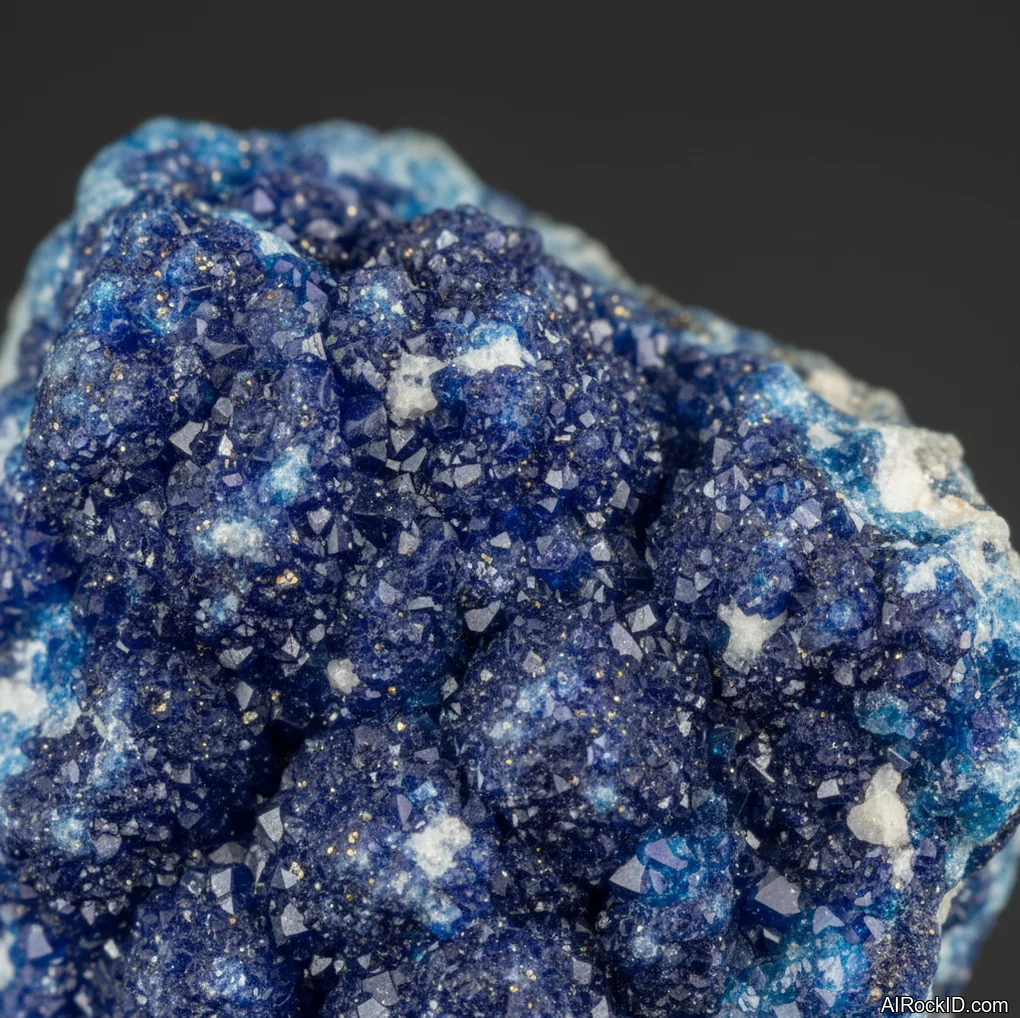
Most of what you’ll run into is massive material, not nice, tidy crystals. True lazurite crystals do exist, but they’re a “show me” piece at shows, not a “stack of flats on the table” situation. When crystals do show up, they’re usually small, dodecahedral-looking forms or little grains sitting in marble, and they’re the sort you end up cradling because the edges don’t take hard knocks well.
Origin & History
“Lazurite” and “azure” are basically linguistic cousins. The trail goes back to old words for blue, then slips through Arabic and Persian before it lands in European languages.
As for the mineral itself, it didn’t even get pinned down as a proper species until the 1800s. That was when mineralogists were finally sorting out the difference between lapis lazuli, which is a rock, and the individual minerals that make it up (lazurite being one of them).
And yeah, people collecting the stuff today sometimes miss a simple point: the famous old pigment ultramarine came from lazurite-rich lapis mined in Afghanistan. Not some new-age myth. Just materials science plus trade routes. You take the good blue rock, grind it into powder, wash it, then separate out the bluest fraction, and what’s left is that pricey paint that used to be saved for the biggest, most serious commissions.
Where Is Lazurite Found?
Lazurite turns up in contact-metamorphosed limestones and marbles, with classic material from Afghanistan and Russia and good lapis-bearing zones in Chile and parts of the western USA.
Formation
Pick up a chunk from a marble zone and it kind of tells on itself immediately. Lazurite forms during contact metamorphism, when limestone gets cooked next to nearby intrusions and the chemistry happens to line up for feldspathoids instead of regular feldspars. You’re basically staring at a high-temperature, low-silica setup where sulfur is hanging around, and that sulfur is a big reason the blue comes out so saturated.
Look at what it hangs out with and the whole thing clicks. Calcite shows up a lot because the host rock started life as limestone. Pyrite sneaks in too, since sulfur and iron are both in the mix, and it can show up as those glittery dots you catch when you tilt the stone under a light, or as little blebs. And sometimes you’ll run into sodalite, hauyne, diopside, or mica depending on the local recipe. But in the market? Most of it gets shoved under “lapis” unless the seller’s actually being careful.
How to Identify Lazurite
Color: Deep royal to ultramarine blue is the classic look, often with lighter blue patches and white calcite veining. Some pieces lean slightly violet-blue or show uneven color where the lazurite content drops.
Luster: Typically dull to vitreous on fresh breaks, and more waxy to vitreous on polished faces.
Pick up a piece and check the “blue plus friends” combo: lazurite blue, calcite white, and pyrite brass is the usual trio in lapis-bearing rock. The real test is a streak plate if you’ve got one, because lazurite’s streak is light blue, not white like calcite. And if you’re shopping tumbled stones, watch for dye: dyed material can leave color on a damp cloth and the blue looks too even, like it was painted on.
Properties of Lazurite
Physical Properties
| Crystal System | Cubic |
| Hardness (Mohs) | 5 - 5.5 (Medium (4-6)) |
| Density | 2.38 - 2.45 g/cm3 |
| Luster | Vitreous |
| Diaphaneity | Opaque |
| Fracture | Uneven |
| Streak | Light blue |
| Magnetism | Non-magnetic |
| Colors | Deep blue, Ultramarine, Violet-blue, Blue with white veining, Blue with pyrite specks |
Chemical Properties
| Classification | Silicates (feldspathoid; tectosilicate) |
| Formula | Na3Ca(Al3Si3O12)S |
| Elements | Na, Ca, Al, Si, O, S |
| Common Impurities | Fe, K |
Optical Properties
| Refractive Index | 1.500 - 1.522 |
| Birefringence | None |
| Pleochroism | None |
| Optical Character | Isotropic |
Lazurite Health & Safety
Lazurite’s fine to handle for normal collecting or wearing as jewelry. But if you’re grinding or sanding it, don’t breathe in the dust, same as with any other stone (that fine powder gets everywhere).
Safety Tips
If you’re going to cut or shape it, put on a respirator, and do it wet so the dust stays down (that fine powder gets everywhere).
Lazurite Value & Price
Price Range
Rough/Tumbled: $5 - $80 per piece
Cut/Polished: $2 - $25 per carat
Price shoots up when the blue is even and really saturated, with hardly any calcite showing. And yeah, a light dusting of pyrite can actually bump it up too. Big, clean blocks you can carve without hitting surprises, plus cabbing rough that stays clean on the wheel, cost more than the stuff that’s cracked up, chalky, or laced with veins.
Durability
Moderate — Scratch resistance: Fair, Toughness: Fair
It’s generally stable in normal indoor conditions, but it can chip on edges and doesn’t love harsh cleaners or long soaks.
How to Care for Lazurite
Use & Storage
Store it so it can’t bang into harder stones; lazurite will lose crisp edges fast in a mixed bowl. I keep my nicer lapis-lazurite pieces in soft pouches because quartz will rough them up.
Cleaning
1) Rinse quickly with lukewarm water. 2) Use mild soap and a soft brush for dirt in pits or calcite seams. 3) Pat dry and let it air-dry fully before putting it away.
Cleanse & Charge
If you do energetic cleansing, stick to gentle stuff like smoke, sound, or a quick moonlight sit. I skip long sunbaths because color-treated pieces can look weird over time.
Placement
On a desk or shelf is fine, just don’t put it where it’ll get knocked onto tile. If it’s a polished slab, felt pads underneath stop it from getting scratched by gritty dust.
Caution
Skip ultrasonic cleaners and any harsh chemicals. They can eat away at the calcite in the rock and, once that starts, those weak seams can open up and flake. And don’t throw it in a tumbler unless you’re genuinely fine with it coming out more rounded and a little pitted. (It’ll happen.)
Works Well With
Lazurite Meaning & Healing Properties
Compared to a lot of those “calming blue stones,” lazurite feels kind of serious when you actually hold it. It’s cool to the touch. It’s got that dense, weighty feel, and when the blue is a really good deep shade, your eyes just lock on, like a drop of ink bleeding into paper. That’s why people link it with clarity, studying, and speaking plainly. Same thing I notice when I leave a small slab next to my notebook (it’s the one that always feels colder than the desk at first). Less daydreamy. More “finish the thought.”
But look, I’m keeping this grounded. Anything people claim as a benefit here is in the metaphysical lane, not medical. If you’re stressed, tossing a stone in your pocket can work as a reminder to slow down, sure, but it doesn’t replace real support, sleep, therapy, or meds when you need them.
And if you pick up a piece with a little pyrite in it, the vibe changes fast. The contrast shifts the whole mood. The blue feels steadier, the tiny gold flecks give your eyes somewhere to rest, and it comes off more confident than a flat, uniform blue. For meditation, I’ve had better luck with lazurite when I’m doing focused breathwork or sitting down with one question and actually writing the answer out. When I want that floaty, zoned-out relaxation? I grab something else. That’s fine. Why force it?
Identify Any Crystal Instantly
Snap a photo and get properties, value, care instructions, and healing meanings in seconds.