Nellite
What Is Nellite?
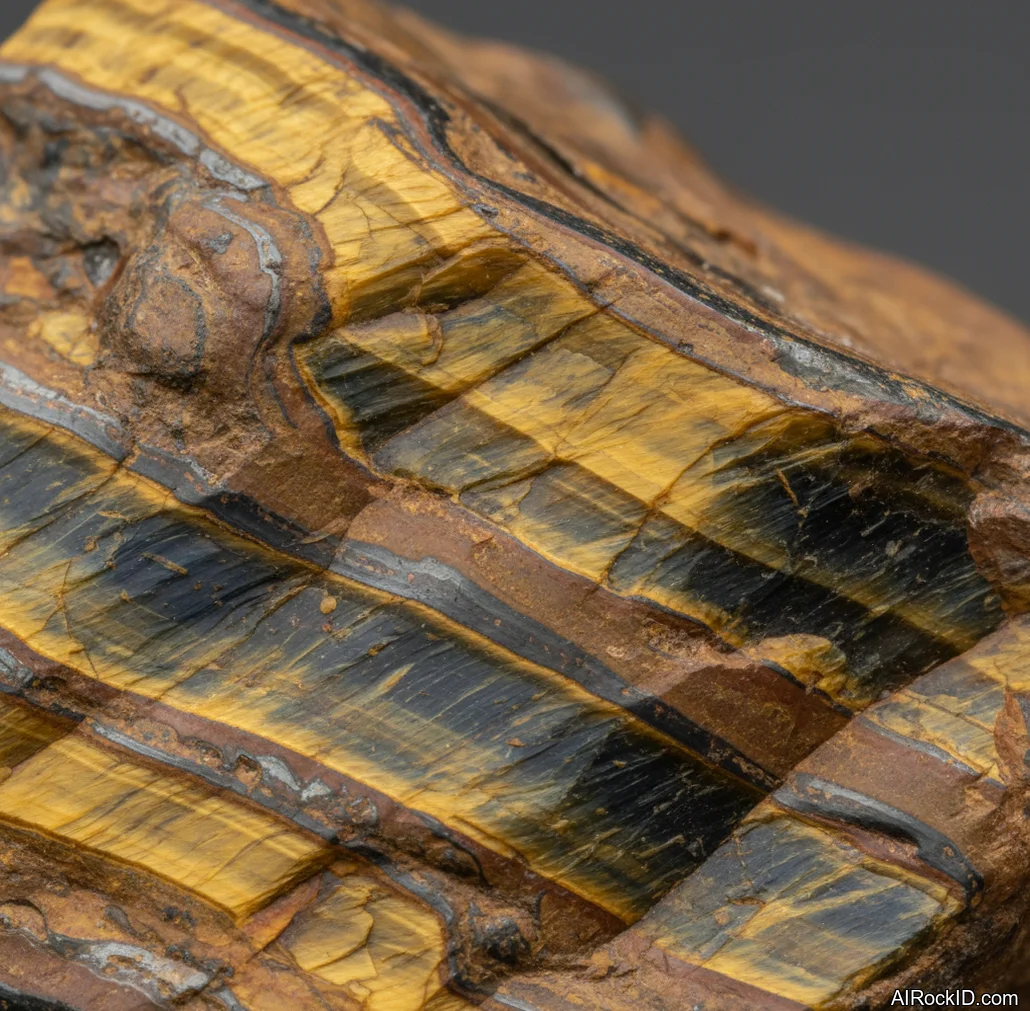
Nellite’s a quartz-rich metamorphic rock, and it’s got fibrous amphibole plus iron oxides in it. That combo is what gives it the brown-to-golden banding, and when it’s polished you get this softer, chatoyant sheen that sort of drifts instead of snapping.
Pick up a decent palm stone and you feel it right away. It’s dense for its size. Not absurdly heavy like hematite, but it has that “solid” weight quartz-heavy material has, and it stays cool in your hand longer than glass does (even after you’ve been holding it for a bit).
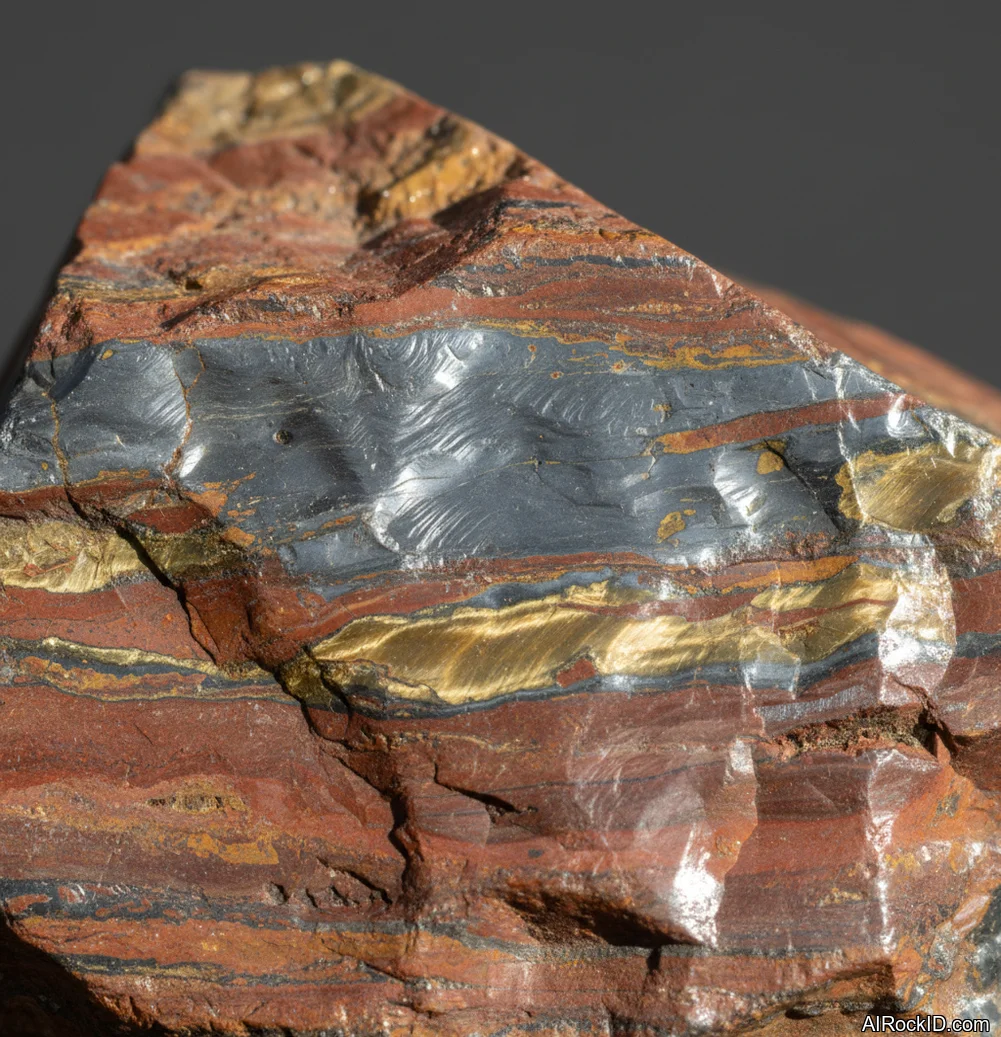
At first glance, people confuse it with tiger iron, or with a really flashy tiger’s eye. But nellite usually leans more cocoa-brown and bronze than bright gold. And the bands look a little smoky and layered, not like those crisp ribbon stripes. Tip it under a shop light and you can watch the sheen slide across the surface in a wide, soft band, especially on a well-cut cabochon. Pretty obvious once you’ve seen it once, you know?
Origin & History
Most dealers I’ve run into treat “nellite” as a lapidary trade name, not a formally defined mineral species, and that’s pretty much how I’ve always seen it used at shows too. It tends to pop up on tables next to other South African banded quartz rocks, usually cut as slabs, cabs, or those smooth worry stones that feel slightly waxy when you rub them with your thumb.
Thing is, the name gets linked to the Nelspruit area in South Africa in a lot of market chatter, but the tags and labels are all over the place. And some sellers kind of mash it together with “tiger iron” because the look overlaps (same general vibe at a glance, especially under bright booth lights). The historical footprint leans way more toward modern lapidary and metaphysical shop use than anything you’d dig up in old-school mineralogy texts.
Where Is Nellite Found?
Most material in the market is associated with South African banded quartz deposits, with similar-looking banded quartz-amphibole rocks also cut in Australia and the western United States.
Formation
Think of metamorphism as slow, patient work. You start with silica-rich rock plus iron-bearing layers, then heat and pressure shove everything around until quartz takes over and the darker material gets pulled into long, smeared bands.
Look at the edge of a cut slab and you can see where the shimmer comes from. The fibrous amphibole and fine iron oxides get lined up as the rock deforms, and once a cutter domes the surface just right (not too flat, not too steep), the light sort of skates along those aligned fibers. But it isn’t some single-crystal trick. It’s the rock’s texture. And that’s why two pieces from the same box can end up looking totally different after polishing.
How to Identify Nellite
Color: Usually brown, bronze, and golden-tan with darker gray to near-black streaks; some pieces show a muted red-brown from iron oxides. The sheen is more “bronze glow” than bright tiger’s-eye gold in most cases.
Luster: Polished surfaces show a silky to vitreous luster with chatoyancy that moves as you tilt it.
Pick up two pieces and tilt them under a single point light. Nellite’s chatoyancy often shows as a broader, softer band compared to the sharper “cat’s eye” in classic tiger’s eye. If you scratch it with a steel blade, it won’t bite easily because the quartz content is high. And if the seller calls it nellite but it’s screaming red with obvious metallic sparkle, you might be looking at tiger iron or a hematite-rich mix instead.
Properties of Nellite
Physical Properties
| Crystal System | Amorphous |
| Hardness (Mohs) | 6.5-7 (Hard (6-7.5)) |
| Density | 2.7-3.1 g/cm3 |
| Luster | Vitreous |
| Diaphaneity | Opaque |
| Fracture | Uneven |
| Streak | white |
| Magnetism | Non-magnetic |
| Colors | brown, bronze, golden tan, dark gray, black, reddish brown |
Chemical Properties
| Classification | Silicates (rock mixture dominated by quartz) |
| Formula | SiO2 (dominant; rock mixture) |
| Elements | Si, O, Fe, Mg, Na, Ca |
| Common Impurities | Fe, Ti, Mn |
Optical Properties
| Refractive Index | 1.544-1.553 |
| Birefringence | 0.009 |
| Pleochroism | None |
| Optical Character | Uniaxial |
Nellite Health & Safety
Normal handling’s pretty low risk. But once you start cutting it or dry-grinding it, you can kick up silica-bearing dust that hangs in the air and gets that gritty feel on your gloves. So treat it the same way you’d treat any quartz slab in the shop.
Safety Tips
Go with wet cutting or wet grinding. Seriously, keep it damp so you’re dealing with slurry, not a cloud of dust in your face. And don’t cheap out on the mask, either, you need a proper respirator rated for fine particulates (the kind that actually seals to your face, not a loose paper thing). When you’re done, clean up the slurry while it’s still wet instead of sweeping up dry dust. Why make more airborne mess than you have to?
Nellite Value & Price
Price Range
Rough/Tumbled: $10 - $60 per palm stone or small slab
Cut/Polished: $1 - $6 per carat (cabochons; quality dependent)
Price jumps around depending on how crisp the banding looks and how hard that moving sheen pops when you tilt it under a direct light. And the thick slabs that flash evenly, edge to edge, usually run higher, because cutters can tell (just by rolling the stone in their fingers) they’re going to get solid cabs out of it.
Durability
Durable — Scratch resistance: Good, Toughness: Good
It’s mostly quartz, so it handles normal wear well, but layered pieces can bruise on sharp impacts if the cut crosses weaker bands.
How to Care for Nellite
Use & Storage
Tossing it in a pocket with keys will haze the polish over time, even though it’s fairly hard. I keep mine in a soft pouch or a divided box slot.
Cleaning
1) Rinse with lukewarm water and a drop of mild soap. 2) Use a soft toothbrush to get into any saw marks or tiny pits. 3) Rinse well and pat dry with a microfiber cloth to keep the shine.
Cleanse & Charge
If you do energetic cleansing, running water, smoke, or a quick rest on selenite are all common choices. Skip harsh salt soaks if your piece has tiny surface pits that can trap residue.
Placement
On a desk it looks best under a lamp where you can tilt it and catch the moving band. If you want the sheen to pop, place it so the light hits at a low angle across the dome.
Caution
Don’t dry-sand or drill unless you’ve actually got dust control in place, because that fine powder gets everywhere (and you’ll feel it in your throat). And skip the ultrasonic cleaner if the piece has any fractures or little porous spots where grit can lodge and refuse to come out.
Works Well With
Nellite Meaning & Healing Properties
Compared to the brighter flash stones, nellite feels steadier in your hand. When I’m sorting trays at a show, it’s the one I keep right next to me, because it grounds you without turning into this blah, dead-looking thing. And the visuals do some of the work too. Those brown-gold bands give off pure “get organized” energy, not that airy, floaty vibe.
Most people who pick it up from my table are looking for focus and staying level headed. I tell them what I tell everyone: keep the metaphysical side in the lane of personal practice, not medicine. But if you want a routine you’ll actually stick to, gripping a polished nellite during a planning session, or during a breath-count meditation, is simple enough to repeat. Consistency beats grand claims.
But here’s where it gets annoying. Some sellers hype it as a rare tiger’s eye variant. It isn’t. Good nellite comes down to cut and polish, full stop. A well-domed cab will give you that broad bronze glide as you tip it under the light (you can feel the smooth curve with your thumb), while a flat cut or a piece sliced the wrong way just reads like plain brown rock.
Identify Any Crystal Instantly
Snap a photo and get properties, value, care instructions, and healing meanings in seconds.