Red Picasso Jasper
What Is Red Picasso Jasper?
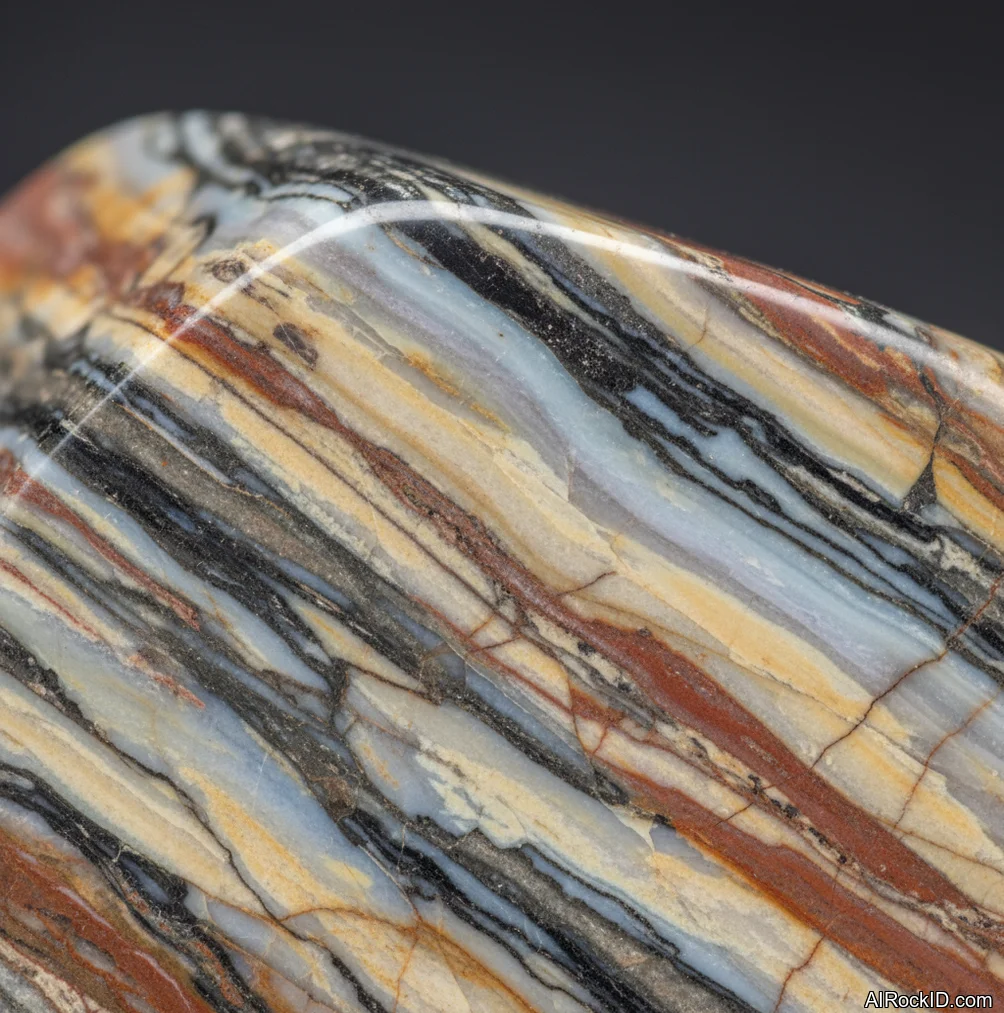
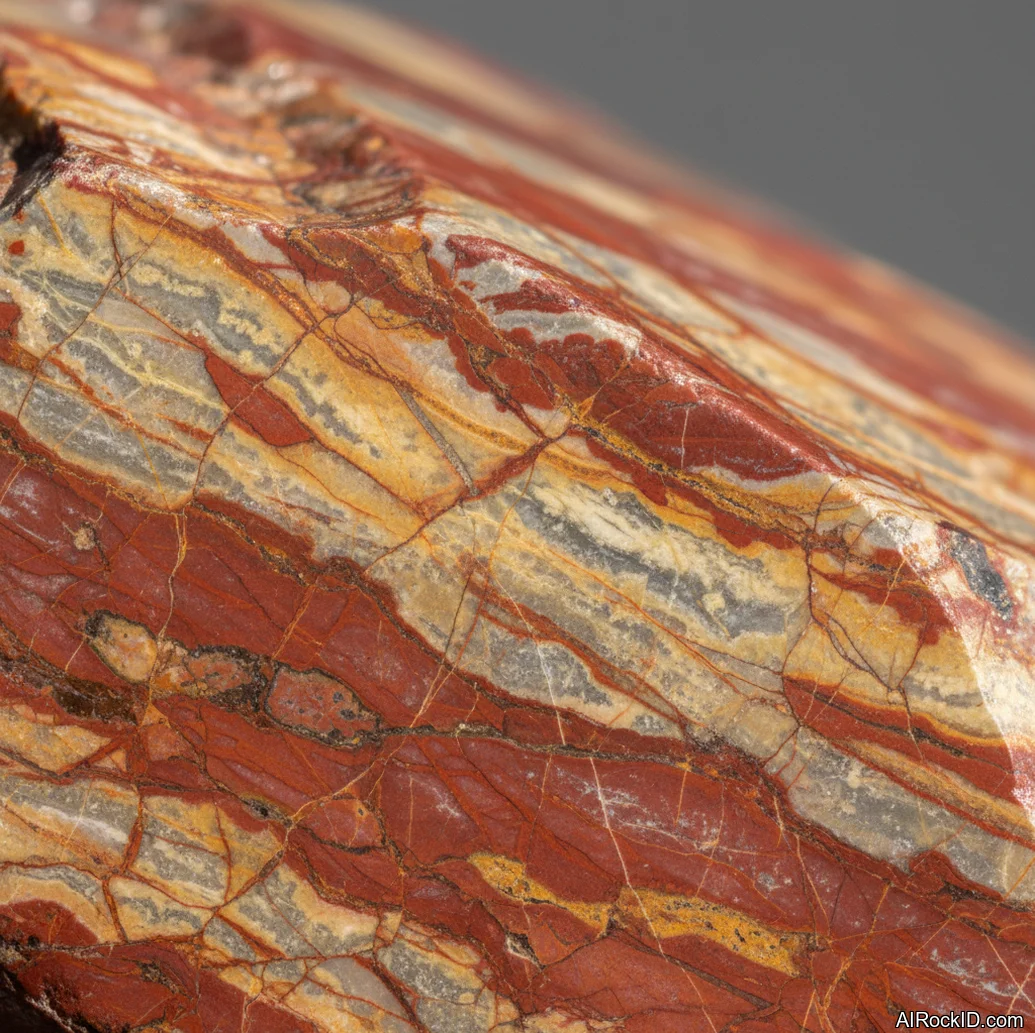
Red Picasso Jasper is an opaque, patterned variety of microcrystalline quartz (jasper/chalcedony), and it’s marked by red fields with sketchy black, cream, and gray linework running through it.
Pick up a piece and you’ll notice it has that quartz heft right away. But it doesn’t feel glassy like clear quartz. It’s got this smooth, dense river-stone feel, especially once it’s polished and you can feel the slick surface under your thumb. The patterns are the whole point here. Some pieces look like brushstrokes, some look like cracked paint, and some have those thin black lines that honestly look like somebody scribbled on the rock with a pen. Who does that? Nature, apparently.
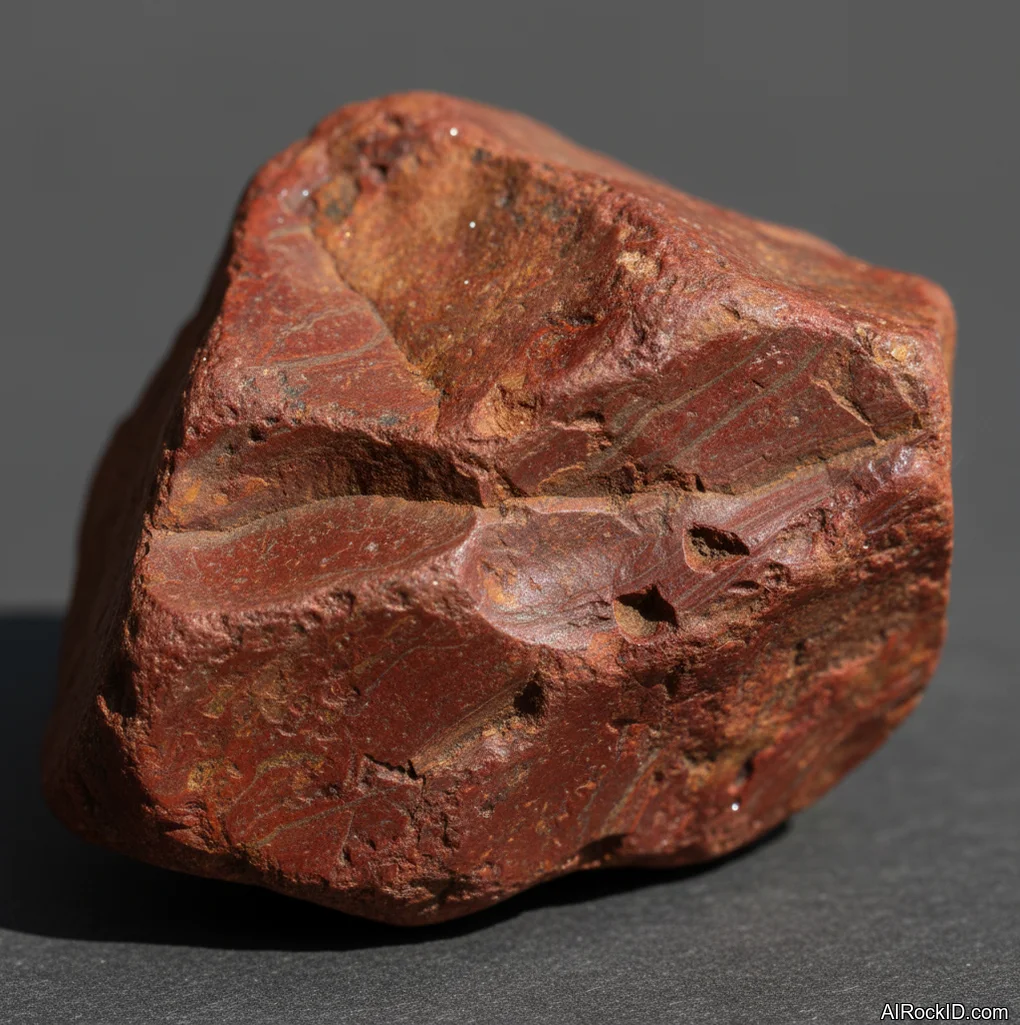
At first glance, people expect a true “red” stone. Thing is, a lot of what gets sold as Red Picasso is actually a mix: brick red, rusty orange, tan, and cool gray with dark veining. And the color usually isn’t just sitting on the surface. If you catch a broken edge on a raw chunk, the red goes right through, just more muted without the polish (a little duller, less punchy).
Origin & History
“Picasso Jasper” is a trade name, not a formally defined mineral species. It really started popping up all over the lapidary and metaphysical world in the late 20th century, right around when patterned jaspers got pushed harder into bead lines and cab production.
And the “Picasso” bit? That’s basically a dealer’s little inside joke. The sharp, angular linework and those blocky color patches look like sketch marks and abstract paintings, so the name stuck.
But here’s the slightly annoying part. Different suppliers slap “Picasso Jasper” on completely different rocks. Some of what’s sold under that label is jaspery chalcedony. Some of it is closer to marble or metamorphosed limestone with bold, dramatic veining.
In your hand, the quartz-based material feels harder and kind of “tighter,” and it’ll take a brighter polish. The marble-ish stuff can feel just a touch softer, and it can etch if you hit it with an acid test.
Where Is Red Picasso Jasper Found?
Most Red Picasso Jasper on the market is sourced through big lapidary pipelines, with common supply lines coming out of Brazil and the western USA; Russia also shows up in dealer lots.
Formation
Look at the skin of a fresh break and you can usually tell why people toss it into the jasper bucket. It’s cryptocrystalline silica, formed when silica-rich fluids pushed through the host rock and seeped into open spaces, fractures, plus those porous zones you don’t notice until they’re filled. That gel-like silica slowly hardened into chalcedony and jasper, and iron oxides (with other minerals tagging along) ended up drawing the lines.
Compared to a clean agate, Picasso-type material just looks busier and it’s more opaque. The banding isn’t that classic concentric agate stuff. It’s closer to fracture networks and flow patterns that basically got locked in place. And the red, especially, is usually iron oxide staining. I’ve cut a few small slabs where the red areas felt tougher under the blade, and on the wheel the pale areas would undercut a bit (you can actually feel the slight dip with a fingernail if you’re paying attention). Kind of a blunt reminder, right? “Jasper” can be a mash-up of micro-textures even inside one stone.
How to Identify Red Picasso Jasper
Color: Typically brick red to rusty red with cream, tan, gray, and black linework or webbing; patterns can look like sketch lines or broken mosaic blocks. Color is usually opaque and fairly even through the piece, not just on the surface.
Luster: Waxy to vitreous when polished, dull to waxy when raw.
If you scratch it with a steel nail, it shouldn’t bite easily, and a clean quartz-based piece will usually scratch glass. The real test is the feel on a fresh broken edge: quartz-based jasper feels sharp and glassy-gritty at the break, not chalky. Cheap versions are usually dyed howlite or dyed magnesite, and those often show color pooled in cracks or drill holes and feel warmer and lighter in the hand.
Properties of Red Picasso Jasper
Physical Properties
| Crystal System | Trigonal |
| Hardness (Mohs) | 6.5-7 (Hard (6-7.5)) |
| Density | 2.58-2.65 g/cm3 |
| Luster | Waxy |
| Diaphaneity | Opaque |
| Fracture | Conchoidal |
| Streak | White |
| Magnetism | Non-magnetic |
| Colors | Red, Rust, Orange, Tan, Cream, Gray, Black, Brown |
Chemical Properties
| Classification | Silicates |
| Formula | SiO2 |
| Elements | Si, O |
| Common Impurities | Fe, Mn, Al |
Optical Properties
| Refractive Index | 1.530-1.540 |
| Birefringence | None |
| Pleochroism | None |
| Optical Character | Uniaxial |
Red Picasso Jasper Health & Safety
Red Picasso Jasper is usually fine to touch and keep out on a shelf. But if you’re cutting or grinding it, watch the dust. It’s silica-heavy, and breathing that powder (the super-fine stuff that hangs in the air) isn’t something you want.
Safety Tips
Use water while you’re cutting or sanding to keep the dust down (you’ll notice it turns into a gritty slurry). And don’t skip the respirator, either. Wear one that’s properly fitted and rated for fine particulates, because that powder gets everywhere and you really don’t want it in your lungs.
Red Picasso Jasper Value & Price
Price Range
Rough/Tumbled: $5 - $35 per palm stone or small specimen
Cut/Polished: $1 - $6 per carat
Price usually follows how crisp the pattern looks and how well the stone’s been polished. The clean, high-contrast line drawing pieces, plus nicely cut cabs with no little pits you can feel when you run a fingertip over them, cost more than the muddy, fractured stuff.
Durability
Durable — Scratch resistance: Good, Toughness: Good
It’s stable in normal household conditions, but sharp impacts can chip edges, especially on thin cabochons.
How to Care for Red Picasso Jasper
Use & Storage
Store it so polished faces don’t rub against harder gems like sapphire or topaz. A small pouch or a divided box slot keeps the shine from getting hazy.
Cleaning
1) Rinse with lukewarm water to remove grit. 2) Wash with mild soap using a soft brush or cloth. 3) Rinse well and dry completely before putting it back in a pouch.
Cleanse & Charge
If you do energetic cleansing, simple options are a quick rinse, smoke, or setting it on a dry bed of selenite. Avoid leaving it in strong sun for long stretches if you notice the reds looking washed out on your particular piece.
Placement
It looks best under angled light where the black linework pops, like on a shelf lamp or near a desk light. I keep mine where I can pick it up, because it’s a very “hand stone” kind of material.
Caution
Skip harsh acids and those heavy-duty household cleaners. If your piece is actually the marble-type material sold under the same name, acids can etch it fast (you’ll see that dull, chalky patch where it used to shine). And don’t toss it in an ultrasonic cleaner if the stone has fractures or little pits. Those tiny holes love to hold onto grime, and the vibration can work its way in and make things worse. Why risk it?
Works Well With
Red Picasso Jasper Meaning & Healing Properties
Grab Red Picasso Jasper when you want something grounding but not dead-still. That’s the best way I can say it. It’s not one of those sleepy, uniform stones.
The patterns are busy. Almost like somebody dragged a fine-tip pen across clay, then went back over it (and you can feel that “movement” even before you really look). For a lot of people, that kind of visual energy lands as: keep going, keep building, stay on track. Especially if you’re trying to stick to a plan and not wander off halfway through.
Most dealers sell it as a creativity stone because of those sketch-like lines, and yeah, I see it. When I’m sorting slabs at a show, this is the stuff that makes your brain start drawing projects on the spot. Cab shapes, pendants, little inlay ideas, the whole thing. But, thing is, it can be visually loud. If patterns ramp you up instead of calming you down, a high-contrast piece can feel like too much sitting on a nightstand. Ever had a stone that feels like it’s staring back at you? Same vibe.
Metaphysical talk is personal, and it’s not medical care. Still. In the shop, I’ve watched people reach for it during stressful stretches because it feels steady in the hand and it’s got that earthy color range. Compared to something like carnelian, it reads less “spark” and more “structure,” like you’re laying a foundation instead of just chasing motivation.
Identify Any Crystal Instantly
Snap a photo and get properties, value, care instructions, and healing meanings in seconds.