Tai Chi Stone
What Is Tai Chi Stone?
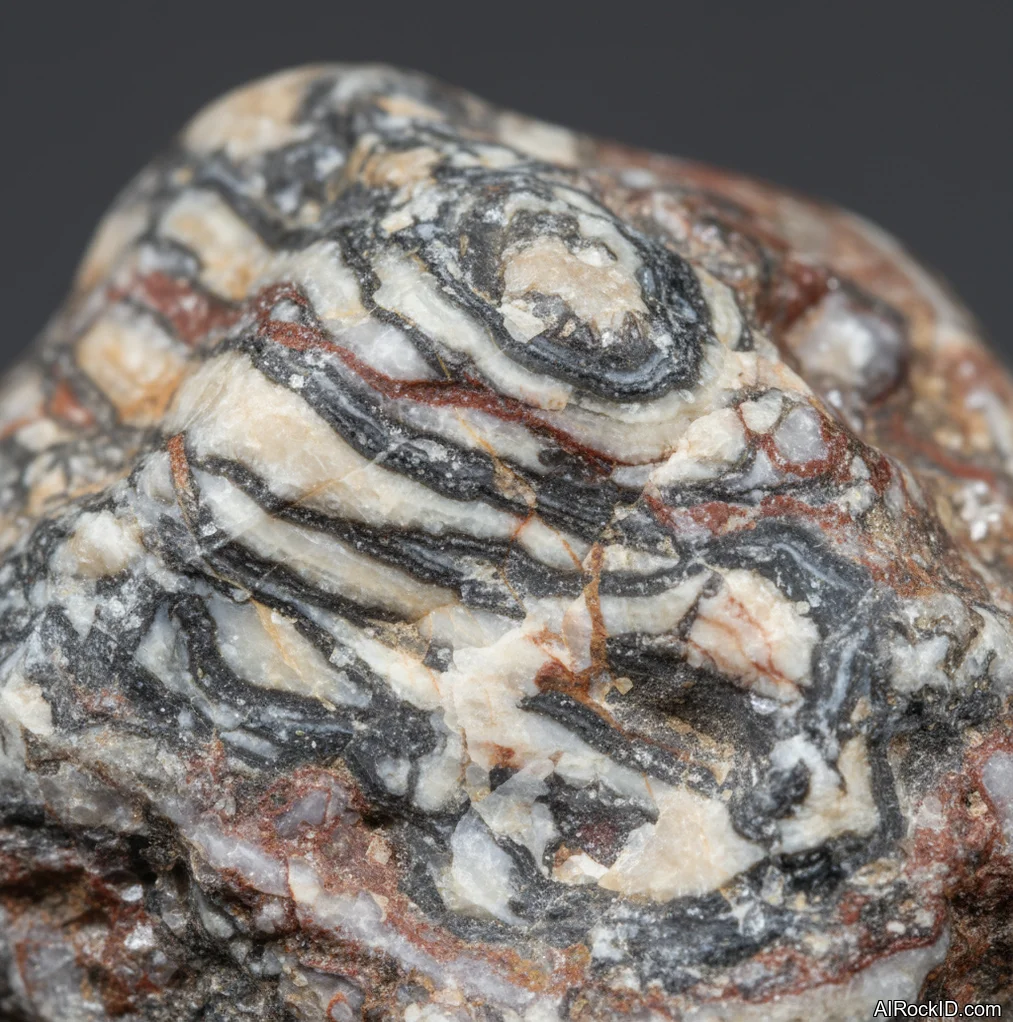
Tai Chi Stone is a trade name for a black-and-white patterned chalcedony (microcrystalline quartz) that gets cut and polished to give off that yin-yang vibe.
Hold a piece for a second and you feel it right away: cool, solid, kind of steady in your palm, like quartz-based material usually is. The pattern’s the main attraction. You’ll see milky white pressed up against charcoal and true black, and it tends to show up as swirls or blobby patches, not neat little stripes. Most of the stuff you run into at shows is tumbled, or shaped into worry stones and palm stones, and when it’s done well the surface gets that slick, glassy polish you can almost see your overhead lights in.
People will glance at it and call it “jasper,” and yeah, in a lot of shops that word gets slapped on anything that’s opaque and quartz-y. But in the hand, it acts like chalcedony. It’s hard enough to take a bright shine, it doesn’t have that soft, chalky feel, and it won’t pick up tiny dents the way calcite does. But look, don’t go in expecting every piece to nail a perfect tai chi symbol. Plenty of it reads more like abstract black ink floating through cream (and that’s kind of the charm, isn’t it?).
Origin & History
Most dealers treat “Tai Chi Stone” as a marketing label, not a real, formally defined mineral species. It shows up on tags the same way names like “leopard jasper” or “picture jasper” do, where the pattern is the point and the geology is kind of beside the point.
The name comes from the Tai Chi (yin-yang) symbol, since the best pieces have that crisp black-and-white contrast you can spot from a few feet away. I first started seeing it sold under that name in the 2000s at gem shows, usually sitting in the same trays as other patterned chalcedonies and jaspers (you know the ones, piled in little compartment boxes that clack when you pick them up). And sellers will sometimes switch the tag to “Tai Chi marble,” especially when the material looks more calcite-like, so if you actually care what you’re buying, it’s smart to do a quick scratch test. Why guess if a tiny test tells you?
Where Is Tai Chi Stone Found?
Most Tai Chi Stone on the market is sold as patterned chalcedony/jasper from big lapidary supply chains, with Brazil and the USA commonly cited by dealers.
Formation
Look at the surface up close and you’ll usually notice it’s got that tight, cryptocrystalline look, not obvious individual grains you can pick out. That’s a clue that silica-rich fluids seeped into little cavities and fractures, then set up and hardened into chalcedony. With time, those fluids don’t always show up with the same chemistry, so you end up with pulses that leave alternating light and dark zones.
The black parts can come from super-fine iron or manganese oxides, carbonaceous material, or other tiny inclusions that tint the silica while it’s still gelling and then locking in as it solidifies. And it’s almost never a neat, two-layer deal. Most pieces have ragged boundaries, faint ghosty swirls, and that in-between gray where the chemistry smeared together instead of flipping like a switch (you can almost see where it drifted).
How to Identify Tai Chi Stone
Color: Opaque black-and-white patterning, often with gray transitions; the contrast can be stark or smoky depending on the piece. Patterns are usually swirled, blotchy, or yin-yang style crescents rather than straight banding.
Luster: Waxy to vitreous when polished.
If you scratch it with a steel nail, it shouldn’t mark easily, and it should scratch ordinary window glass. The real test is feel and sound: tap two pieces together and you get that higher, glassy click you hear from quartz-based tumbles, not the dull thud of softer carbonate rocks. Cheap versions sold as “Tai Chi marble” can be calcite or dolomite, and those will scratch with a copper coin or even a knife and feel a bit warmer in the hand.
Properties of Tai Chi Stone
Physical Properties
| Crystal System | Trigonal |
| Hardness (Mohs) | 6.5-7 (Hard (6-7.5)) |
| Density | 2.58-2.64 g/cm3 |
| Luster | Waxy |
| Diaphaneity | Opaque |
| Fracture | Conchoidal |
| Streak | White |
| Magnetism | Non-magnetic |
| Colors | Black, White, Gray |
Chemical Properties
| Classification | Silicates |
| Formula | SiO2 |
| Elements | Si, O |
| Common Impurities | Fe, Mn, C |
Optical Properties
| Refractive Index | 1.530-1.540 |
| Birefringence | None |
| Pleochroism | None |
| Optical Character | Uniaxial |
Tai Chi Stone Health & Safety
Handling it is pretty low-risk, and a quick splash of water isn’t a big deal for quartz-based material. The real worry? Dust in the air if you cut or grind it, especially that fine, gritty stuff that hangs around and ends up in your lungs.
Safety Tips
If you’re doing lapidary work, run water on the cut, keep the area well ventilated, and wear a real respirator that’s rated for fine silica dust (not just a paper mask).
Tai Chi Stone Value & Price
Price Range
Rough/Tumbled: $5 - $40 per tumbled/palm stone
Price usually follows the contrast and the pattern first, then you get into size and how clean the polish is. Stones that have that crisp, balanced yin-yang look, with a sharp boundary and no muddy bleed (you can feel it when you run a fingertip over the face, honestly), tend to move quicker and get priced higher even when the material itself isn’t rare.
Durability
Durable — Scratch resistance: Good, Toughness: Good
It’s stable like most quartz, but the polish can haze if it gets scuffed around in a pocket with keys.
How to Care for Tai Chi Stone
Use & Storage
Keep it in a soft pouch or a compartmented box if it’s polished, because quartz will scratch softer stones and still get scuffed by harder stuff. And if you’ve got multiple palm stones, don’t let them clack together in a jar unless you like little edge chips.
Cleaning
1) Rinse with lukewarm water to remove grit. 2) Wash with mild soap and your fingers or a soft toothbrush. 3) Rinse and dry with a microfiber cloth to keep the polish looking sharp.
Cleanse & Charge
If you do energetic cleansing, rinsing in water or leaving it on a shelf overnight works fine. Avoid saltwater if there are any natural pits that can trap residue.
Placement
It reads best under a lamp where the black-and-white contrast pops, so I like it on a desk or near other monochrome stones. In a bowl of mixed tumbles, it tends to disappear unless it’s a really high-contrast piece.
Caution
Don’t mix it up with the softer stuff sold as “Tai Chi marble” and then go at it like it’s quartz. If you can’t tell what’s in your hand, do a quick scratch test first (some pieces even have that slightly waxy feel) before you toss it in an ultrasonic cleaner or hit it with anything harsh.
Works Well With
Tai Chi Stone Meaning & Healing Properties
Next to the flashy crystals, Tai Chi Stone feels almost shy. It’s a quiet little tool. People grab it when they want something simple to look at and hold: light against dark, both sitting in the same piece of rock. I’ve seen customers stand there turning one over and over like a coin, especially when they’re stuck on a decision or trying to come down from a loud, hectic day.
If you pick up a good one, you can feel it right away. Your thumb kind of finds a home on the border where the colors meet, like there’s a tiny groove or a natural “rest spot” right at that line (hard to explain until it’s in your hand). And that line is the whole point, honestly. It’s the metaphor, so it ends up in meditation kits and in pockets as a carry-around stone. I use it as a nudge to check my own extremes. Am I overcorrecting? Am I dodging the hard thing? That sort of self-audit.
But look, it’s still a stone. Not a fix. If you’re dealing with anxiety, sleep issues, or anything medical, don’t replace real support with something you can hold in your palm. Use it as a grounding object, the same way you’d use a smooth worry stone, and let it sit inside a bigger routine that actually helps.
Identify Any Crystal Instantly
Snap a photo and get properties, value, care instructions, and healing meanings in seconds.