Golden Barite
What Is Golden Barite?
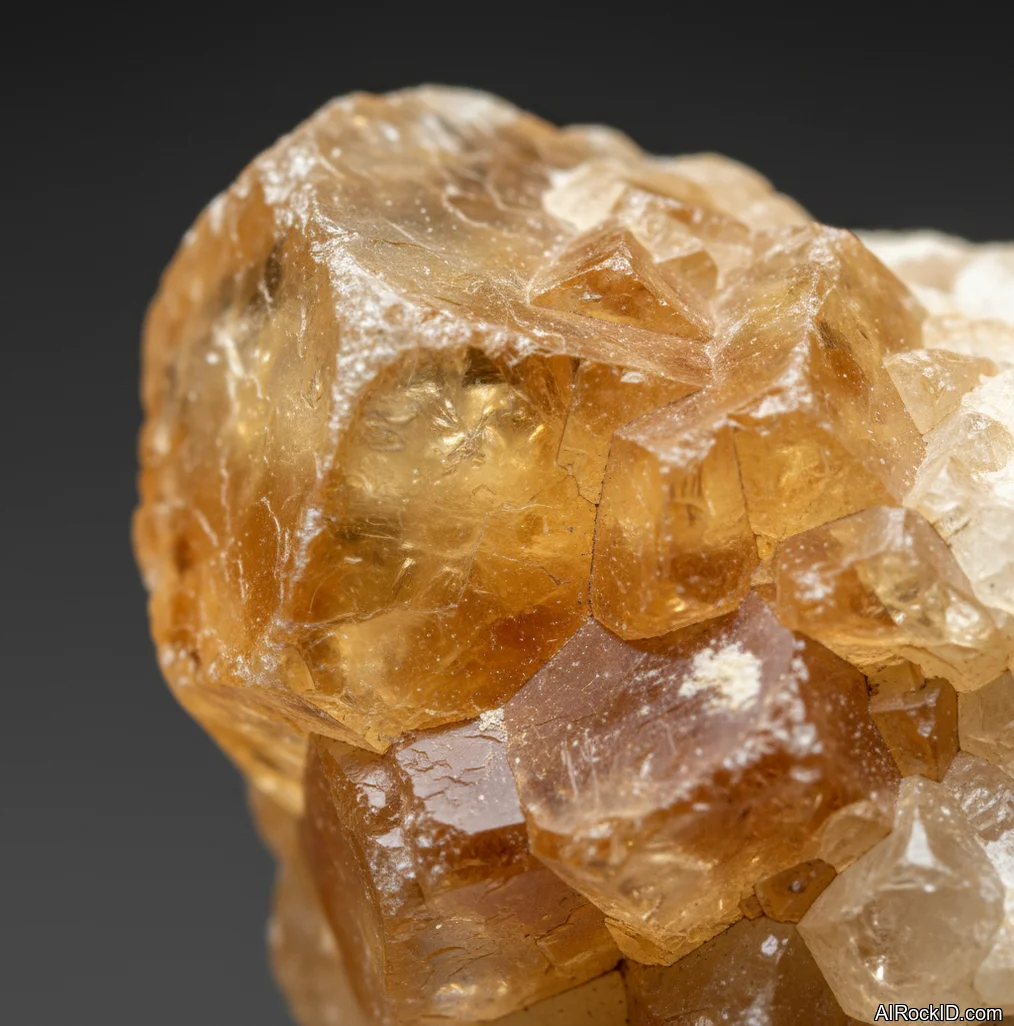
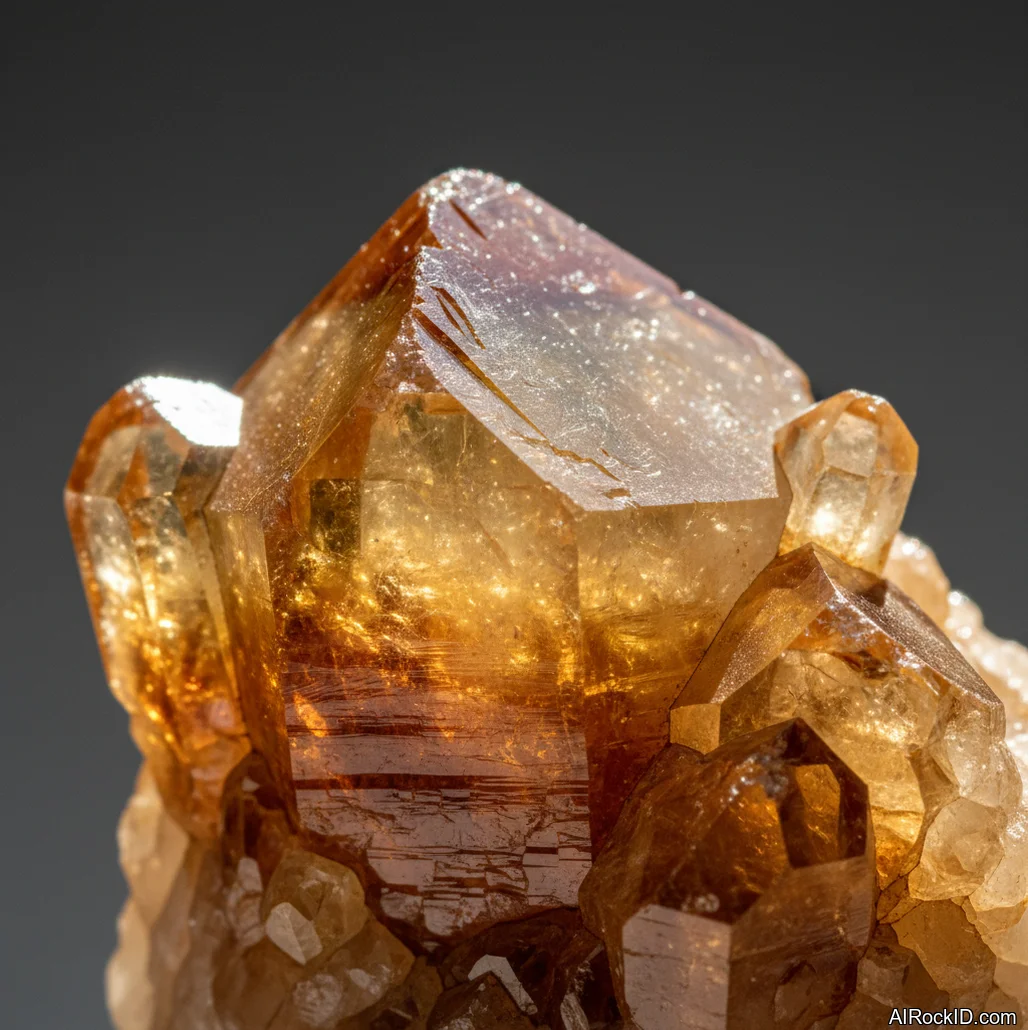
Golden Barite is a honey to yellow-gold colored variety of barite (barium sulfate). It forms heavy crystals with perfect cleavage.
Pick up a piece and the weight hits you first. It just drops into your palm like a little brick, the kind of heft quartz never has, and that’s one of the quickest tells you’re holding real barite and not some lookalike.
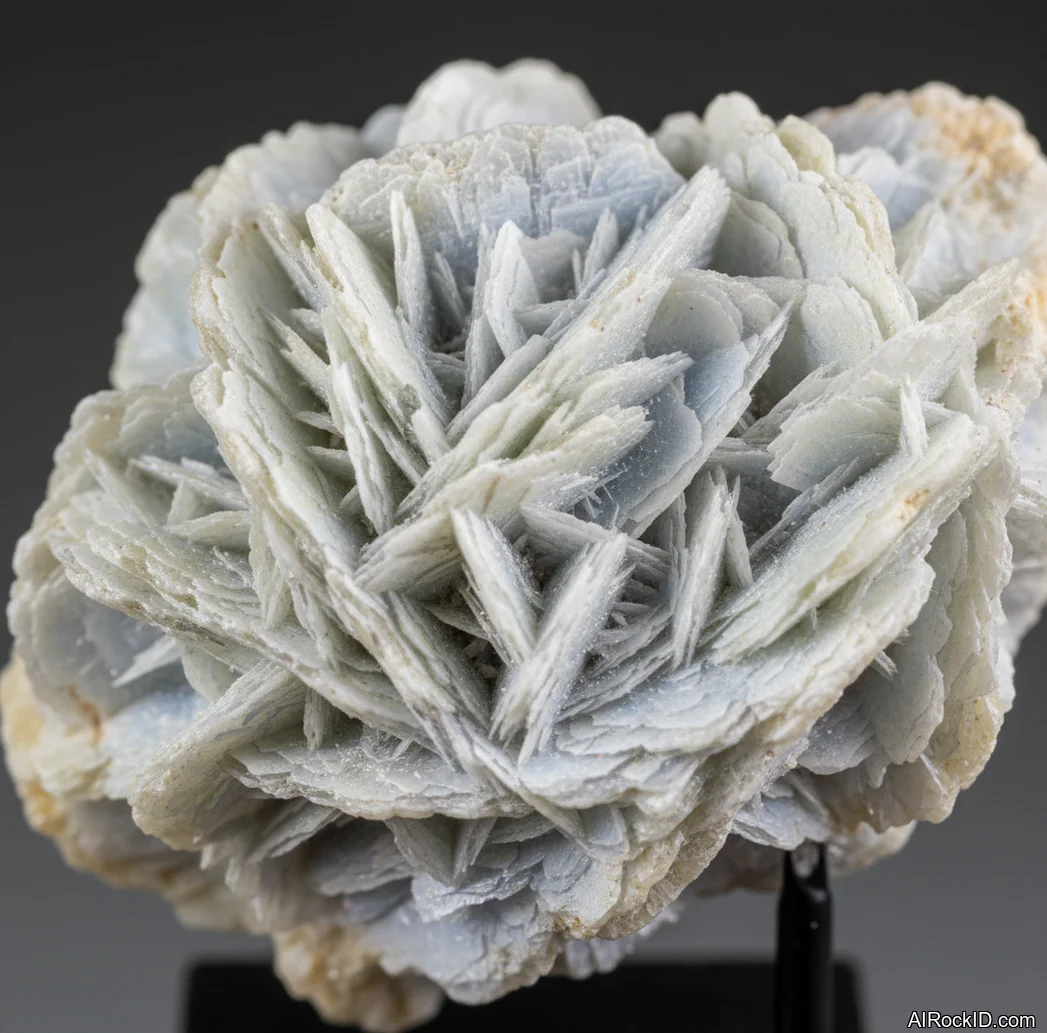
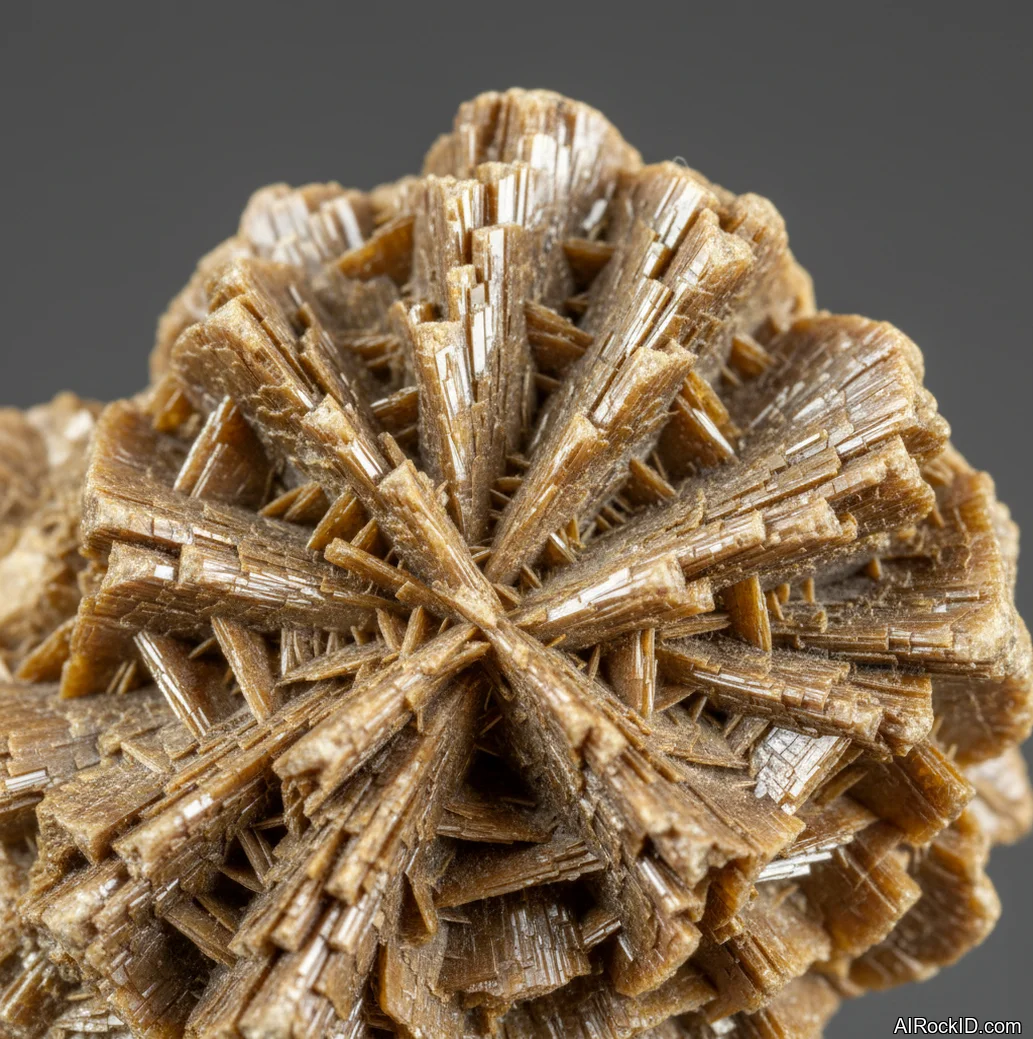
Look, get your eyes right up on the crystal faces and you’ll usually catch that barite “blade” habit. Sometimes they’re stacked like pages in a book (the edges can feel a bit sharp if you rub a thumb across them), sometimes they fan out instead. The golden color can swing from buttery to amber to a straw yellow. And when you tilt it under a shop light, you’ll often see a soft pearly flash slide across the surface. Pretty hard to miss once you’ve seen it, right?
Origin & History
Barite got its official write-up in 1800, thanks to Dietrich Ludwig Gustav Karsten. The name traces back to the Greek “barys,” meaning heavy, and honestly that tracks, because barite really does feel weirdly weighty in your hand for how plain it can look at first.
Collectors have been after it forever since it shows up in all kinds of habits, from thin, knife-like blades to those thick, chunky tabular crystals that sit there like little tiles (and they’ll clack together if you bump them in a box). And that golden material? It never earned a separate species name. It’s still barite, just with iron staining or inclusions that shove the color into that warm range.
Where Is Golden Barite Found?
Golden to honey barite shows up in hydrothermal and sediment-hosted deposits worldwide, and the best pieces usually come out of classic mining districts where cavities had room to grow crystals.
Formation
Most golden barite shows up when barium-rich fluids run into sulfate-rich fluids, and the barite drops out of solution. It can happen in hydrothermal veins. And around hot springs. You’ll see it in sedimentary basins too, or tucked into cavities where the chemistry stays steady long enough for crystals to stack up layer by layer.
Compared to quartz, barite feels like it forms in a hurry once the conditions click, but then it’ll snap along cleavage if you so much as breathe on it. I’ve cracked open dealer flats where the crystals look flawless under the tape and cardboard dust, then you lift one and a corner just pops off on a clean, flat plane. Annoying, right? That’s barite being barite.
How to Identify Golden Barite
Color: Golden Barite ranges from pale straw yellow to deep honey and amber tones. The color is often uneven, with stronger gold along fractures, edges, or iron-stained zones.
Luster: Luster is vitreous to pearly, especially on cleavage faces.
If you scratch it with a copper penny, it’ll usually mark, because barite is softer than people expect. The real test is the heft: barite feels unusually heavy for its size (specific gravity around 4.5), and most yellow calcite or quartz just won’t match that hand-feel. And watch for perfect cleavage, because fresh breaks can look like flat mirrors.
Properties of Golden Barite
Physical Properties
| Crystal System | Orthorhombic |
| Hardness (Mohs) | 3-3.5 (Soft (2-4)) |
| Density | 4.3-4.6 g/cm3 |
| Luster | Vitreous |
| Diaphaneity | Transparent to translucent |
| Fracture | Uneven |
| Streak | White |
| Magnetism | Non-magnetic |
| Colors | Golden, Honey-yellow, Straw yellow, Amber, Yellow-brown |
Chemical Properties
| Classification | Sulfates |
| Formula | BaSO4 |
| Elements | Ba, S, O |
| Common Impurities | Fe, Sr, Ca |
Optical Properties
| Refractive Index | 1.636-1.648 |
| Birefringence | 0.012 |
| Pleochroism | Weak |
| Optical Character | Biaxial |
Golden Barite Health & Safety
Normal handling is fine. And if the piece is intact, a quick splash or brief contact with water is usually okay too (think rinsing it under the tap and patting it dry right after). The bigger risk is physical damage, plain and simple. Drop it on tile or bang it against a hard edge and that’s where you’ll get chips, cracks, or worse.
Safety Tips
If you ever have to cut it, grind it, or snap it, don’t breathe in the dust. And put on eye protection too, because those cleavage chips can pop off fast and hit you in the face.
Golden Barite Value & Price
Price Range
Rough/Tumbled: $10 - $250 per specimen
Prices can jump all over the place depending on crystal size, any chips or cracks, and how clean the faces look. Golden color definitely helps. But the stuff that really makes dealers raise the tag is a sharp, undamaged blade and that nice luster you only get when the light skates off the surface instead of catching on little scuffs.
Durability
Fragile — Scratch resistance: Poor, Toughness: Poor
It’s stable in normal room conditions, but it chips and cleaves easily, so handling is the real enemy.
How to Care for Golden Barite
Use & Storage
Store it padded and separate from harder minerals. Barite hates being tossed in a mixed bowl where quartz points can nick it.
Cleaning
1) Rinse quickly with lukewarm water to remove loose dust. 2) Use a soft makeup brush or very soft toothbrush to get into crystal edges. 3) Pat dry and let it air-dry fully before putting it back on a shelf.
Cleanse & Charge
For a gentle reset, I stick it in moonlight or set it on a dry selenite plate. Skip salt soaks, mostly because you don’t want crystals rubbing and chipping in a gritty dish.
Placement
A stable shelf is better than a high-traffic desk. If it’s a bladed cluster, give it space so it doesn’t get bumped when you grab your keys.
Caution
Soft mineral with perfect cleavage. It’ll split cleanly if you catch an edge, and you can actually feel how “snappy” it is along those natural planes when you handle it. So don’t toss it in an ultrasonic cleaner. And skip harsh scrubbing too. Also, don’t carry it loose in a pocket where it can bang into keys or coins and crack right along the cleavage planes.
Works Well With
Golden Barite Meaning & Healing Properties
A lot of folks who pick up golden barite for energy work want that sunny, steady feeling, but without the jittery “amped” edge some bright yellow stones can throw at you. Me? I grab it when I need my brain to slow down, not power off. It helps me focus. Quiet. And it’s got this satisfying heaviness in your palm, like a paperweight that actually does its job.
Hold a golden barite blade and it’s pretty obvious why people tie it to grounding and structure. It feels dense. It looks orderly. And when you turn it in the light, you can see those clean planes where it likes to break, almost like it’s telling you, “Here. Straight lines. No chaos.” But look, if you’re expecting it to hit like citrine or golden calcite, you might walk away kind of underwhelmed. Golden barite is more “get organized” than “get excited.” Does that make sense?
And yeah, none of this is medical advice. If crystals are part of your routine, I’d use barite like a physical cue. Set it where you handle bills, where you journal, or where you map out your week (that spot on the desk you keep clearing off and then immediately trashing again). The change comes from repetition and attention as much as anything else, honestly.
Identify Any Crystal Instantly
Snap a photo and get properties, value, care instructions, and healing meanings in seconds.