Nine Dragon Jade
What Is Nine Dragon Jade?
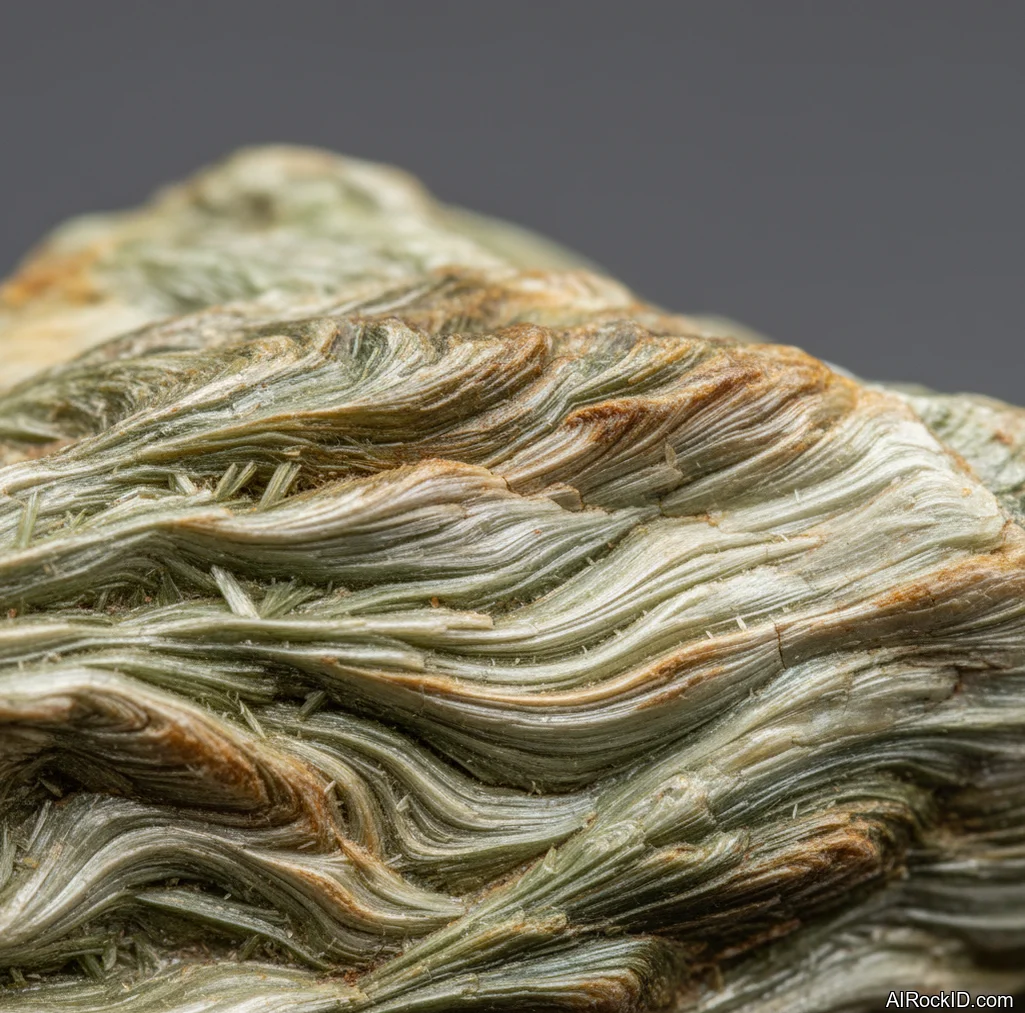
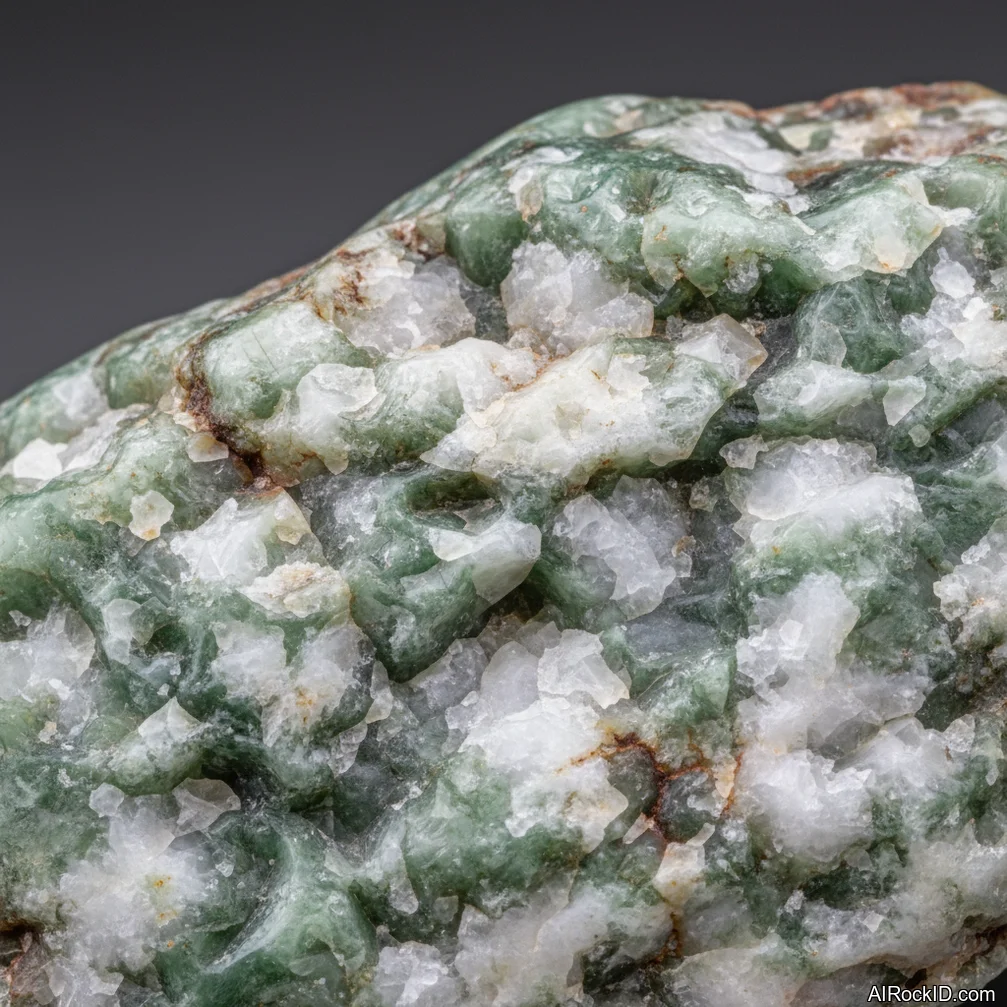
Nine Dragon Jade is basically a trade name sellers use for a serpentine heavy rock they market as “jade.”
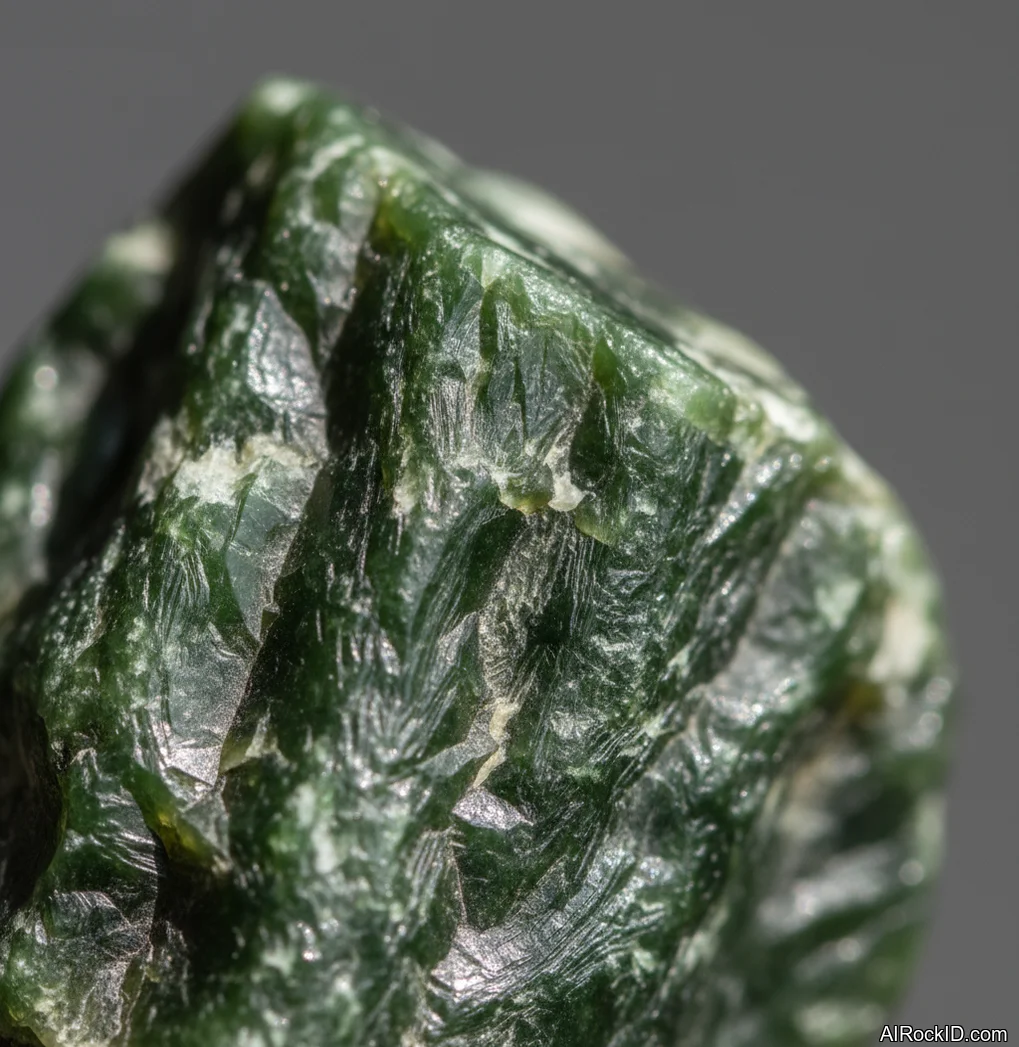
Grab one of those palm stones and you’ll feel the difference fast. It’s a touch softer, and it warms up in your hand quicker than real nephrite does. Run your thumb over the polished side and there’s this waxy slip to it, kind of like soapstone (you can almost feel that slightly draggy glide). The look is what people are paying for: misty, cloudy greens cut through with darker, wiggly streaks, and vendors love saying those lines look like dragons from old Chinese carvings.
People see it in a tray and assume it’s jadeite or nephrite. But it’s not. Still, it can be a solid lapidary material and a cheaper “jade look” option, as long as you handle it like serpentine when it comes to wear and care.
Origin & History
Most dealers toss around “Nine Dragon Jade” as a marketing label, not a formally defined mineral variety, and there isn’t one neat “first described on this date” moment like you’d get with a real species. The actual stuff underneath is serpentine, which Georgius Agricola described and named back in 1564, and the word comes from the Latin serpentinus, meaning “snake-like,” a nod to that mottled, scaly look it can have when you tilt it under the light.
The “nine dragon” part? That’s cultural dressing. Nine carries a lot of symbolic weight in Chinese art, and dragons are all over imperial motifs. And I’ve watched the name get slapped onto all sorts of green, dragon-pattern stones at shows, but the ones that feel like serpentine in your hand, kind of waxy, a little slick when your fingers warm it up (you know that texture?), are the pieces that keep showing up under that label.
Where Is Nine Dragon Jade Found?
It’s sold most often with a China origin, and similar serpentine material comes out of serpentinite belts in places like California and parts of Russia.
Formation
Serpentine shows up when ultramafic rocks like peridotite get changed by hot, watery fluids. Picture oceanic crust and mantle rock getting cooked and soaked along faults and subduction zones, the kind of places where everything’s cracked up and fluids can actually move. Give it time and the olivine and pyroxene start to break down. What you’re left with is a mix of serpentine minerals, often with magnetite and other leftovers mixed in, and that’s what ends up as those darker streaks.
If you stare at a slab for a minute, it’s obvious why it’ll take a really nice polish even though it isn’t hard. The stuff is micro-fibrous to fine-grained, so light doesn’t bounce the way it does in quartz. It kind of glows, but not flashy. More like that muted, waxy sheen you notice when you tilt it under a lamp and the surface looks almost “greasy” (in a good way). And when there’s magnetite in the mix, that’s usually where the “dragon” swirls get their contrast. That’s the pop.
How to Identify Nine Dragon Jade
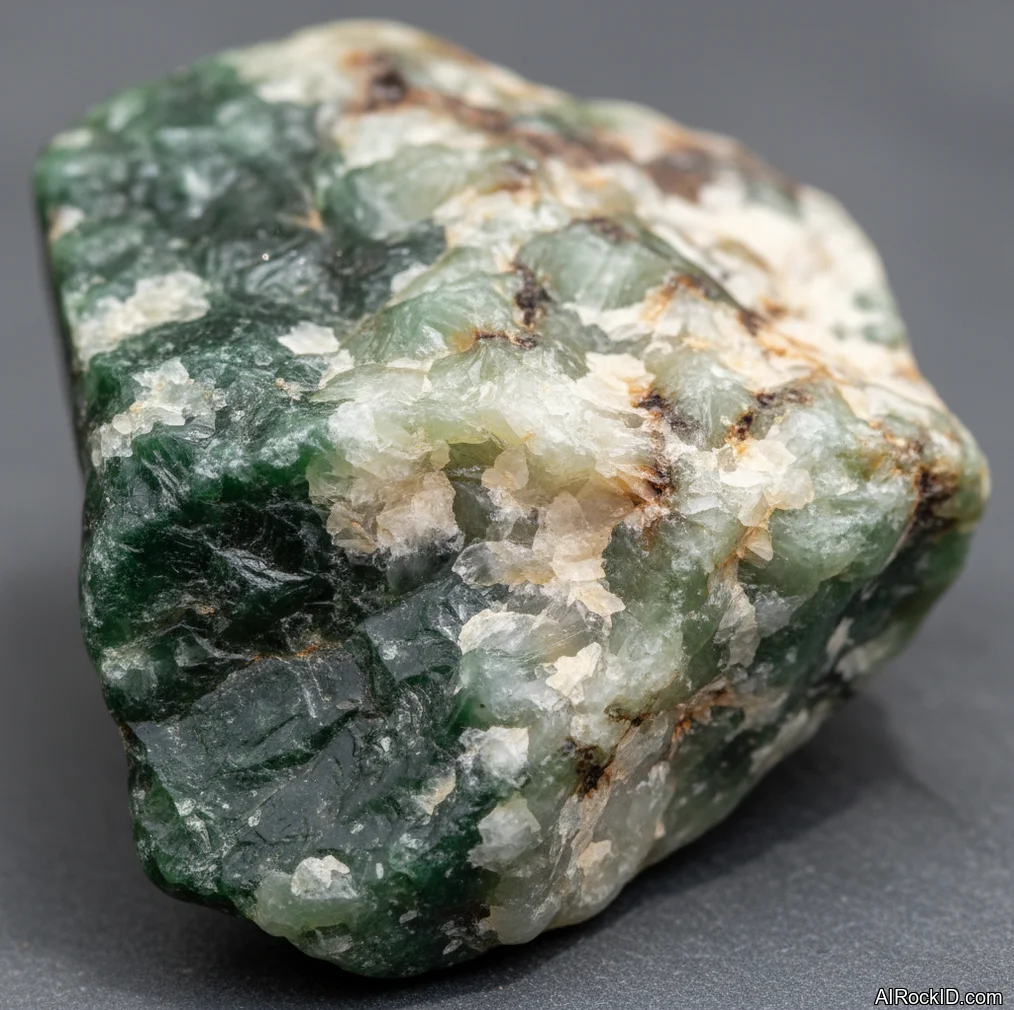
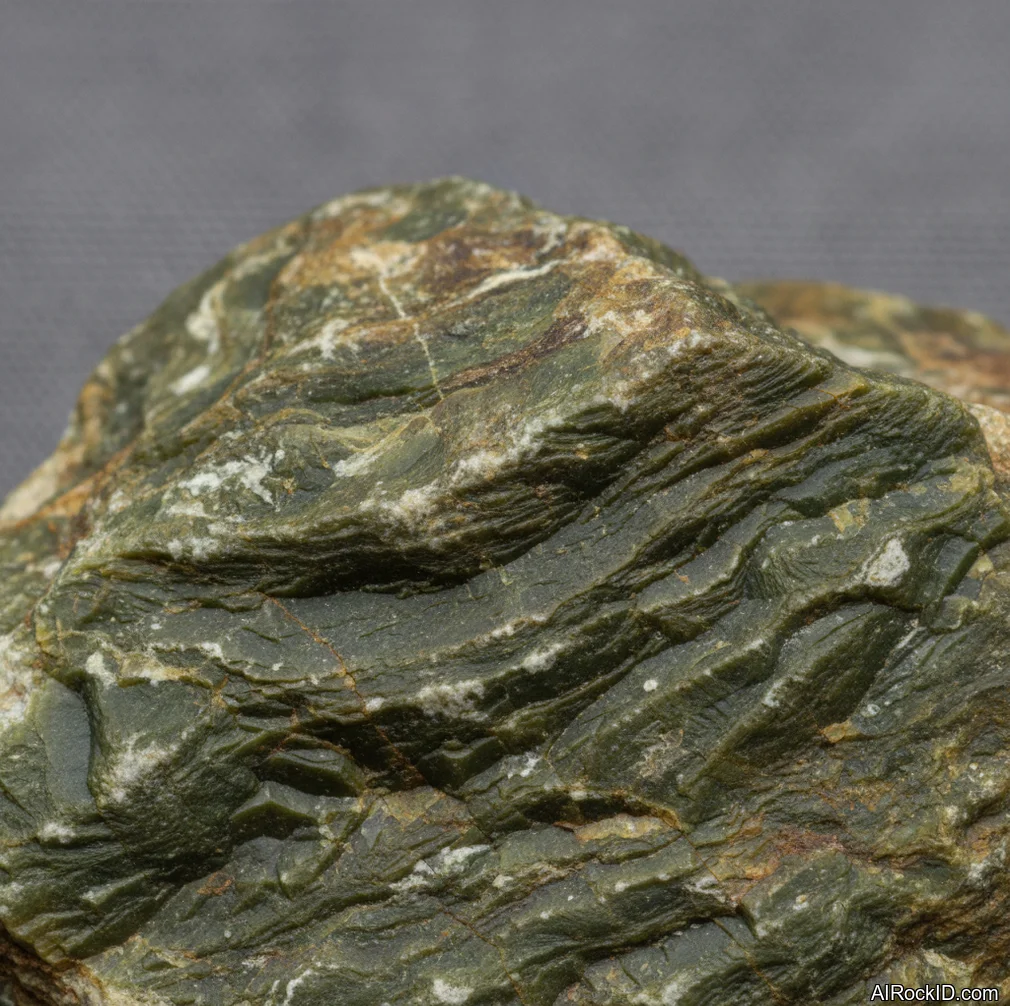
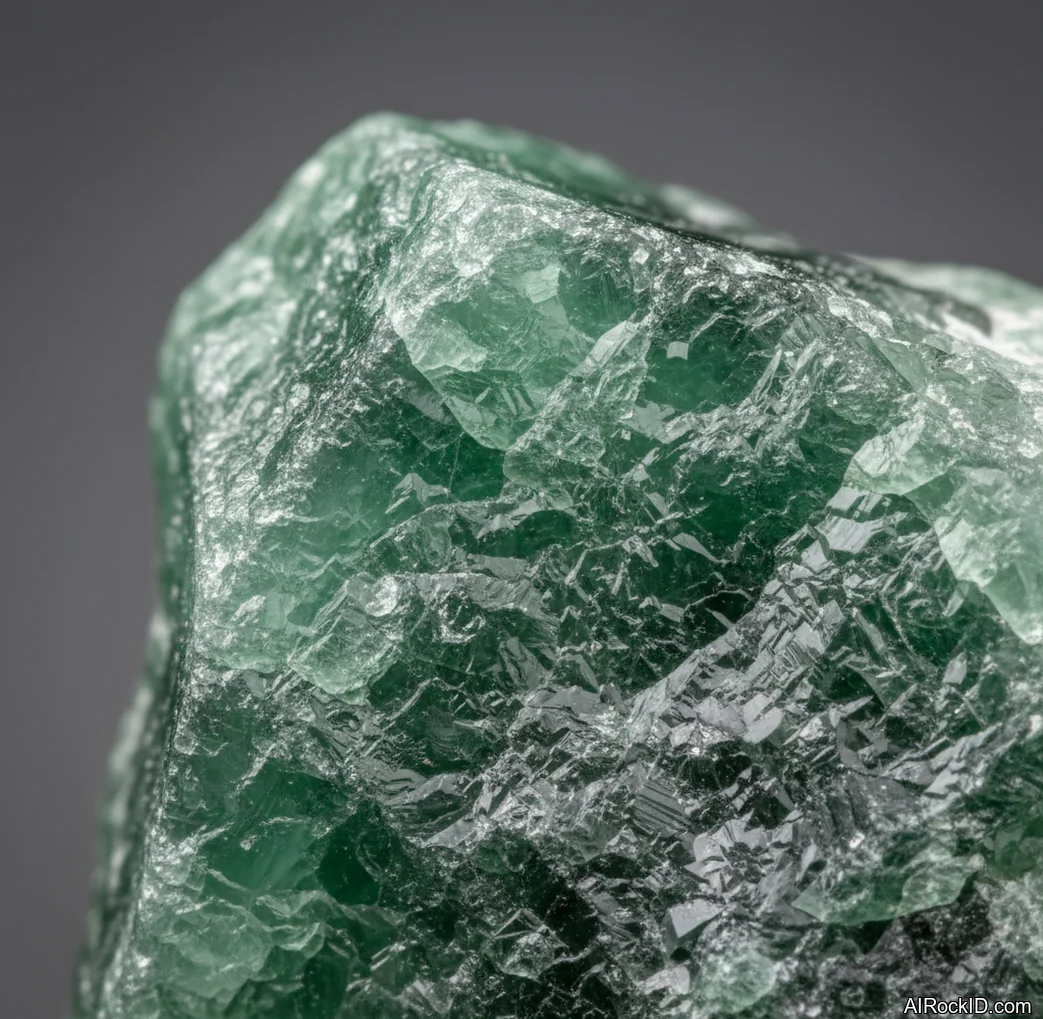
Color: Usually medium to dark green with black, deep green, or brownish mottling, often in curling streaks that look like smoke or scales. Some pieces lean yellow-green, especially in brighter polish.
Luster: Waxy to slightly greasy when polished.
If you scratch it with a steel nail, many pieces will mark or at least scuff, which is your first hint you’re not holding nephrite or jadeite. The real test is feel: polished serpentine has a slick, soapy drag, and it doesn’t have the dense, tough “tool-handle” vibe that nephrite has. And when I tap two polished pieces together, serpentine gives a duller click compared to the sharper ring you get from harder materials.
Properties of Nine Dragon Jade
Physical Properties
| Crystal System | Monoclinic |
| Hardness (Mohs) | 2.5-4 (Soft (2-4)) |
| Density | 2.50-2.60 |
| Luster | Waxy |
| Diaphaneity | Opaque to translucent |
| Fracture | Uneven |
| Streak | White |
| Magnetism | Non-magnetic |
| Colors | green, dark green, yellow-green, black, brown |
Chemical Properties
| Classification | Silicates |
| Formula | Mg3Si2O5(OH)4 |
| Elements | Mg, Si, O, H |
| Common Impurities | Fe, Ni, Cr, Al |
Optical Properties
| Refractive Index | 1.560-1.571 |
| Birefringence | 0.010 |
| Pleochroism | Weak |
| Optical Character | Biaxial |
Nine Dragon Jade Health & Safety
Normal handling is fine. And if the stone’s already finished, getting it wet or rinsing it off with water is totally fine too. Thing is, the real problem is the dust. If you’re cutting or grinding it without the right controls, that fine powder gets in the air fast, and that’s where the risk comes from.
Safety Tips
If you’re going to shape it or sand it, do it wet and wear a respirator that’s actually rated for fine particulates. Don’t sweep up the dry dust. Scoop up the slurry while it’s still damp (it’s that gray, gritty paste that sticks to your gloves and the edge of the bench) and toss it out.
Nine Dragon Jade Value & Price
Price Range
Rough/Tumbled: $5 - $40 per tumbled stone or palm stone
Cut/Polished: $2 - $12 per carat
Price usually comes down to a few very specific things: how good the polish actually is (slick and glassy versus kind of hazy), how strong the pattern contrast looks in person, and whether the seller is trying to sell it as “jade” or being upfront and calling it serpentine. Cleaner, more translucent green with crisp, dark swirls is what pushes it toward the higher end.
Durability
Moderate — Scratch resistance: Fair, Toughness: Good
It’s generally stable, but it’ll pick up scratches and dings faster than true jade if you wear it daily.
How to Care for Nine Dragon Jade
Use & Storage
Store it in a pouch or a separate compartment so harder stones don’t scratch it. I don’t toss serpentine “jade” in a mixed bowl with quartz points, because it’ll come out looking hazy.
Cleaning
1) Rinse with lukewarm water and a drop of mild soap. 2) Wipe with a soft cloth or a baby toothbrush for carvings. 3) Rinse again and dry fully before storing.
Cleanse & Charge
If you do energy-style cleansing, stick to gentle options like smoke, sound, or a quick rinse and dry. Skip salt soaks if you’ve got any cracks or a rough matte finish.
Placement
Keep it where it won’t get knocked around. A desk stone is fine, but I wouldn’t make it your keychain rock unless you like little battle scars.
Caution
Skip steam cleaners, strong acids, and any long, gritty scrubbing that has you grinding away in the same spot. And don’t toss carved or cracked pieces into an ultrasonic cleaner.
Works Well With
Nine Dragon Jade Meaning & Healing Properties
People reach for Nine Dragon Jade for the same kind of reasons they grab other green stones: steadying, soothing, that “back to baseline” feeling. In my own stash, it’s the one I pick when I want something calm in the hand that isn’t trying to show off. It’s got that smooth, almost slick surface, and when you rub it with your thumb it warms up slow. That little detail matters when you’re actually clutching it on a rough day.
But here’s the collector reality. A lot of what people say about it is basically pulled from the wider jade tradition, even though this material is usually serpentine. If you’re into dragon symbolism, protection motifs, prosperity imagery, that’s a real cultural thread you can hold onto. Just keep your feet on the ground, okay? A palm stone isn’t going to replace sleep, therapy, a doctor, or basic common sense.
Most dealers sell it as “jade energy,” and that’s where things get muddy. Compared to nephrite, serpentine feels softer and more buttery under the thumb, and yeah, that can feel comforting. But if you’re hunting for a lifetime bracelet stone, this one isn’t it. Think touchstone, a display slab, or a carving you handle gently (not the thing you smack into doorframes).
Identify Any Crystal Instantly
Snap a photo and get properties, value, care instructions, and healing meanings in seconds.