Stellar Beam Calcite
What Is Stellar Beam Calcite?
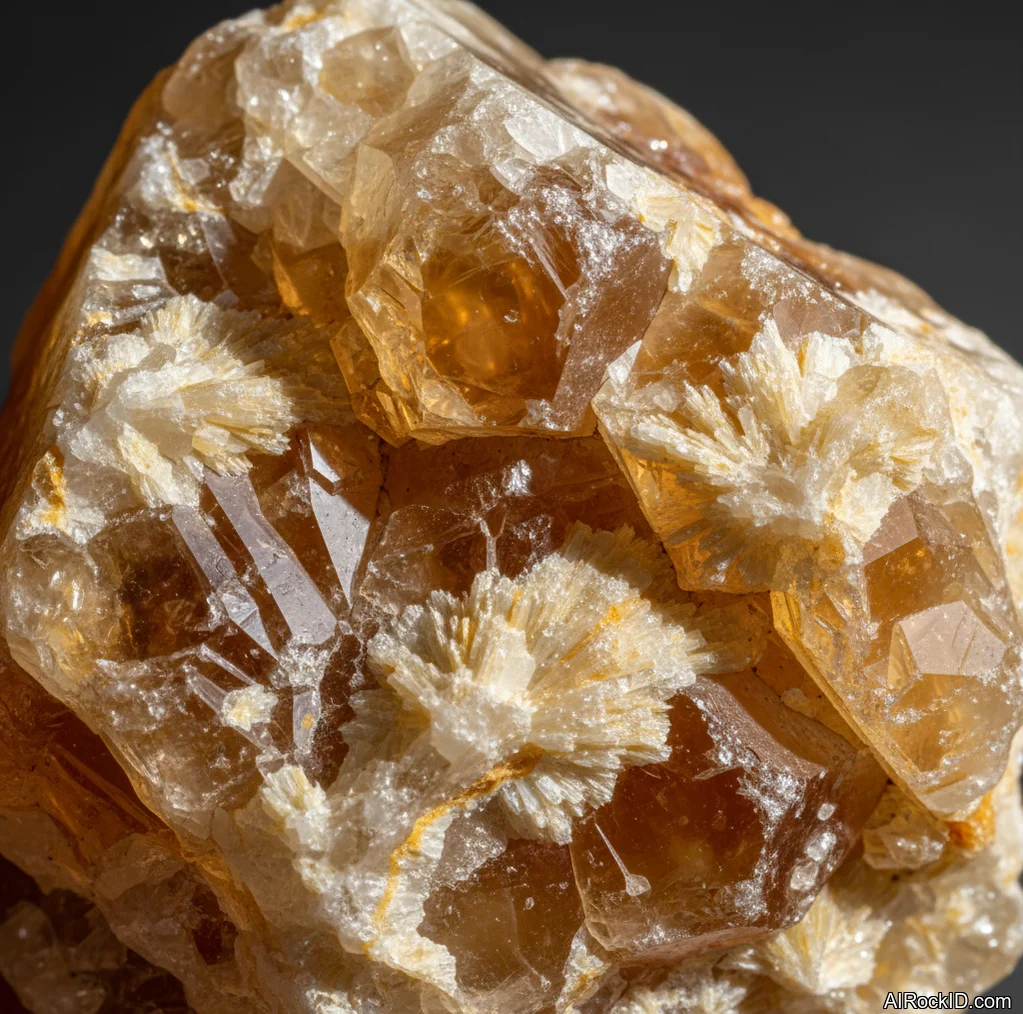
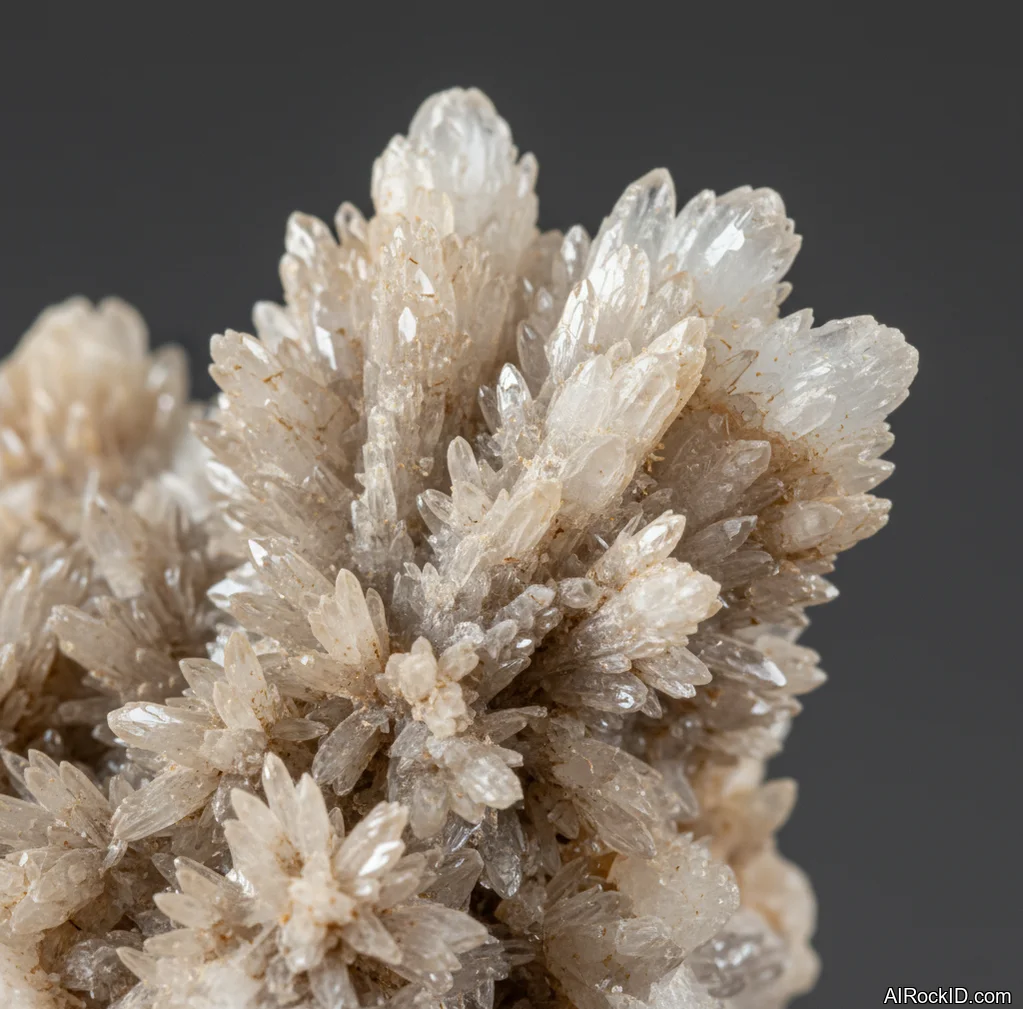
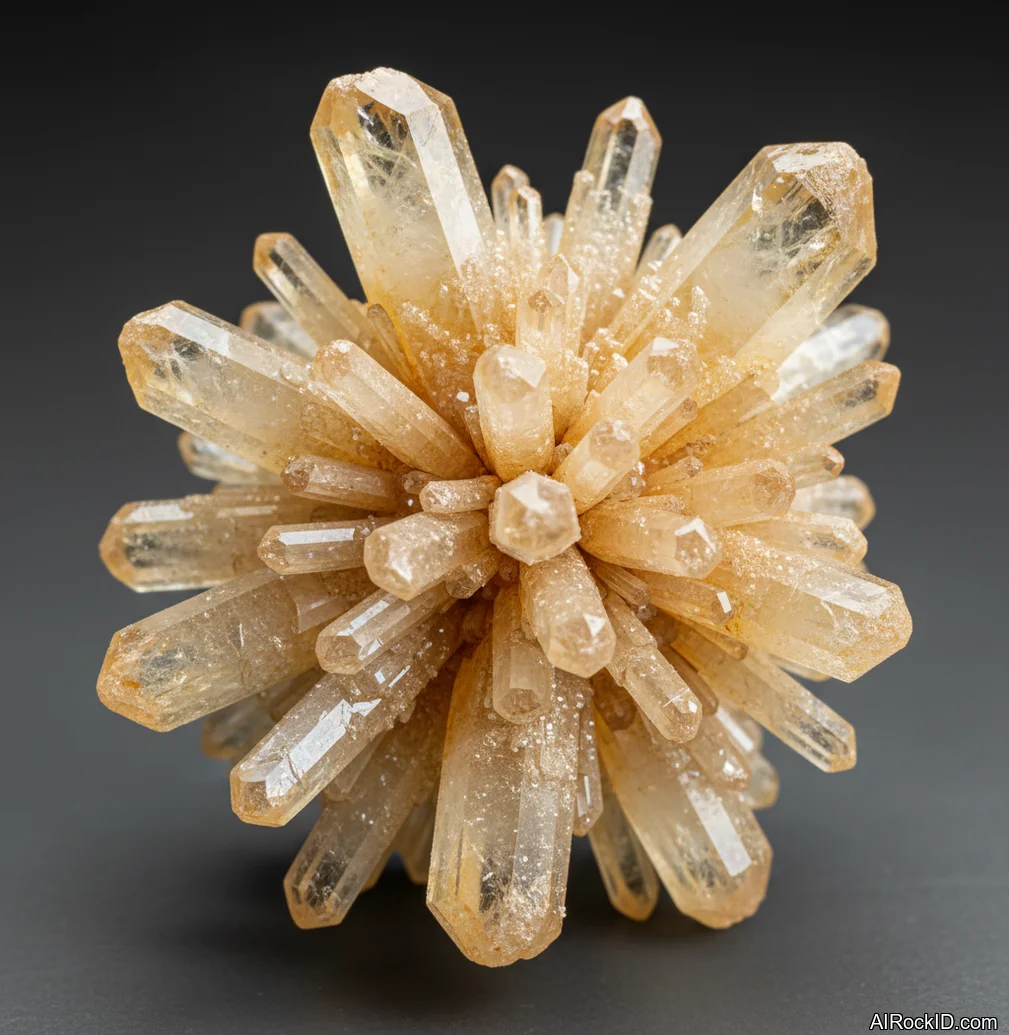
Stellar Beam Calcite is just a trade name for calcite that grew in radiating, beam-like sprays or starburst clusters. In normal collector talk, it’s calcite doing that fireworks thing, where thin blades or fibrous-looking crystals shoot out from one center point.
Pick up a cluster and the first thing you clock is how the faces feel. Even when the rays look “fibrous,” you can usually catch those little flat cleavage flashes when you slowly roll it under a lamp (the kind of quick blink you only see at the right angle). It stays cool in your hand like most carbonates, and it’s lighter than people expect if they’re used to hauling around quartz chunks. But it’s also the kind of piece you learn to handle like a potato chip. One bump on a table edge and you’ll hear that tiny, heartbreaking tick.
At a glance, it can pass for aragonite sprays or even some zeolites, especially when it’s white and kind of airy. But the tell is calcite’s cleavage, and how fast it gives up to a steel point. I’ve had customers swear it was “hard like quartz” right up until they watched a pocketknife leave a clean line on a back face. Pretty convincing, right?
Origin & History
“Stellar Beam Calcite” isn’t some antique mineral term. It’s a newer market label dealers slap on calcite that grows in those radiating habits, the kind that look like beams, spokes, or little starbursts.
Calcite itself has been described and named for a long time, though. The species name comes from the Latin “calx,” meaning lime, and that tracks with how calcite ties back to limestone and lime production (anyone who’s handled a chunk of limestone and noticed that dusty, chalky feel gets why).
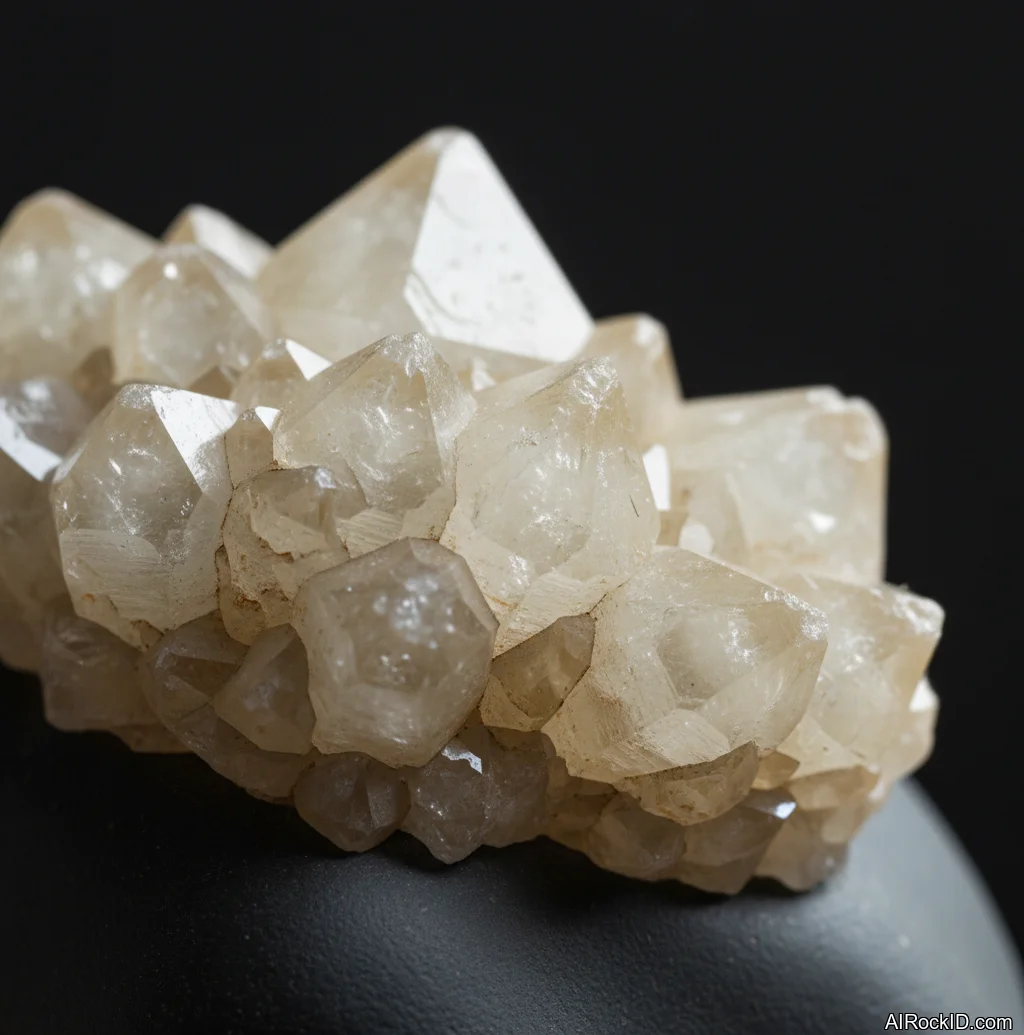
Most of the time, these starburst pieces show up at shows in flats with a locality tag, and “stellar beam” is really just there to separate them from rhombs, dogtooth spar, Iceland spar, and other calcite forms. That’s pretty normal in the hobby. Habit names sell. And they help collectors picture what they’re getting, fast.
Where Is Stellar Beam Calcite Found?
Radiating calcite pops up anywhere calcite grows in open space, like vugs in limestone, hydrothermal veins, and cavities in ore zones. Material sold as “stellar beam” is commonly labeled from Brazil and occasionally from Alpine-style pockets.
Formation
Most beam and starburst calcite shows up when calcium-rich fluids push through fractures or open cavities, then the chemistry flips quickly enough that you get tons of nucleation points all at once. So instead of one big rhomb hogging the space, you end up with a crowd of crystals fighting for room, shooting out from a little seed spot like spokes on a wheel.
Look, if you stare right into the center, that’s usually where the chaos is. It might be lightly iron-stained (that rusty tint that seems to sit down in the crevices), or you’ll spot tiny snapped fragments where later growth basically muscled earlier crystals out of the way. And in those little pockets, calcite will grow on whatever surface it can grab: a bit of dolomite, a sulfide crust, even older calcite already stuck to the wall. That stacked history is why these clusters feel so busy and 3D.
How to Identify Stellar Beam Calcite
Color: Most pieces are white to off-white, sometimes with honey, champagne, or pale amber tones. Clear to nearly clear rays happen too, but they’re less common in the starburst habit.
Luster: Luster ranges from vitreous to pearly, especially on cleavage faces.
If you scratch it with a copper coin, it’ll mark easily, and a steel pin will bite in without much effort. The real test is cleavage: break chips tend to show flat, repeated planes rather than glassy conchoidal curves. And if you’ve got a hand lens, watch for double images through clearer bits, calcite’s birefringence can be obvious even without fancy gear.
Properties of Stellar Beam Calcite
Physical Properties
| Crystal System | Trigonal |
| Hardness (Mohs) | 3 (Soft (2-4)) |
| Density | 2.71 g/cm3 |
| Luster | Vitreous |
| Diaphaneity | Transparent to translucent |
| Fracture | Uneven |
| Streak | White |
| Magnetism | Non-magnetic |
| Colors | White, Colorless, Cream, Honey, Pale yellow, Light gray |
Chemical Properties
| Classification | Carbonates |
| Formula | CaCO3 |
| Elements | Ca, C, O |
| Common Impurities | Fe, Mn, Mg |
Optical Properties
| Refractive Index | 1.486-1.658 |
| Birefringence | 0.172 |
| Pleochroism | None |
| Optical Character | Uniaxial |
Stellar Beam Calcite Health & Safety
Stellar Beam Calcite is safe to handle and it isn’t toxic. But don’t grind or cut it without thinking about the dust. That super-fine mineral powder gets everywhere, sticks to your fingers, and it can irritate you if you breathe it in or get it in your eyes.
Safety Tips
If you’re trimming matrix or doing lapidary work, put on eye protection and a proper dust mask. And when you’re done, skip the dry sweeping, it just kicks the dust back up. Grab a damp wipe instead and clean it up that way.
Stellar Beam Calcite Value & Price
Price Range
Rough/Tumbled: $15 - $220 per specimen
Prices bounce around depending on how clear the rays look, how unchipped the tips are (the kind that don’t catch on a fingertip when you rub them), and whether the cluster has a strong, centered “star” instead of that lopsided spray. And yeah, damage is pretty common, so truly pristine pieces can pull real money even though calcite itself is everywhere.
Durability
Nondurable — Scratch resistance: Poor, Toughness: Poor
Calcite scratches easily and cleaves readily, so sharp temperature changes, drops, and rough shipping are the main threats.
How to Care for Stellar Beam Calcite
Use & Storage
Store it so the rays can’t knock into anything, a padded box beats a shelf if you’ve got kids, pets, or shaky floors. And don’t stack it under heavier specimens, calcite loses that fight every time.
Cleaning
1) Blow off loose grit with a bulb blower or soft brush. 2) Rinse quickly in lukewarm water if needed, then pat dry. 3) Skip acids and vinegar, and don’t soak for long if the piece has fractures or crumbly matrix.
Cleanse & Charge
For a non-water option, use smoke, sound, or a quick selenite plate rest. Keep it out of harsh sun if the color is delicate, and avoid heat.
Placement
Put it somewhere stable where you can look at it from the side, not just from above, because the beam effect shows best at low angles. A small stand that cradles the base helps prevent tip damage.
Caution
Don’t use salt or anything acidic on calcite, and stay away from ultrasonic or steam cleaning too. When you pick it up, grab it by the base, not the rays. Seriously, those rays chip fast.
Works Well With
Stellar Beam Calcite Meaning & Healing Properties
Next to a lot of stones people grab for “energy work,” calcite feels almost blunt in the best way. When I pick up a solid starburst cluster, I don’t even think “woo” first. I look at the structure. Those rays kick your eyes outward, like the whole piece is actively pointing away from its center, and I can see why folks link it to focus, mental sorting, getting unstuck, stuff like that.
But look, calcite’s soft. That matters. You’re not going to chuck it in your pocket and thumb it all day the way you might with quartz. It’ll get scuffed, fast. So most people treat it like a sit-down stone, the kind you park on a desk while you plan, or keep next to a notebook when you’re trying to unknot a problem (and you need something to stare at for a minute). And if you’re working crystals into a wellness routine, keep it in the “personal practice” lane, not the “medicine” lane.
Thing is, I’ve noticed the whole “beam” look does something simple to people. They slow their breathing down when they just watch it. Why? It’s like staring at spokes on a wheel, a repeating pattern your brain can latch onto without effort. Not mystical proof of anything. Just how pattern-tracking works. And if your piece has that pearly sheen on the cleavage faces, candlelight hits it in this soft, slippery way that makes the whole thing feel calmer than it has any right to.
Identify Any Crystal Instantly
Snap a photo and get properties, value, care instructions, and healing meanings in seconds.