Fruit Jasper
What Is Fruit Jasper?
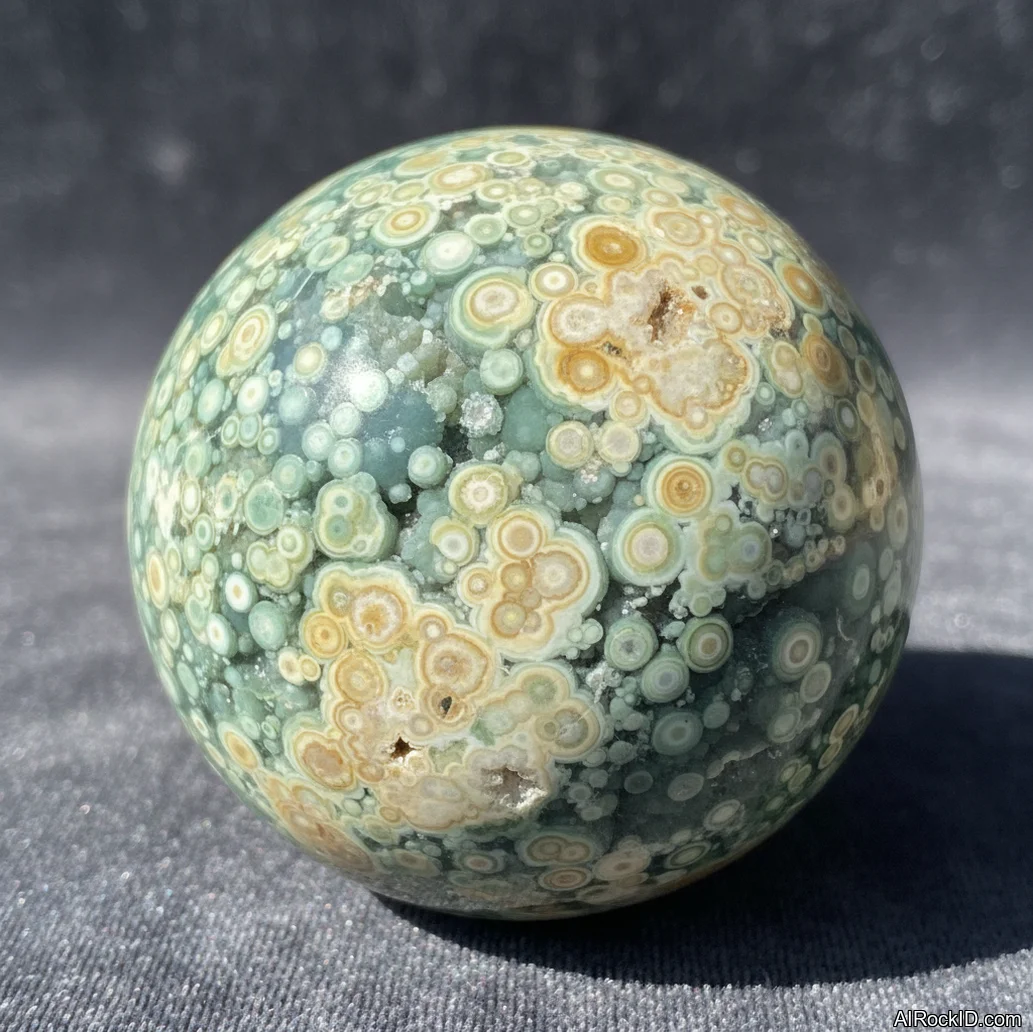
Fruit Jasper is basically a trade-name for jasper, meaning it’s an opaque, microcrystalline quartz (chalcedony) rock with multicolor spots or little orb-like patches.
Pick up a palm stone and you clock it fast. It’s got that quartz heft, heavier than it looks. And it stays cool in your hand even after you’ve been holding it while you stand there scanning a table. Most of what gets sold as Fruit Jasper is polished, because the pattern really jumps once it’s got a shine (you can feel how slick the surface gets, almost like glass). In rough form, it can look kinda dull and muddy until you wet it, then the colors wake up.
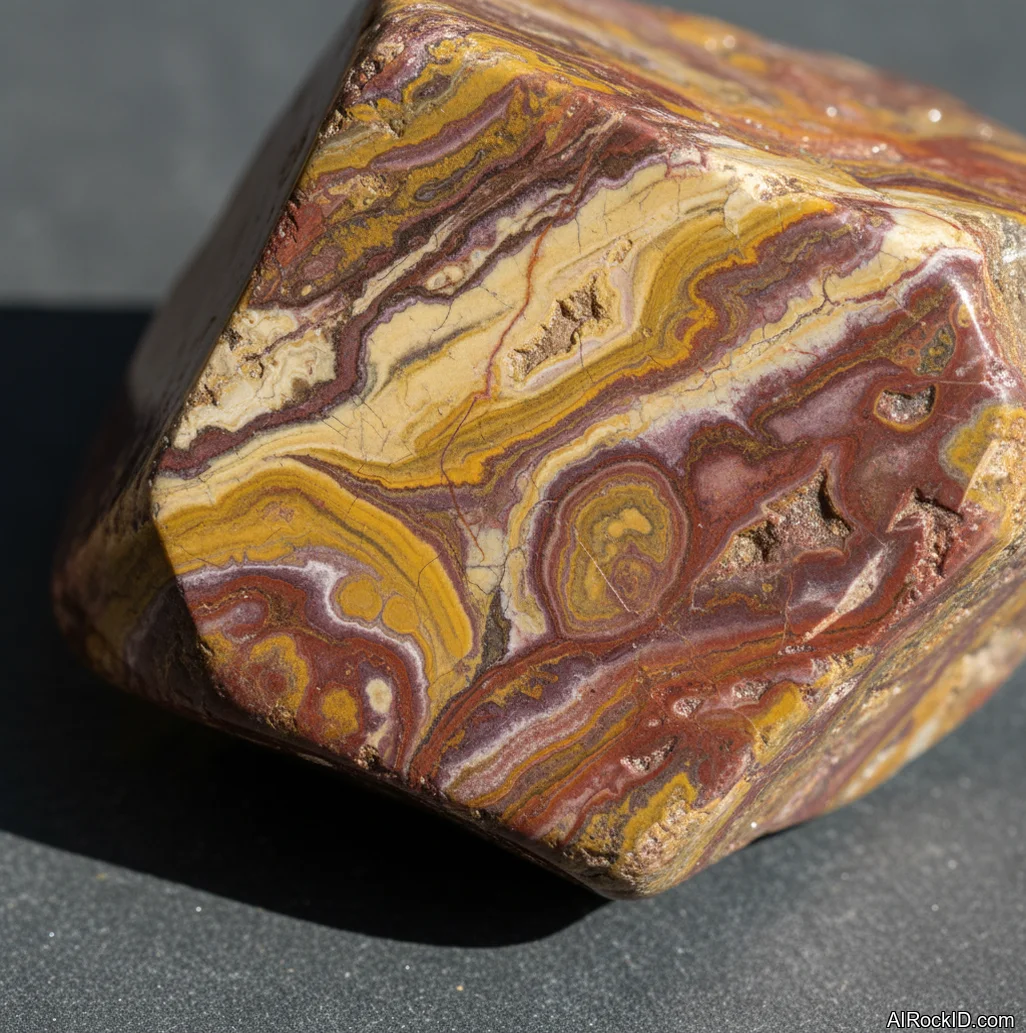
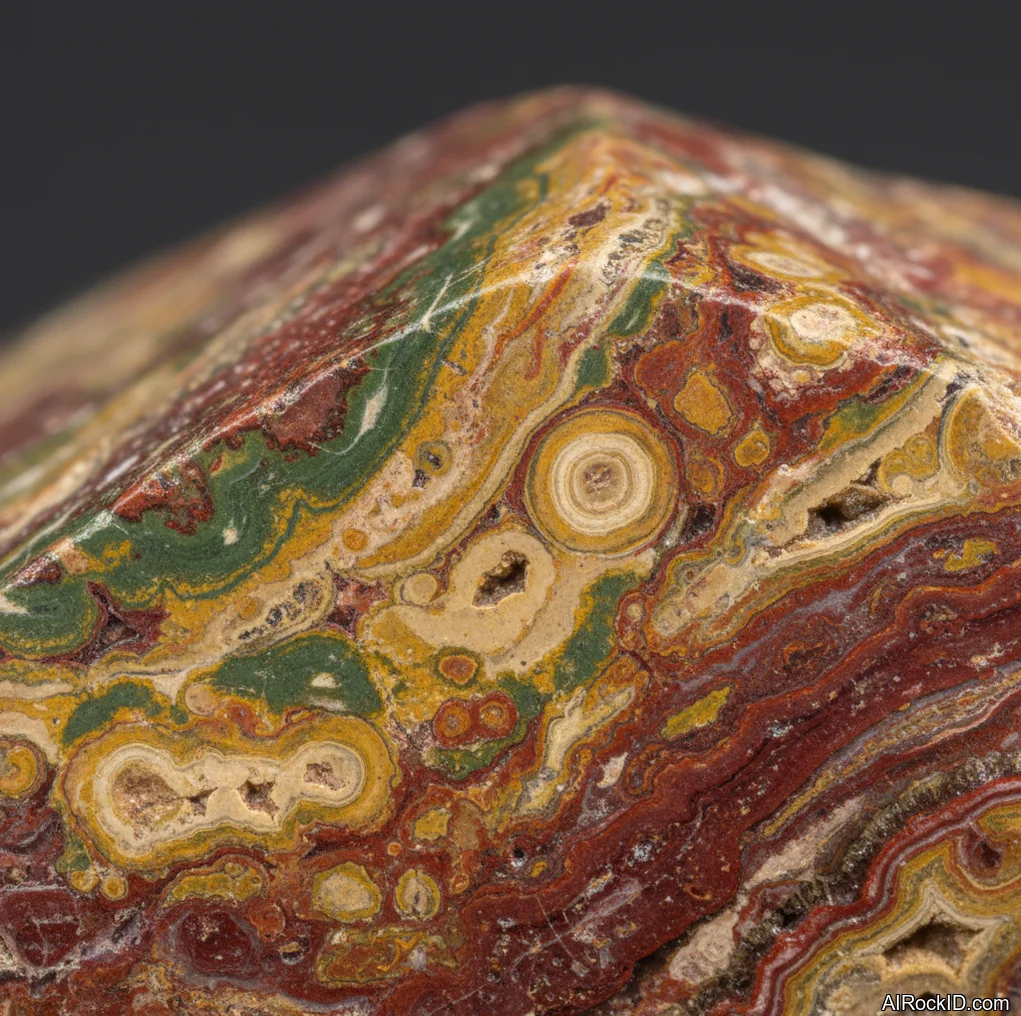
At first glance, people mix it up with ocean jasper or “fancy jasper.” But sometimes that’s fair, since dealers use the name pretty loosely. The giveaway for a lot of the Fruit Jasper I see is that confetti look: scattered reds, greens, yellows, and cream, with soft edges instead of sharp banding. It’s not a single-mine, single-recipe material. It’s more of a look category, and that’s how the market treats it.
Origin & History
Fruit Jasper doesn’t have some neat, official “first described on this date” moment like a new mineral species would. Jasper’s been used as a grab-bag name for patterned chalcedony since antiquity, so there isn’t a single starting gun here. “Fruit Jasper” is basically a modern shop label, and I started noticing it popping up a lot more at bead shows and in online listings in the 2000s and 2010s, usually sitting right alongside other mixed-pattern jaspers.
Thing is, the name’s pure marketing. Sellers are banking on that fruit-salad color mix, the little round patches that look like seeds or bits of pulp when you tilt the stone under a light, and the overall happy, bright feel. And you’ll see it sold under other names depending on the wholesaler, which is why two pieces both called Fruit Jasper can look pretty different in person. Why the mismatch? That label’s doing a lot of work.
Where Is Fruit Jasper Found?
Material sold as Fruit Jasper is commonly sourced through Brazil, Russia, and the USA in the trade, though the name is used loosely and exact localities are often not disclosed.
Formation
Most jasper starts out as silica in a gel state that later hardens, usually filling cracks and cavities or replacing material in volcanic and sedimentary settings. What you’ve got is microcrystalline quartz, with iron and other trace bits tinting it while it forms. It’s not the “one crystal grew in a pocket” kind of deal. It’s more like silica drifting around in water, then finally setting up and locking in.
Look, if you hold a polished face under a bright lamp, you can sometimes watch the colors feather into each other right at the edges. That’s the microcrystalline texture showing through. And if you’ve ever actually cut jasper, the saw gives you clues too. Some pieces cut buttery smooth. Others hit those tiny hard spots that make the blade sing, usually from uneven silica or small inclusions (you can feel it in the feed, too).
How to Identify Fruit Jasper
Color: Fruit Jasper is typically multicolored with scattered spots or soft orb-like patches in greens, reds, yellows, cream, and brown. Patterns are usually mottled or “confetti” rather than strongly banded.
Luster: Polished pieces show a waxy to vitreous luster.
If you scratch it with a steel nail, it won’t take the scratch, but the nail might leave a gray streak that wipes off. The real test is a simple glass scratch: real jasper scratches glass because it’s quartz-based. And in your hand it should feel dense and cool, not light or warm like resin or plastic imitations.
Properties of Fruit Jasper
Physical Properties
| Crystal System | Trigonal |
| Hardness (Mohs) | 6.5-7 (Hard (6-7.5)) |
| Density | 2.58-2.64 g/cm3 |
| Luster | Waxy |
| Diaphaneity | Opaque |
| Fracture | Conchoidal |
| Streak | White |
| Magnetism | Non-magnetic |
| Colors | Green, Red, Yellow, Cream, Brown, Orange, Gray |
Chemical Properties
| Classification | Silicates |
| Formula | SiO2 |
| Elements | Si, O |
| Common Impurities | Fe, Mn, Al, Ca |
Optical Properties
| Refractive Index | 1.53-1.54 |
| Birefringence | None |
| Pleochroism | None |
| Optical Character | Uniaxial |
Fruit Jasper Health & Safety
Fruit Jasper is usually safe to pick up, move around, and keep on a shelf, and a quick rinse or brief splash of water won’t hurt it. But if you’re cutting or grinding it, that’s where you need to pay attention, because the real day-to-day issue is silica dust.
Safety Tips
If you’re sawing, sanding, or drilling, keep things wet and wear the right respirator so you don’t end up breathing in that super-fine silica dust. It hangs in the air longer than you’d think.
Fruit Jasper Value & Price
Price Range
Rough/Tumbled: $3 - $25 per piece
Cut/Polished: $0.50 - $3 per carat
Prices bounce around based on how clear the pattern is, how hard the colors pop against each other, and whether the surface takes a clean polish with zero pits (those little pinholes you can feel when you run a fingernail over it). Big, well-matched pairs and high-gloss cabbing rough usually cost more than a mixed tumble lot.
Durability
Very Durable — Scratch resistance: Good, Toughness: Good
It’s stable quartz-based material, but polished surfaces can still dull if it rides loose in a pocket with keys and grit.
How to Care for Fruit Jasper
Use & Storage
Keep it in a pouch or separate compartment if it’s polished, because quartz-on-quartz scuffs are real. I’ve watched a glossy jasper palm stone turn hazy after one week in a bowl with other stones.
Cleaning
1) Rinse with lukewarm water and a drop of mild soap. 2) Gently scrub with a soft toothbrush if it has pits or crevices. 3) Pat dry, then air dry fully before storing.
Cleanse & Charge
For a simple reset, rinse and dry it, or leave it on a windowsill for indirect light. But don’t bake it in harsh sun for days if you care about keeping the surface looking fresh.
Placement
On a desk, Fruit Jasper is the kind of stone you end up fidgeting with, so put it where your hand naturally lands. For display, a small stand helps because the best pattern is usually on one face.
Caution
Skip acid cleaners and abrasive powders. And if you’re cutting or polishing it, handle it like any other quartz: keep the silica dust down by working wet and wearing a respirator (the kind that actually seals around your nose and cheeks, not a flimsy paper mask).
Works Well With
Fruit Jasper Meaning & Healing Properties
A lot of people grab Fruit Jasper when they want that grounded feeling, just without the “serious and heavy” vibe, if that makes sense. It’s still jasper, so it comes off earthy and steady, like “okay, I can handle my to-do list.” But the multicolor pattern keeps it from feeling like a brick in your pocket.
I’ve kept a piece by my workbench for those nights I’m sorting flats after a show, and it’s the one my hand finds without thinking when I’m trying not to rush. Thing is, you can kind of see the whole “daily balance” idea just by staring at it for a second. The pattern’s busy, sure, but it doesn’t look frantic. And the colors usually run warm.
But here’s the honest part: the trade-name thing matters. Two Fruit Jaspers from two different sellers can feel like totally different stones in your hand, especially if one leans green and the other’s mostly red and yellow. So if you’re picking one for personal use, choose the exact piece, not the label.
And no, I’m not calling that medical care. I don’t treat it like it is. I treat it like a tactile reminder. A smooth palm stone, a little weight, something solid to lock onto when my brain’s bouncing around. And if you’re picky about texture (I am), go for a high polish. Some lower-grade tumbles have tiny pits you can feel with your thumb, and after a minute it starts to bug you.
Identify Any Crystal Instantly
Snap a photo and get properties, value, care instructions, and healing meanings in seconds.