Pagoda Calcite
What Is Pagoda Calcite?
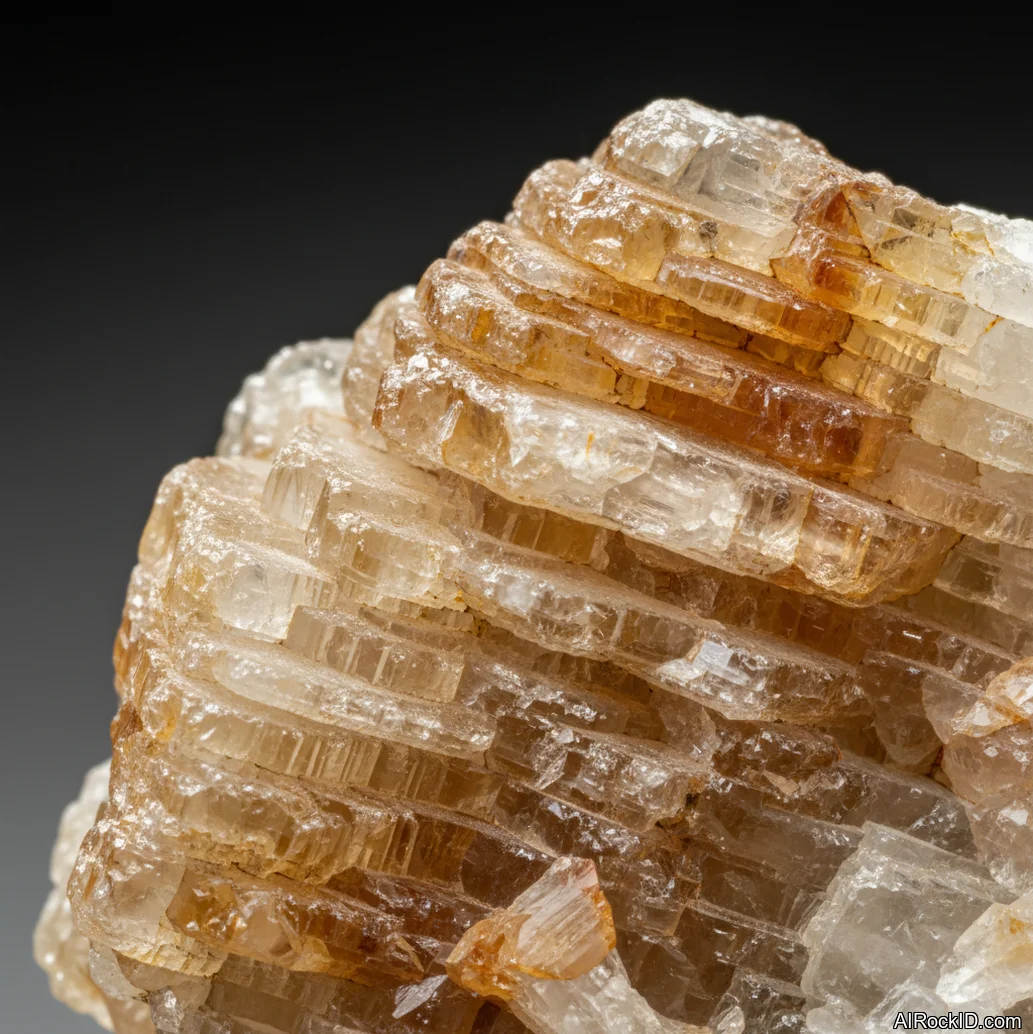
Pagoda Calcite is just calcite that grew in these stacked, step-like layers, so it ends up looking like a tiny tiered roof or a little temple.
Grab a decent piece and two things hit you right away. It feels lighter than you expect for the size. And the edges can feel surprisingly sharp where each step meets the next, like little ledges your fingertip catches on. Tip it under a desk lamp and those flat faces throw back this pearly flash, then it disappears the second you shift it a few degrees. Calcite being calcite, honestly.
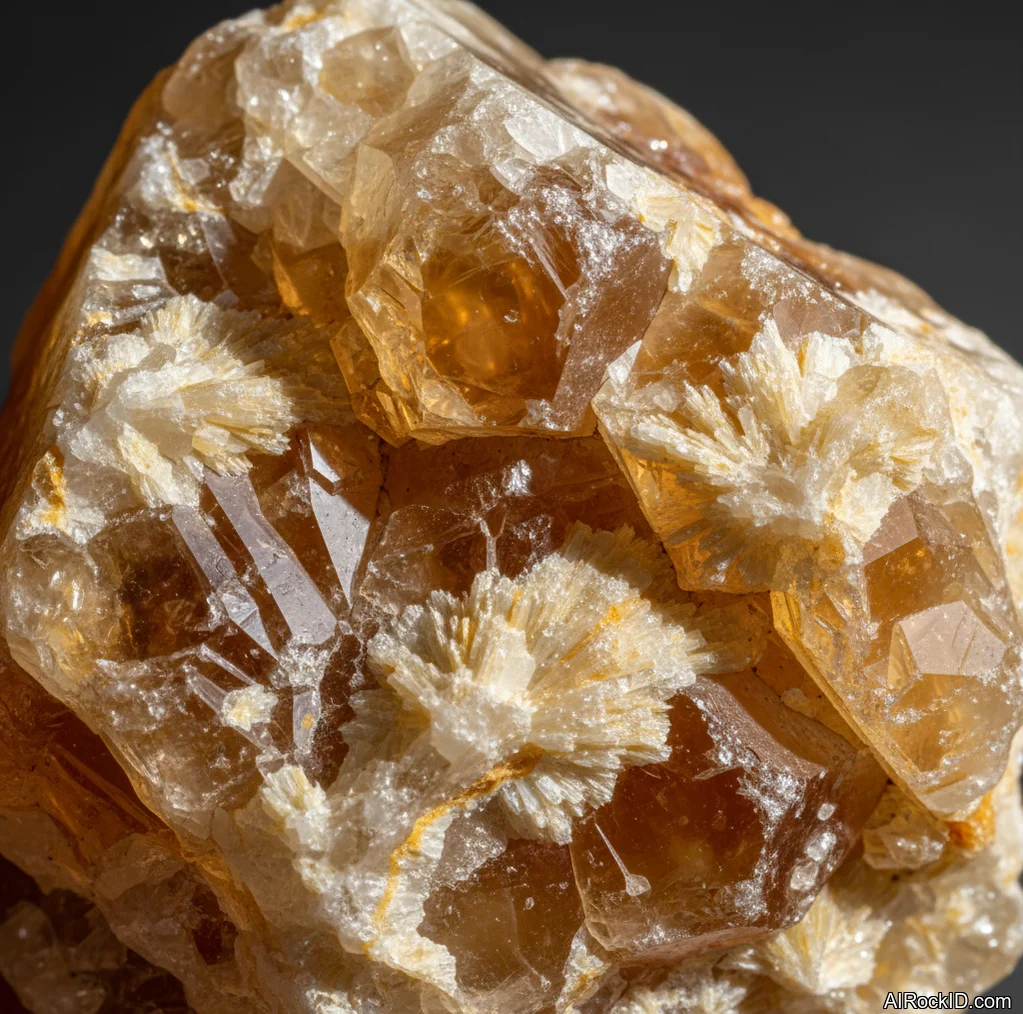
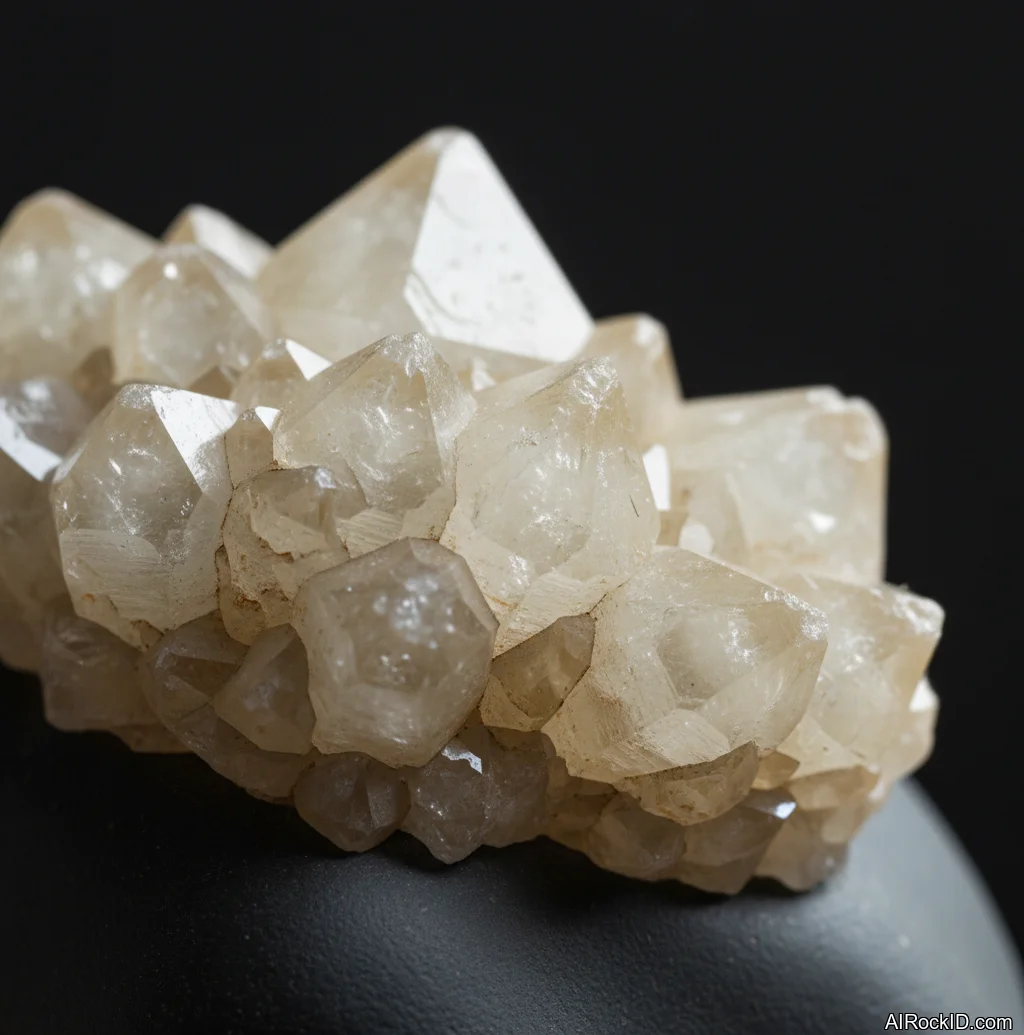
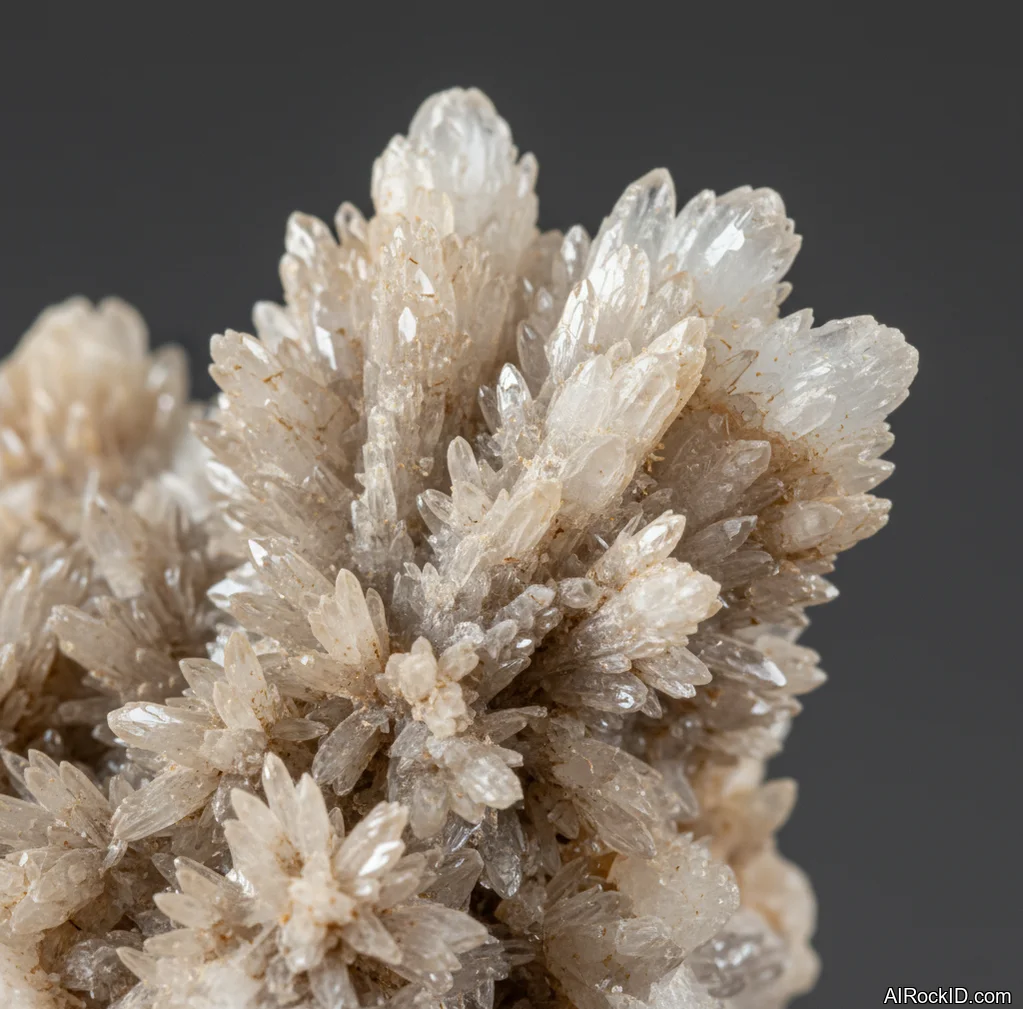
Most of what’s sold as “pagoda” comes in creamy tan, honey, or that pale tea sort of color, and sometimes you’ll see darker bands tucked between the steps. But it’s still calcite at the end of the day, which means it’s soft and it cleaves like crazy. If you’ve ever had a calcite chunk pop off a clean little rhomb in your pocket (yep, just from knocking around), you already know the vibe.
Origin & History
“Pagoda calcite” isn’t an official mineral name. It’s just a trade nickname for a particular growth habit. Dealers leaned into it because the stepped, tiered look is such an easy picture in your head, and the label tends to stick even when the piece in your hand is a cluster, a single crystal, or a layered aggregate.
Calcite itself has been described and named for a long time. The word comes from the Latin “calx,” meaning lime, and early mineralogists recognized the species as the main player in limestones and marbles. So when someone says “pagoda calcite,” they’re basically using collector shorthand: calcite, but with that stacked, temple-like architecture.
Where Is Pagoda Calcite Found?
Pagoda-style stepped growth shows up in calcite from several classic calcite regions, especially Chinese and Mexican material, plus some U.S. mine pieces when the conditions line up.
Formation
You get that pagoda look when calcite keeps starting over in these little spurts. Thing is, the chemistry shifts, the temperature bumps up or down, or the flow through a vein or cavity changes, so the crystal grows, stalls, then kicks back in again with edges that are just a bit offset. Over time, those restarts pile up. Terraces.
Most pieces I’ve handled felt like they came out of vugs in limestone, or out of hydrothermal vein pockets where there was enough open space for the layers to build outward. And calcite reacts fast to tiny environmental changes, so you’ll usually catch faint zoning from step to step. Sometimes it’s only a slight color shift. Sometimes it’s texture you can literally pick up with a fingernail, that little change in drag as you scrape across the edge (you know the feel).
How to Identify Pagoda Calcite
Color: Common colors are cream, beige, honey-yellow, and light brown, sometimes with darker bands between the “floors.” Some pieces are nearly white with a warm tint.
Luster: Luster is vitreous to pearly, especially on fresh cleavage faces.
If you scratch it with a copper coin or a steel nail, it’ll mark easily, because calcite is only Mohs 3. Look closely at the steps: the surfaces often show tiny cleavage planes and a slightly sugary sparkle rather than the glassy look of quartz. The real test is a drop of weak acid (even vinegar in a pinch): calcite fizzes, especially on a fresh scratch.
Properties of Pagoda Calcite
Physical Properties
| Crystal System | Trigonal |
| Hardness (Mohs) | 3 (Soft (2-4)) |
| Density | 2.71 g/cm3 |
| Luster | Vitreous |
| Diaphaneity | Transparent to translucent |
| Fracture | Uneven |
| Streak | White |
| Magnetism | Non-magnetic |
| Colors | Cream, Beige, Honey, Yellow, Light brown, White |
Chemical Properties
| Classification | Carbonates |
| Formula | CaCO3 |
| Elements | Ca, C, O |
| Common Impurities | Fe, Mn, Mg |
Optical Properties
| Refractive Index | 1.486-1.658 |
| Birefringence | 0.172 |
| Pleochroism | None |
| Optical Character | Uniaxial |
Pagoda Calcite Health & Safety
Pagoda Calcite is non-toxic, so it’s safe to handle. The real “risk” here isn’t to you, it’s to the piece itself. Drop it on a hard floor or knock it against the edge of a table and you’ll chip it (and yeah, that hurts to see).
Safety Tips
If you ever end up trimming or grinding calcite (most people don’t), put on eye protection and keep the dust under control. Calcite’s cleavage can pop off little chips, and those things can really fly.
Pagoda Calcite Value & Price
Price Range
Rough/Tumbled: $10 - $120 per piece
Prices jump when the steps look clean and evenly stacked, and the edges are still sharp. A big cluster that catches the light with strong luster will cost more, but the second you spot a chipped corner or a step that’s been cleaved off (that rough, chalky break), the value drops fast.
Durability
Nondurable — Scratch resistance: Poor, Toughness: Poor
It’s stable in normal indoor conditions, but it bruises and cleaves easily and can etch if you get acids on it.
How to Care for Pagoda Calcite
Use & Storage
Store it wrapped or in a box so the steps don’t grind against harder stones. I keep mine away from quartz points because quartz will chew calcite up just from a little rubbing.
Cleaning
1) Rinse quickly with lukewarm water if needed. 2) Use a soft brush (makeup brush works) with a tiny bit of mild soap. 3) Pat dry, don’t rub, and avoid soaking if the piece has fractures or clay in the crevices.
Cleanse & Charge
If you do energy-style cleansing, stick to smoke, sound, or moonlight. Salt and acidic cleaners are a bad idea since calcite reacts and etches.
Placement
Put it somewhere it won’t get bumped. A stable shelf with side clearance is better than a busy desk where it’ll get knocked into a keyboard or a mug.
Caution
Calcite splits cleanly because it has perfect cleavage, and it’s pretty soft too (Mohs 3). So don’t hit it with acids or vinegar-based cleaners, and keep anything abrasive away. Look, even a plain paper towel can put those tiny, annoying scuff marks on the softer faces if you rub it like you mean it.
Works Well With
Pagoda Calcite Meaning & Healing Properties
In the metaphysical world, pagoda calcite gets called a “layering” stone, and honestly, I see the point. That stepped, pagoda-looking structure practically tells your brain, “Do it in stages.” One thing at a time. Build up. Don’t jump ahead. When I use it like that, it’s not about big dramatic energy or fireworks. It’s about pacing, plain and simple.
On a stressful day, I’ll grab a piece and the first thing I notice is the feel. It’s cooler in the hand, kind of chalky-calm, not slick and glassy like some polished stones. But look, here’s the real-world part: it’s still a soft carbonate. If you’re someone who fidgets, taps it on the desk, or keeps rubbing the edges with your thumb (guilty), calcite will start showing it. Little dings. Tiny scuffs. And those bright, fresh cleavage spots that pop up out of nowhere. Some people love that because it feels like the stone’s actually living with you. Others? It drives them nuts.
Thing is, I treat any “healing” talk as personal practice, not medicine. What pagoda calcite does really well is give you a visual anchor you can’t ignore. Those terraces are handy for meditation timing, study blocks, or journaling sessions when you want a dead-simple cue: finish this layer. Then move to the next. Why make it more complicated than that?
Identify Any Crystal Instantly
Snap a photo and get properties, value, care instructions, and healing meanings in seconds.